








 Contact Platform Support
 Help Center
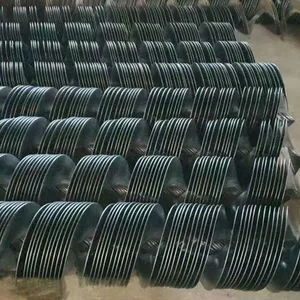
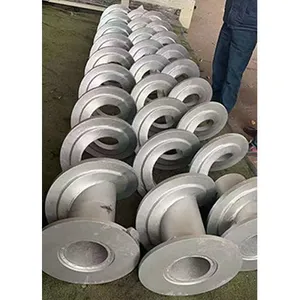
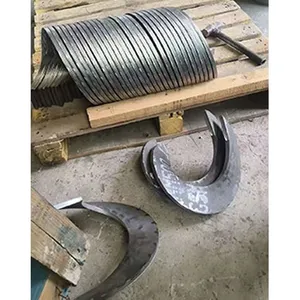
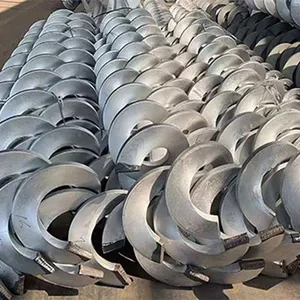
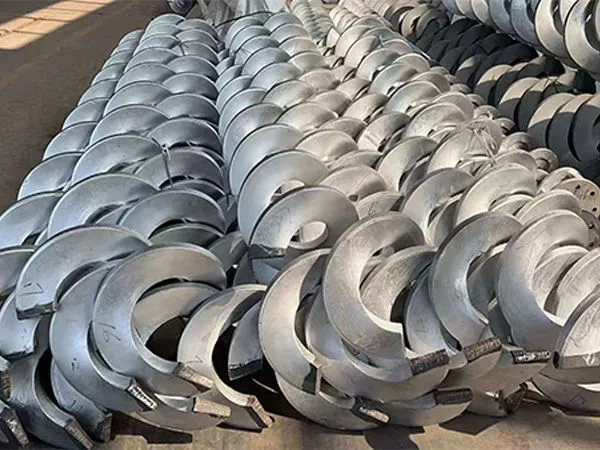
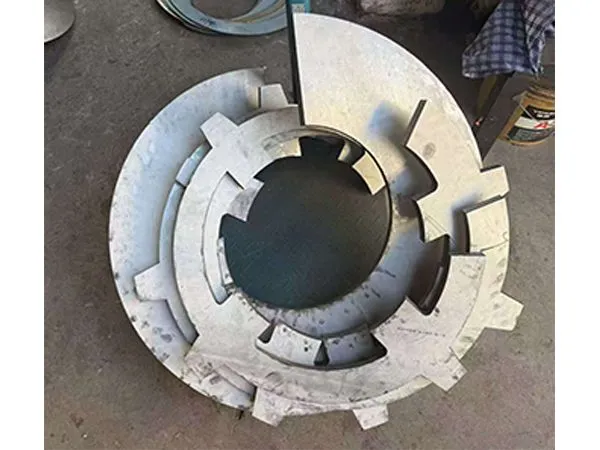
Stainless Steel, Carbon Steel, Screw Conveyor Blades, Auger Blades – Various Materials Available for Customization.
Product Spotlights


Related Products
-
 Grain Hose Conveyor Length Can be Customized Hose Spiral ConveyorUS$ 300 - 10000MOQ: 10 Combos
 -
Dust Collector Electronic Timer Dust Collector Pulse Controller Various Models Are Available for Customization.US$ 150 - 2000MOQ: 10 Boxes
-
Industrial Pleated Bags Woodworking Pleated Cloth Bag Customizable SizeUS$ 5 - 100MOQ: 100 Combos
-
Hand-propelled Vacuum Cleaner: Compact, Convenient, and EfficientUS$ 550MOQ: 10 Combos
-
Electric Tar Catcher, Electrostatic Precipitator, Coke Oven Flue Gas Collection and Treatment Equipment, Cangzhou Jinding Environmental ProtectionNegotiableMOQ: 0 Unit
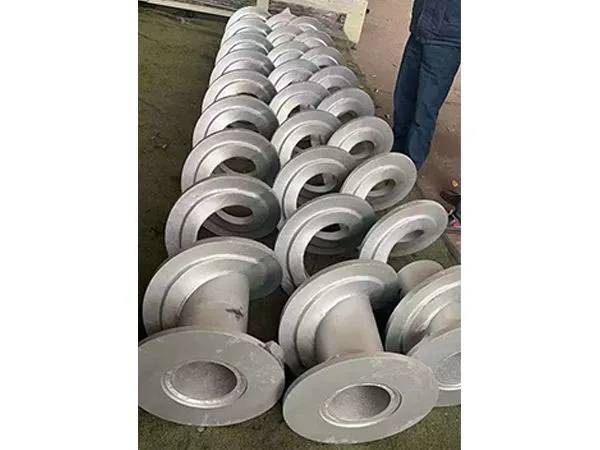
Spiral blades are critical core components of screw conveyors, commonly referred to as "mixing dragon wings." Below is a detailed introduction: Structure and Types Solid Spiral Blades: The most prevalent design features continuous solid metal strips that spiral upward around a central axis. With robust structural integrity, excellent rigidity, and strong thrust capacity, they deliver high conveying efficiency. These blades are ideal for transporting materials with high density and moderate friction, though they tend to be relatively heavy and consume slightly more energy.
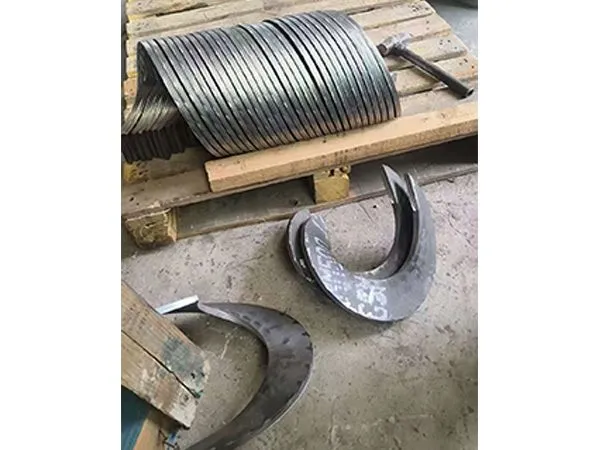
Band-type spiral blade: The blade is formed by one or more continuous metal strips spirally wound around a central shaft, with a significant gap between the blade and the shaft. It is lightweight, has relatively low power consumption, and is less prone to material entanglement or wrapping. This design is suitable for processing fluffy, lightweight, easily entangled, and viscous materials. However, its thrust is typically weaker than that of solid-type blades, and its rigidity is slightly inferior.
Strip-type helical blade propeller: Additional blades are intermittently welded or installed on continuous helical blades. It combines helical conveying and mixing/dissolving functions, effectively breaking up lumpy materials, preventing entanglement, and promoting material mixing. However, its structure is relatively complex, resulting in slightly higher manufacturing and maintenance costs.
Paddle-type variable-pitch spiral blades: The pitch of spiral blades is not constant and typically decreases gradually from the feed end to the discharge end. A larger pitch at the feed end facilitates rapid reception and conveyance of fluffy materials, while a smaller pitch at the discharge end increases compressive force on the material, thereby improving feeding uniformity and crushing efficiency. However, their design and manufacturing are more complex compared to blades with constant pitch.
Variable-pitch helical blade composite: Different blade types are used in different sections on the same shaft. It integrates the advantages of various blade types and can be optimized for material properties and crushing process requirements, but the design and manufacturing are the most complex.
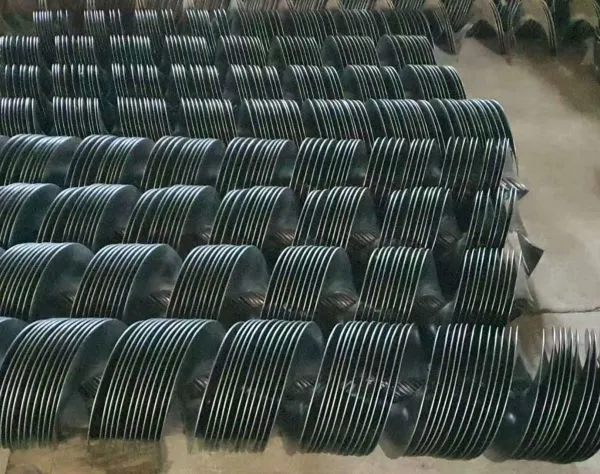
Cold rolling forming process for composite spiral blade manufacturing: The feeding strip steel is deformed through the compression of two rolls in a cold rolling mill to form spiral blades. This method enables production of blades in various models, specifications, and sizes, offering advantages such as high production efficiency, superior blade quality, high hardness, and excellent wear resistance.
Winding molding: The raw materials are rotated and formed according to the pitch specified in the mold design, followed by welding or joining to create a complete structure for the wound-blade assembly. The formed blades exhibit uniform thickness characteristics. This process is simple to operate and requires low technical expertise, making it suitable for batch production of single-model blades.
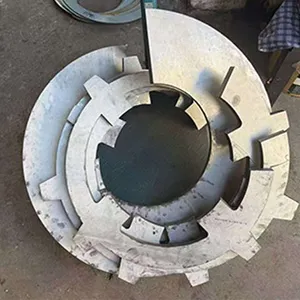
Stamping forming: This process primarily utilizes a hydraulic press to perform stamping according to predetermined parameters such as the inner and outer diameters and pitch of the blades. It enables the production of blades with substantial thickness and large pitch, thereby compensating for the limitations of winding forming and cold rolling forming.
Materials and Applications: Common materials include ordinary carbon steel, stainless steel, and high-manganese steel. For example, carbon steel blades are suitable for conveying general powdered or granular materials, while manganese steel blades with higher wear resistance are recommended for transporting substances with high particle strength, such as minerals. In industries with stringent hygiene requirements, such as food and pharmaceuticals, stainless steel blades are preferable.
Applications: Spiral blades are widely used in industries such as mining, metallurgy, food processing, pharmaceuticals, environmental protection, and construction materials. They are employed for conveying powdered materials, solid-liquid two-phase flow materials, or highly viscous and compressible materials, while also serving to stir and mix the materials.
Cangzhou Jinding Environmental Protection Equipment Co., Ltd. specializes in manufacturing spiral conveyor blades with customized solutions tailored to client requirements. We welcome inquiries from both new and existing customers. Contact us via WhatsApp: +8618713052490.

Send Inquiry to This Supplier


You May Also Like
-
Type Yjd-a Star Discharge Valve, Cangzhou Jinding Environmental ProtectionUS$ 400 - 5000MOQ: 1 Unit
-
Type Qmfd-100 Electromagnetic Pulse Valve, Cangzhou Jinding Environmental ProtectionUS$ 30 - 500MOQ: 1 Piece
-
Dmf-zm Right Angle Electromagnetic Pulse Valve With Nuts, Cangzhou Jinding Environmental ProtectionUS$ 40 - 500MOQ: 1 Piece
-
Type Yjd-b Star Discharge Valve, Cangzhou Jinding Environmental ProtectionUS$ 400 - 5000MOQ: 1 Unit
-
Vertical Electric Tar Catcher, Honeycomb Tar Collector, Asphalt Fume Collection and Treatment, Cangzhou Jinding Environmental ProtectionNegotiableMOQ: 0 Unit
-
Dmf-y Submerged Electromagnetic Pulse Valve, Cangzhou Jinding Environmental ProtectionUS$ 45 - 500MOQ: 1 Piece
-
Dmf-z Type Electromagnetic Pulse Valve, Cangzhou Jinding Environmental ProtectionUS$ 45 - 500MOQ: 1 Piece
-
Silicone Dust Removal Skeleton, Cangzhou Jinding Environmental ProtectionUS$ 7.54 - 7.69MOQ: 1 Rod
-
Stainless Steel Discharger, Cangzhou Jinding Environmental ProtectionUS$ 700 - 5000MOQ: 1 Unit
-
High-temperature-resistant Star-shaped Discharge Valve, Cangzhou Jinding Environmental ProtectionUS$ 550 - 5000MOQ: 1 Unit


