








 Contact Platform Support
 Help Center
Instruction Manual for At/s12.16.5, At/s8.10.1 Switch Drivers and Hs/s3.1 Light Sensor Modules



Related Products
-
 Ddbc516fr Office Intelligent Lighting Switch Driver Panel, Ddbc300 Logic Light SensorUS$ 115.38 - 123.08MOQ: 1 Unit
 -
Tya604b Intelligent Lighting Switch Driver, Txa210a Dimming ModuleUS$ 407.69MOQ: 1 Set
-
Slc-3-100, Slc-3-60, Slc-3-80 Park Street Light Energy Savers, Energy-saving Retrofit, Voltage Stabilization and DimmingUS$ 1230.77 - 1307.69MOQ: 1 Set
-
Ksl-r416a Factory Lighting Induction System, Ksl-r816a Self-locking Negative Feedback Switch ModuleUS$ 150.77 - 166.15MOQ: 1 Set
-
Ajt-rm0416a School Lighting Intelligent Switch Controller, 8-channel 16a Intelligent Lighting Time Control Module With Remote ControlUS$ 153.69 - 161.54MOQ: 1 Set
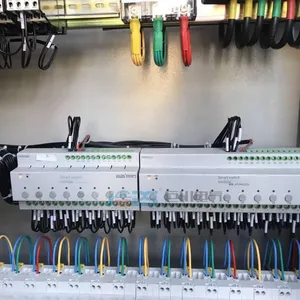
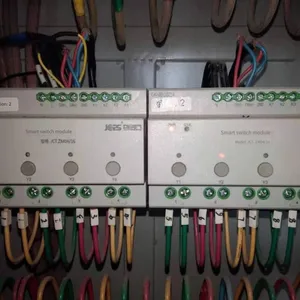
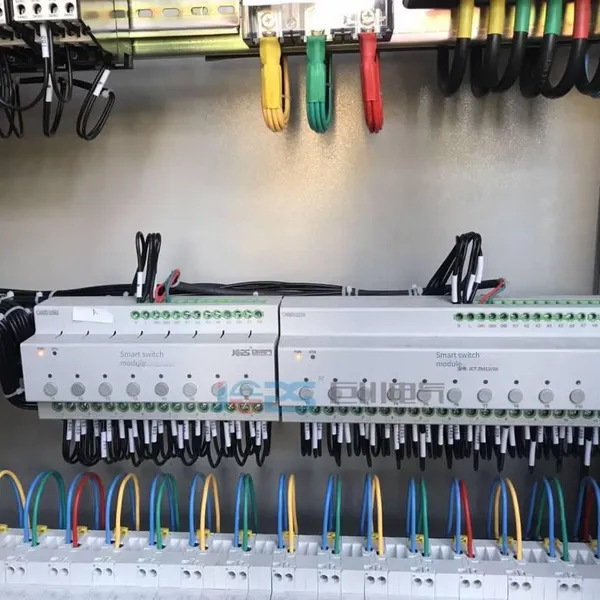
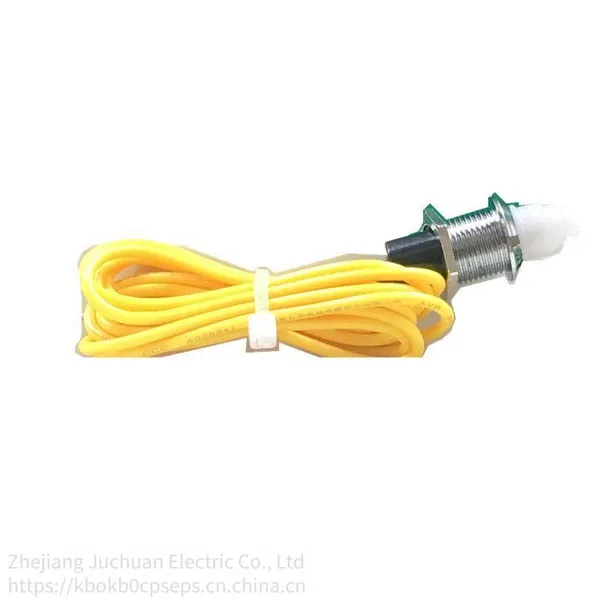
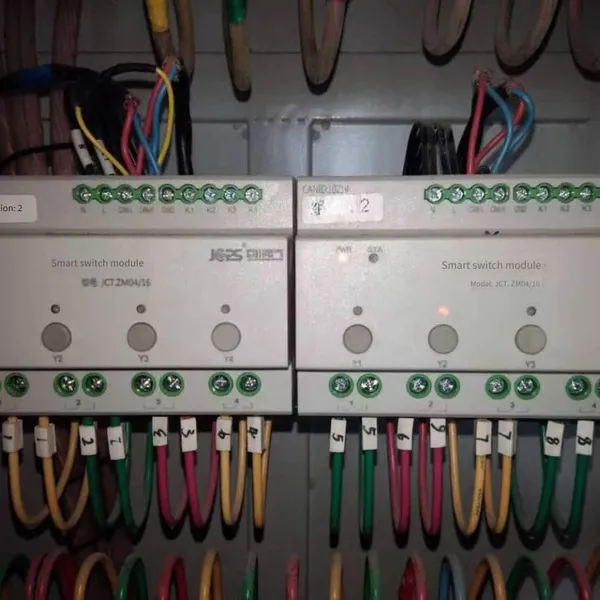
AT/S12.16.5, AT/S8.10.1 Switch Driver HS/S3.1 Photosensitive Module Instruction Manual. It is responsible for receiving and processing the signals transmitted by the sensors and performing corresponding operations, such as turning lights on/off and adjusting the brightness of lights. Connect to the bus through a bus connection terminal, and there is no need for a data rail data strip. The channel status is displayed through the indicator light. A green LED indicator shows the operation ready information. It is equipped with a built-in Juchuan bus connector. It has functions such as manual toggle, logic, delay, staircase, preset, and flashing. Each loop can be called by 5 8-bit scenes simultaneously, and 64 scene numbers are available. Each output channel is equipped with a current detection function, which is especially suitable for capacitive loads and loads with relatively high inrush current, such as fluorescent lamp loads. It can also control electric heating, pumps, and valves.
HS/S3.1 Technical Parameters:
Each fluorescent lamp output:
Rated voltage: DC 24V±10%
Rated current: 6A
Load type: 24V DC driver
Device width: 4 modules = approximately 72mm
HS/S3.1 Intelligent Lighting Module Usage Value
1. Energy saving of lighting control equipment
Using appropriate lighting control equipment can also improve the working efficiency of the lighting system well. For example, by using infrared motion detection technology and constant brightness (illumination) lighting technology, when there are people in the lighting environment and lighting is needed, the lighting control system turns on the lighting source. On the contrary, if there is no one in the lighting environment and lighting is not needed, the lighting source is turned off. Another example is that when the outdoor natural light is strong, the luminous intensity of the indoor lighting electric light source can be appropriately reduced, and when the outdoor natural light source is weak, the luminous intensity of the indoor lighting electric light source can be appropriately increased, so as to achieve constant brightness (illumination) lighting in the lighting environment and achieve the effect of lighting energy saving.
2. Create a good lighting environment
People's requirements for the lighting environment are closely related to the activities they engage in, in order to meet the requirements of different usage functions. The specific manifestations are as follows.
The lighting space can be divided by controlling the lighting environment. When there are changes in the lighting room and partitions, corresponding controls can be used to make flexible changes accordingly.
By adopting control methods, different atmospheres can be created in the same room. Through different visual experiences, it can have a positive impact on people both physically and psychologically.
3. Automatic control of lighting
The system is characterized by scene control. There can be multiple lighting circuits in the same room. Adjusting the brightness of each circuit to achieve a certain lighting atmosphere is called a scene; different scenes can be preset (creating different lighting environments), and the fade-in and fade-out time when switching scenes can make the lighting change gently. Clock control uses a clock controller to make the lighting change according to the daily sunrise and sunset or follow a time pattern. Various sensors and remote controls are used to achieve automatic control of the lighting.
4. Beautify the environment
Indoor lighting uses scene changes to enhance the artistic effect of the environment, creating a sense of stereoscopy and layering, and creating a comfortable environment, which is beneficial to people's physical and mental health and improves work efficiency.
5. Extend the lifespan of lamps
The main factors affecting the lifespan of lamps are overvoltage use and cold-state shock, which greatly reduce the lifespan of lamps. The LT series intelligent dimmer has an output voltage limit protection function: that is, when the grid voltage exceeds the rated voltage of 220V, the dimmer automatically adjusts the output to be within 220V. When a light bulb is connected to power in a cold state, an inrush current 5 - 10 times the rated current will be generated, which greatly affects the lifespan of the lamp. The intelligent dimming control system uses slow start and fade-in/fade-out dimming control to avoid the cold-state shock to the lamp and extend its lifespan. The system can extend the lifespan of the light bulb by 2 - 4 times, saving a large number of light bulbs and reducing the workload of replacing light bulbs.
AT/S12.16.5, AT/S8.10.1 Switch Driver HS/S3.1 Light Sensor Module Instruction Manual Installation method:
1. Install on the rail. A 4-channel intelligent lighting module is equivalent to a 4-position switch, a 6-channel intelligent control module is equivalent to a 6-position switch, and an 8-channel intelligent lighting control module is equivalent to an 8-position switch.
2. The module wiring is very convenient with direct input and output.
3. Only one bus line is needed for the bus, reducing wiring errors.
4. The wiring terminals are large and can accommodate 25-square wires.
Wiring demonstration:
1. The switch is a Chint switch. Connect the 16A switch directly to the input terminal of the module, and then connect the input terminal directly to the lamp.
2. Connect the bus, the module, and other modules in series, and then connect them to the computer.

Send Inquiry to This Supplier


You May Also Like
-
Thlxd-pt-60a, Thlxd-pt-30a, Thlxd-pt-40a Road Lighting Energy-saving Voltage Stabilizers for National HighwaysUS$ 153.54 - 153.69MOQ: 1 Unit
-
Le-100npi Le-80npi Street Lighting Electromagnetic Voltage Stabilization and Regulation Device, Voltage Regulating Energy SaverUS$ 153.69 - 598.46MOQ: 1 Set
-
Rxyk kq Fire Emergency Evacuation System Residual Pressure Controller Rxyk-yp Differential Pressure SensorUS$ 89.23MOQ: 1 Unit
-
Village Road Lighting Power-saving Voltage Stabilizing and Energy-saving Devices Spjd-l/0.4-80-s and Spjd-l/0.4-50-sUS$ 153.54 - 153.69MOQ: 1 Unit
-
Slc-3-60, Slc-3-80, Slc-3-63 Landscape Street Lighting Load Voltage Stabilization and Energy Saving Device With Wireless MonitoringUS$ 153.54 - 153.69MOQ: 1 Set
-
Thlxd-pt-0.4-30kw 60kw Hefei Highway Tunnel Energy-saving Reconstruction Led Lighting Dimming SystemUS$ 1230.77 - 1289.23MOQ: 1 Set
-
Mtk3-80kva, Mtk3-160kva, Mtk3-50kva Factory Intelligent Street Lamp Voltage Regulation and Energy Saving DeviceUS$ 153.54 - 153.69MOQ: 1 Unit
-
Bmw-160kva, Bmw-120kva Landscape Street Lighting Load Voltage Stabilization and Energy Saving Device With Wireless MonitoringUS$ 153.54 - 153.69MOQ: 1 Unit
-
Bmw/pt-160, Bmw/pt-120 Industrial Park Street Light Energy Saver, Voltage Stabilization and Regulation Remote Monitoring SystemUS$ 153.69 - 1046.15MOQ: 1 Unit
-
Zlb3000-sq-30/3 Zlb3000-sq-40/3 Landscape Lighting Renovation Energy-saving Voltage Stabilization DeviceUS$ 1600 - 1615.38MOQ: 1 Set


