Home > Electrical & Electronics > Electrical Control System > TRICONEX 2402 Input/Output Module

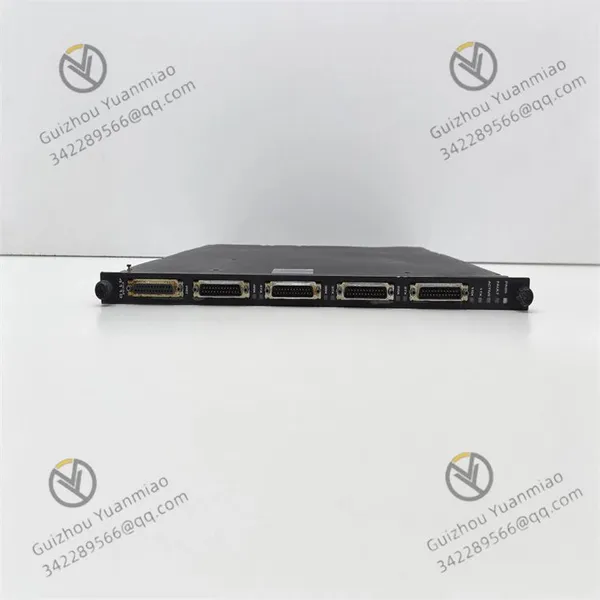
TRICONEX 2402 Input/Output Module

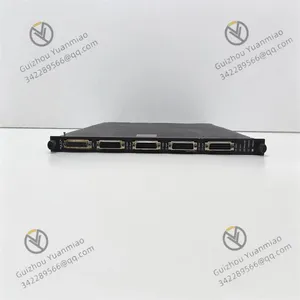
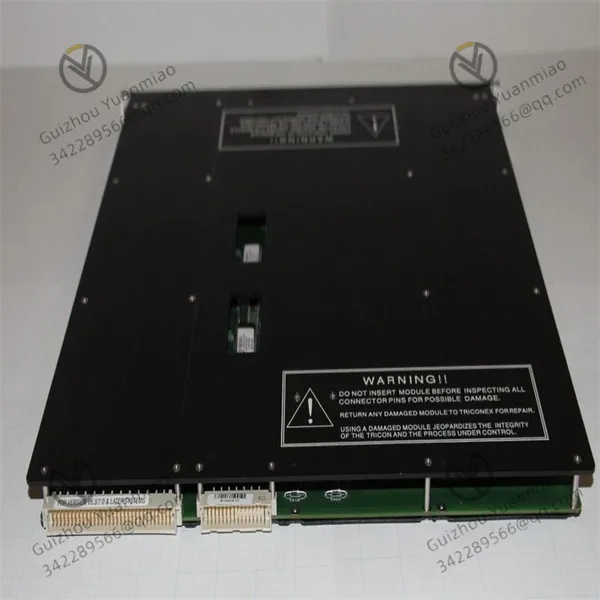
TRICONEX 2402 Input/Output Module photo-1
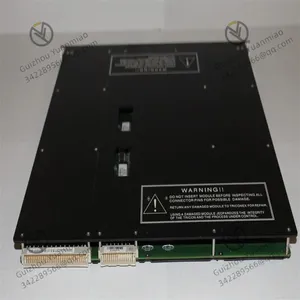
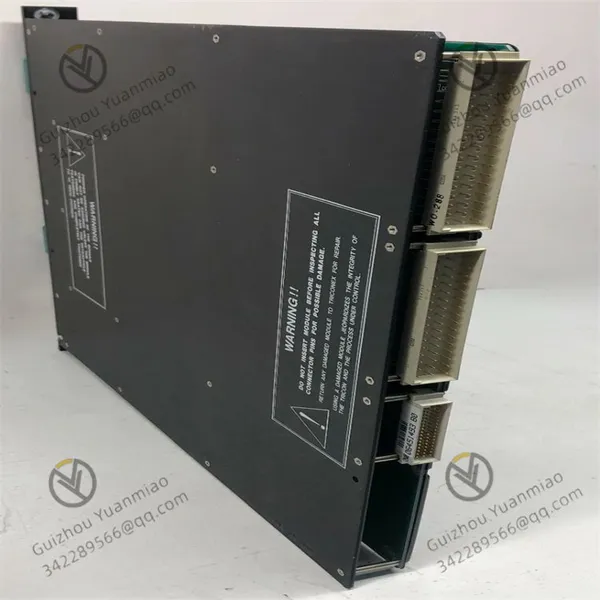
TRICONEX 2402 Input/Output Module photo-2
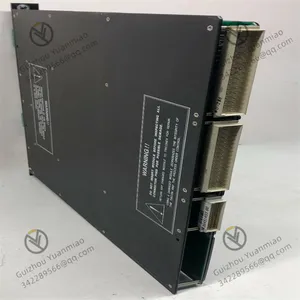
TRICONEX 2402 Input/Output Module photo-3
Negotiable MOQ: 1 Piece (Price negotiable depending on order volume and customization)
Key Specifications
Get Latest Price
Material:
Other
Certification:
Other
Function:
Other

Payment & Shipping
Payment Methods:
Port of Shipment:
China
Delivery Detail:
Delivery time depends on order quantity.
Material Other
Certification Other
Function Other
Condition Other
Task Other
Mathematical Model Other
Signal Other
Customized Other
Structure Other
TRICONEX 2402 Input/Output Module

4118—02


Basic Information
Brand and Model: TRICONEX is the brand name, and 2402 is the model number of the product.
Place of Origin: United States.
Product Type: Input/output module, which can realize the input and output functions of digital quantities.


Functional Features
High Reliability: It adopts advanced fault-tolerant technology and redundant design, which can operate stably in harsh industrial environments and ensure the reliability and safety of the system. For example, in industries such as petrochemicals that have extremely high requirements for system stability, TRICONEX 2402 can work stably for a long time, reducing production interruptions caused by module failures.
High-Precision Measurement: It can accurately measure and control various physical quantities in industrial processes, such as current, voltage, temperature, pressure, etc., providing accurate data support for industrial production.
Flexible Configuration: Users can flexibly configure the module according to actual needs, including the number of input and output points, signal types, range, etc., to adapt to different industrial application scenarios.
Fast Response: It has fast signal processing capability and response speed, which can timely respond to changes in industrial processes and ensure the efficient operation of the system.

3002—01

Application Fields
Power Industry: It can be used in DCS monitoring systems of power plants, integrated automation control systems of substations, etc., to realize real-time monitoring and control of power systems and ensure the stable operation of power systems.
Petrochemical Industry: In processes such as oil extraction, oil refining, and chemical production, it is used to monitor and control various process parameters, such as temperature, pressure, flow, etc., to ensure the safety and efficiency of the production process.
Water Treatment Industry: It is applied in sewage treatment plants, waterworks, etc., to monitor and control parameters such as water level, water quality, and flow, so as to realize the rational utilization and treatment of water resources.
Metallurgical Industry: In processes such as steel production and non-ferrous metal smelting, it is used to monitor and control parameters such as temperature, pressure, and speed in the production process, improving production efficiency and product quality.
Papermaking Industry: It is used in the automatic control of papermaking production lines to monitor and control parameters such as paper thickness, humidity, and tension, ensuring the stable quality of paper.


Usage Notes
Installation Environment: It should be installed in a dry, ventilated environment with appropriate temperature, and avoid installation in humid, high-temperature, or dusty places to prevent affecting the performance and service life of the module.
Grounding Requirements: The TRICONEX 2402 module requires good grounding to ensure the stability and safety of the system. The grounding resistance should meet relevant standard requirements, generally not exceeding 4 ohms.
Wiring Specifications: When wiring, attention should be paid to separating the power lines and signal lines to avoid signal interference. At the same time, signal lines should use shielded wires to improve anti-interference ability.
Power Supply Requirements: A power supply that meets the module's requirements should be used to avoid damage to the module due to excessively high or low power supply voltage. An overvoltage protection device should be installed at the power input end to prevent the impact of power surges on the module.

3624—01

Working Principle
I. Core Function Positioning
The TRICONEX 2402 module is mainly used to connect sensors (such as proximity switches, limit switches) and actuators (such as solenoid valves, relays) in industrial sites, realize the input collection of digital signals (monitoring the status of on-site equipment) and the output control of digital signals (driving the action of on-site equipment), and communicate with the main controller of the TRICONEX fault-tolerant control system (such as Tricon, Trident) to form a complete industrial control loop.


II. Specific Working Links


  1. Working Principle of Digital Input (DI)
    Signal Acquisition:
    Digital signals in industrial sites (such as "on/off" of switches, "running/stopping" of equipment) are usually transmitted to the input channels of the module in the form of DC voltage (such as 24V DC). The isolation circuit (such as a photoelectric coupler) inside the module will electrically isolate the external on-site signal from the internal circuit, avoiding on-site interference (such as surges, ground loops) affecting the core circuit of the module.


Signal Conversion and Processing:
After being processed by the shaping circuit (removing noise and stabilizing the waveform), the isolated signal is converted into a digital logic signal (0 or 1, corresponding to "open" or "closed" states) that the controller can recognize. The microprocessor of the module will monitor the input signal in real-time and transmit the signal status to the main controller through the internal bus.


Redundancy Check (Improving Reliability):
The module adopts a redundant design (such as channel-level redundancy). The same signal can be collected through multiple independent channels. The microprocessor compares and checks the multi-channel data. If there is a deviation, a fault-tolerant mechanism (such as ignoring the error value, alarming) is triggered to ensure the accuracy of the input signal.


  1. Working Principle of Digital Output (DO)
    Receiving Control Instructions:
    The main controller sends output control instructions (such as "start valve", "stop motor") to the 2402 module through the system bus according to preset logic or operator instructions. The instructions are transmitted to the output channels of the module in the form of digital signals.


Signal Amplification and Driving:
The drive circuit (such as a relay, transistor) inside the module amplifies the weak signal (low voltage, small current) output by the controller into a strong electric signal (such as 24V DC, 220V AC) that can drive on-site actuators. For example, the relay output channel controls the on/off of the external circuit through the closing/opening of contacts.


Status Feedback and Protection:
The output channel has a built-in status monitoring circuit, which detects the actual action status of the actuator in real-time (such as whether it is successfully "closed") and transmits the feedback signal back to the main controller to form closed-loop control. At the same time, the module has overcurrent and overvoltage protection functions. If the on-site load is abnormal (such as a short circuit), the protection circuit will quickly cut off the output to avoid damage to the module.


  1. Communication with the Main Controller
    The module is connected to the system main controller through a dedicated bus (such as TRICONEX's TriBus) and follows a specific communication protocol (such as Tricon's proprietary protocol) to realize real-time data interaction (upload of input signals, download of output instructions).

4201—04

During communication, the module will periodically send its own status information (such as channel faults, power status). If the main controller detects an abnormality in the module, it will switch to the redundant module through fault-tolerant logic or trigger an alarm to ensure the uninterrupted operation of the system.


  1. Redundancy and Fault-Tolerant Mechanism (Core Features)
    The high reliability of the TRICONEX 2402 module comes from its Triple Modular Redundancy (TMR) or dual redundancy design:
    Key circuits (such as power supply, microprocessor, communication interface) adopt multi-module parallel operation. The same signal is processed through multiple independent paths, and the effective signal is determined through "majority voting" logic (such as 2 out of 3). If a single module fails, the remaining modules can still ensure normal output, avoiding system failure caused by a single point of failure.


The module has a built-in self-diagnostic function, which detects the hardware status in real-time (such as channel short circuit, component aging) and reports the fault information to the main controller, facilitating maintenance personnel to troubleshoot in a timely manner.


III. Summary
The working principle of the TRICONEX 2402 module can be summarized as: realizing the interaction between on-site signals and the controller through isolation, conversion, and amplification circuits, combined with redundant design and fault-tolerant mechanisms, stably transmitting digital signals in harsh industrial environments, and ensuring the safety and continuity of industrial control processes. Its core value lies in reliably connecting the "physical state" of on-site equipment with the "logical instructions" of the control system, and it is a key component in industrial Safety Instrumented Systems (SIS) and Emergency Shutdown Systems (ESD).


Product Tags: 2402 I/O Module

Send Inquiry to This Supplier

Message
0/5000

Want the best price? Post an RFQ now!
Gold Verified Supplier
1Yr
Verified Business License
Business Type
Trading Company
Year Established
2014
Factory Size
1,000-3,000 square meters
Product Certifications
SA8000