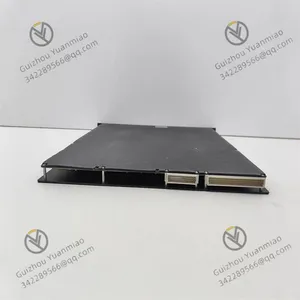
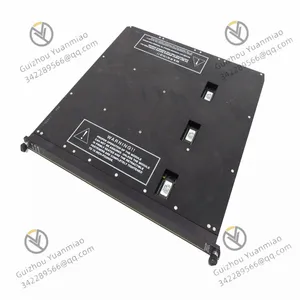
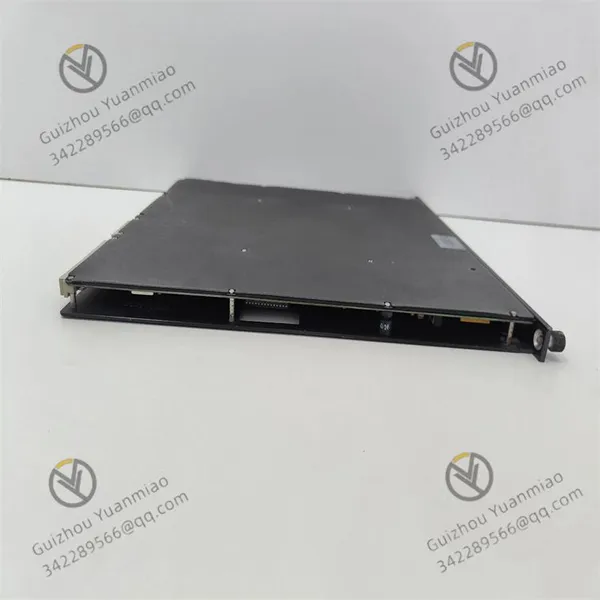
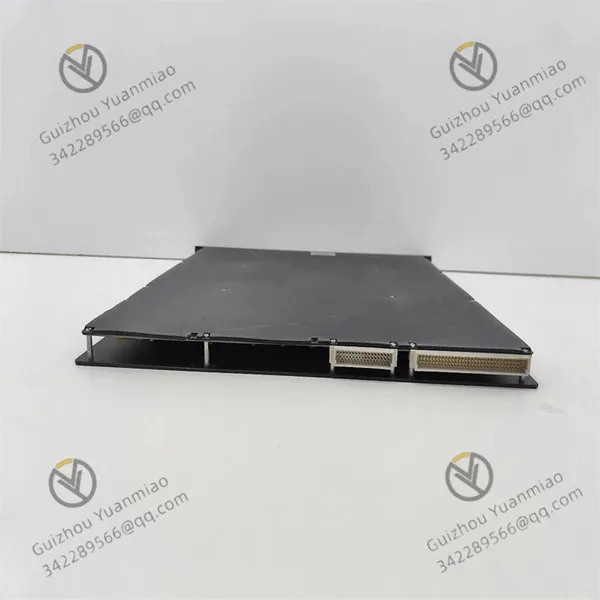
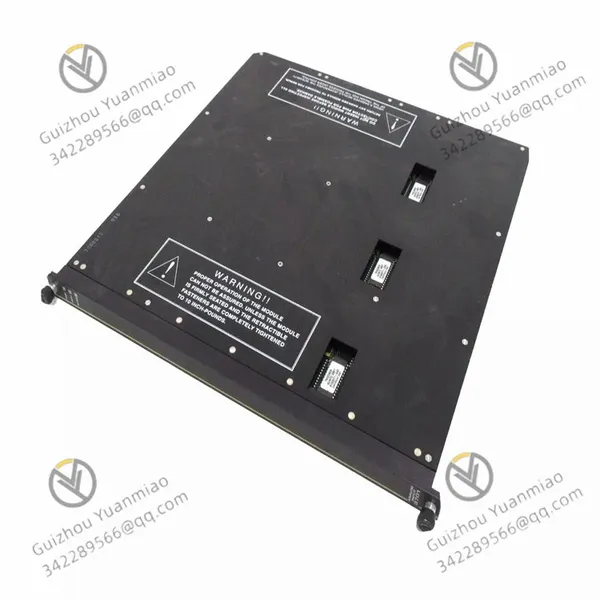
TRICONEX 3515 Integrated Pulse Input Module
The TRICONEX 3515 integrated pulse input module is a dedicated I/O component for pulse signal acquisition in the Triconex safety control system. It is mainly used to receive and process pulse signals from on-site equipment (such as pulse outputs of physical quantities like flow rate, rotational speed, and frequency), convert them into digital information recognizable by the system, and transmit it to the CPU module. It is compatible with the Triple Modular Redundancy (TMR) architecture and is widely used in safety instrumented systems (SIS) or process control systems that require accurate monitoring of dynamic physical quantities in industries such as petrochemicals, energy, and manufacturing.
I. Core Functions and Positioning
As a "dedicated acquisition interface" for pulse signals, the 3515 module focuses its core functions on high-precision capture and reliable processing of pulse signals, specifically including:
Receiving pulse signals output by on-site equipment (such as flow pulses from turbine flowmeters, rotational speed pulses from motor encoders, etc.);
Performing preprocessing such as isolation, filtering, and shaping on pulse signals to eliminate interference and standardize the signals;
Implementing basic operations such as pulse counting, frequency measurement, and period measurement (supported by some models);
According to the requirements of the TMR architecture, synchronously distributing the processed pulse data to the three redundant channels of the system for voting and further calculation by the CPU module;
Equipped with a self-diagnostic function to monitor the module's hardware status and signal abnormalities in real-time, ensuring data reliability.
II. Design Features Adapted to TMR Architecture
Consistent with the redundancy logic of the Triconex system, the hardware and signal processing mechanism of the 3515 module are designed around Triple Modular Redundancy (TMR) to ensure the safety of pulse signal acquisition:
Triple independent channels: The module contains three completely isolated signal processing channels (A, B, C) inside. Each channel has independent pulse conditioning circuits, isolation components, and communication interfaces to prevent single-point faults from affecting overall data transmission.
Synchronous data distribution: The same on-site pulse signal is sent to the three channels simultaneously. After independent processing, it is transmitted to the three corresponding channels of the CPU module respectively, ensuring that the CPU can obtain three consistent original pulse data, which provides a basis for subsequent voting.
Redundancy verification mechanism: If a fault occurs in one channel (such as signal loss or counting error), the CPU can compare the data of the three channels and adopt the "majority voting" logic (2 out of 3 consistency is valid) to ensure the correctness of the output data.

III. Key Links in Pulse Signal Processing
On-site Signal Access and Preprocessing
Signal type adaptation: Supports multiple pulse signal types, including dry contact pulses (mechanical contact on/off), wet contact pulses (active voltage pulses, such as 24V DC), sine wave or square wave pulses (such as encoder outputs), etc., to adapt to different on-site equipment.
Electrical isolation: Through optoelectronic isolation or magnetic isolation technology, the on-site side signal is completely isolated from the internal circuit of the system, avoiding damage to the module caused by interference such as ground loops and surge voltages, and improving the anti-electromagnetic interference (EMI) capability.
Filtering and shaping: A built-in low-pass filter circuit eliminates high-frequency noise, and a shaping circuit converts irregular pulses (such as jittered or distorted signals) into standard square waves to ensure clear pulse edges and avoid false counting.
Pulse Data Processing and Transmission
Basic operations: The module can perform real-time counting (cumulative pulse count), frequency measurement (number of pulses per unit time), or period measurement (pulse interval time) on pulse signals. Some models support preset threshold alarms (such as pulse frequency exceeding the limit).
Synchronous transmission: The processed pulse data (such as count values, frequency values) is synchronously transmitted to the TriBus of the Triconex system through three channels and then distributed to the three channels of the CPU module to ensure data timeliness and consistency.
Status Monitoring and Fault Diagnosis
The module monitors its own working status in real-time, including power supply voltage, channel circuit integrity, isolation component status, communication links, etc.;
If a fault is detected (such as pulse signal loss, channel short circuit, or communication interruption), a local alarm is given through an indicator light (such as a red fault light), and the fault information is transmitted to the CPU module via the bus and finally reported to the HMI or engineer station, facilitating quick problem location.
IV. Key Technical Parameters (for reference)
Input type: Pulse signals (supporting dry contacts, wet contacts, sine wave/square wave pulses);
Input voltage range: Typically supports 24V DC (for wet contacts), no voltage requirement for dry contacts;
Pulse frequency range: Usually supports 0~10kHz or higher (depending on the model, meeting the needs of medium and high-speed pulse acquisition);
Number of channels: Commonly 4 or 8 independent pulse inputs (each corresponding to an independent conditioning circuit);
Isolation mode: Electrical isolation between channels, isolation between the on-site side and the system side (isolation voltage is usually ≥2500V AC);
Counting accuracy: Supports 32-bit counters (meeting the needs of large value accumulation);
Response time: Microsecond level (ensuring no loss of high-frequency pulses).

V. Typical Application Scenarios
Due to its ability to accurately collect pulse signals, the 3515 module is often used in safety or control scenarios that require monitoring of dynamic physical quantities:
Flow measurement: Collecting pulse outputs from turbine flowmeters and vortex flowmeters to calculate instantaneous or cumulative flow (such as monitoring the medium flow in chemical pipelines);
Rotational speed monitoring: Receiving encoder pulses from motors, pumps, and compressors to calculate rotational speed in real-time (such as overspeed protection systems);
Displacement/position monitoring: Measuring equipment displacement or position through linear encoder pulses (such as valve opening feedback);
Frequency signal monitoring: Processing frequency outputs from on-site sensors (such as frequency signals from vibration sensors).
Summary
The TRICONEX 3515 integrated pulse input module provides stable pulse signal acquisition capability for safety control systems through TMR redundancy design, high-precision pulse processing, and reliable self-diagnostic functions. It is a key link connecting on-site dynamic monitoring equipment and system control logic, and is particularly suitable for industrial safety scenarios with high requirements for the real-time and accuracy of pulse signals.