Home > Electrical & Electronics > Electrical Control System > TRICONEX 3674 Digital Output Module
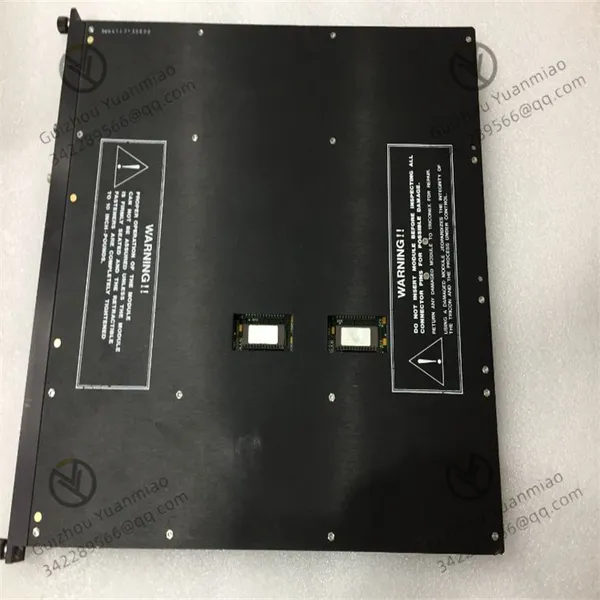
TRICONEX 3674 Digital Output Module
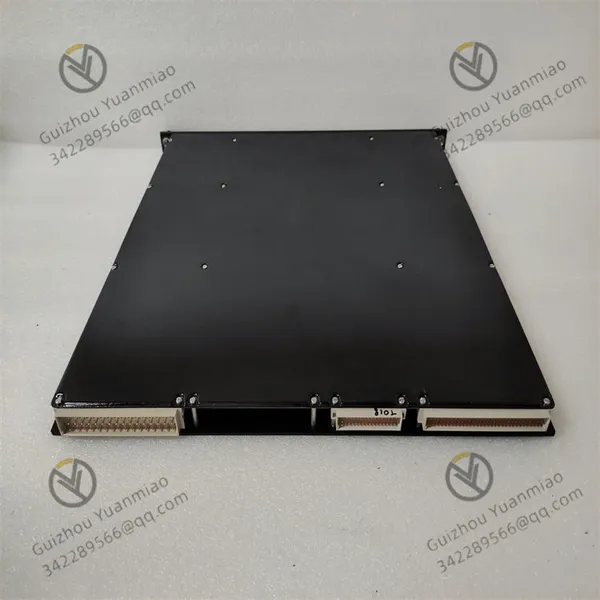
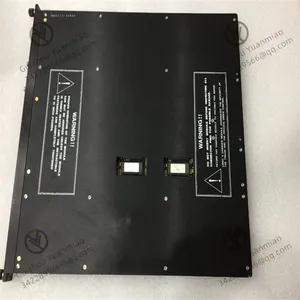
TRICONEX 3674 Digital Output Module photo-1
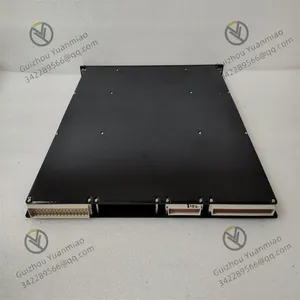
TRICONEX 3674 Digital Output Module photo-2
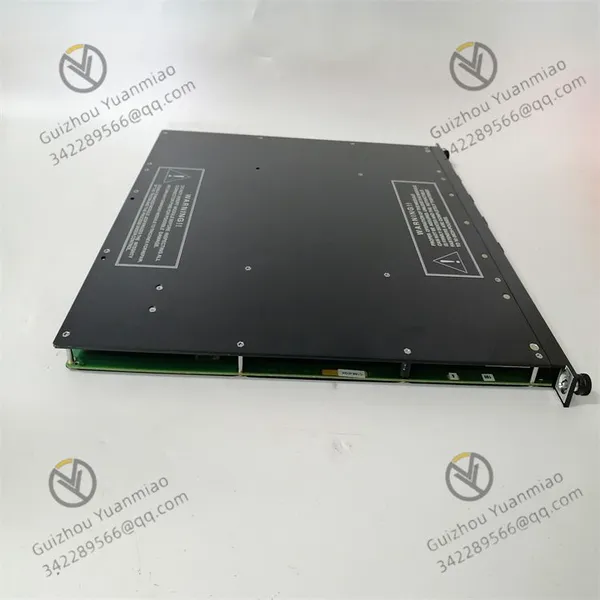
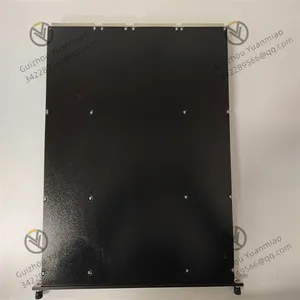
TRICONEX 3674 Digital Output Module photo-3
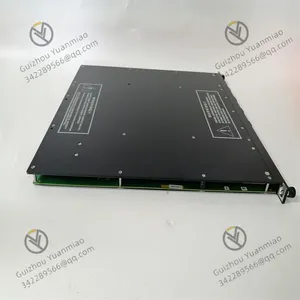
TRICONEX 3674 Digital Output Module photo-4
Negotiable MOQ: 1 Piece (Price negotiable depending on order volume and customization)
Key Specifications
Get Latest Price
Material:
Other
Certification:
Other
Function:
Other

Payment & Shipping
Payment Methods:
Port of Shipment:
China
Delivery Detail:
Delivery time depends on order quantity.
Material Other
Certification Other
Function Other
Condition Other
Task Other
Mathematical Model Other
Signal Other
Customized Other
Structure Other
TRICONEX  3674  Digital Output Module3636T—02

The TRICONEX 3674 digital output module is a key I/O component responsible for digital signal output in the Triconex safety control system. It is mainly used to convert the system's control commands into digital signals executable by on-site equipment (such as switching signals), drive actuators like valves, relays, and contactors. It is compatible with the Triple Modular Redundancy (TMR) architecture and widely applied in safety instrumented systems (SIS) or process control systems with extremely high requirements for control reliability in industries such as petrochemical, electric power, and metallurgy.


I. Core Functions and Positioning
As the "control command output interface" between the system and on-site actuators, the 3674 module focuses its core functions on the reliable output and safe control of digital signals, specifically including:


  • Receiving digital control commands issued by the CPU module (such as logical signals like "on/off" and "start/stop");

  • Performing processing such as isolation and amplification on the command signals to convert them into drive signals recognizable by on-site equipment (such as relay contact actions and voltage signal output);

  • According to the requirements of the TMR architecture, synchronously outputting control signals through three redundant channels to ensure that the commands received by the actuators are consistent and reliable;

  • Equipped with a self-diagnostic function to monitor the module's output status and channel faults in real-time, and promptly feed back abnormal information to the system to ensure the safety of the control link.


II. Design Features Adapted to TMR Architecture
Consistent with the redundancy logic of the Triconex system, the hardware and signal output mechanism of the 3674 module are designed around Triple Modular Redundancy (TMR) to ensure the safety and availability of digital output:


  • Three independent output channels: The module contains three completely isolated signal output channels (A, B, C) inside. Each channel has independent drive circuits, isolation components, and output interfaces to prevent command output failure due to a single point of failure.

  • Synchronous command execution: The control commands of the CPU module are issued to the three channels simultaneously. After independent processing, the three channels synchronously output the same control signal to the on-site actuators (or received through the three interfaces of redundant actuators), ensuring that the commands received by the actuators are free from deviation.

  • Redundancy voting and fault tolerance: If a fault occurs in one channel (such as output short circuit or drive circuit failure), the system can compare the output status of the three channels, adopt the "majority voting" logic (2 out of 3 consistency is considered a valid command), and isolate the faulty channel to ensure that the actuator can still receive the correct command.

  • 3625 (4)

III. Key Links in Digital Signal Output
  1. Output Signal Types and Driving Capability


  • Signal types: It supports various digital output types, commonly including relay output (dry contact output, controlling external circuits through contact on-off) and transistor output (wet contact output, such as 24V DC voltage signal, directly driving low-voltage actuators).

    • Relay output: Realizes signal output through the closing/opening of mechanical contacts, suitable for high-voltage and large-current scenarios (such as driving contactor coils), but with relatively slow response speed;

    • Transistor output: Realizes voltage signal output through semiconductor switches (such as MOSFET), with fast response speed (microsecond level), suitable for low-voltage and small-current scenarios (such as driving solenoid valves).

  • Driving capability: Depending on the model, the single-channel output current is usually several to dozens of amperes (for relay output) or several hundred milliamperes (for transistor output), meeting the power requirements of different actuators.


  1. Electrical Isolation and Anti-Interference Design
    The module adopts optoelectronic isolation or magnetic isolation technology internally to completely electrically isolate the system side (the side communicating with the CPU) from the on-site side (the side driving the actuators). The isolation voltage is usually ≥2500V AC, preventing surges and grounding interference on the on-site side from affecting the internal circuits of the system.
    The output circuit is designed with overcurrent protection and short-circuit protection circuits (such as fuses and current-limiting resistors) to prevent damage to internal components of the module caused by actuator faults (such as short circuits).
  2. Output Status Monitoring and Feedback
    The module has a built-in status monitoring circuit, which detects the actual status of each output channel in real-time (such as whether the relay is closed or the transistor is conducting) and feeds back the status information to the CPU module.
    If the output status is inconsistent with the command (for example, the command requires "closing" but the actual contact does not act), the module will trigger a fault alarm to ensure that the system can promptly detect abnormalities in the control link.

IV. Key Technical Parameters (for reference)
  • Output type: Relay output (dry contact), transistor output (wet contact, such as 24V DC);

  • Number of channels: Commonly 8 or 16 independent digital output channels (each corresponding to independent drive circuits and isolation components);

  • Output voltage range: Relay output supports multiple AC/DC voltages (such as 250V AC, 30V DC), and transistor output is usually 24V DC;

  • Maximum output current: The maximum single-channel current of relay output is 5A~10A (depending on the model), and that of transistor output is 0.5A~2A;

  • Isolation mode: Electrical isolation between channels, isolation between the system side and the on-site side (isolation voltage ≥2500V AC);

  • Response time: Relay output is about 10ms~20ms, transistor output is ≤1ms;

  • Redundancy design: Supports TMR triple redundant channels, meeting IEC 61508 Safety Integrity Level (SIL) 3 or higher requirements.

  • 3008 (1)

V. Typical Application Scenarios
Due to its ability to reliably output digital control commands, the 3674 module is often used in safety or control scenarios that require precise control of actuators:


  • Valve control: Driving solenoid valves or motors of pneumatic/electric valves to realize "on/off" or "regulation" control of valves (such as emergency shut-off valves and feed valves);

  • Equipment start-stop control: Outputting signals to control contactors or relays of equipment such as motors, pumps, and compressors to realize "start/stop" operations;

  • Alarm and interlock execution: When the system triggers interlock logic (such as overpressure and overtemperature), output signals drive audible and visual alarms, safety interlock devices, etc., to realize emergency shutdown or safety protection;

  • Indicator light control: Driving on-site status indicators (such as "running/stopping" and "normal/faulty") to intuitively feedback equipment status.


Summary
The TRICONEX 3674 digital output module provides a stable digital command output channel for the safety control system through TMR redundancy design, reliable signal driving capability, and real-time status monitoring function. It is a key link connecting the system control logic and on-site actuators, and is particularly suitable for industrial safety scenarios with extremely high requirements for the reliability and safety of control commands, ensuring the stability and safety of the production process.
Product Tags: 3674 Digital Output Module

Send Inquiry to This Supplier

* Message
0/5000

Want the best price? Post an RFQ now!
Verified Business License
Business Type
Trading Company
Year Established
2014
Factory Size
1,000-3,000 square meters
Product Certifications
SA8000