Home > Electrical & Electronics > Electrical Control System > TRICONEX 3003 Input Module

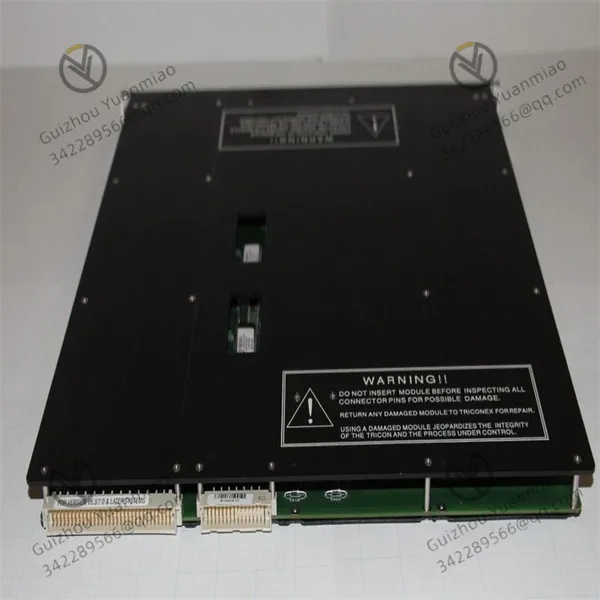
TRICONEX 3003 Input Module

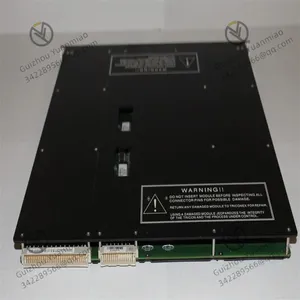
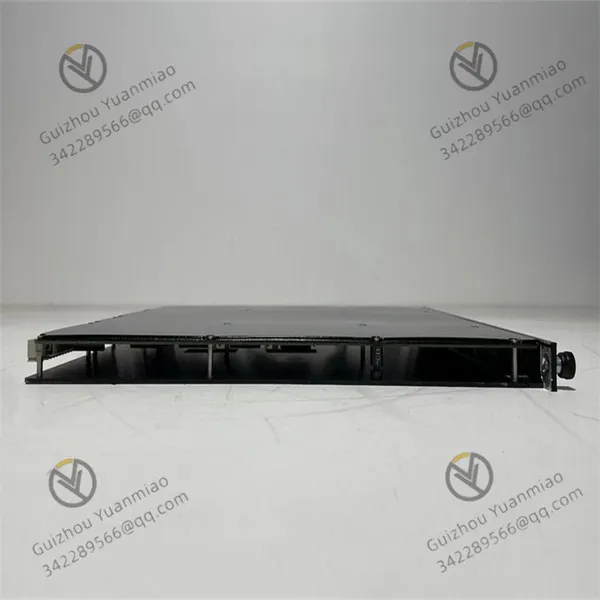
TRICONEX 3003 Input Module photo-1
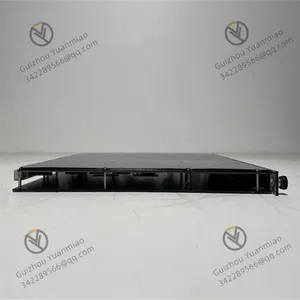
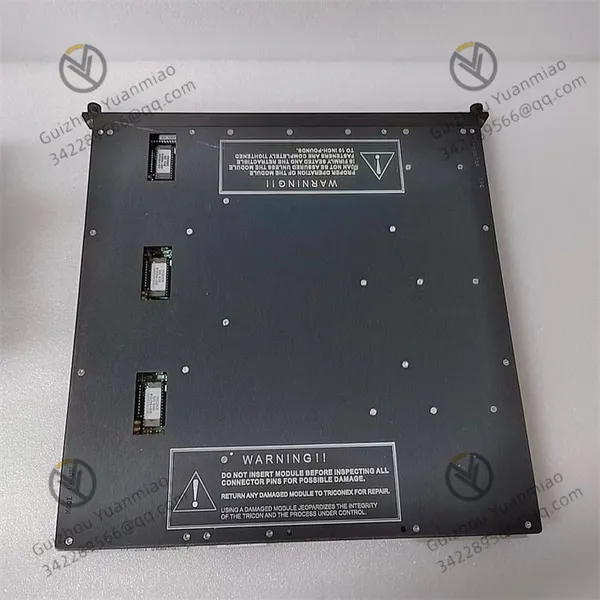
TRICONEX 3003 Input Module photo-2
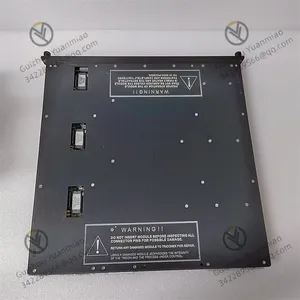
TRICONEX 3003 Input Module photo-3
Negotiable MOQ: 1 Piece (Price negotiable depending on order volume and customization)
Key Specifications
Get Latest Price
Material:
Other
Certification:
Other
Function:
Other

Payment & Shipping
Payment Methods:
Port of Shipment:
China
Delivery Detail:
Delivery time depends on order quantity.
Material Other
Certification Other
Function Other
Condition Other
Task Other
Mathematical Model Other
Signal Other
Customized Other
Structure Other
TRICONEX 3003 Input Module

3624—01


TRICONEX 3003 is a digital input module, which is a key I/O component of the Triconex safety control system. It is mainly used to collect digital signals on site (such as switch status, alarm signals, etc.) and transmit them to the CPU module (such as 3007) for processing. Its design focuses on "high reliability" and "safety redundancy", and it is adapted to the Triple Modular Redundancy (TMR) system architecture. It is widely used in safety instrumented systems (SIS), emergency shutdown systems (ESD) and other scenarios in industries such as petrochemical, electric power, and metallurgy.


I. Core Function Positioning
The TRICONEX 3003 input module is the "signal entrance" between the system and on-site equipment, with core functions including:


  • Receiving digital input signals from on-site equipment (such as the on/off status of limit switches, buttons, relay contacts, etc.);

  • Performing preprocessing such as isolation, filtering, and level conversion on input signals to ensure stable and reliable signals;

  • According to the requirements of the TMR architecture, synchronously transmitting the processed signals to the three independent channels of the system for the CPU module to perform voting and calculation;

  • Real-time monitoring of its own working status to realize fault self-diagnosis and alarm.


II. Design Features Adapted to TMR Architecture
As an input module of the Triconex system, the 3003 needs to work in conjunction with the triple redundancy logic of the CPU module, and its hardware and signal processing mechanisms are designed around the TMR architecture:


  • Triple independent channels: The module contains three completely isolated signal processing channels inside, corresponding to the three redundant channels A, B, and C of the system. Each channel has independent signal conditioning circuits, isolation components, and communication interfaces to prevent single-point faults from affecting the overall signal transmission.

  • Synchronous signal distribution: The same on-site signal will be sent to the three channels of the module at the same time. After independent processing, they are respectively transmitted to the three corresponding channels of the CPU module to ensure that the CPU can obtain three consistent original inputs (providing a basis for subsequent voting).

  • 3700A (2)

III. Specific Working LinksOn-site Signal Access and Preprocessing
  • Digital signals (usually 24V DC or 120V AC/DC) from on-site equipment (such as switches, sensors) are connected to the module through terminals;

  • The built-in isolation circuit (such as photoelectric isolation) of the module electrically isolates the on-site signal from the internal circuit of the system to prevent interference such as ground loops and surges from damaging the module or the system;

  • The filter circuit denoises the signal (such as eliminating high-frequency interference and jitter) to ensure signal stability;

  • The level conversion circuit converts the on-site signal into a standard logic level recognizable by the CPU module (such as TTL level).

Signal Transmission to CPU Module
  • The preprocessed signals are synchronously transmitted to the TriBus of the Triconex system through three independent channels;

  • The bus sends the signals of the three channels to channels A, B, and C of the CPU module respectively for the CPU to perform consistency check (to ensure that there is no difference in the input signals among the three channels).

Fault Self-diagnosis and Status Monitoring
  • The module has a built-in diagnostic circuit to monitor its own status in real-time, including:

    • Power failure (such as abnormal voltage);

    • Channel failure (such as damage to the signal conditioning circuit, failure of isolation components);

    • Communication failure (such as disconnection from the TriBus);

  • If a fault is detected, the module displays it through an indicator light (such as a red fault light) and transmits the fault information to the CPU module through the bus, which is then reported to the HMI or engineer station by the system.


IV. Key Technical Parameters (for reference)
  • Input type: Digital input (dry contact or wet contact signal);

  • Input voltage range: Supports 24V DC, 120V AC/DC, etc. (depending on the specific model subdivision);

  • Number of channels: Usually 16 digital inputs (each channel corresponds to an independent signal processing path);

  • Isolation mode: Electrical isolation between channels, photoelectric isolation between the field side and the system side;

  • Response time: Millisecond level (to ensure signal real-time performance and meet safety control requirements).

  • 3503E (4)

V. Synergistic Effect with the System
In the Triconex control system, the role of the 3003 input module is to provide reliable original input signals for the CPU module:


  • Its triple-channel design ensures that the CPU can obtain three consistent inputs. In conjunction with the majority voting logic of the CPU, even if one channel of the module fails, the correctness of the input can still be guaranteed through the signals of the other two channels;

  • The isolation and filtering functions of the module reduce the impact of on-site interference on the system and improve the safety of signal transmission;

  • The fault self-diagnosis function helps the system quickly locate problems and avoids control logic errors caused by abnormal input signals.


In summary, the TRICONEX 3003 input module is a key link connecting the on-site and the CPU in the TMR system. Through redundant design, signal preprocessing, and self-diagnosis, it ensures the reliability and safety of digital input signals and provides a basis for the stable operation of the entire control system.

Product Tags: 3003 Input Module

Send Inquiry to This Supplier

Message
0/5000

Want the best price? Post an RFQ now!
Gold Verified Supplier
1Yr
Verified Business License
Business Type
Trading Company
Year Established
2014
Factory Size
1,000-3,000 square meters
Product Certifications
SA8000