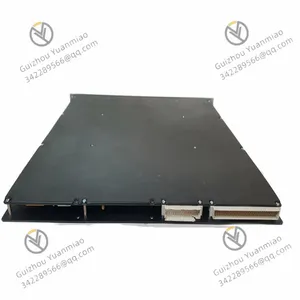
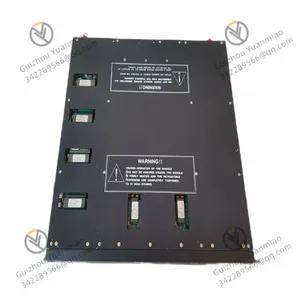
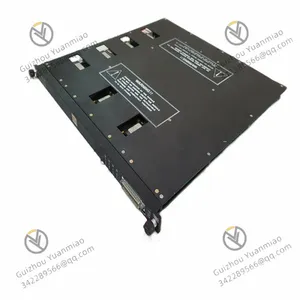
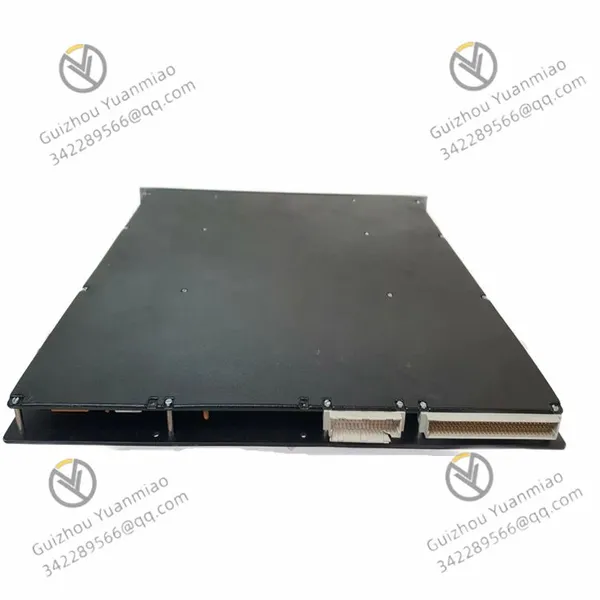
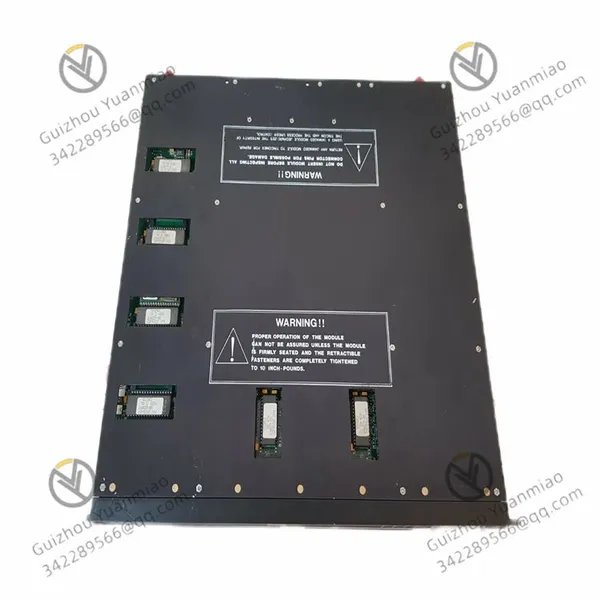
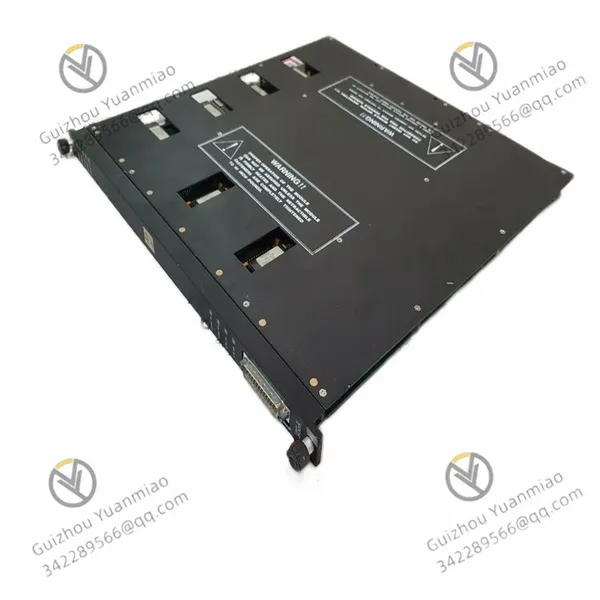
TRICONEX 3007 CPU Module

TRICONEX 3007 CPU Module photo-1
TRICONEX 3007 CPU Module photo-2
TRICONEX 3007 CPU Module photo-3
Negotiable MOQ: 1 Piece (Price negotiable depending on order volume and customization)
Key Specifications
Get Latest Price
Material:
Other
Certification:
Other
Function:
Other

Payment & Shipping
Payment Methods:
Port of Shipment:
China
Delivery Detail:
Delivery time depends on order quantity.
Material Other
Certification Other
Function Other
Condition Other
Task Other
Mathematical Model Other
Signal Other
Customized Other
Structure Other
TRICONEX 3007 CPU module

3005—01


The TRICONEX 3007 is a CPU module based on Triple Modular Redundancy (TMR) technology. It is a core component of the Triconex safety control system, responsible for executing control logic, processing data, and coordinating the work of various system modules. Its working principle revolves around the two cores of "redundant fault tolerance" and "real-time control". Through the collaborative design of hardware and software, it ensures high reliability and safety in high-demand scenarios such as industrial Safety Instrumented Systems (SIS) and Emergency Shutdown Systems (ESD).


I. Core Function Positioning
The TRICONEX 3007 CPU module is the "brain" of the Triconex control system, with main functions including:


  • Running user - written control programs (such as logical operations, interlock control, safety logic, etc.);

  • Receiving on - site signals collected by input modules (such as 2402), processing and analyzing them;

  • Sending control instructions to output modules according to program logic to drive on - site actuators;

  • Realizing system redundancy management, self - diagnosis and fault tolerance;

  • Communicating with external devices (such as HMI, engineer stations, other control systems).


II. Core Technology: Triple Modular Redundancy (TMR)
TMR technology is the core of the high reliability of the 3007 CPU module. Its principle is to achieve "fault tolerance" and "uninterrupted operation" through the parallel work of three independent and identical subsystems (channels):


  • Triple parallel processing:

    • The three channels receive the same input signal at the same time and independently execute the same control program;

    • Each channel contains independent microprocessors, memories, power supplies and communication interfaces, which are completely isolated physically to avoid the impact of a single point of failure on the whole system.

  • Majority voting mechanism:

    • The operation results of the three channels are sent to the "voter" for comparison in real - time;

    • If the three results are consistent, they are output directly; if the result of one of the channels is abnormal (such as hardware failure, operation error), the system adopts the "2 - out - of - 3" principle (based on the two consistent results) and ignores the output of the faulty channel to ensure the correct execution of the control logic.

  • Fault isolation and switching:

    • The built - in fault detection circuit of the module monitors the status of the three channels in real - time (such as processor failure, memory error, communication interruption, etc.);

    • Once a fault in a certain channel is detected, the system will automatically isolate it (without affecting the other two channels) and report the fault information through the indicator light or communication interface;

    • The remaining two channels can still work normally (meeting the "2 - out - of - 2" voting logic), ensuring the uninterrupted operation of the system until the faulty channel is repaired.

  • 3005—02

III. Specific Working Links1. Program Running and Data Processing
  • Program storage and loading:
    The control program written by the user (for example, written with Triconex's TriStation software) is downloaded to the memory of the 3007 CPU module through the engineer station. The memories of the three channels will store the same program synchronously to ensure consistency.

  • Real - time operation:
    The microprocessors of the three channels read the digital/analog signals transmitted by the input module (after isolation and conversion) at the same time, and perform real - time operations (such as logical AND/OR, timer, counter, interlock condition judgment, etc.) according to the program logic (such as ladder diagram, function block diagram).
    During the operation, each channel independently maintains its own intermediate variables and state data to ensure the independence of the processing process.

2. Receiving Input Signals and Sending Output Instructions
  • Signal interaction process:

    • Input stage: After being processed by the input module, the on - site signal is sent to the three channels of the 3007 CPU through the system bus (such as TriBus) at the same time;

    • Processing stage: The three channels respectively calculate the signals to generate output instructions;

    • Output stage: The output instructions of the three channels are voted by the voter and then sent to the output module through the bus to drive the actuators (such as valves, motors, etc.).

  • Data synchronization mechanism:
    The three channels maintain the same operation rhythm through internal synchronization signals (such as clock synchronization) to avoid result deviations caused by differences in processing speed.

3. Self - diagnosis and Fault Management
  • Real - time self - inspection:
    The module has built - in hardware and software diagnosis functions to continuously detect its own state:

    • Hardware level: Detect whether the microprocessor, memory, power supply, communication interface, etc. are normal;

    • Software level: Detect program integrity (such as checksum), operation logic errors, data consistency, etc.

  • Fault reporting and recording:
    If a fault is detected (such as channel failure, memory error, communication interruption), it will be displayed through an indicator light (such as a red fault light), and the fault information (type, time, location) will be stored in the internal log;
    At the same time, the fault information is sent to the engineer station or HMI through the communication interface to remind maintenance personnel to handle it.

4. Communication Function
The 3007 CPU module communicates with other modules in the system (input/output modules, redundant CPU modules) through a dedicated interface, and adopts Triconex's proprietary bus protocol (such as TriBus) to ensure the real - time and reliability of data transmission;

It supports communication with external systems, such as connecting to HMI, SCADA systems, and engineer stations through protocols such as Modbus and Ethernet/IP, to realize functions such as program downloading, monitoring data uploading, and remote diagnosis.

4329—03


IV. Redundancy Expansion and System Collaboration
The 3007 CPU module can cooperate with other redundant components (such as redundant power modules, redundant communication modules) to form a complete redundant control system;
If the system is configured with dual CPU modules (master - standby mode), the 3007 can synchronize data with the standby CPU through heartbeat signals. When the master CPU fails, the standby CPU switches seamlessly to achieve "zero downtime".

V. Summary
The working principle of the TRICONEX 3007 CPU module can be summarized as: with Triple Modular Redundancy (TMR) technology as the core, through parallel processing of three independent channels, majority voting and real - time self - diagnosis, it ensures the correct execution of control logic while realizing fault tolerance and isolation of hardware faults. Its design goal is to ensure the uninterrupted operation of the system even in the event of single or multiple faults in industrial safety - critical scenarios, thereby ensuring the safety and stability of the production process.


As a classic CPU module in the Triconex series, the 3007 is widely used in Safety Instrumented Systems (SIS) in industries such as petrochemicals, electric power, and metallurgy, and is a core component for realizing "safety control".


Product Tags: 3007 CPU module

Send Inquiry to This Supplier

Message
0/5000

Want the best price? Post an RFQ now!
Gold Verified Supplier
1Yr
Verified Business License
Business Type
Trading Company
Year Established
2014
Factory Size
1,000-3,000 square meters
Product Certifications
SA8000