








 Contact Platform Support
 Help Center
Large Mining Thickener Plant



Related Products
Large Mining Thickener Plant
1. Product Introduction
Large mining thickener plants are critical for high-capacity solid-liquid separation in modern, large-scale mining operations. Their primary advantages include:
Massive Processing Capacity: Designed to handle extreme volumetric flow rates and high tonnages of slurry or tailings continuously, making them ideal for large-scale copper, gold, iron ore, and coal operations.
Maximization of Water Recovery: By rapidly separating water from solids, these plants allow mines to recycle a vast majority of process water immediately back to the mill, drastically reducing fresh water consumption.
Significant Footprint Optimization: High-rate and paste thickeners pack a massive settling capacity into a relatively small surface footprint compared to traditional, massive settling ponds.
Underflow Density Optimization: Advanced rake designs and drive systems allow the plant to achieve exceptionally high underflow densities, which reduces the volume of tailings sent to storage facilities and extends the lifespan of Tailings Storage Facilities (TSFs).
Automated & Low Operational Cost: Equipped with smart automation (like auto-dilution and torque-sensing rake controls), these plants require minimal manual intervention and optimize flocculant consumption to reduce operating costs.
2. Working Principle
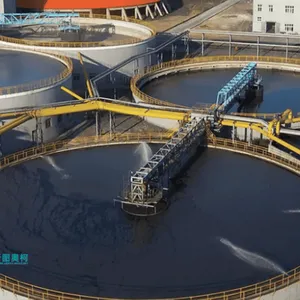
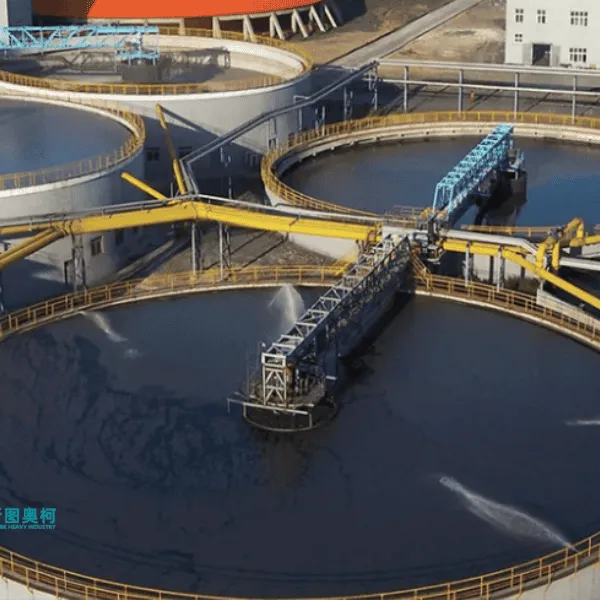
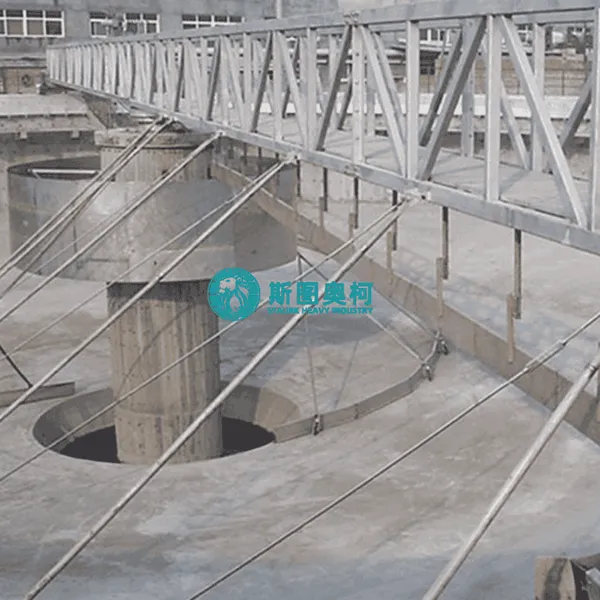
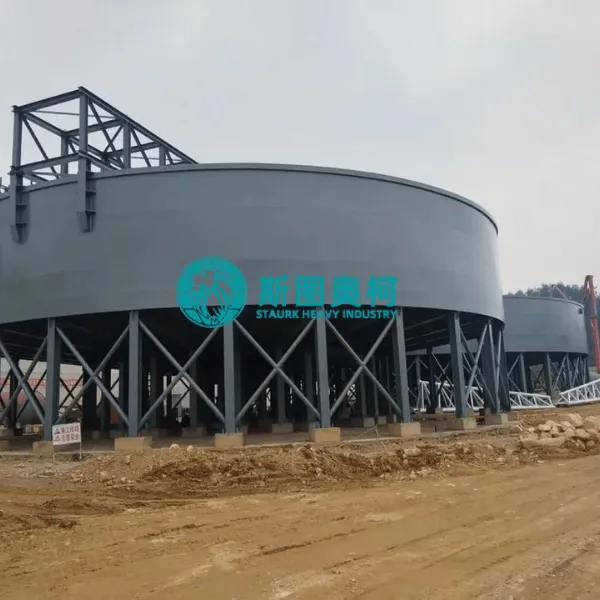
A Large Mining Thickener Plant is a heavy-duty, highly engineered industrial installation utilized for dewatering slurry, concentrating mineral concentrates, or managing tailings. Depending on the operational needs, these plants utilize High-Rate Thickeners, High-Density Thickeners, or Paste Thickeners.
Key Features & Components:
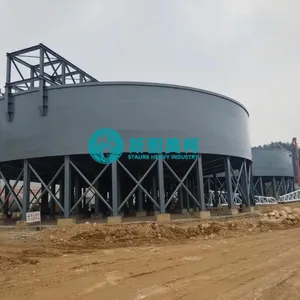
The Thickener Tank & Bridge: A massive steel or concrete tank (often ranging from 20 to over 100 meters in diameter) supported by a heavy-duty bridge that houses the drive mechanism.
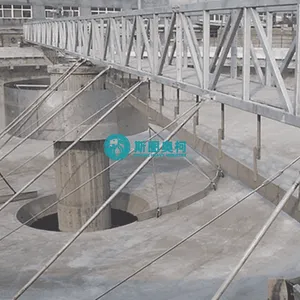
Heavy-Duty Drive & Lift Mechanism: A high-torque hydraulic or planetary gear drive system that rotates the rakes. It features an automatic lift mechanism to raise the rakes if mud torque becomes too high, preventing structural damage.
Optimized Feedwell: A specially engineered central chamber (such as a dynamic feedwell) where incoming slurry mixes perfectly with flocculants to maximize particle agglomeration.
Rake Arm Assembly: Specially angled blades attached to rotating arms that gently plow the settled solids toward the central discharge cone without redispersing the settled bed.
Flocculant Preparation & Dosing System: An automated system that precisely dilutes and injects polymer flocculants into the feed stream to accelerate settling.
3. Industrial Line Advantages
The working principle of a thickener plant relies on gravity sedimentation, accelerated by chemical conditioning, to separate a continuous feed stream into a clear liquid overflow and a dense, muddy underflow.
Step 1: Slurry Feed and Flocculant Injection
The low-density slurry from the mineral processing plant (e.g., flotation tailings) enters the central Feedwell. At the same time, a diluted flocculant polymer is injected. The feedwell is designed to control turbulence, allowing the polymer chains to bind the fine mineral particles together into large clusters called "flocs."
Step 2: Gravity Sedimentation and Bed Formation
The conditioned slurry flows out of the feedwell into the main tank. Because the flocs are heavy, they rapidly sink to the bottom of the tank due to gravity, forming a compacted sludge bed.
Step 3: Rake Raking and Compaction
The Rake Assembly rotates slowly through the sludge bed. The rakes serve two purposes: they create channels in the mud to allow trapped water to escape upward, further compacting the sludge, and they gently push the dense mud toward the central underflow cone at the bottom of the tank.
Step 4: Overflow and Underflow Discharge
Clarified Overflow (Liquid): The clean water, free of heavy solids, rises to the top of the tank, wells over the peripheral weir into a launder, and is pumped back to the plant for reuse.
Dense Underflow (Solids): The highly concentrated mud at the bottom cone is pumped out via heavy-duty slurry pumps. This dense underflow is either sent to a filter press for further dewatering, or pumped directly to the tailings dam/underground paste backfill system.

Send Inquiry to This Supplier



You May Also Like
-
 Industrial Thickener Project SupplierUS$ 2000MOQ: 1 Set
 -
Large Diameter Thickener TankUS$ 2000MOQ: 1 Set
-
Turnkey Mineral Thickener SystemNegotiableMOQ: 1 Set
-
150 TPD Zinc, Lead, and Silver Flotation LineNegotiableMOQ: 1 Set
-
Bentonite Rotary Drum Dryer by 20TPH to 80TPHNegotiableMOQ: 1 Set
-
Hot Sell Rotary Dryer Henan Staurk MachineryNegotiableMOQ: 1 Set
-
Jaw Crusher Primary Crusher Ore CrusherNegotiableMOQ: 1 Set
-
Hot Sell Fine Jaw Crusher Ore Crusher Stone CrusherNegotiableMOQ: 1 Set
-
Hot Sell Hammer Crusher for Crushing Limestone, Coal GypsumNegotiableMOQ: 1 Set
-
Secondary Impact CrusherNegotiableMOQ: 1 Set


