








 Contact Platform Support
 Help Center
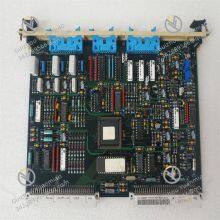
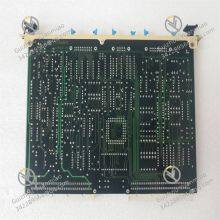
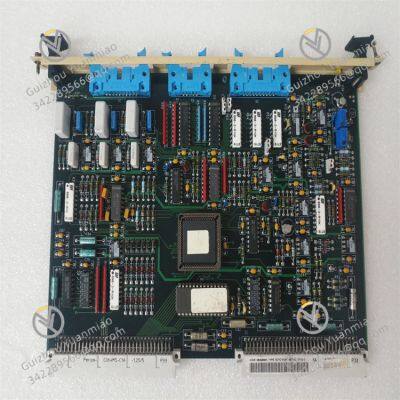
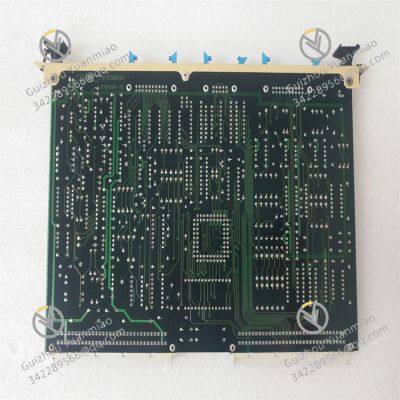
ABB SCYC51040 58052680E Dual-system Redundant Control Board


Related Products
-
 ABB ACU-01B 3HNA024871-001 Air Control Unit/Axis Computer UnitNegotiableMOQ: 1 Piece
 -
ABB PM632 3BSE005831R1 Industrial‑grade Central Processing Unit (CPU) ModuleNegotiableMOQ: 1 Piece
-
ABB PFVO142 3BSE023732R0001 Fibre Optic Interface ModuleNegotiableMOQ: 1 Piece
-
ABB NDBU-95C 64008366D Network Distribution and Bus Interface UnitNegotiableMOQ: 1 Piece
-
ABB DSRF180A 57310255-AV 8-Channel Relay Output ModuleNegotiableMOQ: 1 Piece
ABB SCYC51040 58052680E is a dual‑system redundant control board. As a core component of industrial control systems, it performs key tasks including data acquisition, logic control, signal conversion, and dual‑system redundant switching.
Designed with advanced redundancy technology, the board supports seamless active‑standby system switching. It integrates a high‑reliability hardware architecture and flexible communication capabilities, featuring high performance, strong scalability, and excellent anti‑interference performance. It can withstand harsh industrial environments such as extreme temperatures and vibration.It is widely used in applications requiring extremely high system continuity and stability, including industrial automation, power systems, traffic control systems, aerospace, and data center management. As a core control unit for new high‑reliability control systems or an original upgrade spare part for legacy systems, it ensures uninterrupted operation of industrial processes, improves production efficiency, and enhances operational safety.
1 Core Parameters
1.1 Core Electrical Performance Parameters
| Parameter Category | Specification | Application Description |
|---|---|---|
| Supply Voltage | 24 VDC | Compatible with standard industrial 24 VDC power supplies with high voltage stability. Can be directly connected to the power circuit of industrial control systems, complying with industrial electrical standards and ensuring stable power supply to the board. |
| Communication Protocol | Supports PROFIBUS DP | Enables seamless connection to various devices in industrial automation systems for real‑time data exchange and coordinated control. Offers good compatibility and interoperability, suitable for multi‑device integration scenarios. |
| Core Functions | Data acquisition, signal conversion, logic control, dual‑system redundant switching, overload protection, short‑circuit protection | Integrates multiple core control functions for comprehensive monitoring and control of industrial processes. Overload and short‑circuit protection prevent damage to the board and associated equipment, improving system reliability. |
| Expansion Compatibility | Supports multiple platforms such as LabView and MatLab | Provides good scalability for secondary development and customization according to user requirements, adapting to personalized control needs in different industrial scenarios. |
| Output Capacity | 8 digital outputs with high current drive capability | Can directly drive various field actuators, meeting synchronous control requirements for multiple devices without additional amplification modules, simplifying system integration. |
1.2 Mechanical and Installation Parameters
Structure: Industrial‑grade compact hardware architecture. The housing uses high‑reliability industrial materials with good shock and corrosion resistance, suitable for harsh industrial environments. The board features high integration and optimized layout, saving installation space while providing sufficient mechanical strength against minor impacts and vibration.
Dimensions: 100 × 75 × 25 mm (L × W × H). Compact size suitable for installation in various industrial control cabinets and boxes, enabling flexible layout and cooperation with other control modules to improve space utilization.
Installation: Standardized mounting design compatible with common interfaces in industrial control systems. Easy to install without special tools for fast deployment and fixation. Secure, vibration‑resistant interfaces ensure no loosening during long‑term operation.
Packaging: ABB original industrial packaging effectively protects the board during transportation and storage. Complies with industrial equipment transport standards, suitable for long‑distance delivery and bulk storage, facilitating spare part management and on‑site deployment.
1.3 Environmental and Reliability Parameters
| Parameter Category | Specification | Application Description |
|---|---|---|
| Operating Temperature | -25 ℃ to +70 ℃ | Suitable for various extreme industrial environments, including low‑temperature outdoor sites and high‑temperature workshops. Stable operation without startup delay or performance degradation, meeting requirements across multiple industries. |
| Storage Temperature | -40 ℃ to +85 ℃ | Meets temperature requirements for long‑term storage and long‑distance transportation. No risk of damage to internal components due to thermal expansion or contraction, supporting long‑term spare part storage and emergency use. |
| Relative Humidity | 5%–95% (non‑condensing) | Stable operation in high‑humidity environments such as data centers and outdoor control stations, avoiding short circuits and component damage caused by condensation. |
| Vibration & Shock | Complies with industrial‑grade vibration and shock standards; withstands normal vibration and minor shocks during industrial equipment operation | Suitable for high‑vibration scenarios such as traffic control systems and aerospace equipment, ensuring stable operation without affecting overall system control performance. |
| MTBF | ≥ 100,000 hours | Significantly higher than the industry average. Combined with redundant design, it meets the high‑reliability demand for 24/7 uninterrupted operation of industrial control systems and reduces maintenance downtime. |
| Warranty | Covers quality defects of all core components, redundancy functions, and communication performance of the board. Suitable for long‑term operation warranty of industrial projects. Specific terms are subject to the purchase contract. |
2 Structural and Functional Features
2.1 Core Structural Design
Dual‑System Redundant Architecture: Dual‑controller design with two identical main control boards working in redundancy. Both boards share identical hardware and software configurations, running the same system and application programs. Under the control of redundant logic circuits, the active and standby boards operate cooperatively, eliminating single points of failure.
High‑Speed Redundant Communication: Equipped with a common redundant logic control circuit and dedicated high‑speed peer‑to‑peer redundant communication channel between active and standby boards, ensuring real‑time data synchronization. Efficient and reliable communication supports bumpless switching and prevents data loss or control interruption during switching.
Industrial‑Grade Protection: Uses high‑reliability industrial components and housing materials with excellent corrosion, shock, and electromagnetic interference resistance. Effectively defends against dust, oil, and EMI on site, protecting internal circuits and components, extending service life, and adapting to harsh industrial environments.
Standardized Interface Design: Communication, power, and I/O interfaces adopt industrial‑grade standardized designs with clear labeling for easy wiring, commissioning, and maintenance. Secure, vibration‑resistant connections ensure stable data transmission and power supply, with good compatibility for seamless connection to various industrial automation devices.
2.2 Core Functional Features
Dual‑System Bumpless Switching: Supports seamless switching between active and standby systems. If the active board fails, the standby board takes over control immediately without interruption, avoiding production downtime and safety incidents caused by system failures, meeting high‑availability requirements.
Comprehensive Data Acquisition and Signal Conversion: Provides powerful data acquisition to collect signals from various field sensors and actuators in real time, completing conversion and transmission for accurate logic control. Converts control commands into recognizable signals for field devices to achieve precise industrial process control.
Flexible Logic Control: Supports complex logic control algorithms for multi‑device coordination and sequential control according to production requirements, adapting to industry‑specific customization. Supports LabView, MatLab, and other platforms for secondary development and functional expansion, improving system flexibility.
Comprehensive Protection Functions: Built‑in overload and short‑circuit protection. Monitors operating status and output current in real time, cutting off faulty circuits promptly to avoid damage. Equipped with fault self‑diagnosis for quick fault location and troubleshooting.
Wide Compatibility and Interoperability: Supports PROFIBUS DP and other mainstream industrial protocols, enabling seamless integration with ABB automation control systems and third‑party devices. Supports system upgrades and integration without major modifications.
High Reliability and Scalability: Industrial‑grade high‑reliability components and redundant design deliver industry‑leading MTBF for 24/7 operation. Good scalability supports flexible expansion of I/O channels and control functions as system scale and requirements grow, extending product service life.
3 Application Areas
With its dual‑system redundant design, high reliability, strong environmental adaptability, and wide compatibility, the board is widely used as a core component in high‑availability industrial control systems:
Industrial Automation: Used as a core control unit in various automated production lines and process control systems for data acquisition, logic control, and redundant backup, ensuring uninterrupted production, improving efficiency and quality in automotive, electronics, machinery, and other manufacturing fields.
Power Systems: Applied in control and monitoring systems for power plants, substations, and smart grids for data acquisition, logic control, and redundant switching, ensuring stable power transmission and distribution, preventing outages, and safeguarding power supply security.
Traffic Control Systems: Deployed in railway, metro, and urban traffic systems for precise control and redundant backup of signals and scheduling commands, ensuring stable operation, improving efficiency and safety, and adapting to high‑vibration, variable environments.
Aerospace: Used in control and monitoring systems for aerospace equipment. High reliability, anti‑interference performance, and redundancy ensure stable operation under extreme conditions, meeting strict availability and safety requirements.
Data Center Management: Implemented in control and monitoring systems for data centers to coordinate and redundantly back up servers, air conditioning, and power equipment, ensuring uninterrupted operation and data security in high‑humidity, high‑reliability environments.
High‑Power Applications: Applied in variable frequency drives, electric vehicle control systems, variable‑speed compressors, and other high‑power equipment for control and protection, ensuring stable operation and improving efficiency and safety.

Send Inquiry to This Supplier



You May Also Like
-
ABB PM783F 3BDH000364R0001 CPU ModuleNegotiableMOQ: 1 Piece
-
ABB FC95-22 HESG440295R2 HESG448688R22 Control UnitNegotiableMOQ: 1 Piece
-
ABB SPCJ4D34-AA Motor Protection Relay ModuleNegotiableMOQ: 1 Piece
-
ABB DSPC172H DSP Master Control CPU ModuleNegotiableMOQ: 1 Piece
-
ABB REF541KM115AAA Feeder TerminationNegotiableMOQ: 1 Piece
-
ABB RET670 1MRK002816-AC Digital Transformer Protection Intelligent Electronic DeviceNegotiableMOQ: 1 Piece
-
ABB 07DC91C Digital Input ModuleNegotiableMOQ: 1 Piece
-
ABB DSQC602 Analog Output ModuleNegotiableMOQ: 1 Piece
-
ABB 3BHB019265R0410 Analogue Input/Output (I/O) ModuleNegotiableMOQ: 1 Piece
-
ABB R474A11XE HAFAABAAABE1BCA1XENegotiableMOQ: 1 Piece


