








 Contact Platform Support
 Help Center
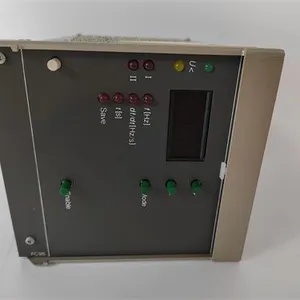
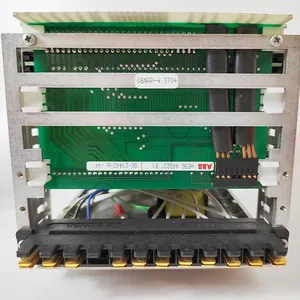
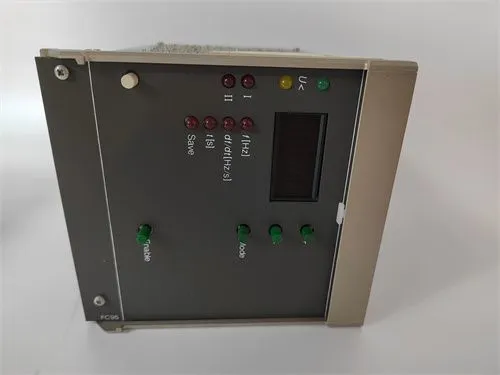
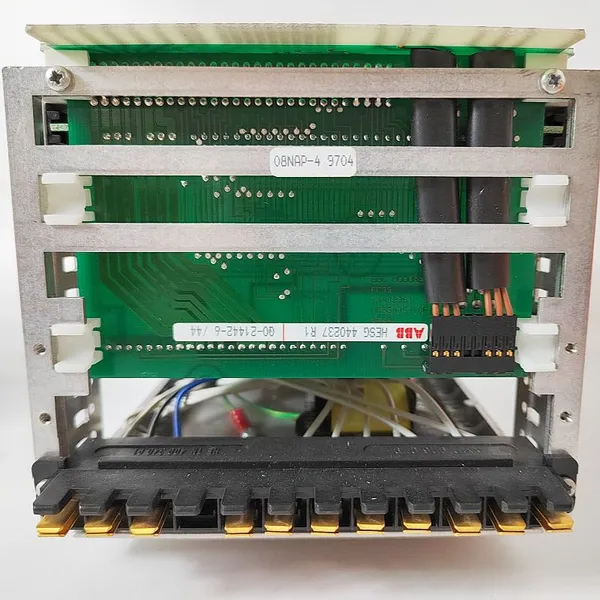
ABB FC95-22 HESG440295R2 HESG448688R22 Control Unit



Related Products
-
 ABB SPCJ4D34-AA Motor Protection Relay ModuleNegotiableMOQ: 1 Piece
 -
ABB DSPC172H DSP Master Control CPU ModuleNegotiableMOQ: 1 Piece
-
ABB REF541KM115AAA Feeder TerminationNegotiableMOQ: 1 Piece
-
ABB RET670 1MRK002816-AC Digital Transformer Protection Intelligent Electronic DeviceNegotiableMOQ: 1 Piece
-
ABB 07DC91C Digital Input ModuleNegotiableMOQ: 1 Piece
ABB FC95-22 (HESG440295R2, HESG448688R22) is a dedicated control unit for the ACS880 series inverters. It is designed as the core controller for medium‑high power industrial drive applications, integrating advanced vector control algorithms and multi‑protocol communication capabilities. It suits various industrial loads including fans, pumps, compressors, and conveyors, achieving both high control accuracy and operational stability. It is widely used in heavy industries such as metallurgy, mining, chemical engineering, and power generation.
1. Functions and Advantages
1.1 Core Functions
Advanced vector control: Supports Sensorless Vector Control (SLVC) and Flux Vector Control (FVC). High control accuracy, fast torque response (≤10ms), and high torque output at 0.5Hz (up to 150% of rated torque), suitable for low‑speed heavy‑load applications.
Multi‑mode speed control: Four control modes – V/F control, vector control, torque control, and speed control – can be flexibly selected based on load type (fan, pump, constant torque load, etc.) to meet various industrial requirements.
Rich communication capabilities: Onboard multiple communication interfaces supporting mainstream industrial fieldbus protocols including Modbus RTU, PROFIBUS DP, and EtherNet/IP. Enables seamless integration with PLC and DCS systems for remote monitoring, parameter setting, and fault diagnostics.
Comprehensive protection functions: Integrates overcurrent, overvoltage, undervoltage, overheating, overload, motor stall, and earth‑fault protection. Monitors inverter and motor operation in real time and shuts down quickly in case of abnormality to protect equipment.
Flexible I/O expansion: Supports digital and analog I/O extension, allowing connection of various sensors (temperature, pressure, flow) and actuators to implement closed‑loop control and process interlocking.
Fault diagnosis and recording: Built‑in fault diagnostic module displays fault codes, causes, and solutions in real time. Automatically logs recent fault information (up to 50 records) for easy maintenance and troubleshooting.
1.2 Key Advantages
High reliability: Industrial‑grade wide‑temperature design, strong anti‑interference performance complying with IEC 61000 standards. Adapts to harsh industrial environments with high temperature, dust, and strong electromagnetic interference.
Energy saving and high efficiency: Optimized vector control algorithm reduces motor losses. Combined with energy‑saving modes (e.g., dedicated curves for fans and pumps), it effectively lowers power consumption, especially for long‑running loads.
Easy configuration: Supports online configuration, parameter modification, and commissioning via Drive Composer Pro software. Manual setting is also available via the inverter’s local keypad, simplifying operation and reducing commissioning costs.
Strong compatibility: Fully compatible with ABB ACS880 series inverters. Can directly replace older control units in the same series (e.g., FC90-22) without hardware modification, enabling seamless upgrades.
Convenient maintenance: Supports hot‑swap (in accordance with inverter shutdown procedures). The control unit can be quickly replaced in case of failure to minimize downtime. Built‑in self‑diagnostics allows fast fault location and simplifies maintenance.
2. Technical Specifications
2.1 Control Performance
| Parameter | Value |
|---|---|
| Control method | V/F control, SLVC, FVC, torque control |
| Speed range | 0.1Hz–600Hz (SLVC); 0.01Hz–600Hz (FVC) |
| Torque response time | ≤10ms (FVC) |
| Low‑frequency torque | Up to 150% rated torque at 0.5Hz (FVC) |
| Control accuracy | Speed: ±0.1% (FVC); ±1% (SLVC) |
| Braking method | Dynamic braking, regenerative braking (with braking unit) |
2.2 Communication and I/O
| Parameter | Value |
|---|---|
| Communication interfaces | 1×RS485 (Modbus RTU), 1×PROFIBUS DP (optional), 1×EtherNet/IP (optional) |
| Communication speed | RS485: 9600bit/s–115200bit/s; PROFIBUS DP: 9.6kbit/s–12Mbit/s |
| Digital inputs | 8 channels (configurable, passive contacts default) |
| Digital outputs | 4 channels (relay output, 2A/250VAC) |
| Analog inputs | 2 channels (0–10V DC or 4–20mA, configurable) |
| Analog outputs | 2 channels (0–10V DC or 4–20mA, configurable) |
2.3 Electrical and Environmental
| Parameter | Value |
|---|---|
| Operating voltage | 24V DC (19.2–30V DC), powered by inverter main unit |
| Power consumption | Typical |
| Operating temperature | -20℃~+60℃ |
| Storage temperature | -40℃~+85℃ |
| Relative humidity | 5%–95% (non‑condensing) |
| Protection degree | IP20 (control unit only; must be installed inside inverter with min. IP54 enclosure) |
| Mounting | Clip‑in mounting inside inverter (for ACS880 series) |
| Weight | Approx. 0.8–1.2kg (varies by batch) |
3. Application Areas
Metallurgy: Speed control for rolling mill auxiliaries (fans, pumps), conveyor control in continuous casting lines, speed regulation for heating furnace fans.
Mining: Speed and torque control for hoists, belt conveyors, and crushers, suitable for heavy‑load, low‑speed operation.
Chemical engineering: Control for reactor agitator motors, compressor speed regulation, flow control for process pumps, achieving precise process parameter control.
Power industry: Speed control for power station boiler fans and pumps to save energy; control for coal handling system conveyors and feeders.
General industry: Energy‑saving speed control for central air‑conditioning fans, cooling tower pumps, injection molding machines, air compressors, and other equipment.
4. Installation and Commissioning Guide
4.1 Pre‑Installation Preparation
Model compatibility check: Confirm that FC95-22 (HESG440295R2/HESG448688R22) matches the ACS880 series inverter and power rating (110kW and above) to ensure compatibility between the control unit and main unit.
Environment check: Install in an environment meeting temperature and humidity requirements, free from strong electromagnetic interference, dust, and moisture. Control cabinet protection degree ≥ IP54.
Tools and materials: Screwdriver, multimeter, Drive Composer Pro software, communication cables (e.g., PROFIBUS), anti‑static wristband to prevent ESD damage.
4.2 Hardware Installation
Power off: Disconnect main power before installation and wait at least 10 minutes for internal capacitors to discharge to avoid electric shock or equipment damage.
Unit mounting: Align the FC95-22 control unit with the internal clips, push firmly into place, and ensure a tight, secure connection to the inverter main unit.
Wiring rules:
Communication wiring: Connect RS485, PROFIBUS DP, or EtherNet/IP cables as required. Ensure secure connections and proper grounding of the shield.
I/O wiring: Connect digital and analog I/O signals, clearly distinguishing input and output terminals to avoid reverse connection. Use appropriately rated wiring and install fuses for load circuits.
Grounding: Reliably connect the control unit grounding terminal to the inverter grounding system with grounding resistance ≤4Ω to improve anti‑interference performance.
4.3 Software Configuration
Device connection: Connect to the FC95-22 control unit via communication cable using Drive Composer Pro and read default parameters.
Parameter setting:
Basic parameters: Set motor data (rated voltage, current, power, speed) and control method (V/F/SLVC/FVC).
Communication parameters: Configure protocol, station address, and baud rate to ensure compatibility with PLC/DCS.
Protection parameters: Set thresholds for overcurrent, overvoltage, overload, overheating, and adjust braking parameters based on load.
I/O parameters: Assign functions to digital and analog I/O (e.g., start/stop input, run/fault output).
Parameter download: Download the configured parameters to the control unit and restart the inverter for settings to take effect.
4.4 Commissioning and Verification
Power‑on test: After powering up, the PWR LED remains lit, RUN LED flashes, no fault alarms. Verify parameters via the local keypad.
Communication test: Send control commands from PLC or DCS to confirm normal data transmission between the control unit and host system.
Function test:
Speed control test: Switch control modes and adjust speed reference to verify smooth, stable motor operation with required accuracy.
Torque test: At 0.5Hz, verify torque output reaches 150% of rated torque for heavy‑load performance.
Protection test: Simulate overcurrent, overload, undervoltage, etc., to confirm the unit trips quickly and displays the correct fault code.
Onsite commissioning: Connect actual load, run the full process, and confirm stable motor operation, control accuracy, response speed, and energy consumption meet requirements.
5. Common Problems
No power to control unit: Check main unit power supply, interface connection between control unit and main unit, and condition of power fuse.
Communication abnormality: Check cable connections, shield grounding, communication parameters (address, baud rate, protocol), and correct termination resistor setup.
Unstable motor speed: Verify control mode matches load type, check motor parameters, confirm stable analog input, and eliminate interference sources.
Fault alarm cannot be reset: Check fault code and troubleshoot accordingly (e.g., for overcurrent, inspect motor windings and load for short circuit). Clear fault before resetting.
Insufficient low‑frequency torque: Ensure FVC mode is selected, check encoder wiring, and recalibrate motor parameters.

Send Inquiry to This Supplier


You May Also Like
-
ABB DSQC602 Analog Output ModuleNegotiableMOQ: 1 Piece
-
ABB 3BHB019265R0410 Analogue Input/Output (I/O) ModuleNegotiableMOQ: 1 Piece
-
ABB R474A11XE HAFAABAAABE1BCA1XENegotiableMOQ: 1 Piece
-
ABB CRBX01 2VAA008424R1 Remote Bus ExtenderNegotiableMOQ: 1 Piece
-
ABB FET3251C0P184C0H2 Power Control Board / Process Transmitter Companion UnitNegotiableMOQ: 1 Piece
-
ABB UNITROL1005-0011 ECO 3BHE043576R0011 Industrial‑grade Control ModuleNegotiableMOQ: 1 Piece
-
ABB SAFT183VMC Control ModuleNegotiableMOQ: 1 Piece
-
ABB REJ601BD446NN1XG Relion® 605 Series Feeder Protection RelayNegotiableMOQ: 1 Piece
-
ABB XVC768AE102 3BHB007211R0102 16-Channel AC Digital Input ModuleNegotiableMOQ: 1 Piece
-
ABB PM858-C 3BSE093350R1 AC 800M Series CPU ModulesNegotiableMOQ: 1 Piece


