








 Contact Platform Support
 Help Center
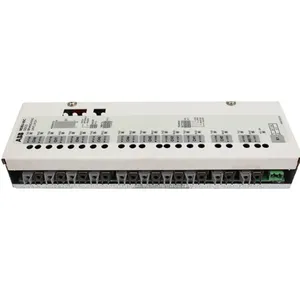
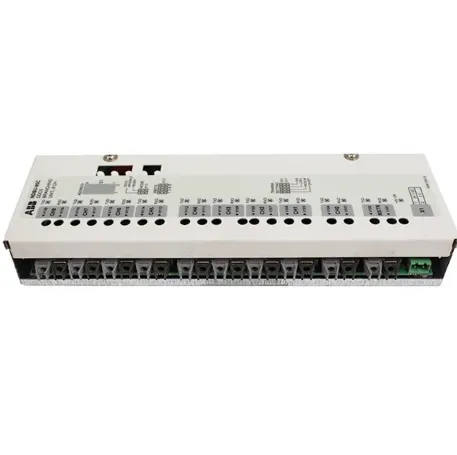
ABB NDBU-95C 64008366D Network Distribution and Bus Interface Unit



Related Products
-
 ABB DSRF180A 57310255-AV 8-Channel Relay Output ModuleNegotiableMOQ: 1 Piece
 -
ABB PM783F 3BDH000364R0001 CPU ModuleNegotiableMOQ: 1 Piece
-
ABB FC95-22 HESG440295R2 HESG448688R22 Control UnitNegotiableMOQ: 1 Piece
-
ABB SPCJ4D34-AA Motor Protection Relay ModuleNegotiableMOQ: 1 Piece
-
ABB DSPC172H DSP Master Control CPU ModuleNegotiableMOQ: 1 Piece
The ABB NDBU-95C 64008366D is a star-type branching unit specially designed for the DDCS (Distributed Drives Communication System). Its core function is to distribute the master DDCS signal to up to 9 drive slaves, with an output rate of 10 Mb per channel. It is compatible with ABB drive systems such as ACS800/DCS800/ACS880, and is used for high-speed, redundant communication networking in multi-motor coordinated control applications.
1. Functions and Advantages
1.1 Core Functions
Star topology distribution: 1 master input converted to 9 independent outputs, supporting centralized connection of multiple drive nodes and simplified wiring.
Native DDCS protocol support: Ensures real-time data exchange between drive units, suitable for multi-axis synchronous speed regulation, process interlocking and remote monitoring.
Redundant communication: Dual-bus interface design supports automatic bumpless switching, improving system communication continuity.
Galvanic isolation & anti-interference: Galvanic isolation between the bus section and the slave side suppresses industrial EMI interference and ensures stable signal transmission.
Online maintenance compatibility: Supports hot swapping, meeting non-stop maintenance requirements and reducing system downtime.
1.2 Key Advantages
Plug-and-play configuration: Default address 124; parameters can be quickly configured via ABB Drive composer.
Industrial-grade reliability: Wide-temperature design and anti-interference circuits, suitable for harsh environments such as metallurgy, mining and papermaking.
Seamless system integration: Fully compatible with the ABB drives ecosystem, reducing system integration complexity.
2. Technical Specifications
2.1 Communication Specifications
| Parameter | Value |
|---|---|
| Communication Protocol | DDCS (Distributed Drives Communication System) |
| Output Rate per Channel | 10 Mb |
| Max. Number of Nodes | 9 drive slaves |
| Interface Type | DDCS optical / electrical interface (dual redundant) |
| Default Address | 124 (modifiable via software) |
2.2 Electrical Specifications
| Parameter | Value |
|---|---|
| Power Supply | 24 V DC (industrial standard) |
| Isolation | Galvanic isolation between bus and slave side |
| EMC Standard | Complies with IEC 61000-4-2 (ESD), IEC 61000-4-3 (radiated immunity) |
2.3 Environmental and Mechanical Specifications
| Parameter | Value |
|---|---|
| Operating Temperature | 0℃~60℃ (operation); -40℃~85℃ (storage) |
| Relative Humidity | 5%~95% (non-condensing) |
| Protection Degree | IP20 (module); must be installed in IP54 or higher cabinet |
| Mounting | DIN rail / panel mounting |
| Weight | Approx. 0.7–1 kg (varies slightly by batch) |
3. Application Areas
Metallurgy: Multi-motor synchronous control for rolling mills, drive systems for continuous casting lines.
Mining: Multi-drive coordination for hoists, belt conveyors.
Papermaking: Sectional drives for paper machines, tension control.
Other heavy industries: Cement production lines, power drives, petrochemical pump sets and other multi-axis motion applications.
4. Installation and Commissioning Guide
4.1 Pre-installation Preparation
Confirm model compatibility: NDBU-95C (64008366D) is suitable for DDCS bus systems; verify compatibility with drive units (ACS800/ACS880, etc.).
Environmental check: Control cabinet protection degree ≥ IP54; temperature and humidity meet specifications; no strong electromagnetic interference sources.
Tools required: DIN rail, screwdriver, fiber cleaning tools, Drive composer software, multimeter.
4.2 Hardware Installation
DIN rail mounting: Secure the module on a standard DIN rail to ensure firm and stable installation.
Power wiring: Connect 24 V DC power with correct polarity; a 1 A fuse is recommended.
Bus connection:
Connect the master DDCS signal to the redundant input of the module (optical / electrical interface).
Connect slave drive units (inverters / servos) to the 9 output channels via DDCS cables, assigning ports according to the topology plan.
Grounding: Reliably ground the module grounding terminal; grounding resistance ≤ 4 Ω to improve anti-interference performance.
4.3 Software Configuration
Device connection: Connect the module via Drive composer and read default parameters (address 124).
Address modification: Modify the module address according to system planning (avoid conflicts with other nodes).
Redundancy setup: Enable dual-bus redundancy, set switching priority and monitoring parameters.
Slave configuration: Configure the DDCS slave address in the drive unit to match the NDBU-95C output ports.
4.4 Commissioning and Verification
Power test: After power-on, the power indicator (PWR) stays on with no fault alarms.
Communication test:
Master sends test signals; slaves receive and feedback normally; bus activity indicator (ACT) flashes.
Simulate a bus fault (disconnect one main bus) to verify redundant switching; no communication interruption occurs.
Process test: Run multi-motor coordinated processes; verify speed synchronization, tension control and other indicators meet design requirements.
Troubleshooting: For communication abnormalities, check connections, address configuration and supply voltage; locate issues via diagnostic indicators.

Send Inquiry to This Supplier


You May Also Like
-
ABB REF541KM115AAA Feeder TerminationNegotiableMOQ: 1 Piece
-
ABB RET670 1MRK002816-AC Digital Transformer Protection Intelligent Electronic DeviceNegotiableMOQ: 1 Piece
-
ABB 07DC91C Digital Input ModuleNegotiableMOQ: 1 Piece
-
ABB DSQC602 Analog Output ModuleNegotiableMOQ: 1 Piece
-
ABB 3BHB019265R0410 Analogue Input/Output (I/O) ModuleNegotiableMOQ: 1 Piece
-
ABB R474A11XE HAFAABAAABE1BCA1XENegotiableMOQ: 1 Piece
-
ABB CRBX01 2VAA008424R1 Remote Bus ExtenderNegotiableMOQ: 1 Piece
-
ABB FET3251C0P184C0H2 Power Control Board / Process Transmitter Companion UnitNegotiableMOQ: 1 Piece
-
ABB UNITROL1005-0011 ECO 3BHE043576R0011 Industrial‑grade Control ModuleNegotiableMOQ: 1 Piece
-
ABB SAFT183VMC Control ModuleNegotiableMOQ: 1 Piece


