








 Contact Platform Support
 Help Center
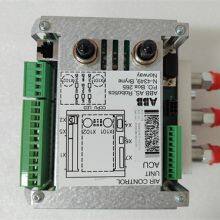
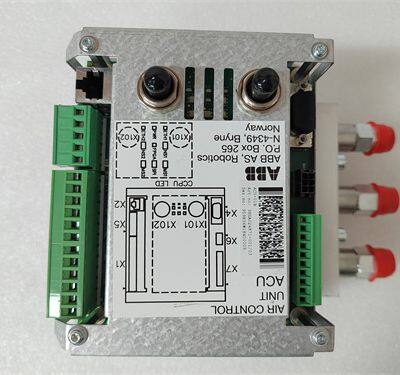
ABB ACU-01B 3HNA024871-001 Air Control Unit/Axis Computer Unit


Related Products
-
 ABB PM632 3BSE005831R1 Industrial‑grade Central Processing Unit (CPU) ModuleNegotiableMOQ: 1 Piece
 -
ABB PFVO142 3BSE023732R0001 Fibre Optic Interface ModuleNegotiableMOQ: 1 Piece
-
ABB NDBU-95C 64008366D Network Distribution and Bus Interface UnitNegotiableMOQ: 1 Piece
-
ABB DSRF180A 57310255-AV 8-Channel Relay Output ModuleNegotiableMOQ: 1 Piece
-
ABB PM783F 3BDH000364R0001 CPU ModuleNegotiableMOQ: 1 Piece
ABB ACU-01B (spare part number 3HNA024871-001) is a high-performance Air Control Unit / Axis Computer Unit designed specifically for industrial painting robots and high-precision robot axis control applications. As an original core component of the ABB IRC5 robot control system, it performs closed-loop control of air pressure and flow for painting processes, robot axis positioning, signal acquisition, and real-time communication. It also provides interlock protection for pneumatic and electrical systems.Compatible with mainstream painting robots such as IRB 5400 and IRB 5500, it can be directly mounted on the robot arm or inside the control cabinet. It serves as a standard unit for new painting lines or an original upgrade spare part for legacy equipment, ensuring uniform coating, high paint utilization, and stable processes. It is widely used in high-precision finishing applications including automotive body painting, home appliance coating, and aerospace component surface treatment.
Featuring ABB industrial-grade electrical control, precision pneumatic regulation, and anti-interference hardware design, the unit offers fast response, high control accuracy, strong environmental resistance, and seamless compatibility with the IRC5 system. It withstands solvent vapors, dust, temperature fluctuations, and high-frequency electromagnetic interference in painting workshops, achieving millisecond-level air regulation and jitter-free axis positioning, which significantly reduces overspray and rework rates.
1 Core Parameters
1.1 Core Electrical and Pneumatic Performance Parameters
| Parameter Category | Specification | Application Description |
|---|---|---|
| Supply Voltage | 24 V DC (±10% tolerance); compatible with IRC5 standard power module | Uses the same power source as the robot cabinet, eliminating extra power supplies. Stable output under voltage fluctuations and resistant to grid disturbances. |
| Communication Interfaces / Protocols | Ethernet, CAN 2.0B, RS-485; compatible with ABB robot proprietary protocols, Profinet | Seamless connection to the IRC5 main controller, supporting real-time command transmission, status feedback, and fault diagnosis. Can be integrated into the factory MES system. |
| Pneumatic Control Capacity | 3 independent controllable air circuits; pressure range 0.1–0.6 MPa; flow response time ≤ 5 ms | Precisely controls pressure and flow of atomizing air, fan air, and paint supply air, suitable for water-based, solvent-based, and other paint types. |
| Control Accuracy | Air pressure control accuracy ±0.005 MPa; axis positioning accuracy ±0.01 mm with encoder | Ensures streak-free large-area painting, no overspray at edges, and repeat positioning accuracy meeting high-end finishing requirements. |
| Output Channels | 4–8 digital / analog outputs; relay output up to 5 A per channel | Directly drives pneumatic proportional valves, solenoid valves, heaters, and other actuators without additional power amplification modules. |
1.2 Mechanical and Installation Parameters
Structure: Industrial-grade sealed metal housing with grid heat dissipation. Corrosion-resistant aluminum alloy, solvent-resistant surface coating. Protection class IP20 (electrical section). Stainless steel sealed pneumatic connectors, meeting explosion-proof requirements for hazardous areas.
Dimensions and Weight: Compact design for limited arm-mounted space; net weight 3.66 kg; mounting dimensions precisely match IRC5 standard holes.
Mounting: Bolt-fixed, supports arm mounting or cabinet embedded installation. Pneumatic quick connectors and electrical dedicated snap-in connectors. Installation without special tools; replacement and wiring can be completed within 30 minutes.
Packaging: ABB original anti-static, moisture-proof industrial package, including the unit, mounting accessories, gaskets, wiring diagram, and calibration certificate, suitable for long-distance transport and workshop storage.
1.3 Environmental and Reliability Parameters
| Parameter Category | Specification | Application Description |
|---|---|---|
| Operating Temperature | -10 ℃ to +55 ℃ | Adapts to low winter and high summer temperatures in painting workshops without performance degradation; no extra heating or cooling required. |
| Storage Temperature | -25 ℃ to +70 ℃ | Meets requirements for long-term spare part storage and cross-region transport; no risk of component damage due to thermal expansion or contraction. |
| Relative Humidity | 5%–95% (non-condensing) | Withstands high humidity in southern painting workshops, preventing electrical short circuits and pneumatic component corrosion caused by condensation. |
| Immunity Performance | Complies with IEC 61000-4 EMC standards; resistant to interference from inverters and high-voltage electrostatic spray guns | Eliminates air fluctuations or robot trembling caused by electromagnetic interference during painting, ensuring coating uniformity. |
| MTBF | ≥ 80,000 hours @ 25 ℃, rated conditions | Satisfies 24/7 continuous operation of painting lines, greatly reducing downtime and maintenance frequency. |
| Warranty | 12 months (original standard), including 7-day acceptance period | Covers all original factory quality issues of electrical, pneumatic, and control functions; supports ABB global on-site calibration and service. |
2 Structural and Functional Features
2.1 Core Structural Design
Electro-pneumatic Integrated Design: Microprocessor, signal acquisition module, pneumatic proportional valve, pressure sensor, and safety shut-off valve integrated in one metal housing, reducing external wiring and air lines, lowering leakage and failure points. Pneumatic and electrical chambers physically isolated to prevent corrosion by solvent vapors.
Redundant Safety Structure: Built-in pneumatic overpressure protection and electrical short-circuit / overcurrent protection. If overpressure or electrical fault is detected, the main air supply is immediately cut off and a stop alarm sent to the IRC5 controller, preventing equipment damage and massive paint leakage.
Standardized Interfaces: Electrical connectors dedicated to IRC5, anti-misinsertion and vibration-resistant. Pneumatic ports with international standard G1/4 thread, compatible with common pneumatic hoses without adapters.
Modular Design: Pneumatic regulation and electrical control modules can be replaced separately without full disassembly, shortening maintenance downtime.
2.2 Core Functional Features
Closed-loop Precision Air Control: Real-time feedback from internal pressure sensors, dynamic adjustment via PID algorithm, maintaining constant atomizing / fan air pressure and flow during painting. Ensures consistent film thickness even with fluctuating supply pressure, improving paint utilization by 10%–15%.
Robot Motion Synchronization: Receives robot speed, trajectory, and gun angle signals from the IRC5 controller and adjusts air parameters accordingly. Automatically optimizes airflow at corners, edges, and complex geometries to reduce overspray and buildup.
Comprehensive Self-diagnosis and Alarm: Continuously monitors air pressure, electrical current, and module temperature. In case of abnormality (air leakage, sensor failure, over-temperature), fault codes, locations, and solutions are displayed immediately on the IRC5 teach pendant, with logs recorded for fast troubleshooting.
Seamless IRC5 Compatibility: Plug-and-play original component without modifying controller programs or installing extra drivers. Supports offline configuration and online tuning of air parameters via ABB RobotStudio, reducing engineering complexity.
Strong Environmental Resistance: Sealed housing designed for solvent vapor protection in painting workshops; internal circuits with anti-corrosion coating. Stable long-term operation in harsh environments with dust, solvent vapors, and frequent temperature changes.
3 Application Areas
Automotive Manufacturing: Automated painting lines for car bodies, bumpers, and wheels, suitable for high-speed, multi-model flexible production, ensuring consistent coating quality across batches.
Home Appliance & 3C Manufacturing: High-precision finishing for refrigerator, washing machine, mobile phone, and laptop casings, requiring low overspray and high productivity for mass production.
Aerospace: Surface treatment of aircraft fuselages, engine components, and satellite shells, with extremely high requirements for coating uniformity and thickness precision, suitable for complex curved surfaces.
Construction Machinery: Structural part painting for excavators, cranes, and other heavy equipment, adapting to mixed outdoor and workshop environments, ensuring weather resistance and corrosion protection.
4 Installation and Operation & Maintenance Notes
4.1 Pre-installation Preparation
Confirm compatibility of the model (ACU-01B 3HNA024871-001) with the robot type and IRC5 controller version. Verify supply voltage, pneumatic port specifications, and installation space.
Inspect the unit: no housing deformation, damaged pneumatic ports, or loose electrical connectors. Keep the calibration certificate after unpacking for acceptance.
Prepare tools: torque wrench, lint-free cloth, isopropyl alcohol cleaner. Use solvent-resistant hoses for pneumatics and shielded cables for electrical connections to avoid electromagnetic interference.
Perform work with power and air supply disconnected. Apply anti-static measures in the painting workshop; operators must wear anti-static wrist straps.
4.2 Installation Specifications
Mechanical Installation: Fix according to official drawings, follow torque specifications in the manual to avoid housing deformation. Additional reinforcement required for arm mounting to prevent loosening from high-speed robot motion.
Pneumatic Connection: Clean ports, install new gaskets, connect supply, atomizing, and fan air lines as labeled. Perform a 0.7 MPa pressure test for 30 minutes with no leakage.
Electrical Connection: Connect 24 V DC power and IRC5 communication cables, ensuring correct polarity. Single-point grounding of the shield to reduce interference. Hot-plugging connectors is strictly prohibited.
Cleaning: Wipe the housing and connectors with isopropyl alcohol to remove oil and dust, preventing coating contamination during painting.
4.3 Power-up and Commissioning
Apply power first and check the unit indicators. Then switch on compressed air and confirm no leaks.
Import painting parameters via RobotStudio, calibrate pressure and flow, and record values under standard working conditions.
Run the robot without load to test air-motion synchronization. Perform test spraying and verify uniformity with a coating thickness gauge; fine-tune PID parameters if needed.
Test fault alarm functions: simulate air loss and power fluctuations to confirm the controller receives alarms and activates safety shutdown.

Send Inquiry to This Supplier



You May Also Like
-
ABB FC95-22 HESG440295R2 HESG448688R22 Control UnitNegotiableMOQ: 1 Piece
-
ABB SPCJ4D34-AA Motor Protection Relay ModuleNegotiableMOQ: 1 Piece
-
ABB DSPC172H DSP Master Control CPU ModuleNegotiableMOQ: 1 Piece
-
ABB REF541KM115AAA Feeder TerminationNegotiableMOQ: 1 Piece
-
ABB RET670 1MRK002816-AC Digital Transformer Protection Intelligent Electronic DeviceNegotiableMOQ: 1 Piece
-
ABB 07DC91C Digital Input ModuleNegotiableMOQ: 1 Piece
-
ABB DSQC602 Analog Output ModuleNegotiableMOQ: 1 Piece
-
ABB 3BHB019265R0410 Analogue Input/Output (I/O) ModuleNegotiableMOQ: 1 Piece
-
ABB R474A11XE HAFAABAAABE1BCA1XENegotiableMOQ: 1 Piece
-
ABB CRBX01 2VAA008424R1 Remote Bus ExtenderNegotiableMOQ: 1 Piece


