








 Contact Platform Support
 Help Center
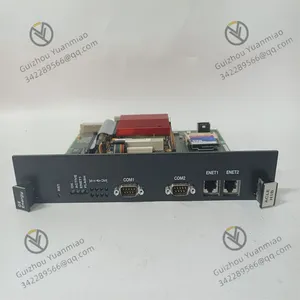
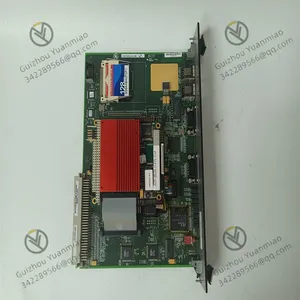
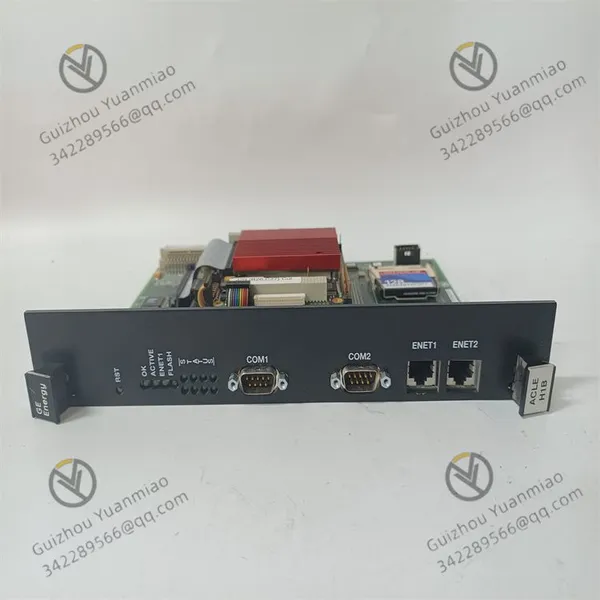
GE IS215ACLEH1B Application Control Layer Module




Related Products
-
 GE IS215UCVEH2A Industrial Automation ModuleNegotiableMOQ: 1 Piece
 -
GE IS200MVRCH1ABA Analog Input/output BoardNegotiableMOQ: 1 Piece
-
GE IS200MVRDH1AAB Signal Processing ModuleNegotiableMOQ: 1 Piece
-
GE IS215WECAH1A Turbine Control System ComponentsNegotiableMOQ: 1 Piece
-
GE IS215VPROH2B Emergency Turbine Protection PlateNegotiableMOQ: 1 Piece
Working principle
Data processing and computing: The module is equipped with a high-speed processor, which serves as the computing core of the entire module and can handle complex control algorithms in real time. Meanwhile, the 128KB level 2 cache enables high-speed access to common data and instructions, and 8MB DRAM provides memory for storing and processing data during operation. Together, they assist the processor in quickly processing various types of data and ensure the efficient operation of equipment such as turbines.
Input/output control: The module is equipped with I/O points and internal Boolean forcing functions, and manages different inputs and outputs through the Peripheral Component Interconnect (PCI) controller. On the one hand, it can receive signals from devices such as sensors and convert them into digital signals that the module can process. On the other hand, control signals are sent to actuators and other devices based on the processing results to achieve precise control of the devices.
Communication function realization: This module integrates Ethernet connection, typically 10BaseT or RJ45 sockets, and supports communication protocols such as Modbus. It can seamlessly communicate and exchange data with other devices or systems through the Ethernet network, achieving remote monitoring, control, and configuration. In addition, the module also features serial ports COM1 and COM2, which can be connected to external devices, providing more options for communication.
System Configuration and storage: 4MB flash memory. The BIOS contains basic firmware and system configuration Settings. When the module starts up, the BIOS initializes the hardware components, loads the necessary drivers and configuration information, and enables the module to work normally. Non-volatile flash memory can store relevant data and programs, and can preserve configuration information even in the event of a power outage, ensuring that the system can return to the correct working state after a restart.
Function control and Management: In the turbine control system, this module can implement turbine control logic and adjust parameters such as speed, load and temperature. Meanwhile, it can execute security protocols, monitor system failures, and trigger the emergency shutdown program when anomalies occur. It can also coordinate the activities of subsystems such as fuel management and speed control, achieve load balancing, record operational data, generate reports, and facilitate analysis and maintenance.
Parameter Introduction
Hardware parameters:
Processor: Equipped with a high-speed processor (the specific model is not mentioned), capable of processing complex control algorithms in real time.
Cache: It features a 128KB L2 cache, enabling high-speed access to frequently used data and instructions, and enhancing processing capabilities.
Storage: It includes a 4MB flash BIOS for storing basic firmware and system configuration Settings. It may be equipped with 8MB DRAM (Dynamic Random Access Memory) to provide memory for storing and processing data during operation.
Interface: It is equipped with an Ethernet interface, usually a 10BaseT or RJ45 socket, supporting remote monitoring, control and configuration. Equipped with serial ports COM1 and COM2, it supports asynchronous serial communication protocols and can be connected to external devices. In addition, there is a PCI controller, which is used to manage input and output, configuration transmission with the PCI bus, and various memory functions.
Indicator light: It is equipped with an LED indicator light, which can be used to display information such as the working status of the module.
Dimensions and weight: The dimensions are approximately 45.7×30.5×30.5 centimeters, and the weight is about 0.45 kilograms.
Software parameters:
BIOS: Phoenix BIOS is adopted, which is the industry standard. It is pre-programmed and does not require manual modification. The BIOS configuration Settings are saved in the EEROM memory.
Functional software: Supports I/O points and internal Boolean forcing functions, enables application control of innovative series drives, and has an online application configuration loading function, facilitating system maintenance and upgrades.
Communication parameters: Supports Ethernet and Modbus communication protocols, enabling data transmission and communication with other devices or systems.
Other parameters: It is usually installed in the EX2100 excitation board frame or the innovative series driver, occupying two and a half slots. The operating temperature is generally between 0℃ and 45℃.

Send Inquiry to This Supplier


You May Also Like
-
GE IS215VAMBH1A Mark VI Series Acoustic Monitoring BoardNegotiableMOQ: 1 Piece
-
GE IS415UCVHH1A VME Control BoardNegotiableMOQ: 1 Piece
-
GE IS215ISBBH2A Communication SwitchNegotiableMOQ: 1 Piece
-
GE IS420UCSCH1A High-performance ControllerNegotiableMOQ: 1 Piece
-
The Working Principle of the GE IS220PAICH1B Mark VIe Analog I/O ModuleNegotiableMOQ: 1 Piece
-
GE IS220PDIAH1B Digital Input ModuleNegotiableMOQ: 1 Piece
-
GE IS220PDOAH1B Mark VIe Digital Output ModuleNegotiableMOQ: 1 Piece
-
GE IS220PTURH1B Turbine Speed Monitoring ModuleNegotiableMOQ: 1 Piece
-
GE DS200TCPDG1B Gas Turbine Control System ComponentNegotiableMOQ: 1 Piece
-
GE DS200IIBDG1A Digital Input Interface BoardNegotiableMOQ: 1 Piece


