








 Contact Platform Support
 Help Center
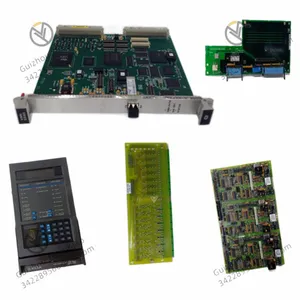
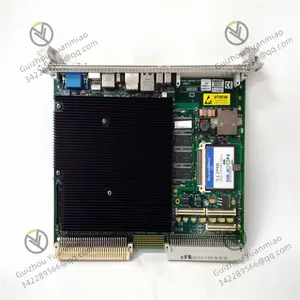
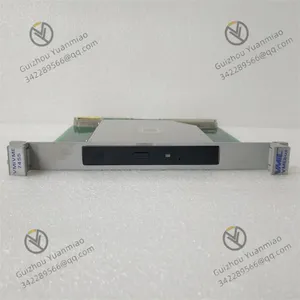
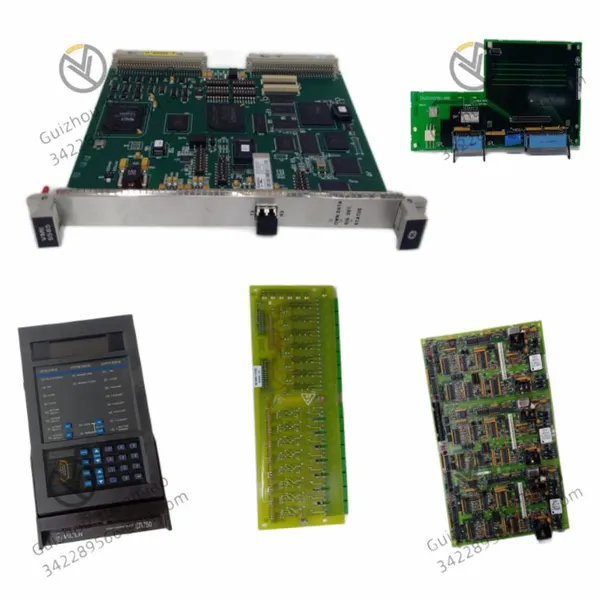
GE VMIVME-7486 VMEbus CPU Module




Related Products
-
 GE VMIVME-7658 Single-board ComputerNegotiableMOQ: 1 Piece
 -
GE VMIVME-7700 High-performance VMEbus Processor ModuleNegotiableMOQ: 1 Piece
-
GE VMIVME-7750 VME Bus ModuleNegotiableMOQ: 1 Piece
-
GE VMIVME-7807-D Single-board ComputerNegotiableMOQ: 1 Piece
-
GE VMIVME-7807RC Single-slot Single-board ComputerNegotiableMOQ: 1 Piece
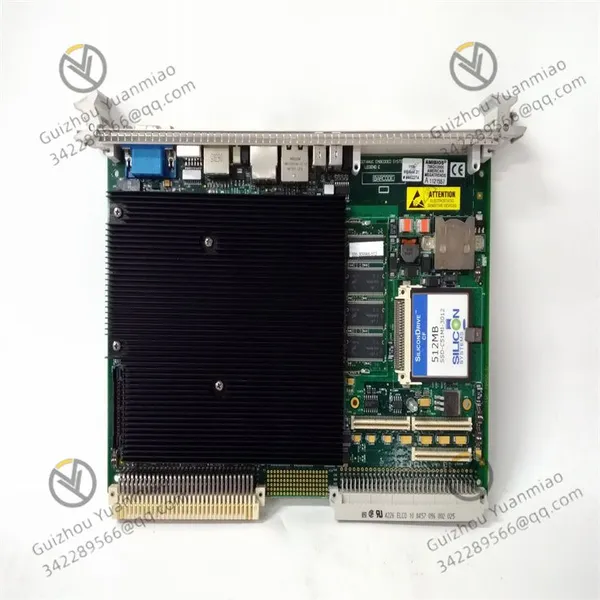
GE VMIVME-7486 VMEbus CPU module
I. Hardware Core Configuration
Processor performance
CPU frequency and architecture: This module may be equipped with a processor of a specific frequency (such as early x86 architecture chips), and the frequency directly affects the speed of instruction execution. If the CPU frequency is insufficient, lag is likely to occur during complex operations or multitasking.
Coprocessor and cache: The module is equipped with a built-in coprocessor (such as a mathematical coprocessor) and an 8KB four-way associated cache. If the cache capacity is insufficient or the coprocessor's functions are limited, the efficiency of data retrieval and operation will decrease (for example, the latency will increase when processing large amounts of data in real time).
2. Memory capacity and type
RAM capacity: Under standard configuration, RAM may be 1MB (up to 4MB in some versions). If multitasking or large programs (such as industrial control software) are running, insufficient memory can lead to frequent disk swapping and slow down system response.
Storage medium speed: If the read and write speed of the flash memory ROM (8MB) is limited, it will affect the system startup time and program loading efficiency.
3. Bus and Interface performance
VME bus speed: The module adopts an 8MHz bus frequency. When communicating with other high-speed devices, the bus bandwidth may become a bottleneck (such as packet loss or delay during concurrent data transmission among multiple devices).
External interface rate: The transmission rates of interfaces such as the RS-232C port (serial communication) and IDE controllers are fixed. If high-speed peripheral devices (such as high-speed disks) are connected, the mismatch of interface rates will lead to a decrease in data transmission efficiency.
Ii. Operating Environment and Stability
1. Temperature and Heat dissipation
The nominal operating temperature of the module is -20 °C to + 70° C. If the ambient temperature exceeds the upper limit (such as in high-temperature industrial scenarios), the CPU will overheat and reduce its frequency, and may even cause hardware failures (such as capacitor aging and chip performance degradation).
Insufficient heat dissipation design (such as poor ventilation of the chassis) will accelerate the temperature rise and affect the stability of internal components.
2. Power Supply and Power Consumption
The power consumption of the module is approximately 15W. If the voltage of the power supply fluctuates (such as too low voltage or excessive ripple), it will cause unstable operation of the CPU (such as incorrect instruction execution or restart).
Poor power filtering may introduce electromagnetic interference, affecting the accuracy of data transmission (such as bus signal distortion).
3. Electromagnetic Compatibility (EMC)
Strong electromagnetic interference in industrial environments (such as motors and frequency converters) may interfere with the internal circuits of modules, causing data errors or system crashes. To optimize EMC performance, measures such as grounding and shielding need to be taken.
Iii. System and Software Compatibility
Operating system and driver support
The module is compatible with both DOS and Windows systems. If an incompatible operating system version is used (such as insufficient support for hardware drivers in a higher version of the system), it will result in the hardware functions not being fully released (such as limited video display resolution and abnormal bus interrupt handling).
Incorrect installation or update of the driver may cause interface communication failures (such as the serial port failing to recognize the device).
2. Software resource occupation
Running too many background programs or being infected by viruses will occupy CPU and memory resources, resulting in delays in the response of industrial control tasks (such as real-time data acquisition).
Insufficient optimization of software algorithms (such as high complexity of data processing algorithms) will increase the CPU computing load and affect real-time performance.
Iv. External Expansion and Integration
VME bus device compatibility
When integrating with other VME modules (such as I/O cards, communication cards), if the protocols between the modules are incompatible (such as interrupt priority conflicts, mismatched bus arbitration mechanisms), it will lead to a decline in the overall performance of the system.
Too many expansion devices may exceed the bus load capacity, causing signal attenuation or timing errors.
2. Load and Data Throughput
If the amount of data generated by external devices (such as high-speed data acquisition cards) exceeds the processing capacity of the module (such as CPU computing speed, memory bandwidth), it will lead to data loss or processing delay.
When there are too many parallel tasks (such as data acquisition, communication transmission, and algorithm operation simultaneously), unreasonable resource scheduling can cause performance bottlenecks.
V. Hardware Aging and Maintenance
1. Component aging
After long-term operation, the performance of components such as capacitors and resistors declines, which may lead to unstable power supply or abnormal signal transmission, indirectly affecting the performance of the CPU.
Oxidation or corrosion of the solder joints on the circuit board can cause poor interface contact (such as VME bus contact failure).
2. Maintenance and cleaning
Dust accumulation leads to poor heat dissipation, or interface dirt accumulation causes an increase in contact resistance (such as communication failure at the RS-232 port), and regular maintenance is required to ensure hardware performance.
Summary: Optimize the direction
Hardware level: Ensure stable power supply, control ambient temperature, and select matching expansion modules;
Software level: Use compatible operating systems and drivers to optimize the occupation of program resources;
Maintenance level: Regularly clean and inspect the hardware, and promptly replace aged components. By optimizing these factors specifically, the performance potential of VMIVME-7486 can be maximized.

Send Inquiry to This Supplier


You May Also Like
-
GE V7768-322001 Embedded Single-board ComputerNegotiableMOQ: 1 Piece
-
GE VMIVME-7452 Controller ModuleNegotiableMOQ: 1 Piece
-
GE VMIVME-7455 Single-slot Drive ModuleNegotiableMOQ: 1 Piece
-
GE IC697CMM742 Ethernet Interface ModuleNegotiableMOQ: 1 Piece
-
GE IC697BEM713 RX7i Series Bus Transmitter ModuleNegotiableMOQ: 1 Piece
-
GE IC697MDL653 Positive/negative Logic Discrete Input ModuleNegotiableMOQ: 1 Piece
-
GE IC697CPX928-FE Central Processing Unit ModuleNegotiableMOQ: 1 Piece
-
GE IC697PWR748D High-performance Power ModuleNegotiableMOQ: 1 Piece
-
GE IC697CPM790 Communication Processor ModuleNegotiableMOQ: 1 Piece
-
Redundant Modules of GE IC698RMX016 RX7i SeriesNegotiableMOQ: 1 Piece


