








 Contact Platform Support
 Help Center
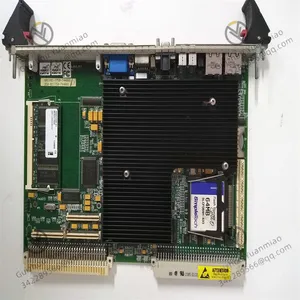
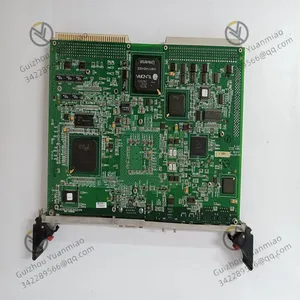
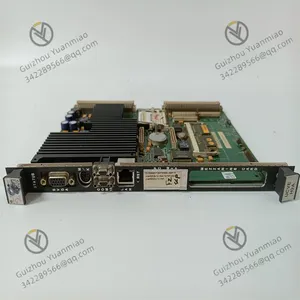
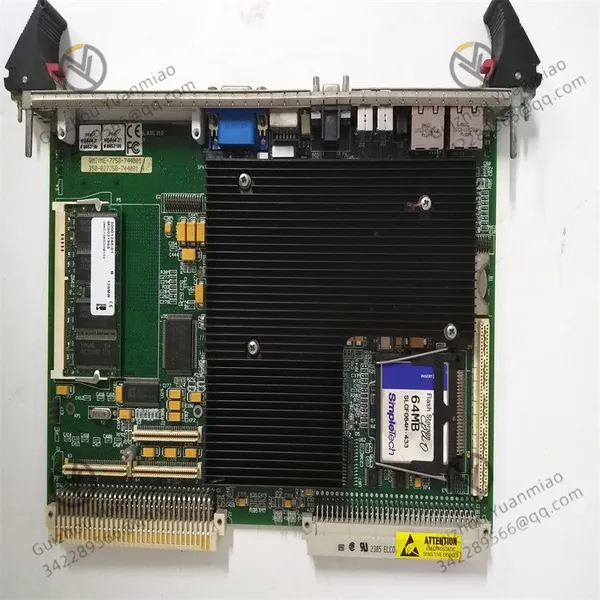
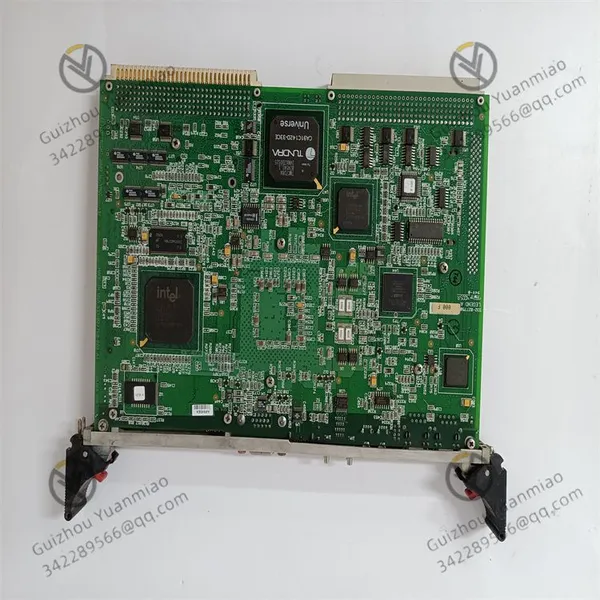
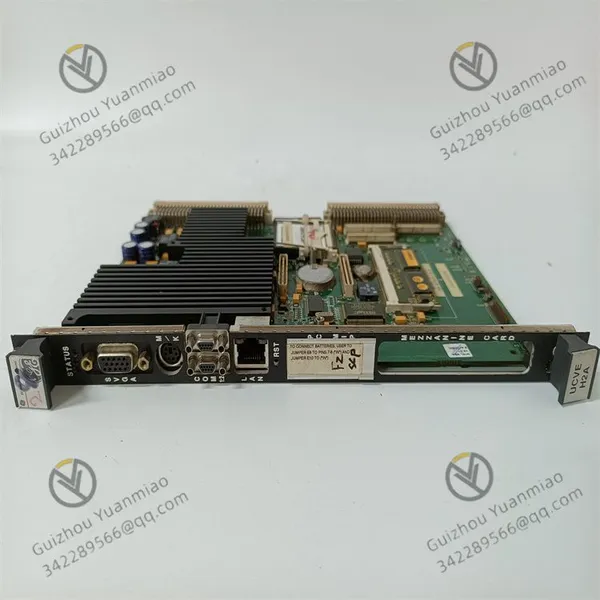
GE VMIVME-7700 High-performance VMEbus Processor Module




Related Products
-
 GE VMIVME-7750 VME Bus ModuleNegotiableMOQ: 1 Piece
 -
GE VMIVME-7807-D Single-board ComputerNegotiableMOQ: 1 Piece
-
GE VMIVME-7807RC Single-slot Single-board ComputerNegotiableMOQ: 1 Piece
-
GE V7768-322001 Embedded Single-board ComputerNegotiableMOQ: 1 Piece
-
GE VMIVME-7452 Controller ModuleNegotiableMOQ: 1 Piece
GE VMIVME-7700 high-performance VMEbus processor module
I. Core Architecture and Processor
Processor technology
PowerPC Architecture: VMIVME-7700 is typically based on PowerPC processors (such as PPC750, PPC7400 or PPC7455), adopting a Reduced Instruction Set Computing (RISC) architecture, and features high throughput and low power consumption.
Superscalar pipeline: The processor supports parallel execution of multiple instructions, capable of processing multiple instructions per clock cycle, significantly enhancing computing efficiency.
Floating-point Unit (FPU) : Equipped with a high-performance FPU, it supports single/double-precision floating-point operations and is suitable for scenarios such as scientific computing and signal processing.
2. Cache system
Multi-level cache: It is usually equipped with 32KB-512KB of level 1 cache (L1) and 1MB-2MB of level 2 cache (L2) to reduce memory access latency and accelerate data processing.
Cache consistency protocol: It ensures data consistency among multi-level caches through hardware mechanisms to avoid data conflicts.
Ii. Memory and Storage Management
1. Main memory configuration
SDRAM/DDR memory: Supports up to 1GB of synchronous dynamic random access memory (SDRAM) or double Data Rate memory (DDR), meeting the requirements of high-speed data processing.
Memory controller: Integrated memory controller optimizes memory access timing and enhances data transmission bandwidth.
2. Storage interface
IDE/ATA interface: The IDE interface is provided through the P2 connector, supporting storage devices such as hard disks and CD-ROMs, and is used for the storage of operating systems and applications.
Flash storage: Built-in 8MB-32MB Flash memory (Flash) for storing boot code (such as BIOS or boot loader).
Iii. VME Bus Communication Mechanism
Bus Protocol and bandwidth
VME64 specification: Adhering to the VITA 1 standard, it supports 32-bit / 64-bit addressing and data transmission, with a maximum bandwidth of up to 40MB/s (32-bit) or 80MB/s (64-bit).
Bus arbitration: Implement a priority arbitration mechanism to ensure that high-priority tasks (such as real-time control) have priority access to bus resources.
2. Interrupt handling
Multi-level interrupt controller: Supports up to 7 levels of interrupt priority and can be configured as edge-triggered or level-triggered to meet the real-time system response requirements.
Interrupt vector table: Accelerate the interrupt handling process by mapping interrupt vectors through hardware.
3. DMA transmission
Direct memory access: Supports DMA controllers to achieve high-speed data transmission between peripherals and memory, reducing the burden on the CPU.
Iv.Connection between I/O interfaces and peripheral devices
1. Standard communication interface
Serial port (RS-232/422/485) : It provides multiple asynchronous serial ports, supporting different baud rates and communication protocols, and is used for device control or data acquisition.
Ethernet (10/100Mbps) : Integrated Ethernet controller, supporting TCP/IP protocol, to achieve network communication and remote monitoring.
Parallel port: Supports IEEE-1284 standard and is used for high-speed data transmission (such as printers, scanners).
2. Special function interfaces
VME P2/P3 connector: The expansion interface is used to connect other VME modules (such as I/O cards, communication cards) to enhance system functionality.
Clock and Timer: Built-in real-time clock (RTC) and programmable timer, providing precise time reference and timing interrupts.
V. Operating System and Software Support
Real-time Operating System (RTOS)
VxWorks, Linux, etc. : Support mainstream industrial-grade RTOS, provide hard real-time performance and task scheduling mechanisms, and meet the requirements of millisecond-level response.
Driver program: The manufacturer provides device drivers (such as VME bus drivers, network drivers) to ensure seamless integration of hardware and the operating system.
2. Software development toolchain
Compiler and Debugger: Supports toolchains such as GCC and Metrowerks, providing a cross-compilation environment for convenient remote development and debugging.
API and Libraries: Provide standard apis (such as POSIX) and dedicated libraries (such as VMEbus communication libraries) to simplify application development.
Vi. Workflow and Data Processing
System startup
After power-on, the processor loads the bootloader from the Flash and initializes the hardware configuration (such as memory and clock).
Load the operating system kernel into memory, complete the system initialization, and start the user application program.
Data processing flow:
Input stage: Data is collected through I/O interfaces (such as sensors, networks) and stored in the memory buffer.
Processing stage: The CPU reads data from memory and performs operations or logical processing (such as filtering, PID control).
Output stage: The processing results are sent to external devices (such as actuators, displays) via the VME bus or I/O interface.
Real-time response mechanism
When an external event triggers an interrupt (such as sensor data being ready), the CPU pauses the current task and jumps to the Interrupt Service Program (ISR) to handle the event.
After the ISR is executed, the CPU resumes the original task to ensure the real-time performance of the system.
Vii. Reliability and Redundancy Design
Industrial-grade features
Wide operating temperature range: Supports an operating temperature range of -40 °C to + 85°C, suitable for harsh environments.
Anti-vibration and shock: Reinforced design, meeting the requirements of military or automotive applications.
2. Redundancy mechanism
Hot backup support: It can be configured as a dual-machine hot backup system, automatically switching to the backup module when the main module fails.
Watchdog timer: Built-in hardware watchdog, monitors the system's operating status and automatically resets in case of abnormalities.
Summary
The VMIVME-7700 achieves real-time data processing, multi-task scheduling and system reliability through a high-performance PowerPC processor, an optimized cache architecture, high-speed VME bus communication and rich I/O interfaces. The core of its working principle lies in the organic combination of computing power, memory management, bus communication and peripheral control, providing a stable and efficient processing platform for industrial automation and embedded systems.

Send Inquiry to This Supplier


You May Also Like
-
GE VMIVME-7455 Single-slot Drive ModuleNegotiableMOQ: 1 Piece
-
GE IC697CMM742 Ethernet Interface ModuleNegotiableMOQ: 1 Piece
-
GE IC697BEM713 RX7i Series Bus Transmitter ModuleNegotiableMOQ: 1 Piece
-
GE IC697MDL653 Positive/negative Logic Discrete Input ModuleNegotiableMOQ: 1 Piece
-
GE IC697CPX928-FE Central Processing Unit ModuleNegotiableMOQ: 1 Piece
-
GE IC697PWR748D High-performance Power ModuleNegotiableMOQ: 1 Piece
-
GE IC697CPM790 Communication Processor ModuleNegotiableMOQ: 1 Piece
-
Redundant Modules of GE IC698RMX016 RX7i SeriesNegotiableMOQ: 1 Piece
-
GE IC698CRE040 Ethernet Communication ModuleNegotiableMOQ: 1 Piece
-
GE IC698ETM001 Industrial Ethernet Switch ModuleNegotiableMOQ: 1 Piece


