








 Contact Platform Support
 Help Center
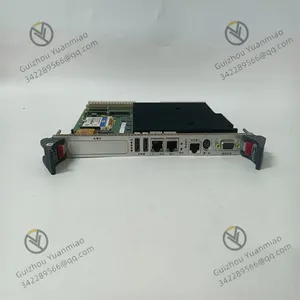
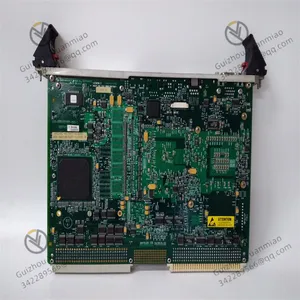
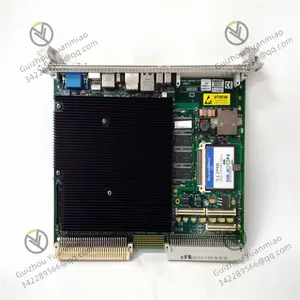
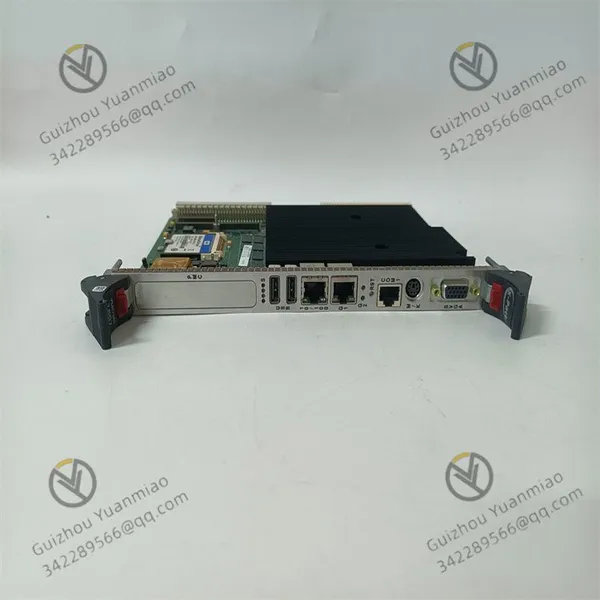
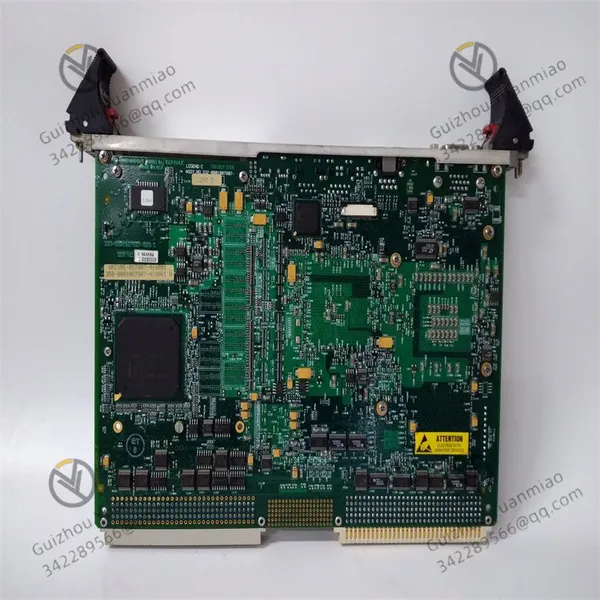
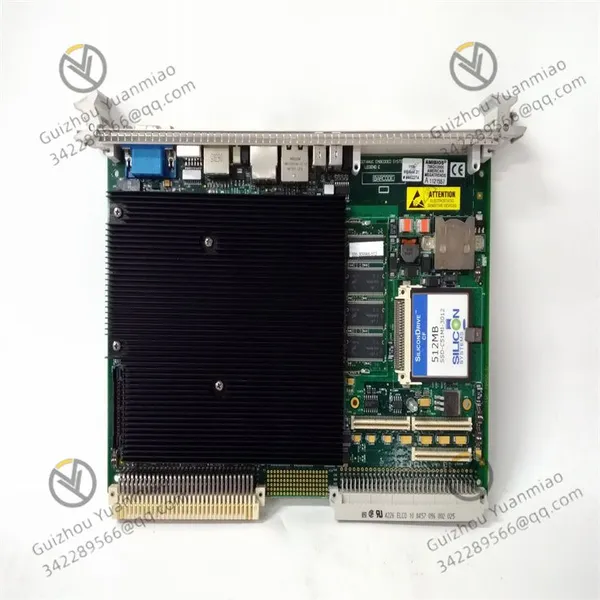
GE VMIVME-7807RC Single-slot Single-board Computer




Related Products
-
 GE V7768-322001 Embedded Single-board ComputerNegotiableMOQ: 1 Piece
 -
GE VMIVME-7452 Controller ModuleNegotiableMOQ: 1 Piece
-
GE VMIVME-7455 Single-slot Drive ModuleNegotiableMOQ: 1 Piece
-
GE IC697CMM742 Ethernet Interface ModuleNegotiableMOQ: 1 Piece
-
GE IC697BEM713 RX7i Series Bus Transmitter ModuleNegotiableMOQ: 1 Piece
GE VMIVME-7807RC single-slot single-board computer
Performance Introduction
Processor: It adopts the Pentium M processor, with three frequencies available: 1.1GHz, 1.6GHz or 1.8GHz. Among them, the 1.8GHz Pentium M processor is equipped with a 2MB L2 cache.
Memory: Supports DDR SDRAM. 1.0GB of memory can be achieved through one SODIMM. 512MB soldered memory is also optional, with a maximum of 1.5GB.
Storage: Up to 2GB of bootable CompactFlash can be supported on the auxiliary IDE (optional), and Ultra IDE drives (rear I/O) are also supported.
Display interface: Built-in SVGA support (front panel connection), equipped with digital video controller (rear I/O) DVI-D, and has dual-head display capability.
Network interface: Equipped with a 10/100Mbit Ethernet controller (front panel connection), supporting dual gigabit Ethernet (front panel or rear I/O), and a P0 with VITA 31.1 interface is also optional.
Other interfaces: Four asynchronous 16550-compatible serial ports are provided, among which COM2, COM3 and COM4 are located at the rear I/O; Four USB 2.0 ports, two on the front panel and two on the rear I/O. In addition, there is a front panel reset switch, a micro speaker, and keyboard/mouse ports (connected to the front panel).
Expansion capability: It has a PMC expansion site (PCI-X, 66MHz), which can be accessed through the front panel, facilitating users to expand functions according to their needs.
Other features: Equipped with 32KB of non-volatile RAM, supports remote Ethernet boot, comes with real-time clock/calendar, and the system and video BIOS are provided in reprogrammable flash memory form.
Operating system support: It supports multiple operating systems such as Windows XP, Windows 2000, VxWorks, QNX, LynxOS and Linux.
Application field
Industrial Automation and Process Control
Factory equipment monitoring and control
The central control unit used in intelligent manufacturing production lines connects sensors, actuators and other devices to collect production data (such as temperature, pressure, speed, etc.) in real time and transmit it to the management system via dual gigabit Ethernet, achieving automated scheduling and fault early warning of the production line. For instance, in an automotive parts processing production line, the movement accuracy of the robotic arm can be precisely controlled, while the wear state of the cutting tools can be monitored to optimize the processing flow.
Process Control and Automation System
In process industries such as chemical engineering and petroleum, as the core node of the distributed control system (DCS), it handles complex closed-loop control logic. For example, in the boiler temperature control system, by receiving the data from the temperature sensor in real time, adjusting the valve opening degree in combination with the PID algorithm to ensure the stability of process parameters, and communicating with the upper computer through the serial port at the same time to achieve remote monitoring.
Aerospace and national defense fields
Airborne electronic equipment and navigation systems
The navigation and control system applied to unmanned aerial vehicles or small aircraft integrates sensor data such as GPS and inertial measurement unit (IMU) by leveraging its high-speed data processing capability, calculates flight attitude and trajectory, and simultaneously outputs real-time images to ground stations through the DVI interface. Its passive cooling design can adapt to the vibration and temperature changes of the airborne environment.
Military communication and radar systems
In portable communication terminals or small radar devices, as the signal processing core, the radio frequency module is inserted through the PMC expansion slot to achieve signal transmission, reception and processing. For example, in field communication base stations, multi-channel data transmission and encryption processing are supported to ensure the reliability and security of military communication.
Medical equipment and life sciences
Medical imaging and diagnostic equipment
In portable ultrasound diagnostic devices or small medical imaging equipment, it is responsible for the real-time processing and display of image data. The dual-screen display is driven through the SVGA and DVI interfaces. Meanwhile, the probe and storage device are connected via the USB port to achieve the acquisition, noise reduction and analysis of ultrasound images, assisting doctors in rapid diagnosis.
Laboratory automation equipment
The control unit used for equipment such as gene sequencers and chemical analysis instruments communicates with sensors and actuators through serial ports, precisely controlling the experimental process (such as sample injection and temperature control), and uploading experimental data to the management system through network interfaces to enhance scientific research efficiency.
Transportation and rail transit
Train signal control and monitoring
In the on-board signal system of high-speed rail or urban rail transit, as the core component of the Train Control Unit (TCU), it processes data from train speed sensors, signal lights, etc., to achieve train autonomous driving (ATO) and fault safety control. Its wide-temperature design can adapt to the temperature fluctuations inside the carriage, ensuring driving safety.
Intelligent traffic management system
It is applied to highway surveillance cameras or traffic signal controllers, transmitting real-time road condition videos via Ethernet, simultaneously analyzing traffic flow data, and dynamically adjusting the duration of traffic lights. For example, in congested sections, an AI acceleration module can be inserted through the PMC expansion slot to achieve vehicle recognition and traffic flow prediction.
Energy and Power System
Smart grid monitoring and protection
In the substation automation system, as the core of the relay protection device, it monitors parameters such as grid voltage and current in real time. When faults such as short circuit and overload are detected, it quickly triggers the protection action and uploads the fault data to the dispatching center through the network interface. Its highly reliable design can meet the continuous operation requirements of the power system for 7×24 hours.
Renewable energy control
In wind power or solar power stations, it is used for monitoring the pitch control system of wind turbines or photovoltaic inverters. Data such as wind speed and light intensity are collected through analog input interfaces to optimize power generation efficiency. At the same time, it communicates with the remote operation and maintenance platform through a serial port to achieve unattended management.

Send Inquiry to This Supplier


You May Also Like
-
GE IC697MDL653 Positive/negative Logic Discrete Input ModuleNegotiableMOQ: 1 Piece
-
GE IC697CPX928-FE Central Processing Unit ModuleNegotiableMOQ: 1 Piece
-
GE IC697PWR748D High-performance Power ModuleNegotiableMOQ: 1 Piece
-
GE IC697CPM790 Communication Processor ModuleNegotiableMOQ: 1 Piece
-
Redundant Modules of GE IC698RMX016 RX7i SeriesNegotiableMOQ: 1 Piece
-
GE IC698CRE040 Ethernet Communication ModuleNegotiableMOQ: 1 Piece
-
GE IC698ETM001 Industrial Ethernet Switch ModuleNegotiableMOQ: 1 Piece
-
GE DS200TCTGG1A Printed Circuit BoardNegotiableMOQ: 1 Pair
-
GE DS200ADGIH1AAA Gas Turbine Control Circuit BoardNegotiableMOQ: 1 Piece
-
GE DS200TCTGG1A Turbine Tripping Circuit BoardNegotiableMOQ: 1 Piece


