








 Contact Platform Support
 Help Center
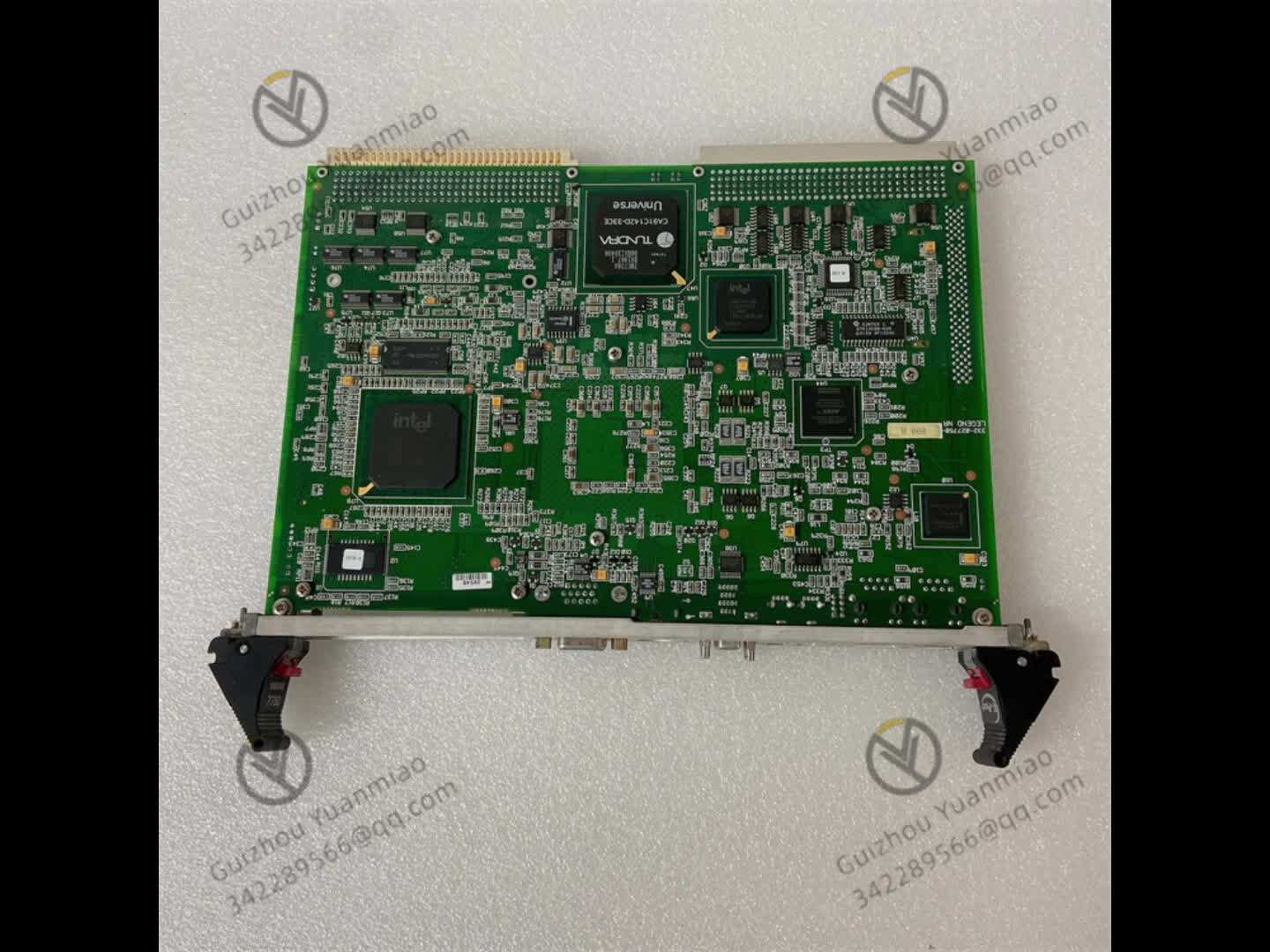
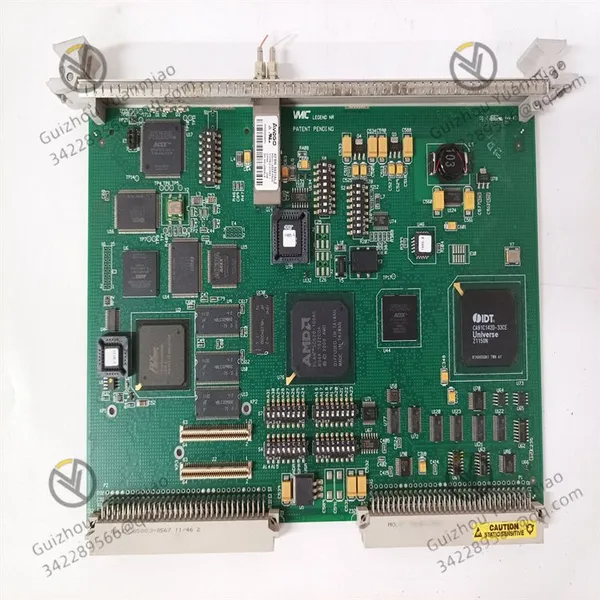
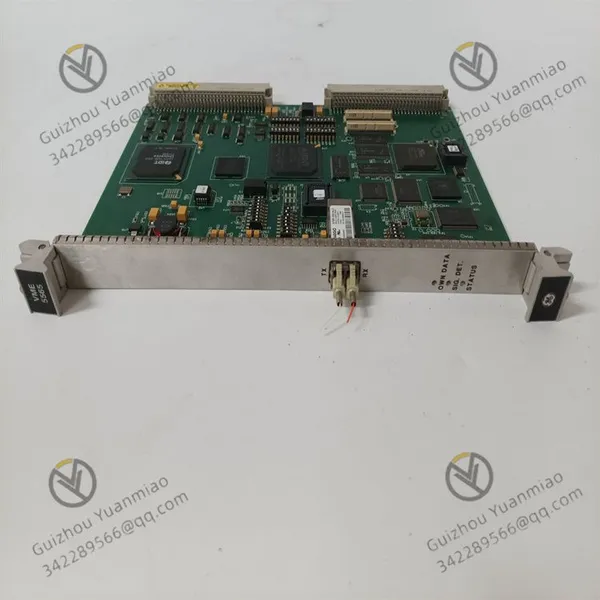
GE VME-5565 Reflective Memory VME Node Card



Related Products
-
 GE VME-7807RC High-performance Single-board ComputerNegotiableMOQ: 1 Piece
 -
GE VMIVME-2510B 64-bit TTL Digital Input/output BoardNegotiableMOQ: 1 Piece
-
GE VMIVME-2540-000 Intelligent ControllerNegotiableMOQ: 1 Piece
-
GE VMIVME-4116 Data Acquisition Control Board Card NegotiableMOQ: 1 Piece
-
GE VMIVME-4140 32-channel 12-bit Analog Output Circuit BoardNegotiableMOQ: 1 Piece
GE VME-5565 reflective memory VME node card
The working principle is to achieve high-speed and real-time data sharing by establishing memory mapping among
various nodes, as follows:
Local memory mapping: Insert GE VME-5565 reflective memory cards on each node that requires real-time
communication. Each card has its own independent local memory. It will map the local memory on the network card to
the host memory, making it as convenient and fast for users to read and write data on the network card as they do on
the host memory.
Network memory mapping: Each reflected memory card, through network memory mapping, maps the local memory
distributed on the node card to a virtual global memory. When a user writes data to the local node card, the data will
be simultaneously written to the memory of all other node cards. In this way, the reading and writing of each node's
local node memory is equivalent to reading and writing to the global memory, and this global memory can be shared
by all distributed nodes, thereby achieving real-time data communication among distributed nodes.
Data transmission and update: Data is transmitted through high-speed optical fiber data paths. When a node's
reflective memory card writes data, the next reflective memory board in the network will receive this new data. Its local
memory is usually updated within 400ns, ensuring that the data can be transmitted to other nodes in an extremely
short time and guaranteeing the real-time performance and consistency of the data.
Furthermore, the data transmission of GE VME-5565 does not require the participation of the CPU, reducing the
burden on the host and improving the overall efficiency of the system. It also supports ring and star topologies, can
automatically adjust the size of data packets, and provides optional redundant transmission modes, increasing the
reliability and flexibility of data transmission.
Technical Specification:
Memory specifications: The on-board SDRAM capacity is typically 128MB, and some can be configured to 64MB,
enabling rapid reading of stored data.
Transmission rate:
Serial rate of optical fiber network: 2.12Gbaud.
Network transmission rate: When not in redundant transmission mode, the transmission rate of 4-byte data packets is
43MB/s, and that of 64-byte data packets can reach up to 170MB/s at most. During redundant transmission, the
transmission rate of 4-byte data packets is 20MB/s, and that of 64-byte data packets is 87MB/s.
PCI transmission rate: 132MB/s at 33MHz/ 32-bit bus, 264MB/s at 33MHz/ 64-bit bus or 66MHz/ 32-bit bus, 528MB/s
at 66MHz/ 64-bit bus, and the available link is limited.
Data packet size: Supports dynamic data packet sizes ranging from 4 to 64 bytes, which can meet the requirements of
different application scenarios.
Number of nodes: It can support up to 256 nodes at most, with strong scalability.
Optical fiber connection: The longest connection with multimode optical fiber can reach up to 300 meters, and the
longest connection with single-mode optical fiber can reach up to 10 kilometers.
Interrupt function: Any node on the network can generate an interrupt in other nodes or all nodes with a single
command, which can be used to synchronize system processes or track data.
Error management: Equipped with error detection function, the redundant transmission mode can further suppress
errors, prevent data loss, and enhance system reliability.
Working environment: Operating temperature is 0°C to + 65°C (forced air cooling), storage temperature is -40 °C to +
85°C, relative humidity is 20% to 80% (no condensation).
Power requirement: The typical value is 0.7A, and the maximum value is 1.5A at + 3.3VDC (±5%). Typically, 1.8A (±5%)
at +5VDC.
Bus standard: Complies with the PCI Revised 2.2 standard and is easy to integrate with various computer systems.
Application scenario description:
Industrial Automation and Control Systems
Monitoring and control of large-scale units
Application scenarios: Such as steam turbine control systems in the power industry and reactor control systems in the
chemical industry, connecting sensors, PLCS, and monitoring hosts to transmit equipment operation parameters
(temperature, vibration, pressure, etc.) in real time.
Advantages: Supports multi-node synchronous collection and control to ensure a rapid response when the equipment
malfunctions and avoid the risk of downtime.
Robots and Intelligent Manufacturing
Application scenario: In multi-robot collaborative production lines, it enables real-time data interaction among various
robot controllers, vision systems, and motion execution units (such as workpiece positions and motion trajectories).
Advantages: High transmission rate ensures the accuracy of multi-robot collaborative operations, reducing action
delays and errors.
Medical equipment and scientific research instruments
Medical Imaging and Diagnostic System
Application scenarios: Connect multiple processing units of imaging equipment such as CT and MRI, transmit scanning
data in real time, and collaboratively complete image reconstruction and analysis.
Advantages: Large-capacity memory and high-speed transmission shorten image processing time and improve
diagnostic efficiency.
High-energy physics experiments and particle accelerators
Application scenario: In particle collision experiments, synchronize the data acquisition and processing nodes of
multiple detectors to transmit massive physical signals (such as particle trajectories and energy data) in real time.
Advantages: Supports expansion of up to 256 nodes, meeting the networking requirements of large-scale
experimental systems and ensuring no data loss and low-latency transmission.

Send Inquiry to This Supplier



You May Also Like
-
GE VMIVME-5565-110000 Reflective Memory Node CardNegotiableMOQ: 1 Piece
-
GE VMIVME-7459 Storage ModuleNegotiableMOQ: 1 Piece
-
GE VMIVME-7486 VMEbus CPU ModuleNegotiableMOQ: 1 Piece
-
GE VMIVME-7658 Single-board ComputerNegotiableMOQ: 1 Piece
-
GE VMIVME-7700 High-performance VMEbus Processor ModuleNegotiableMOQ: 1 Piece
-
GE VMIVME-7750 VME Bus ModuleNegotiableMOQ: 1 Piece
-
GE VMIVME-7807-D Single-board ComputerNegotiableMOQ: 1 Piece
-
GE VMIVME-7807RC Single-slot Single-board ComputerNegotiableMOQ: 1 Piece
-
GE V7768-322001 Embedded Single-board ComputerNegotiableMOQ: 1 Piece
-
GE VMIVME-7452 Controller ModuleNegotiableMOQ: 1 Piece


