








 Contact Platform Support
 Help Center
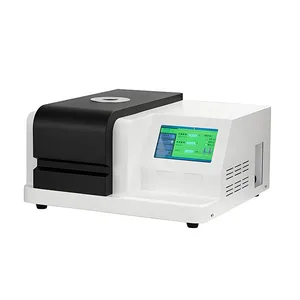
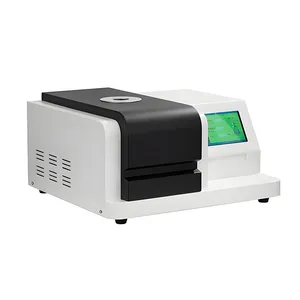
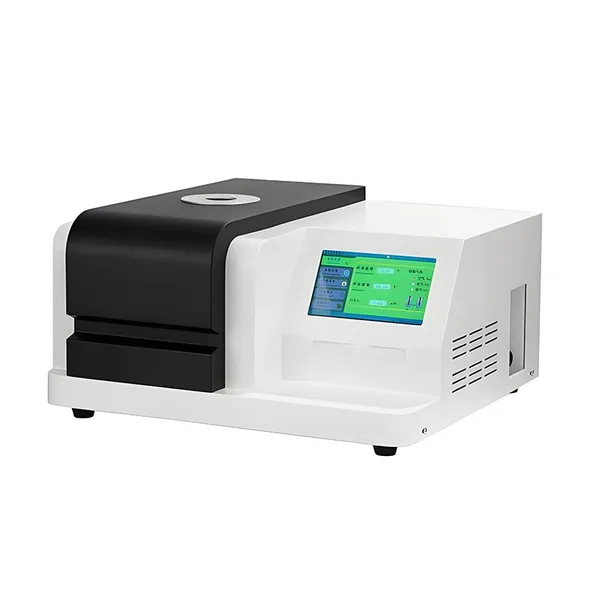
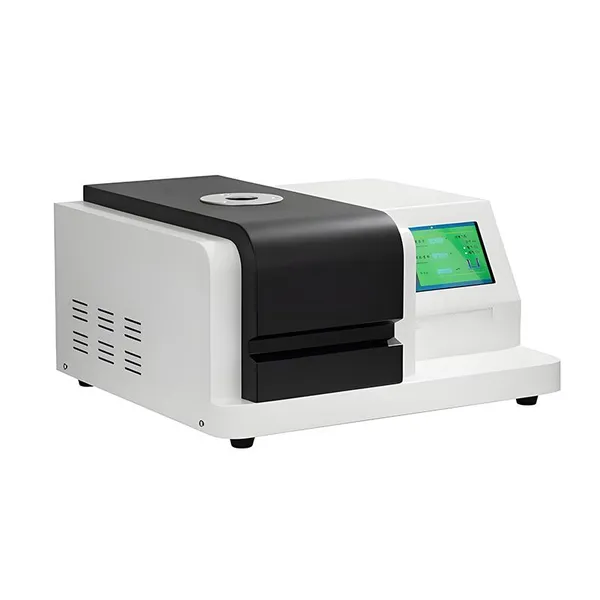
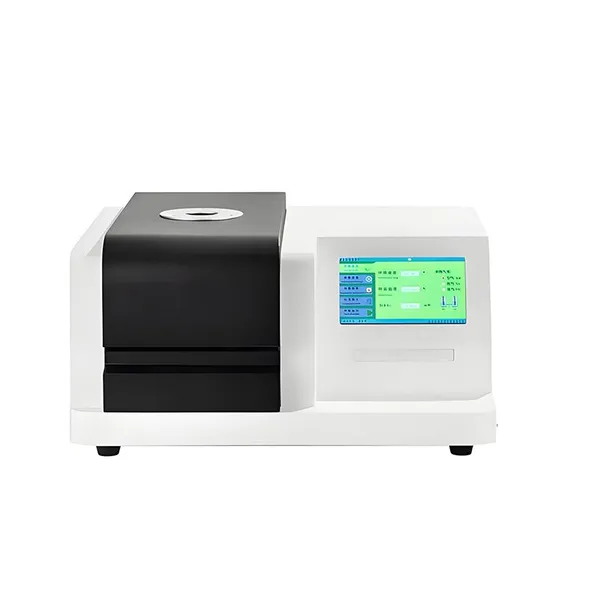
High Temperature Differential Thermal Analyzer


Related Products
-
 High Temperature Differential Thermal AnalyzerUS$ 6000 - 8000MOQ: 1 Set
 -
Dsc Touch Screen Differential Scanning CalorimeterUS$ 6000 - 8000MOQ: 1 Set
-
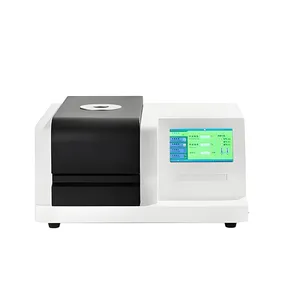
Differential Scanning Calorimetry Analysis AnalyzerUS$ 6000 - 8000MOQ: 1 Set
-
High Sensitivity 0.001 Differential Scanning Calorimeter DSC With Cooling SystemUS$ 6000 - 8000MOQ: 1 Set
-
Differential Scanning Calorimeter (DSC) With Liquid Nitrogen CoolingUS$ 6000 - 8000MOQ: 1 Set
I. Basic Principle
High Temperature Differential Thermal Analyzer (HT-DTA) analyzes the physical or chemical changes of materials at high temperature by measuring the temperature difference between the sample and the reference. When the sample undergoes a heat-absorbing or exothermic reaction (e.g., phase change, decomposition, oxidation), its temperature deviates from the reference, and the instrument records the temperature difference (ΔT) versus temperature/time curve to identify the characteristic points of the reaction (e.g., melting point, decomposition temperature).
II. Instrument Composition
1.
High temperature furnace body
Heating element: silicon carbon rod (1600℃), molybdenum wire (1800℃) or platinum-rhodium alloy (1500℃).
Furnace chamber material: alumina ceramic or graphite, high temperature resistant and low thermal inertia.
2.
Sample holder
Material: platinum crucible (oxidation resistant), alumina crucible (inert).
Dual thermocouples: monitor sample and reference temperatures separately (type S or type B thermocouples).
3.
Control system
Temperature control accuracy: ±1°C (PID algorithm).
◦
Temperature rise rate: 0.1~50℃/min, support program temperature rise.
4.
Atmosphere system
Inert gas (N₂, Ar), oxidizing (O₂), reducing (H₂/CO) environment control.
Vacuum option: up to 10-³ Pa to avoid gas interference.
5.
Data acquisition and analysis software
◦
Real-time display of ΔT curve, automatic labeling of peak temperature and integral enthalpy change.
Core parameters and selection points
Parameter
Description
Temperature range
Conventional type: RT~1500℃; Ultra-high-temperature type: RT~2400℃ (special furnace body is required).
Sensitivity
Minimum detection of thermal effects (e.g. 0.1μV), determines the ability to recognize tiny reactions.
Warming rate
Rapid warming (50°C/min) is suitable for screening experiments; slow (1°C/min) is used for high-resolution analysis.
Atmosphere control
Multiplexed gas mixing system supporting dynamic atmosphere switching (e.g. oxidizing → inerting).
Sample capacity
Standard crucible size (e.g. 5mm diameter), large capacity optional (research batch reaction).
IV. Typical Application Areas
1.
Ceramics and refractories
Optimization of the sintering process: determination of the optimal sintering temperature (identification of crystalline phase transitions by exothermic peaks).
Decomposition reactions: analyze kaolin (Al₂O₃-2SiO₂-2H₂O) dehydration and mullite generation.
2.
Metals and alloys
Melting behavior: determination of the melting point of alloys (e.g., initial melting temperature of nickel-based high-temperature alloys).
Oxidation kinetics: assessment of the oxidation resistance of metals at high temperatures (e.g. oxidative weight gain of titanium alloys at 800°C).
3. Catalyst studies
Activation temperature range: Determine the activation temperature of the catalyst by heat absorption peaks.
Carbon accumulation analysis: detect exothermic reactions during catalyst deactivation.
4. Nuclear Materials
High-temperature stability testing of uranium/plutonium compounds (inert atmosphere to prevent oxidation).
V. Example of operation flow
Example: Phase transition analysis of zirconium oxide (ZrO₂)
1. Sample preparation:
Powdered samples are pressed and loaded into a platinum crucible with α-Al₂O₃ (reference material) separately.
2.
Parameter setting:
Temperature increase range: RT~1500°C, rate 10°C/min, air atmosphere.
3.
Data acquisition:
Monitoring of ΔT curve with heat absorption peak at ~1170°C (tetragonal phase → cubic phase transition).
4. Result analysis:
The peak temperature corresponds to the phase transition temperature and the peak area is integrated to calculate the enthalpy of the phase transition.

Send Inquiry to This Supplier


You May Also Like
-
Differential Scanning Calorimeter (DSC) With Liquid Nitrogen CoolingUS$ 6000 - 8000MOQ: 1 Set
-
Type Differential Scanning Calorimeter for Polymer MaterialUS$ 6000 - 8000MOQ: 1 Set
-
Thermal Gravimetric Analyzer Dsc Differential Scanning CalorimeterUS$ 6000 - 8000MOQ: 1 Set
-
Diamond Dsc Differential Scanning CalorimeterUS$ 6000 - 8000MOQ: 1 Set
-
ISO Laboratory 500C TGA DSC STA Thermal Analyzer DSC Differential Scanning Calorimeter PriceUS$ 6000 - 8000MOQ: 1 Set
-
Differential Scanning Calorimeter Calorimetry Price Industrial Instrument CalorimeterUS$ 6000 - 8000MOQ: 1 Set
-
Computerized Double Column Tensile Testing MachineUS$ 3999 - 9999MOQ: 1 Set
-
Computer Control Tensile Test Equipment Universal Tensile Strength Testing MachineUS$ 1000 - 3500MOQ: 1 Set
-
Computer Control Peel Force Universal Tensile Strength Test EquipmentUS$ 1000 - 2500MOQ: 1 Set
-
100kn Computer Electronic Laboratory Universal Testing Machine And Pressure Material Strength Tension Test MachineUS$ 3000 - 9000MOQ: 1 Set


