








 Contact Platform Support
 Help Center
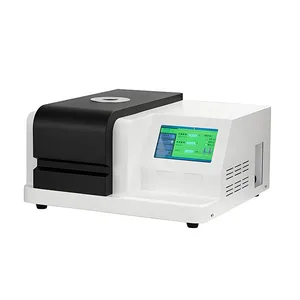
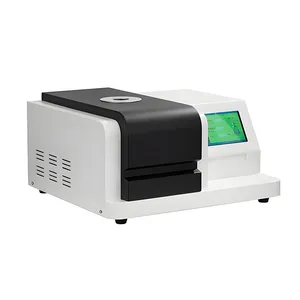
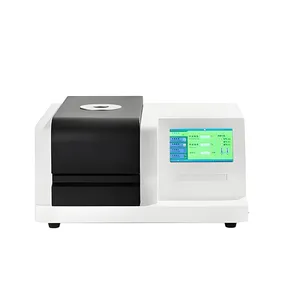
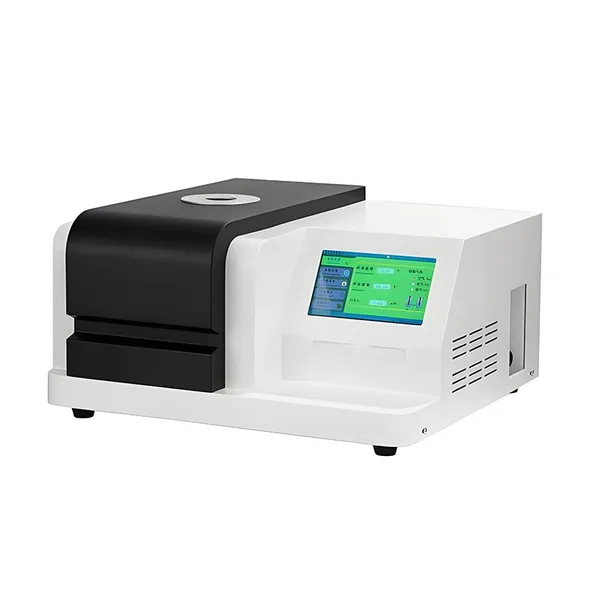
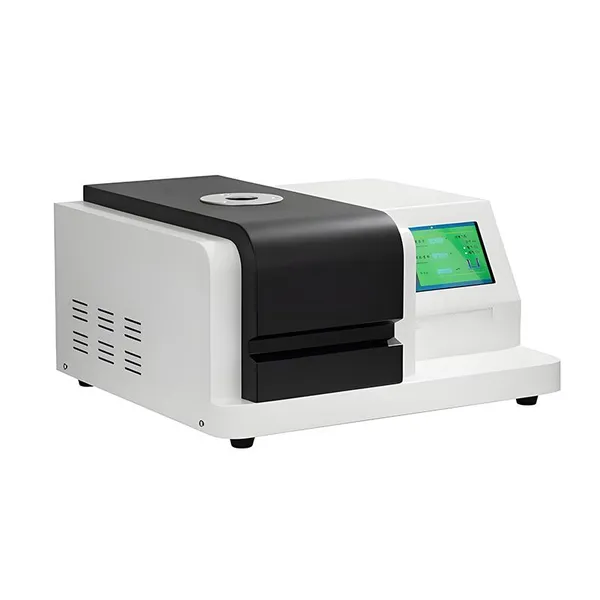
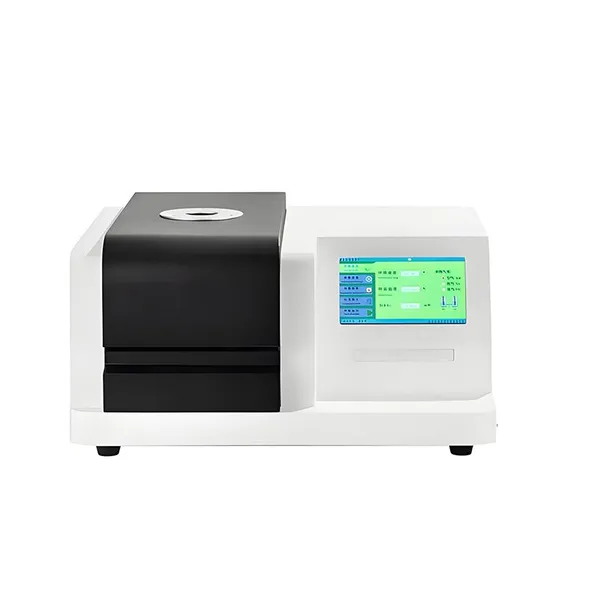
Differential Scanning Calorimeter Calorimetry Price Industrial Instrument Calorimeter


Related Products
-
 Computerized Double Column Tensile Testing MachineUS$ 3999 - 9999MOQ: 1 Set
 -
Computer Control Tensile Test Equipment Universal Tensile Strength Testing MachineUS$ 1000 - 3500MOQ: 1 Set
-
Computer Control Peel Force Universal Tensile Strength Test EquipmentUS$ 1000 - 2500MOQ: 1 Set
-
100kn Computer Electronic Laboratory Universal Testing Machine And Pressure Material Strength Tension Test MachineUS$ 3000 - 9000MOQ: 1 Set
-
Universal Tensile Testing Machine for Metal Material Strength MeasurementUS$ 1800 - 3500MOQ: 1 Set
Differential Scanning Calorimetry (DSC) Measurement Principles in Detail
Differential Scanning Calorimetry (DSC) analyzes the thermal effects of materials at controlled temperatures by accurately measuring the heat changes between the sample and the reference. Its core principle and workflow are as follows:
I. Basic Principle
Heat difference detection
Sample and reference: DSC simultaneously heats (or cools) the sample and the reference (e.g., alumina or empty crucible), and the reference has no thermal effect within the experimental temperature range.
Heat flow difference: When the sample undergoes heat absorption (e.g. melting) or exothermic (e.g. crystallization), the system detects the heat flow difference between the two and converts it into an electrical signal.
Temperature program control
The instrument linearly ramps up or down the temperature at a preset rate (e.g., 10°C/min) to ensure that the temperature of the sample and reference are synchronized.
Temperature accuracy (±0.1°C) is maintained by a closed-loop control system (e.g. resistance heating/liquid nitrogen cooling).
II. Technology Types
Power-compensated DSC
Principle: Adjust the heating power of the sample and reference in real time so that the temperature difference between the two is maintained at zero.
For example, when the sample absorbs heat, increase the power on the sample side to compensate for heat loss.
Output: The compensated power difference corresponds directly to the heat change (unit: mW).
Advantage: High sensitivity, suitable for reaction kinetics studies (e.g. polymerization rate).
Heat Flow DSC
Principle: The difference in heat flow rate between the sample and the reference is measured directly by a heat flow sensor (e.g. thermopile).
The heat flow difference is proportional to the thermal effect of the sample.
Output: Heat flow difference curve (vertical axis: μV/mW).
Advantage: Simple structure, suitable for routine testing (e.g. melting temperature determination).
III. Data Analysis
DSC curve characteristics
Heat-absorption peak (upward): melting, dehydration, decomposition and other processes.
Exothermic peak (downward): crystallization, solidification, oxidation and other processes.
Baseline shift: reflect the change of specific heat capacity (e.g. glass transition).
Calculation of key parameters
Enthalpy of phase change (ΔH): Calculated by integrating the peak area (unit: J/g).
For example, Indium has an enthalpy of fusion of 28.4 J/g and is used for instrument calibration.
Glass transition temperature (Tg): Inflection point temperature of the baseline.
Reaction kinetics: activation energy (Kissinger's equation) is fitted by peak shape at different heating rates.
IV. Application Scenarios
Material Science
Polymer materials: Determine melting temperature (Tm), crystallinity, thermal stability.
Metals/Ceramics: Analyze phase transition, sintering behavior.
Pharmaceutical and Food
Pharmaceutical polycrystalline screening, food oxidative stability testing.
Energy Materials
Lithium battery electrolyte decomposition temperature, phase change material energy storage performance.
V. Experimental Notes
Sample Preparation
Mass: 1-10 mg, evenly spread to avoid thermal resistance.
Encapsulation: sealed crucible to prevent volatiles from interfering.
Calibration and Verification
Temperature calibration: Use standard substances such as indium (Tm=156.6°C) and tin (Tm=231.9°C).
Heat flow calibration: baseline corrected by substances with known enthalpy.
Interference factors
Too rapid a rate of temperature increase may cause distortion of the peak shape.
Atmosphere (N₂, Air) affects oxidation reaction test results.
VI. Comparison with other techniques
Technology DSC DTA TGA
Principle Direct measurement of heat difference Measurement of temperature difference Measurement of mass change
Output Heat flow vs. temperature Temperature difference vs. temperature Mass vs. temperature
Applications Quantitative enthalpy change, specific heat capacity Qualitative phase change, decomposition Decomposition temperature, residue analysis
With the above principles and operational details, the DSC is able to provide quantitative data on the thermal properties of materials, which are widely used in research and industrial quality control. In practice, it is necessary to optimize the experimental parameters in relation to the characteristics of the sample to ensure accurate and reliable results.

Send Inquiry to This Supplier


You May Also Like
-
Fully Automatic Universal Tensile Testing Machine for Plastics IndustryUS$ 2000 - 3000MOQ: 1 Set
-
Universal Tensile Testing Machine With Data Acquisition SystemUS$ 1000 - 2500MOQ: 1 Set
-
Universal Tensile Testing Machine for Textile Fiber Strength AssessmentUS$ 1800 - 2800MOQ: 1 Set
-
Large Double Column Tensile Testing MachineUS$ 1000 - 3500MOQ: 1 Set
-
Plastic Rubber Double Column Tensile Testing MachineUS$ 3000 - 5500MOQ: 1 Set
-
Plastic Rubber Double Column Tensile Testing MachineUS$ 3000 - 5500MOQ: 1 Set
-
Computer Servo Double Column Tensile Testing MachineUS$ 3000 - 5500MOQ: 1 Set
-
Tensile Strength Testing Machine for Metal MaterialsUS$ 3999 - 9999MOQ: 1 Set
-
Tensile Strength Testing Machine for Rubber ProductsUS$ 3999 - 9999MOQ: 1 Set
-
Tensile Strength Testing Machine for Composite MaterialsUS$ 3999 - 9999MOQ: 1 Set


