








 Contact Platform Support
 Help Center
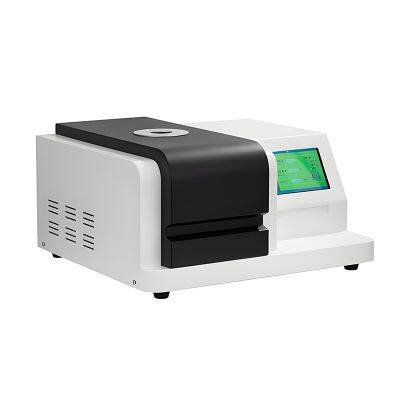
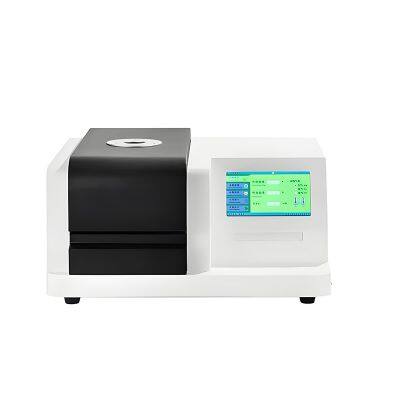
Type Differential Scanning Calorimeter for Polymer Material


Related Products
-
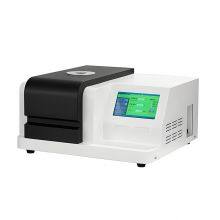
 Thermal Gravimetric Analyzer Dsc Differential Scanning CalorimeterUS$ 6000 - 8000MOQ: 1 Set
 -
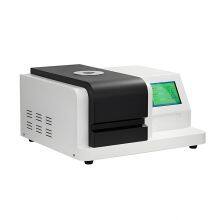
Diamond Dsc Differential Scanning CalorimeterUS$ 6000 - 8000MOQ: 1 Set
-
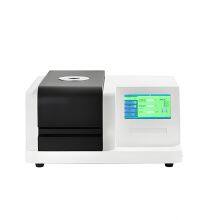
ISO Laboratory 500C TGA DSC STA Thermal Analyzer DSC Differential Scanning Calorimeter PriceUS$ 6000 - 8000MOQ: 1 Set
-
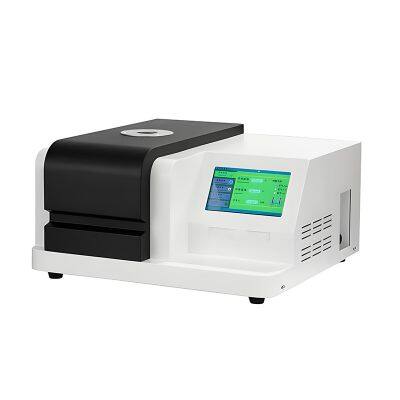
Differential Scanning Calorimeter Calorimetry Price Industrial Instrument CalorimeterUS$ 6000 - 8000MOQ: 1 Set
-
Computerized Double Column Tensile Testing MachineUS$ 3999 - 9999MOQ: 1 Set
Polymer Material Types and Differential Scanning Calorimeter (DSC) Selection and Testing Guidelines
Differential Scanning Calorimetry (DSC) is a core tool for studying the thermal properties of polymer materials, and the functional requirements of DSC vary significantly by polymer type (e.g., thermoplastics, thermosets, elastomers). The following is a detailed explanation of DSC selection and testing for polymer material types:
I. Polymer Material Classification and DSC Testing Highlights
Polymer type
Typical materials
DSC test focus
Thermoplastics
PE, PP, PET, PC
Melting temperature (Tm), crystallinity, glass transition temperature (Tg)
Thermosetting resins
Epoxy resins, phenolic resins
Curing reaction exothermic peak (curing temperature, reaction enthalpy), thermal decomposition temperature
Elastomer
Natural rubber, silicone rubber
Glass transition (Tg), low temperature brittleness point, cross-linking reaction analysis
Blends/Composites
PP/EPDM, PC/ABS
Multiphase melt peak separation, compatibility analysis (judged by Tg shift)
Biodegradable materials
PLA, PHA
Melt-crystallization behavior, thermal stability (oxidation induction time OIT)
II. DSC selection suggestions for different polymer types
Polymer type
Recommended DSC configuration
Key Parameter Requirements
Thermoplastic
- Basic DSC (temperature range: -50℃~400℃)
- Sensitivity: 1μW
- Standard aluminum crucible
Adjustable heating rate (1~20℃/min), support melt peak integration (crystallinity calculation)
Thermosetting resin
- High sensitivity DSC (0.2μW)
- High-pressure sealed crucible (anti-volatilization)
- Fast temperature rise (50°C/min)
Detection of weak exothermic peaks (curing reaction), support for dynamic ramp-up programs (simulation of actual curing conditions)
Elastomer
- Liquid nitrogen cooled DSC (-180°C~400°C)
- Modulated DSC (MDSC)
Low temperature Tg detection (e.g. Tg ≈ -60°C for rubber), separation of reversible/irreversible heat flow (elimination of stress relaxation interference)
Blends/Composites
- High resolution DSC (0.1μW)
- Multi-stage programmed temperature rise
Multi-peak separation capability (e.g., melt bimodal peaks for PP/EPDM), support for specific heat capacity determination (to determine compatibility)
Biodegradable materials
- Oxidation Induction Module (OIT)
- Atmosphere control (O₂/N₂ switching)
Oxidation stability test (OIT value), pyrolysis analysis (e.g. Td≈250°C for PLA)
III. Typical Test Flow and Data Analysis
Case 1: Thermoplastic (PP) melting and crystallization analysis
1.
Sample preparation: take 5mg PP particles, press piece sealed in aluminum crucible.
2.
Test procedure:
First round of heating: 30°C → 220°C (10°C/min) to eliminate thermal history.
Cooling down: 220°C → 30°C (10°C/min), record crystallization peaks.
Second round of warming: 30°C → 220°C (10°C/min), record melting peaks.
3.
Data output:
Melting temperature (Tm): ~160°C (peak temperature).
Crystallinity (Xc): Xc = (ΔHm/ΔH0) × 100% (ΔH0 = 209 J/g, 100% crystalline PP).
Case 2: Analysis of epoxy curing reactions
1.
Sample preparation: liquid epoxy resin mixed with curing agent and sealed in a high pressure crucible.
2.
Test procedure:
Constant temperature mode: 25°C→150°C (10°C/min), monitoring the exothermic peak.
3.
Data output:
Curing onset temperature (Tonset): approx. 80°C.
Enthalpy of reaction (ΔH): total heat (J/g) calculated by integrating the exothermic peak.

Send Inquiry to This Supplier


You May Also Like
-
Computer Control Tensile Test Equipment Universal Tensile Strength Testing MachineUS$ 1000 - 3500MOQ: 1 Set
-
Computer Control Peel Force Universal Tensile Strength Test EquipmentUS$ 1000 - 2500MOQ: 1 Set
-
100kn Computer Electronic Laboratory Universal Testing Machine And Pressure Material Strength Tension Test MachineUS$ 3000 - 9000MOQ: 1 Set
-
Universal Tensile Testing Machine for Metal Material Strength MeasurementUS$ 1800 - 3500MOQ: 1 Set
-
Fully Automatic Universal Tensile Testing Machine for Plastics IndustryUS$ 2000 - 3000MOQ: 1 Set
-
Universal Tensile Testing Machine With Data Acquisition SystemUS$ 1000 - 2500MOQ: 1 Set
-
Universal Tensile Testing Machine for Textile Fiber Strength AssessmentUS$ 1800 - 2800MOQ: 1 Set
-
Large Double Column Tensile Testing MachineUS$ 1000 - 3500MOQ: 1 Set
-
Plastic Rubber Double Column Tensile Testing MachineUS$ 3000 - 5500MOQ: 1 Set
-
Plastic Rubber Double Column Tensile Testing MachineUS$ 3000 - 5500MOQ: 1 Set


