








 Contact Platform Support
 Help Center
Differential Scanning Calorimetry Analysis Analyzer
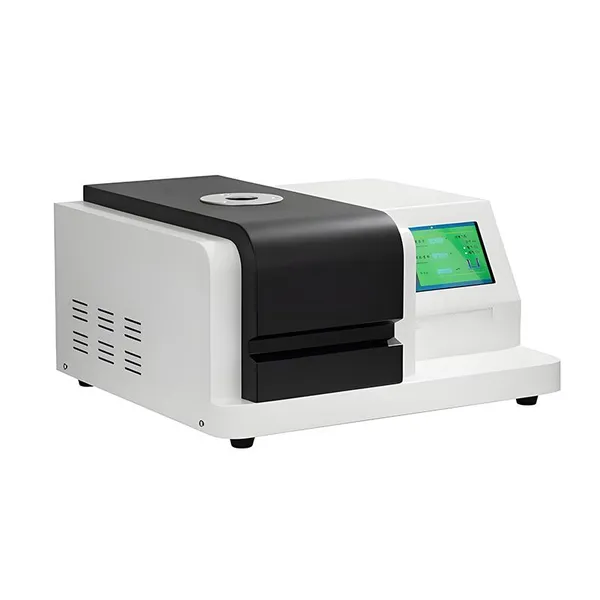
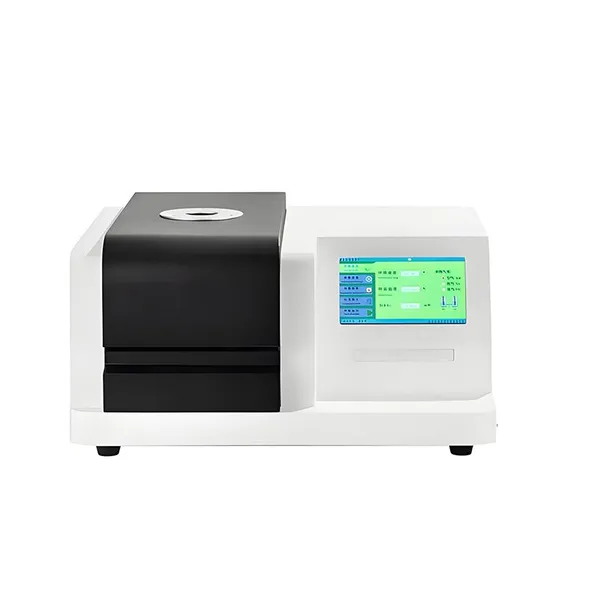


Related Products
-
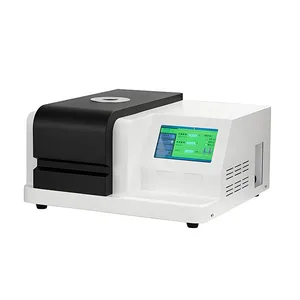
 High Sensitivity 0.001 Differential Scanning Calorimeter DSC With Cooling SystemUS$ 6000 - 8000MOQ: 1 Set
 -
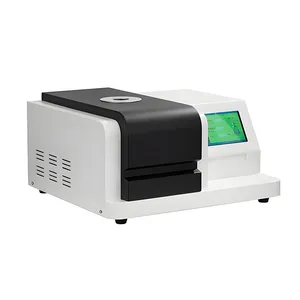
Differential Scanning Calorimeter (DSC) With Liquid Nitrogen CoolingUS$ 6000 - 8000MOQ: 1 Set
-
Differential Scanning Calorimeter (DSC) With Liquid Nitrogen CoolingUS$ 6000 - 8000MOQ: 1 Set
-
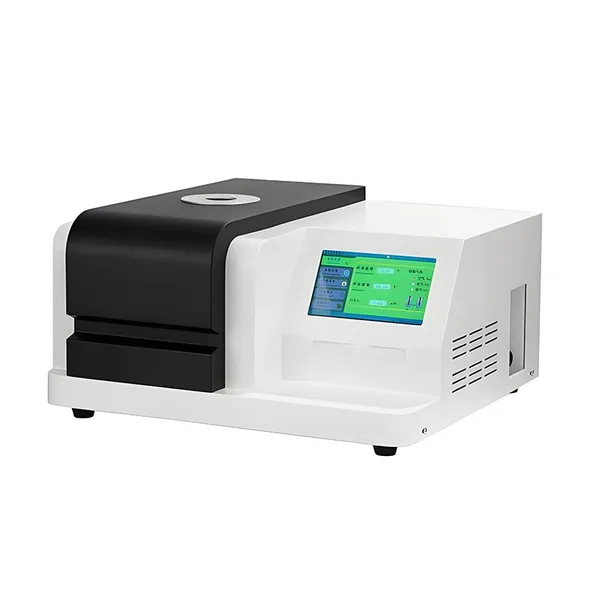
Type Differential Scanning Calorimeter for Polymer MaterialUS$ 6000 - 8000MOQ: 1 Set
-
Thermal Gravimetric Analyzer Dsc Differential Scanning CalorimeterUS$ 6000 - 8000MOQ: 1 Set
Differential Scanning Calorimetry (DSC) Explained
Differential Scanning Calorimetry (DSC) is a key instrument for analyzing the thermodynamic properties of materials by measuring the difference in heat flow between the material and the reference in the programmed temperature control process. Its core function is to quantitatively detect the phase change, heat of reaction, specific heat capacity and other parameters of the material, which is widely used in the fields of material science, pharmacy, chemical industry, food and so on.
I. Core Principle of DSC
Heat flow DSC
The sample and reference material are placed in the same furnace, and the difference in heat flow (ΔH) between them is monitored by thermocouples.
Directly quantify the energy change of heat absorption (e.g., melting, dehydration) or exothermic (e.g., oxidation, crystallization) processes.
The formula:
Δ
��
= ������������
��
⋅
Δ
��
ΔH = K ⋅ ΔT (K is the instrument constant, ΔT is the temperature difference).
Power-compensated DSC
The sample and reference are heated independently, and the power difference is measured directly by dynamically compensating the power to keep the two temperatures the same.
Higher sensitivity, suitable for detecting weak thermal effects (such as polymer glass transition).
Core functions and parameters of DSC
Parameter/Function Description
Temperature range Conventional type: -180℃~725℃; High temperature type: up to 1600℃ (special furnace design is required).
Sensitivity Minimum detection of heat flow: 0.1μW (high-end models), determining the identification of small thermal effects.
Rate of temperature rise and fall Conventional: 0.1~100°C/min; Ultra-fast scanning: up to 500°C/min (to study kinetic processes).
Atmosphere control Inert (N₂, Ar), oxidizing (O₂), vacuum (10-³ Pa), adapted to different reaction environments.
Data accuracy Temperature accuracy ±0.1℃, enthalpy error ≤±1%.
Typical Application Scenarios
Polymer materials
Glass transition (Tg): Detect the softening temperature of amorphous polymers (e.g. Tg≈80℃ for PVC).
Melting and crystallization: Determine the melting point (~130°C) and crystallinity of polyethylene (PE).
Curing reaction: Integral analysis of the exothermic peak of epoxy resin curing (calculation of reaction enthalpy).
Pharmaceutical industry
Polycrystalline identification: Identify differences in melting points of different crystalline forms of drugs (e.g., ibuprofen α-type vs. β-type).
Thermal Stability: Evaluate the denaturation temperature of proteins (e.g. structural changes of antibodies at elevated temperatures).
Metals and Ceramics
Phase transition analysis: aging precipitation of aluminum alloys (exothermic peaks correspond to second phase formation).
Sintering optimization: Tetragonal → cubic phase transition temperature detection (~1170°C) in zirconia (ZrO₂).
Food & Energy
Oxidation of fats and oils: oxidation induction time (OIT) measurement to assess antioxidant properties.
Phase change materials: melting-solidification cycle thermal property analysis of paraffin wax (energy storage application).
IV. Example of DSC operation process
Example: Determination of melting temperature of polypropylene (PP)
Sample preparation: Take 5mg PP particles, press the tablet and seal it in an aluminum crucible.
Parameter setting:
Temperature range: 30℃~200℃, heating rate 10℃/min, nitrogen flow rate 50mL/min.
Test execution:
The instrument automatically records the heat flow curve, and the melting peak corresponds to the PP melting point (about 160°C).
Data analysis:
The software automatically integrates the peak area and calculates the enthalpy of melting (unit: J/g).

Send Inquiry to This Supplier


You May Also Like
-
Diamond Dsc Differential Scanning CalorimeterUS$ 6000 - 8000MOQ: 1 Set
-
ISO Laboratory 500C TGA DSC STA Thermal Analyzer DSC Differential Scanning Calorimeter PriceUS$ 6000 - 8000MOQ: 1 Set
-
Differential Scanning Calorimeter Calorimetry Price Industrial Instrument CalorimeterUS$ 6000 - 8000MOQ: 1 Set
-
Computerized Double Column Tensile Testing MachineUS$ 3999 - 9999MOQ: 1 Set
-
Computer Control Tensile Test Equipment Universal Tensile Strength Testing MachineUS$ 1000 - 3500MOQ: 1 Set
-
Computer Control Peel Force Universal Tensile Strength Test EquipmentUS$ 1000 - 2500MOQ: 1 Set
-
100kn Computer Electronic Laboratory Universal Testing Machine And Pressure Material Strength Tension Test MachineUS$ 3000 - 9000MOQ: 1 Set
-
Universal Tensile Testing Machine for Metal Material Strength MeasurementUS$ 1800 - 3500MOQ: 1 Set
-
Fully Automatic Universal Tensile Testing Machine for Plastics IndustryUS$ 2000 - 3000MOQ: 1 Set
-
Universal Tensile Testing Machine With Data Acquisition SystemUS$ 1000 - 2500MOQ: 1 Set


