








 Contact Platform Support
 Help Center
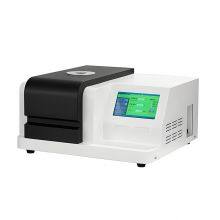
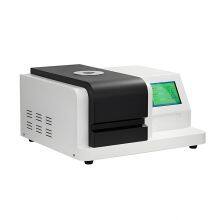
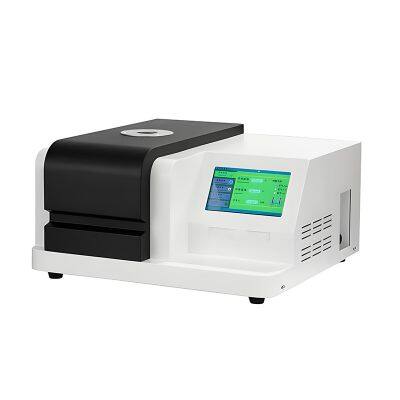
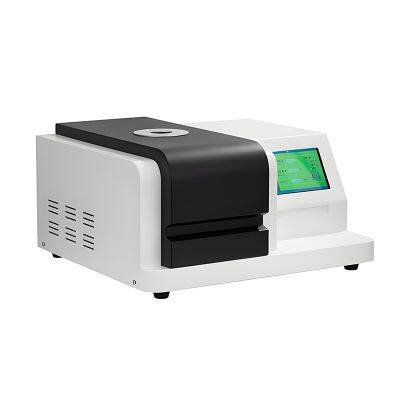
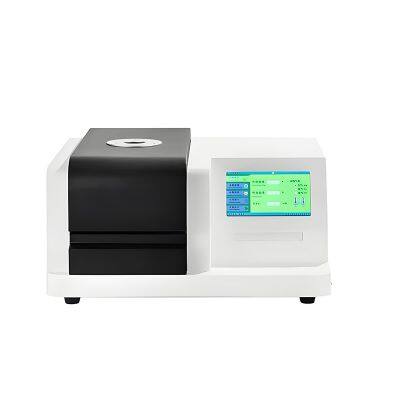
Diamond Dsc Differential Scanning Calorimeter


Related Products
-
 ISO Laboratory 500C TGA DSC STA Thermal Analyzer DSC Differential Scanning Calorimeter PriceUS$ 6000 - 8000MOQ: 1 Set
 -
Differential Scanning Calorimeter Calorimetry Price Industrial Instrument CalorimeterUS$ 6000 - 8000MOQ: 1 Set
-
Computerized Double Column Tensile Testing MachineUS$ 3999 - 9999MOQ: 1 Set
-
Computer Control Tensile Test Equipment Universal Tensile Strength Testing MachineUS$ 1000 - 3500MOQ: 1 Set
-
Computer Control Peel Force Universal Tensile Strength Test EquipmentUS$ 1000 - 2500MOQ: 1 Set
Differential scanning calorimetry (DSC) can be used to measure and analyze various thermal effects of, including the following aspects:
1. Melting thermal effects
Diamonds will undergo melting phenomena at high temperatures, and DSC can measure the melting temperature and melting heat diamonds. The melting temperature refers to the temperature at which a diamond changes from a solid to a liquid state, and the melting heat refers to the heat absorbed during the melting process. melting temperature and melting heat can be determined and calculated through the endothermic peak in the DSC curve.
2. Crystallization thermal effects
If diamonds undergo a crystall process under certain conditions (such as from amorphous to crystalline), DSC can detect the crystallization temperature and crystallization heat. The crystallization temperature refers to the at which a material changes from a liquid or amorphous state to a crystalline state, and the crystallization heat refers to the heat released during the crystallization process.
3 Glass transition temperature (Tg)
Although diamonds are crystalline in nature, in some special synthesis or processing processes, it may involve glass transition. DSC can detect the glass transition (Tg), which is the temperature at which a material changes from a glassy state to a rubbery state.
4. Oxidation stability
In an oxid atmosphere, DSC can be used to study the oxidation stability of diamonds. By testing under different atmospheres (such as nitrogen, oxygen), the thermal effects of diamonds during oxidation process can be observed, thus evaluating their antioxidant capacity.
5. Special thermal effects of nanodiamonds
For nanodiamonds and their precursors DSC can detect the melting peaks of water molecules inside them. Studies have shown that free water molecules and nanoscale water clusters in the channels of nanodiamond precursors show different melting peaks in DSC, and these differences in melting points can be used to judge the dispersion of precursors.
6. Phase transitions and changes in specific heatDSC can detect phase transitions that occur in diamonds during heating or cooling, such as from one crystal structure to another. In addition, by analyzing the baseline shift of the DSC, the specific heat change of diamonds can be evaluated.
7. Purity analysis
Through the characteristic peaks in the DSC curve, the purity of diamonds can be analyzed. example, the melting peak of pure diamonds is usually relatively single, while diamonds containing impurities may show additional peaks of thermal effects.
8. Thermal stability assessment
DSC can used to assess the thermal stability of diamonds at different temperatures, by observing the endothermic or exothermic effects during the heating process, judging their stability in high-temperature.
These measurements and analyses of thermal effects provide important data support for the study of the physical and chemical properties of diamonds, the development of new diamond materials, and the optimization of applications.
Diamond, as a material with high thermal conductivity, has significant application value in the field of thermal analysis. Differentialning Calorimetry (DSC) can be used to study the thermal stability, phase transition, thermal effects and other characteristics of diamonds. Here are the applications of diamonds inSC analysis and the features of related instruments:
Thermal analysis applications of diamonds
Study of thermal stability
Diamonds have extremely high thermal conductivity, the highest of materials, with a thermal conductivity that is five times that of silver. DSC can be used to study the thermal stability of diamonds at different temperatures, such as by measuring their glass temperature, melting temperature and other parameters.
Heat dissipation performance evaluation
Diamonds have broad application prospects in the heat dissipation management of electronic devices. For example, in new vehicles, high-power lasers, data center servers and other fields, diamond substrates can significantly reduce operating temperatures and improve power density. DSC can be used to evaluate the heat performance of diamond materials in these applications.
Oxidation stability test
Some DSC instruments (such as DSC 204 HP) can perform experiments under high and different atmospheres, which is suitable for studying the stability of diamonds in an oxidizing environment. This is crucial for evaluating the service life and performance of diamonds in high-temperature.
DSC instruments used
DSC 204 HP High Pressure Differential Scanning Calorimeter
Features: This instrument can perform experiments under high pressure, with pressure range from vacuum to 15 MPa and a temperature range from -150°C to 600°C. It is suitable for studying the thermal of diamonds under different pressures and atmospheres.
Application: It can be used to study the oxidation behavior, vaporization enthalpy, etc. of diamonds.
D DSC
Features: Power-compensated differential scanning calorimeter, which can determine the glass transition temperature, cold crystallization, and material curing/crosslinking etc.
Application: It is suitable for studying the thermal stability, phase change, etc. of diamonds.
Advantages and prospects
High thermal conductivity: The high thermal conductivity diamonds makes them perform excellently in heat dissipation management, especially in high-power, high-density electronic components.
Multi-field applications: Diamonds are not only used for dissipation in traditional electronic devices, but also show great potential in quantum computing, aerospace and other fields.
Precision of DSC: Through DSC, the thermal effects and stability of diamonds can be precisely measured, providing important data for the research and application of materials.

Send Inquiry to This Supplier


You May Also Like
-
100kn Computer Electronic Laboratory Universal Testing Machine And Pressure Material Strength Tension Test MachineUS$ 3000 - 9000MOQ: 1 Set
-
Universal Tensile Testing Machine for Metal Material Strength MeasurementUS$ 1800 - 3500MOQ: 1 Set
-
Fully Automatic Universal Tensile Testing Machine for Plastics IndustryUS$ 2000 - 3000MOQ: 1 Set
-
Universal Tensile Testing Machine With Data Acquisition SystemUS$ 1000 - 2500MOQ: 1 Set
-
Universal Tensile Testing Machine for Textile Fiber Strength AssessmentUS$ 1800 - 2800MOQ: 1 Set
-
Large Double Column Tensile Testing MachineUS$ 1000 - 3500MOQ: 1 Set
-
Plastic Rubber Double Column Tensile Testing MachineUS$ 3000 - 5500MOQ: 1 Set
-
Plastic Rubber Double Column Tensile Testing MachineUS$ 3000 - 5500MOQ: 1 Set
-
Computer Servo Double Column Tensile Testing MachineUS$ 3000 - 5500MOQ: 1 Set
-
Tensile Strength Testing Machine for Metal MaterialsUS$ 3999 - 9999MOQ: 1 Set


