








 Contact Platform Support
 Help Center
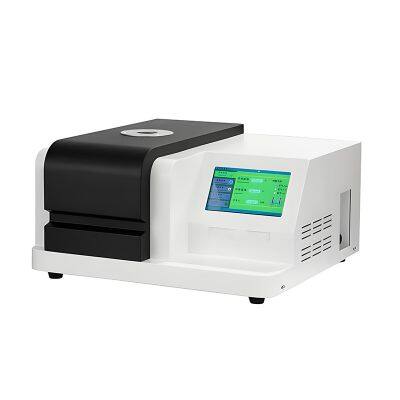
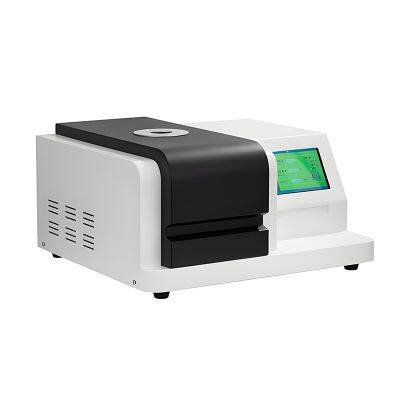
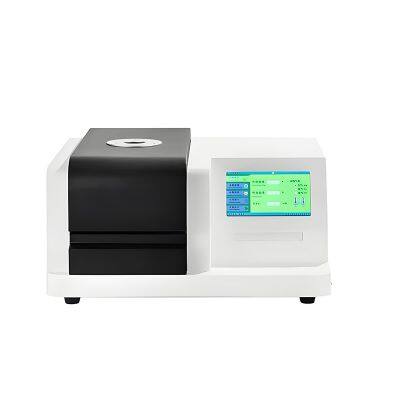
Differential Scanning Calorimeter (DSC) With Liquid Nitrogen Cooling


Related Products
-
 Type Differential Scanning Calorimeter for Polymer MaterialUS$ 6000 - 8000MOQ: 1 Set
 -
Thermal Gravimetric Analyzer Dsc Differential Scanning CalorimeterUS$ 6000 - 8000MOQ: 1 Set
-
Diamond Dsc Differential Scanning CalorimeterUS$ 6000 - 8000MOQ: 1 Set
-
ISO Laboratory 500C TGA DSC STA Thermal Analyzer DSC Differential Scanning Calorimeter PriceUS$ 6000 - 8000MOQ: 1 Set
-
Differential Scanning Calorimeter Calorimetry Price Industrial Instrument CalorimeterUS$ 6000 - 8000MOQ: 1 Set
Differential Scanning Calorimeter (DSC) is the core equipment for determining the melting temperature of a material. It accurately determines the melting point, enthalpy of melting and degree of crystallinity by detecting the change in heat absorbed by the sample during the warming process (melting peak). The following is a detailed explanation of DSC selection and operation for melt temperature testing:
First, the core requirements of the melt temperature test
1.
Temperature range: covering the melting point of the material to be tested (e.g. polyethylene PE about 130 ℃, polypropylene PP about 160 ℃, nylon PA66 about 260 ℃).
2.
Sensitivity: need to detect the melting peak of the start point, peak and termination point (high sensitivity equipment can recognize multiple peaks, such as co-mingled substances or impurity effects).
3.
Temperature rise rate: conventional test 5-20 ℃ / min, rapid scanning (50 ℃ / min or more) for kinetic studies.
4.
Data accuracy: temperature error ≤ ± 0.1 ℃, enthalpy error ≤ ± 1%.
Melting Temperature Test Operation Procedure
Example: Measuring the melt temperature of polyethylene (PE)
1.
Sample preparation:
◦
Take 5-10mg of PE pellets, press the tablet and seal it in an aluminum crucible.
◦
The reference was empty aluminum crucible or α-Al₂O₃.
2.
Parameter setting:
◦
Temperature program: 50°C → 200°C, ramp rate 10°C/min.
◦
Atmosphere: nitrogen flow rate 50mL/min (to prevent oxidation).
3.
Test execution:
◦
The instrument records the heat flow curve and the melting peak onset (T₀), peak (Tₚ) and termination (Tₑ) are automatically labeled.
4.
Data analysis:
◦
Melting temperature: the peak temperature Tₚ is usually taken (e.g. ~130°C for PE).
◦
Melting enthalpy (ΔH): calculated by integrating the peak area (unit: J/g).
◦
Crystallinity: ΔH/ΔH₀ (ΔH₀ is the theoretical enthalpy of melting for a 100% crystallized sample).

IV. Melting Test Common Problems and Solutions
Problem
Cause
Solution
Melt peaks are not sharp
Sample degradation, impurities, or slow heating rate.
Increase ramp rate (e.g. 20°C/min) or purify sample
Multiple peaks overlap
Material co-mingling, polycrystalline or thermal history differences
Reversible/irreversible heat flow separation using Modulated DSC (MDSC)
Baseline drift
Mismatch between reference and sample heat capacity or furnace contamination
Replace reference (empty crucible of same material) and clean furnace chamber
Low melting temperature
Sample oxidized or decomposed
Switch to inert atmosphere (N₂/Ar) or reduce the temperature increase rate.
Maintenance and Calibration
Temperature calibration:
Calibrated monthly using standards (indium melting point 156.6°C, zinc melting point 419.5°C) with an error of ≤±0.1°C.
Sensitivity Verification:
Test pure substances with known enthalpy of fusion (e.g. sapphire) to verify the integration accuracy (error ≤ ±1%).
Daily Maintenance:
Clean the furnace chamber immediately after testing to avoid residual sample carbonization affecting the baseline.
Regularly check the sealing of gas piping to prevent gas leakage leading to oxidized false peaks.
Data Interpretation Tips
Melting peak analysis:
Starting temperature (T₀): the critical point at which the material begins to melt, reflecting the lowest melting point component.
Peak Temperature (Tₚ): the point at which the melting rate is maximized, usually used as the nominal melting point.
Termination Temperature (Tₑ): the point at which melting is complete, significantly affected by the purity of the sample.
Crystallinity Calculation:
Formula: Crystallinity (%) = (ΔH/ΔH₀) x 100
Example: ΔH₀ of PE ≈ 293 J/g, if the measured ΔH=150 J/g, the degree of crystallinity ≈ 51.2%.

Send Inquiry to This Supplier


You May Also Like
-
Computerized Double Column Tensile Testing MachineUS$ 3999 - 9999MOQ: 1 Set
-
Computer Control Tensile Test Equipment Universal Tensile Strength Testing MachineUS$ 1000 - 3500MOQ: 1 Set
-
Computer Control Peel Force Universal Tensile Strength Test EquipmentUS$ 1000 - 2500MOQ: 1 Set
-
100kn Computer Electronic Laboratory Universal Testing Machine And Pressure Material Strength Tension Test MachineUS$ 3000 - 9000MOQ: 1 Set
-
Universal Tensile Testing Machine for Metal Material Strength MeasurementUS$ 1800 - 3500MOQ: 1 Set
-
Fully Automatic Universal Tensile Testing Machine for Plastics IndustryUS$ 2000 - 3000MOQ: 1 Set
-
Universal Tensile Testing Machine With Data Acquisition SystemUS$ 1000 - 2500MOQ: 1 Set
-
Universal Tensile Testing Machine for Textile Fiber Strength AssessmentUS$ 1800 - 2800MOQ: 1 Set
-
Large Double Column Tensile Testing MachineUS$ 1000 - 3500MOQ: 1 Set
-
Plastic Rubber Double Column Tensile Testing MachineUS$ 3000 - 5500MOQ: 1 Set


