








 Contact Platform Support
 Help Center
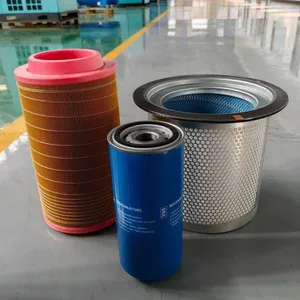
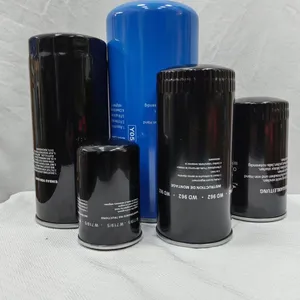
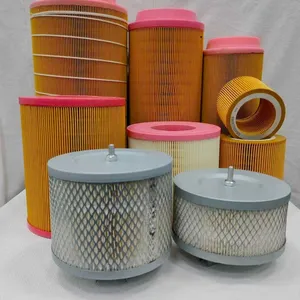
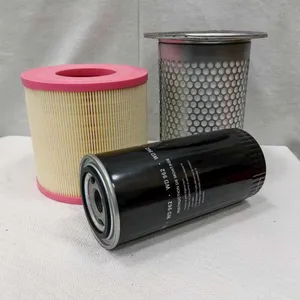
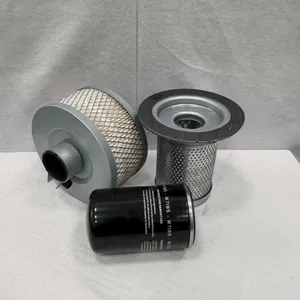
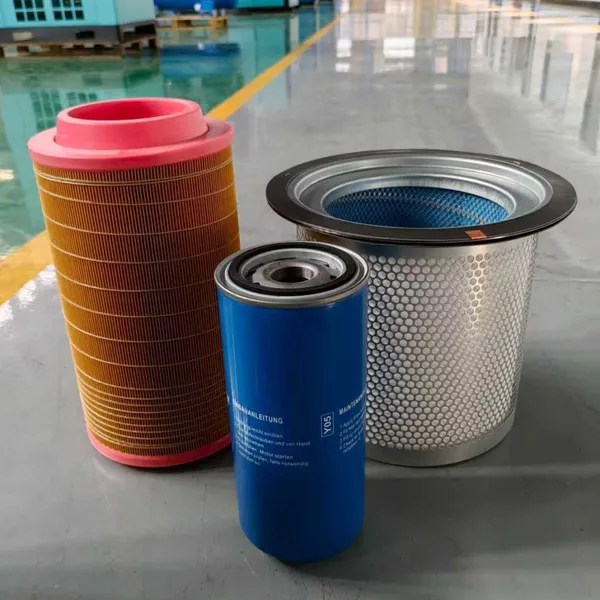
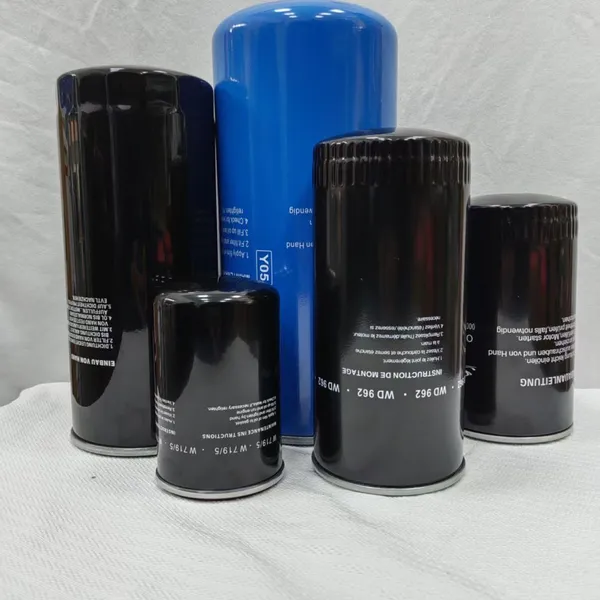
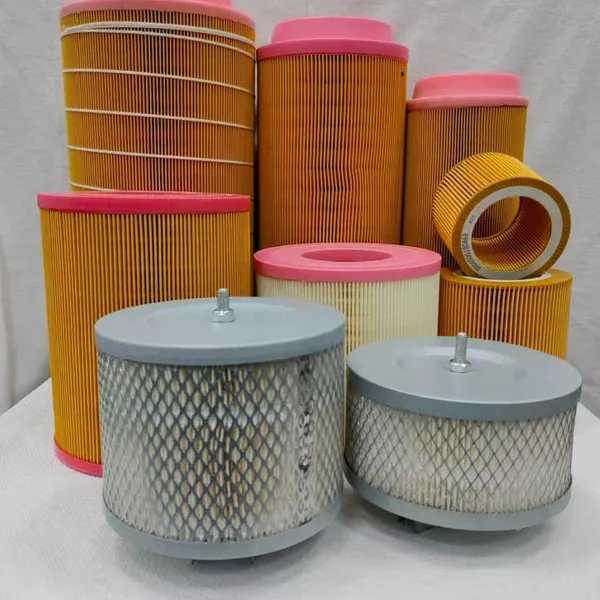
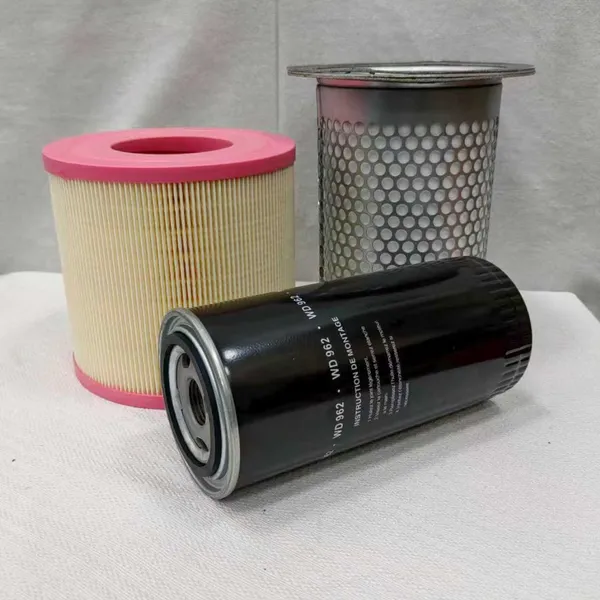
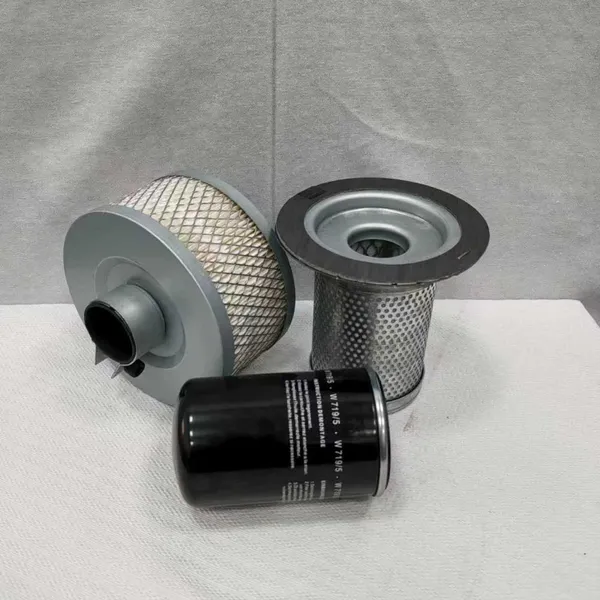
Saman Screw Air Compressor Specializes in Providing Complete Air Compressors and Three-filter Consumables.
Product Spotlights


Related Products
-
 Screw Air Compressor Three Filters, Air Filter Element, Oil Filter Element, Oil Separation ElementNegotiableMOQ: 1 Piece
 -
Screw Air Compressor Accessories, Including Air Filters, Oil Filters, and Oil Separation Cores, Are All Available in a Wide Range of Types.NegotiableMOQ: 1 Piece
-
Specialized in Providing Three Filters for Screw Air Compressors: Air Filter, Oil Filter, and Oil Separator Core.NegotiableMOQ: 1 Combo
-
Screw Air Compressor Parts, Air Compressor Consumables, Three Filters for Screw Air CompressorNegotiableMOQ: 1 Set
-
Air Compressor Parts, Air Filter, Oil Filter, Oil Separation Core, Sensor, Frequency ConverterNegotiableMOQ: 1 Piece
Detailed Description of Three Filters for Screw Air Compressors
In an oil-injected rotary screw air compressor, the "three filters" refer to the Air Intake Filter, Oil Filter, and Air-Oil Separator. They form the core filtration system, working in tandem to ensure the cleanliness of intake air, lubricating oil, and final compressed air, thereby protecting the compressor's internal components, extending service life, and guaranteeing high-quality compressed air output.
1. Air Intake Filter (Air Filter Element)
Basic Information
Location: Installed at the compressor's air intake port.
Core Function: As the first line of defense, it filters out solid contaminants such as dust, sand, pollen, and metal particles from the ambient air before they enter the compressor host. This prevents premature wear of the screw rotors, bearings, and other precision components, reduces the load on downstream oil filters and air-oil separators, and maintains efficient compressor operation.
Technical Specifications
Filtration Material: Typically multi-layer high-efficiency filter paper, synthetic fiber, or glass fiber composite material.
Filtration Accuracy: Generally ≥99.9% efficiency for particles ≥3μm; high-performance models can filter 98% of 1μm particles and 99.5% of 2μm particles.
Pressure Drop: Initial pressure drop is usually ≤0.2 bar; replacement is recommended when the pressure drop reaches 0.5–0.6 bar.
Maintenance & Replacement
Standard Cycle: Replace every 1,000–2,000 operating hours.
Harsh Environments: Shorten to 500–1,000 hours in dusty areas (mines, cement plants, etc.).
Warning Signs: Increased compressor energy consumption, reduced air delivery, or activation of the filter clog alarm.
2. Oil Filter (Lubricating Oil Filter Element)
Basic Information
Location: Installed in the lubricating oil circuit, between the oil tank and the compressor host.
Core Function: Filters out metal wear debris, carbon deposits, sludge, and other impurities generated during compressor operation from the lubricating oil. It ensures the oil's cleanliness, protects the screw rotors and bearings from abrasive wear, prevents oil circuit blockages, and maintains the oil's lubricating, cooling, and sealing properties.
Technical Specifications
Filtration Material: High-temperature-resistant glass fiber or sintered metal.
Filtration Accuracy: 50% efficiency for 8μm particles, 99% efficiency for 10μm particles.
Safety Feature: Equipped with a bypass valve. When the filter is severely clogged and the pressure difference exceeds the set value (typically 2.5–3.5 bar), the valve opens to ensure uninterrupted oil supply and prevent host damage.
Maintenance & Replacement
New Machine: First replacement after 500 operating hours.
Standard Cycle: Replace every 1,500–2,000 hours, preferably simultaneously with an oil change.
Warning Signs: Abnormal oil pressure, increased bearing noise, or bypass valve activation.
3. Air-Oil Separator (Oil Separator Element)
Basic Information
Location: Installed inside the compressor's oil-gas separation tank.
Core Function: The final purification step. It efficiently separates oil mist and tiny oil droplets from the compressed air-oil mixture discharged by the host. The separated oil is collected and returned to the lubrication system via the oil return line, while the clean compressed air exits to the system. This minimizes oil carryover, reduces lubricant consumption, and ensures the compressed air meets purity standards (oil content
Technical Specifications
Filtration Material: Multi-layer composite material, including coarse separation layer, fine fiber layer, and coalescence layer.
Separation Efficiency: Oil content in the final air ≤ 3ppm (ISO 8573-1 Class 2).
Pressure Drop: Initial pressure drop ≤ 0.1 bar; replacement is recommended when it reaches 0.3–0.5 bar.
Maintenance & Replacement
Standard Cycle: Replace every 4,000–6,000 operating hours.
Warning Signs: Increased oil consumption, oil carryover in the air line, reduced system pressure, or high exhaust temperature.
System Synergy & Importance
The three filters are interdependent:
A high-quality air intake filter reduces the load on the oil filter and air-oil separator.
A clean oil filter protects the air-oil separator from contamination.
An efficient air-oil separator ensures low oil content in the final air and protects downstream equipment.
Regular maintenance and timely replacement of these filters are critical for optimizing compressor performance, reducing energy consumption, extending equipment life, and ensuring the production of high-quality compressed air.

Send Inquiry to This Supplier

You May Also Like
-
Screw Air Compressor Three Filters, Air Compressor Air Filter, Air Compressor Oil Filter, Air Compressor Oil-gas Separator CoreNegotiableMOQ: 1 Piece
-
Saman Pressure Swing Adsorption Nitrogen Generator, One-Stop Service for High-Quality Nitrogen SolutionsNegotiableMOQ: 1 Piece
-
The Saman Mobile Screw Air Compressors Can be Divided Into Diesel Mobile Screw Air Compressors and Electric Mobile Screw Air Compressors.NegotiableMOQ: 1 Piece
-
Saman Screw-type Air Compressor, Permanent Magnet Variable-frequency Air Compressor, Double-stage Compression Screw Air CompressorNegotiableMOQ: 1 Piece
-
Saman PSA Nitrogen Generator One-stop Service Provider for High-quality Nitrogen SolutionsNegotiableMOQ: 1 Piece
-
Saman Permanent Magnet Variable Frequency Screw Air Compressor MV-150ANegotiableMOQ: 1 Piece
-
PSA Nitrogen Plant、Membrane Nitrogen Generator、Liquid Nitrogen Generator、Cryogenic Nitrogen PlantNegotiableMOQ: 1 Piece
-
Saman Permanent Magnet Variable-frequency Screw Air Compressor, Highly Efficient and Energy-savingNegotiableMOQ: 1 Piece
-
Saman Oil-free Screw Air Compressor, Factory Direct Sales, Stable Quality, High Efficiency, and High Air OutputNegotiableMOQ: 1 Piece
-
Saman Oil-free Vortex Air Compressor MW-11 - High-efficiency and Energy-saving Oil-free Air CompressorNegotiableMOQ: 1 Piece


