








 Contact Platform Support
 Help Center
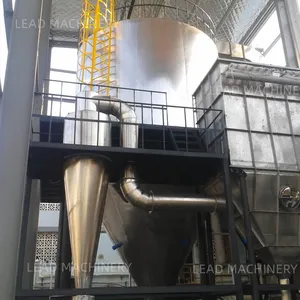
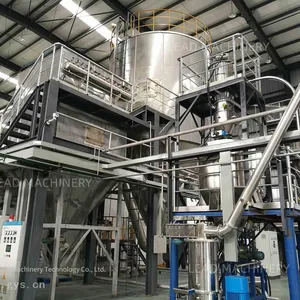
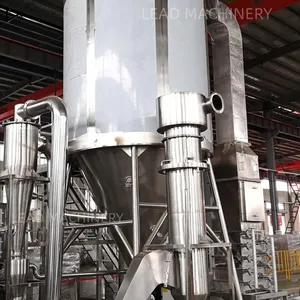
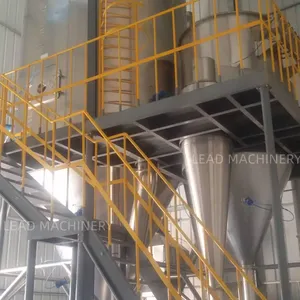
Centrifugal Spray Dryer for Lithium Battery Materials. Professional Manufacturer of Spray Dryers With Worry-free Service
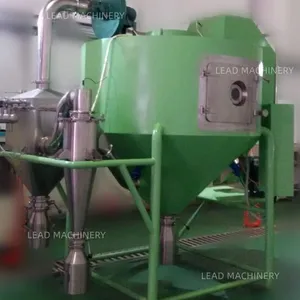
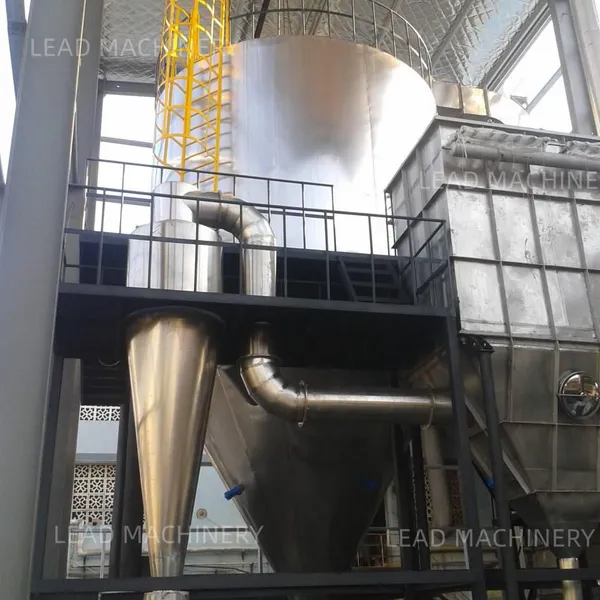
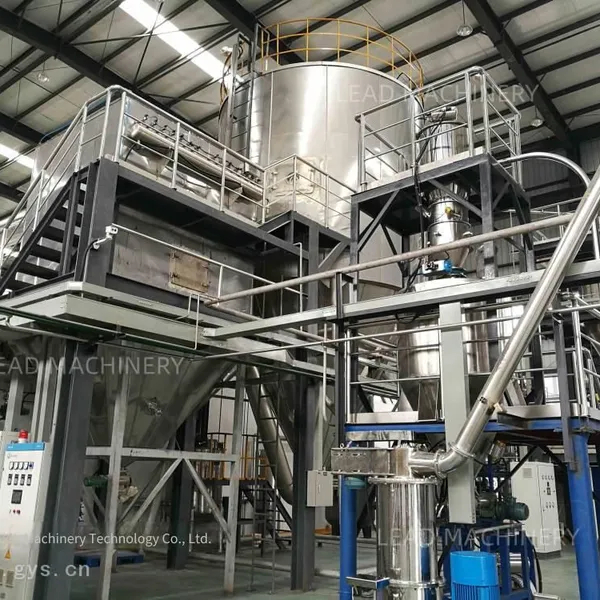
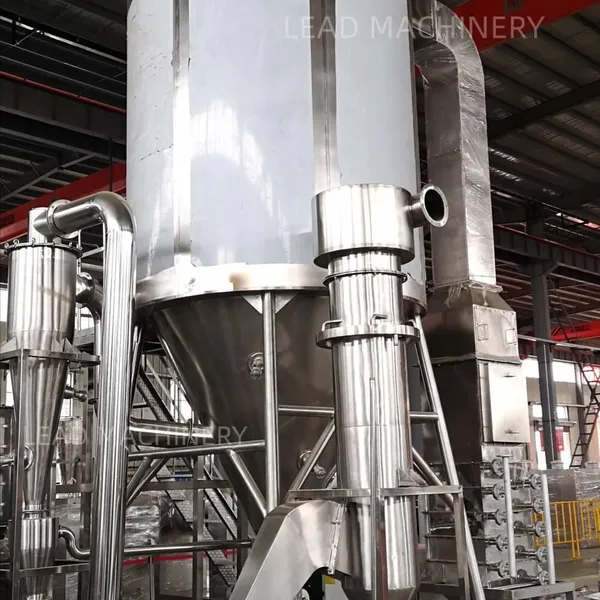
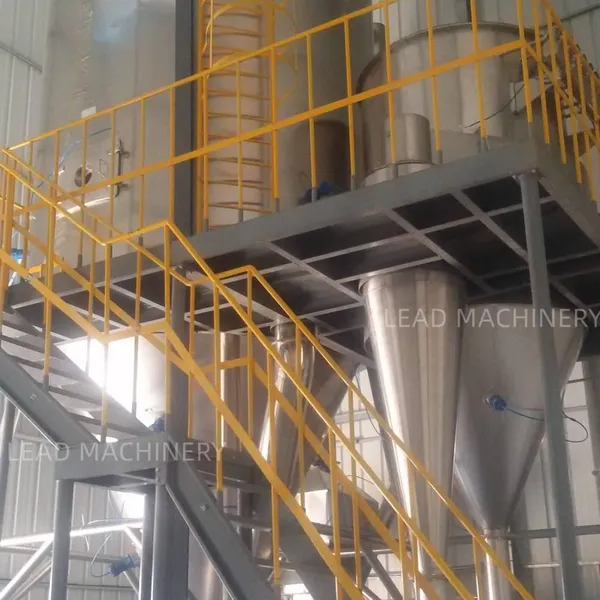
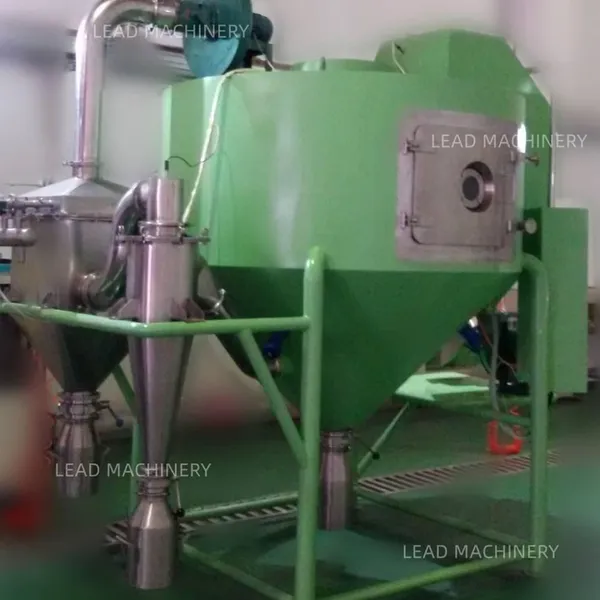
Product Spotlights


Related Products
-
 Centrifugal Spray Dryer for Seasonings, Centrifugal Spray Dryer for Savory Flavors, Professional Manufacturer, Quality GuaranteedUS$ 9000 - 200000MOQ: 1 Set
 -
Bone Broth/meat Broth Centrifugal Spray Dryer, Seasoning Centrifugal Spray DryerUS$ 9000 - 200000MOQ: 1 Set
-
Centrifugal Spray Dryer for Salty Flavors, Spray Drying Equipment for the Food IndustryUS$ 9000 - 200000MOQ: 1 Set
-
Industrial Wastewater Centrifugal Spray Dryer, Spray Drying Equipment for Saline WastewaterUS$ 9000 - 200000MOQ: 1 Set
-
Centrifugal Spray Dryer for Salt-containing Wastewater, Spray Drying Equipment for Industrial WastewaterUS$ 9000 - 200000MOQ: 1 Set
Overview of Centrifugal Spray Dryer:
The centrifugal spray dryer is the core equipment in modern industry for efficiently converting liquid materials into high-quality powders. Its working principle is that through a high-speed rotating centrifugal atomizer, the liquid raw material is instantly scattered and stretched to form a fine mist net. At the same time, hot air is precisely introduced into the drying tower and comes into contact with the mist droplets in a highly efficient co-current or counter-current flow, enabling the moisture to evaporate rapidly within seconds, and finally obtaining a uniform and dry powder product.
The essence of this process lies in "instantaneous drying". The extremely high heat and mass transfer efficiency allows even heat-sensitive substances (such as proteins, probiotics, or natural extracts) to be dehydrated at a lower temperature, thereby maximizing the retention of their active ingredients and natural properties. By precisely controlling the atomizer speed, inlet air temperature, and airflow pattern, operators can flexibly control the particle size, moisture, solubility, and fluidity of the finished powder to meet the strict requirements of many fields, from food milk powder, pharmaceutical raw materials to high-end ceramic powders and nanomaterials.
Therefore, the centrifugal spray dryer is not only a drying technology but also a precise powder manufacturing system. It realizes an elegant transformation from "liquid" to "powder" in an efficient, continuous, and controllable industrial way, and is an indispensable key link in modern production lines that pursue product quality and process efficiency.
System Flow Chart of Centrifugal Spray Dryer
Application of Spray Dryer in Lithium Battery Material Production:
The spray dryer is a very important and widely used unit operation equipment in the lithium battery material industry. It is not only a simple drying tool but also a key process link for material synthesis, morphology control, and performance optimization, directly affecting the energy density, cycle life, and rate performance of the final battery.
Spray drying is mainly used to prepare precursors or final materials for lithium battery cathode and anode materials, especially suitable for material systems that require high uniformity of components, specific morphologies (spherical, porous), and excellent fluidity.
Preparation of Cathode Material Precursors (the Most Main Application)
Component Uniformity: Achieve uniform mixing of multiple metal elements at the atomic/molecular level, avoiding non-uniformity in subsequent solid-phase reactions. This is the basis for ensuring the consistency of the electrochemical performance of cathode materials.
Controllable morphology: By controlling the atomization parameters and drying kinetics, spherical, hollow, or porous micron-sized secondary spheres can be prepared. Spherical particles have a high tap density and excellent fluidity, which is beneficial for the subsequent coating process and can improve the volumetric energy density of the electrode.
Process simplification: Compared with the traditional co-precipitation method, the spray drying process is shorter and easier for continuous and automated production.
Process: A mixed solution containing various metal salts (such as sulfates or nitrates of nickel, cobalt, and manganese for preparing NCM/NCA; or cobalt salts, manganese salts, etc.) is precisely formulated into a slurry with a precipitant (such as ammonia water, sodium hydroxide) and a complexing agent. A uniform spherical precursor particle can be obtained in one step through spray drying.
Advantages:
Direct synthesis for preparing cathode materials
For some materials (such as some lithium iron phosphates and lithium-rich manganese-based materials), a solution containing a lithium source and a metal source can be directly spray-dried and then calcined at a lower temperature to form the final product. This simplifies the process and can create unique nanostructures.
Preparation of anode materials
Silicon-carbon anode: Nano-silicon particles, a carbon source (such as pitch, resin), and a conductive agent are uniformly dispersed in a solvent. After spray drying, secondary microspheres with silicon particles uniformly embedded in the carbon matrix can be formed. This structure can effectively buffer the volume expansion of silicon and is one of the mainstream processes for improving the cycling performance of silicon-based anodes.
Other anodes such as lithium titanate: It can also be used to prepare anode material precursors with uniform particle size and regular morphology.
Preparation of solid electrolyte materials
In the synthesis of oxide or sulfide solid electrolytes, spray drying can be used to prepare precursor powders with uniform composition or directly synthesize electrolyte powders with specific crystal phases and morphologies.
Recycling and regeneration
The solution containing valuable metals leached from waste batteries can be converted into a uniform powder through spray drying, which facilitates subsequent re-preparation.
Industries suitable for centrifugal spray drying:
Food industry
Production of milk powder, soy milk powder, coffee powder, fruit juice powder, egg powder, yeast, and fruit and vegetable powder.
Drying of seasonings (such as soy sauce powder, yeast extract) and food additives (flavors, pigments).
Low-temperature drying of functional foods (probiotics, enzyme preparations) to protect active ingredients.
Pharmaceutical industry
Drying of raw materials such as antibiotics, vitamins, and Chinese medicine extracts.
Preparation of spray-dried microcapsules for drug sustained release or taste masking (such as granules, capsule fillers).
Chemical engineering and materials
Granulation of dyes, pigments, ceramic powders, catalysts, and polymer particles (such as PVC, PE).
Preparation of precursors for nanomaterials and battery cathode and anode materials (such as lithium battery materials).
Environmental protection and bioengineering
Sludge drying in wastewater treatment and immobilization of microbial agents (such as biological pesticides).
Drying of bioactive products such as enzymes and single-cell proteins.
Other industries
Cosmetics (foundation, talcum powder), ceramic glazes, wettable pesticide powders, etc.
Technical parameters of centrifugal spray dryer

Send Inquiry to This Supplier


You May Also Like
-
Fermented Liquid Centrifugal Spray Dryer, Biological Fermented Liquid Spray Drying EquipmentUS$ 9000 - 200000MOQ: 1 Unit
-
Centrifugal Spray Dryer for Pharmaceutical Manufacturing, Chinese Herbal Medicine Spray DryerUS$ 9000 - 200000MOQ: 1 Unit
-
Blood Plasma Centrifugal Spray Dryer, Spray Drying Equipment for Pig and Cow BloodUS$ 9000 - 200000MOQ: 1 Set
-
Biological Fermentation Broth Centrifugal Spray Dryer, Professional Manufacturer of Spray Drying EquipmentUS$ 9000 - 200000MOQ: 1 Set
-
Western Medicine Centrifugal Spray Dryer, Pharmaceutical Spray Drying Tower, Made of High-quality Stainless SteelUS$ 9000 - 200000MOQ: 1 Unit
-
GMP Standard Centrifugal Spray Dryer, Centrifugal Spray Drying Tower for Pharmaceutical UseUS$ 9000 - 200000MOQ: 1 Set
-
Animal Blood Centrifugal Spray Dryer, Plasma Protein Spray Drying TowerUS$ 9000 - 200000MOQ: 1 Set
-
Centrifugal Spray Dryer for the New Energy Industry, Special Spray Dryer for Battery MaterialsUS$ 9000 - 200000MOQ: 1 Set
-
Lithium Iron Phosphate Centrifugal Spray Dryer, Spray Dryer for Battery MaterialsUS$ 9000 - 200000MOQ: 1 Set
-
LG Roller Compactor for Dry Granulation in Pharmaceutical IndustryNegotiableMOQ: 1 Set


