








 Contact Platform Support
 Help Center
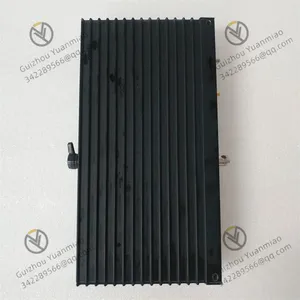
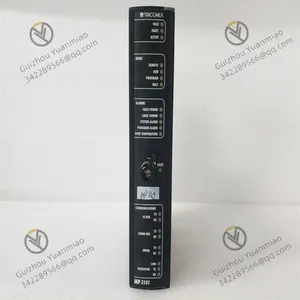
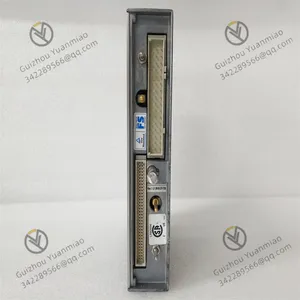
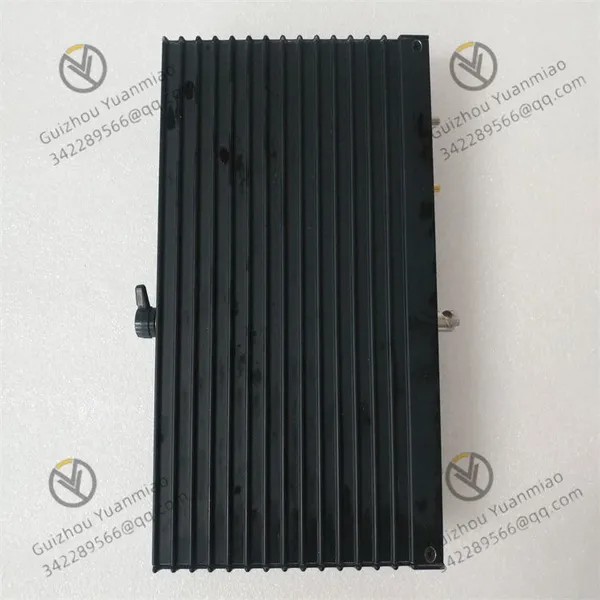
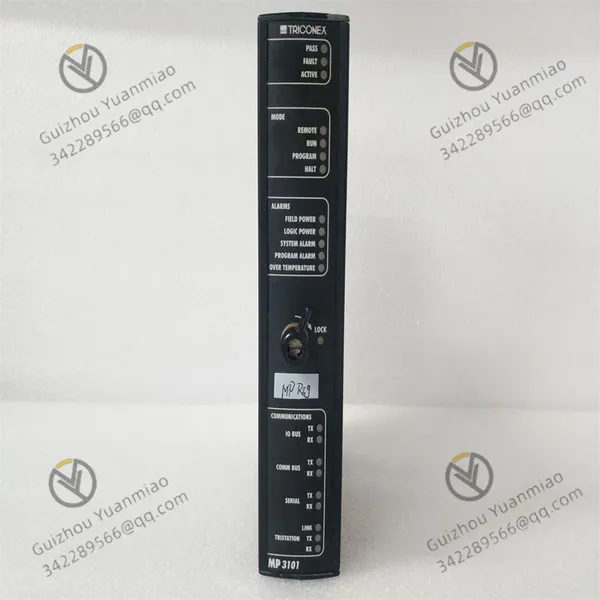
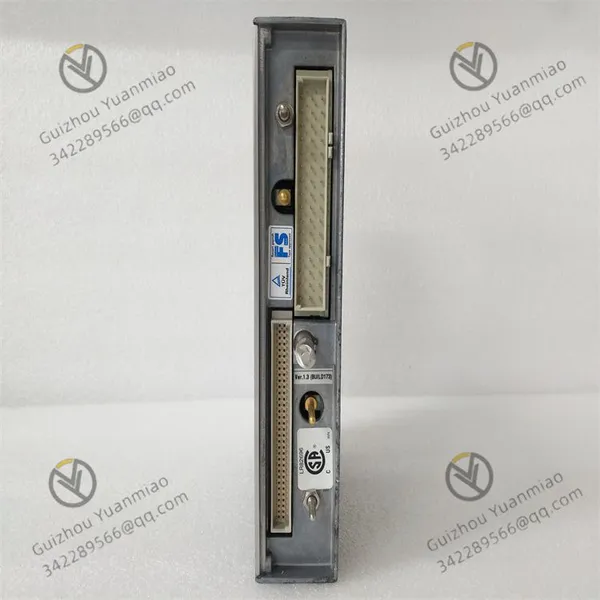
Triconex 3101 High-performance Control Module




Related Products
-
 Triconex 3201 Digital Input ModuleNegotiableMOQ: 1 Piece
 -
Triconex 3301 Digital Input ModuleNegotiableMOQ: 1 Piece
-
Triconex 3381 Pulse Input ModuleNegotiableMOQ: 1 Piece
-
Triconex 3401 Analog Input ModuleNegotiableMOQ: 1 Piece
-
Triconex 3481 High-performance Analog Input ModuleNegotiableMOQ: 1 Piece
Triconex 3101 high-performance control module
I. Hardware Architecture and Core Component Principles
The core mechanism of the Triple Redundancy (TMR) architecture
Hardware redundancy design
The 3101 module adopts triple independent processor channels (A/B/C), and each channel contains an independent CPU, memory, I/O interface and communication module.
Each channel processes the same input signal in parallel and independently executes the control logic.
The output signal is ensured to be correct through a three-out of two voting mechanism (2oo3) : only when at least two outputs from the three channels are consistent will it be recognized as a valid output, avoiding system failure caused by a single point of failure.
Fault Detection and Fault Tolerance
Each channel conducts real-time self-checks and monitors each other. If a channel detects a fault (such as hardware errors or abnormal calculations), the system will automatically isolate the faulty channel, allowing the remaining two channels to continue operating and simultaneously trigger an alarm.
2. Processor and Data Processing Flow
16-bit microprocessor (30MIPS) :
High-speed processing of real-time data, supporting complex algorithms (such as PID control, logical operations, and mathematical modeling), ensuring that the control response time is ≤1ms.
Data processing path:
plaintext
Input signal → Independent sampling of each channel → Triplet data caching → Parallel logical operation → Three-by-two voting → Output drive
Memory structure
1MB RAM: Stores real-time operation data, intermediate variables and temporary configurations.
2MB Flash ROM: Solidify the operating system, control programs and parameters, and support no loss in case of power failure.
3. I/O Interface and Communication Principles
Multi-type signal processing
Supports analog (AI/AO, such as 4-20mA, 0-10V) and digital (DI/DO, such as dry contact, TTL level) input and output, and prevents signal interference through isolation circuits.
Built-in signal conditioning circuits (such as filtering, amplification, and analog-to-digital conversion) ensure the accuracy of the input signal.
Communication protocol stack
The Ethernet interface supports protocols such as Ethernet/IP and Modbus TCP to achieve data interaction with the upper computer, PLC or SCADA system.
The serial port (RS-232/485) supports Modbus RTU and custom protocols, and is used to connect field instruments or third-party devices.
Ii. Software Operation and Control Logic Execution
Real-time Operating System (RTOS) and Task Scheduling
It adopts an RTOS specifically designed for industrial control, supporting multi-task priority scheduling to ensure that critical control tasks (such as safety interlocks) are executed with priority.
The task cycle can be configured (such as 10ms-1000ms) to meet the real-time requirements of different scenarios.
2. The execution process of the control logic
Programming model
The control logic is written using programming languages that comply with the IEC 61131-3 standard (such as ladder diagram LD, Function block diagram FBD, structured text ST), and is compiled and downloaded to the module through TriStation 1131 software.
Cyclic scanning mechanism
plaintext
Input sampling → Logical operation → Output refresh → Self-diagnosis → Communication interaction
Input sampling: Read the input signal once per scanning cycle and store it in the cache of each channel.
Logical operation: Each channel independently executes the user program and calculates the output result.
Vote on two out of three: Vote on the output results of the three channels to generate the final output value.
Self-diagnosis: Detect hardware faults (such as memory errors, communication interruptions) and feed back the diagnostic information to the system.
3. Fail-Safe mechanism
Default output configuration:
When the module detects a fatal fault (such as dual-channel failure), it outputs in the preset fail-safe mode (such as forcing the DO point to 0V or 24V) to prevent the equipment from losing control.
Watchdog timer
Each channel operates independently with a watchdog. If the program flies or the processor malfunctions, the watchdog will trigger a channel reset or a fault alarm.
Iii. Typical Working Scenarios and Application Principles
Application in Safety Instrumented systems (SIS)
In the petrochemical scenario, the 3101 module collects signals such as the temperature and pressure of the reaction vessel in real time, and performs parallel computing through three channels:
When the temperature exceeds the threshold, each channel independently triggers the interlocking logic. After a three-to-two vote, a shutdown signal is output to ensure the reliability of the emergency stop action.
The self-diagnostic function continuously monitors sensor line faults (such as disconnection and short circuit) and reports them to the monitoring system through the communication interface.
2. Closed-loop regulation in process control
In the control of the distillation column, the module collects the temperature at the top of the column through the AI channel. After calculation by the PID algorithm, the opening degree of the reflux valve is adjusted through the AO channel:
The triple channels synchronously perform PID operations. The output signal after voting drives the valve to reduce the control deviation caused by the failure of a single channel.
Support online parameter adjustment (such as PID gain), receive instructions from the upper computer through the Ethernet interface, and dynamically optimize the control strategy.
3. Principles of Communication and System Integration
As a node of the Distributed control system (DCS), the 3101 module exchanges data with other controllers via the Ethernet/IP protocol:
Send the local I/O status to the redundant controller, receive global control instructions, and achieve collaborative control of multiple devices.
Supports the OPC UA protocol, providing a standardized data interface for the SCADA system to achieve remote monitoring and data recording.
Iv. Key Technological Advantages and Principle Support
High reliability (MTBF > 100,000 hours) :
The triple architecture and fault voting mechanism eliminate single points of failure at the hardware level and comply with the IEC 61508 SIL3 safety integrity level requirements.
Real-time performance and determinism
Fixed-cycle scanning and priority task scheduling ensure the timeliness of control logic execution and are suitable for millisecond-level response requirements (such as high-speed circuit breaker control).
Environmental adaptability
The wide temperature range design from -40℃ to + 85℃, anti-vibration (50G shock) and electromagnetic compatibility (EMC) features are achieved through the isolation and protection of hardware circuits to ensure stable operation in industrial environments.
Summary
The working principle of the Triconex 3101 module is centered on the triple redundancy architecture. Through hardware redundancy, fault voting, real-time computing and system integration, it achieves high reliability, safety and accuracy in industrial control. Its design takes into account both complex logic processing and fault tolerance capabilities, and is suitable for scenarios with extremely high requirements for safety and stability, such as petrochemicals, power, and metallurgy.

Send Inquiry to This Supplier


You May Also Like
-
Triconex 3625 Triple Module Redundant Architecture ModuleNegotiableMOQ: 1 Piece
-
Triconex 3664 Digital Output ModuleNegotiableMOQ: 1 Piece
-
Triconex 3721 Analog Input ModuleNegotiableMOQ: 1 Piece
-
TRICONEX 4201 Module Remote ExtenderNegotiableMOQ: 1 Piece
-
TRICONEX 4211 Industrial Automation System ModuleNegotiableMOQ: 1 Piece
-
TRICONEX 8312 Execution Control ModuleNegotiableMOQ: 1 Piece
-
TRICONEX 3503E High-performance Analog Input ModuleNegotiableMOQ: 1 Piece
-
TRICONEX 3604E Digital Output ModuleNegotiableMOQ: 1 Piece
-
TRICONEX 3625C1 Digital Output ModuleNegotiableMOQ: 1 Piece
-
TRICONEX 3700A Analog Input ModuleNegotiableMOQ: 1 Piece


