








 Contact Platform Support
 Help Center
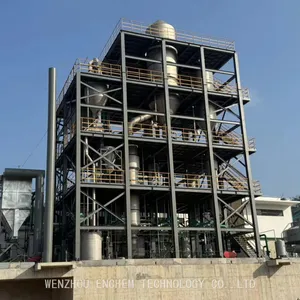
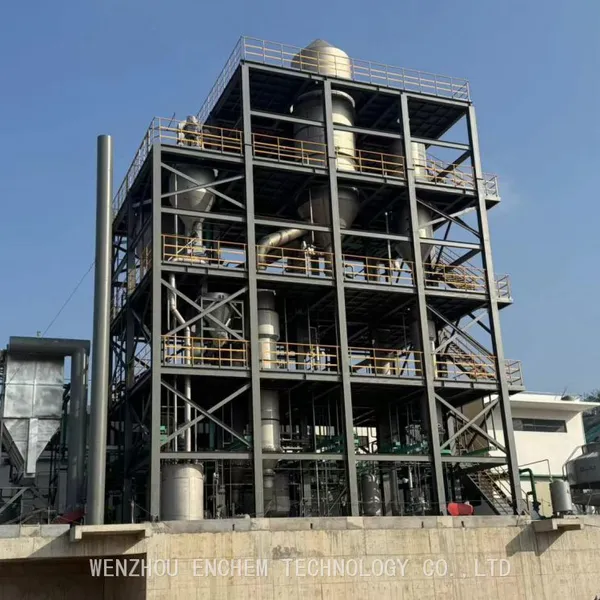
MVR Evaporator for Lithium Sulfate Concentration



Related Products
Project Background
During the production of lithium carbonate from spodumene, the purified leach solution obtained after acid roasting and water leaching contains lithium mainly in the form of lithium sulfate (Li₂SO₄). The lithium sulfate concentration in the purified solution is typically low, which is insufficient for efficient lithium carbonate precipitation. Therefore, the solution must be further concentrated to improve precipitation efficiency and maximize lithium recovery.
For the concentration of lithium-containing solutions, evaporation technology plays a critical role in improving process efficiency and reducing downstream processing costs. Among various evaporation technologies, MVR (Mechanical Vapor Recompression) evaporation technology offers significant advantages due to its low energy consumption, high thermal efficiency, and excellent adaptability for treating high-salt-content solutions.
With optimized process design and material selection, MVR evaporators can be effectively applied in the concentration and crystallization processes of lithium sulfate and other battery material solutions, including nickel sulfate, cobalt sulfate, and mixed sulfate systems.
Working Principle of MVR Evaporator
An MVR evaporator utilizes mechanical vapor recompression technology to recycle the secondary vapor generated during the evaporation process. The generated vapor is compressed by a mechanical vapor compressor, increasing its pressure and temperature, and is then reused as the heating source for the evaporator.
By continuously recycling and utilizing the latent heat of the secondary vapor, the MVR system significantly reduces the consumption of fresh steam and minimizes energy requirements compared with conventional evaporation technologies.
The main advantages of MVR evaporation systems include:
Low energy consumption through efficient vapor recycling;
Reduced dependence on external steam supply;
Compact equipment design and reduced installation footprint;
Stable continuous operation suitable for large-scale production;
Environmentally friendly operation with reduced carbon emissions.

Application in Lithium Sulfate Concentration
The MVR evaporator system is designed to achieve the following objectives:
Concentrate lithium sulfate solution to a higher concentration;
Increase lithium concentration to achieve Li₂O concentration above 60 g/L;
Minimize lithium loss during the concentration process;
Maintain stable solution quality for the subsequent lithium carbonate precipitation process;
Reduce overall energy consumption and operating costs.
System Configuration
The MVR evaporator system for lithium sulfate concentration typically consists of the following main equipment:
Condensate preheater;
Exhaust vapor preheater;
Exhaust vapor condenser;
Forced circulation heater;
Vapor-liquid separator;
Vapor scrubber;
MVR vappr compressor;
Circulation and discharge pump system;
Process piping system;
Electrical and automatic control system.
All components are integrated to provide efficient heat transfer, reliable vapor circulation, and stable concentration performance. The system continuously concentrates the lithium sulfate solution while ensuring consistent feed conditions for the subsequent lithium carbonate precipitation process.
Advantages of MVR Technology in Battery Material Processing
MVR evaporation technology has become an important solution in the battery materials industry due to its excellent energy efficiency and process adaptability.
Compared with conventional steam-driven evaporation systems, MVR systems can substantially reduce operating costs by minimizing steam consumption while maintaining high evaporation efficiency. In addition, the technology is highly suitable for the treatment of sulfate-based solutions containing valuable metals, where lithium, nickel, cobalt, and other resources must be efficiently recovered.
With optimized engineering design, corrosion-resistant materials, and reliable automation systems, MVR evaporators provide:
High lithium recovery efficiency;
Stable and continuous operation;
Lower energy consumption;
Reduced environmental impact;
Improved overall process economics.
By supporting efficient concentration and purification processes, MVR technology contributes to the sustainable development of lithium battery material production and helps manufacturers achieve higher resource utilization and lower carbon emissions.

Send Inquiry to This Supplier


You May Also Like
-
Integrated MVR EvaporatorNegotiableMOQ: 1 Set
-
Triple-Effect EvaporatorNegotiableMOQ: 1 Set
-
Ammonium Chloride Evaporation & Crystallization Project Completed With DMF DistillationNegotiableMOQ: 1 Set
-
Ethanol Recovery System (Ethanol Recovery From Waste Liquid Soap)NegotiableMOQ: 1 Set
-
Sodium Nitrate Evaporation and Crystallization SystemNegotiableMOQ: 1 Set
-
Sodium Sulfate Wastewater Evaporator-CrystallizerNegotiableMOQ: 1 Set
-
Ammonium Sulfate Crystalline Granule Evaporation and Drying PlantNegotiableMOQ: 1 Set
-
Ammonium Sulfate Crystalline Powder Evaporation and Drying PlantNegotiableMOQ: 1 Set
-
Vacuum Decompression Concentrator (Tank)NegotiableMOQ: 1 Set
-
Calcium Chloride Solution Preparation and Refining PlantNegotiableMOQ: 1 Set

