








 Contact Platform Support
 Help Center
Calcium Chloride Solution Preparation and Refining Plant



Related Products
-
 Double-effect Forced Circulation Evaporator for Calcium Chloride ConcentrationNegotiableMOQ: 1 Set
 -
Anhydrous Calcium Chloride Granule Production PlantNegotiableMOQ: 1 Set
-
Flake Calcium Chloride Dihydrate Production PlantNegotiableMOQ: 1 Set
-
Calcium Chloride Dihydrate Rotary Drum Flaker for Condensing and CrystallizingNegotiableMOQ: 1 Set
-
Calcium Chloride Flake Production PlantNegotiableMOQ: 1 Plant
Introduction
Calcium chloride (CaCl₂) is an important inorganic chemical widely used in deicing, dust control, oil and gas, food processing, refrigeration, construction, water treatment, and chemical manufacturing.
Industrial calcium chloride is available in several forms, including calcium chloride solution, calcium chloride hexahydrate, calcium chloride tetrahydrate, calcium chloride dihydrate flakes, and anhydrous calcium chloride powder or granules.
Calcium chloride dihydrate (CaCl₂·2H₂O) is typically a white crystalline solid with strong hygroscopicity and excellent water solubility. Commercial products generally contain 74%, 77%, or 80% calcium chloride.
Anhydrous calcium chloride is produced by further dehydration at elevated temperatures. It is a white to off-white granular or powdery solid with a calcium chloride content typically exceeding 93% and exhibits strong moisture absorption.
Process Description
Industrial calcium chloride solution is commonly produced by reacting dilute hydrochloric acid with limestone or acetylene sludge.
The process begins by feeding crushed limestone into a multi-stage reactor system, while dilute hydrochloric acid is continuously dosed through metering pumps at a controlled ratio. The reaction between limestone and hydrochloric acid produces calcium chloride solution together with carbon dioxide and acid-containing vapor.
The generated vapor is directed to a multi-stage acid mist absorption system, where residual hydrochloric acid is recovered to minimize emissions and improve raw material utilization.
The crude calcium chloride solution then flows into a neutralization tank, where the pH is precisely adjusted using lime milk. After neutralization, the solution enters a clarification system to remove suspended impurities before being filtered through a filter press.
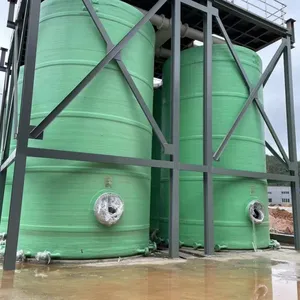
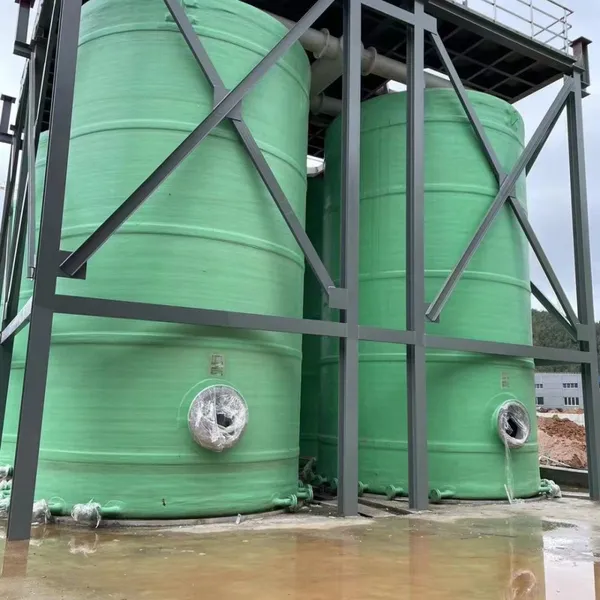
The clarified calcium chloride solution is finally transferred to a product buffer tank, providing a stable feed for downstream concentration or flake/granule production.
The lime milk preparation system serves two purposes:
Neutralizing the calcium chloride solution to achieve the required pH.
Absorbing acid mist generated during the reaction process, allowing recovered calcium chloride solution to be recycled back into the production system.
The entire production line is designed for fully automatic, continuous operation, ensuring stable product quality, high production efficiency, and minimal operator intervention.
System Configuration
A complete calcium chloride preparation and refining plant typically includes:
Limestone feeding system
Multi-stage reaction system
Acid mist absorption system
Lime milk preparation system
Neutralization and clarification tank
Filter press
Finished calcium chloride solution buffer tank
Automatic instrumentation and PLC control system
Main Equipment Features
High-Efficiency Multi-Stage Reactor
A multi-stage reactor system ensures complete reaction between limestone and hydrochloric acid, maximizing raw material utilization while minimizing residual solids. The enclosed reactor design effectively contains reaction gases and improves environmental performance.
Three-Stage Acid Mist Absorption
The acid mist treatment system adopts a three-stage absorption process to efficiently recover hydrochloric acid vapor and ensure exhaust emissions comply with environmental regulations.
System Advantages
Fully Automatic Operation
Once raw materials are fed into the system, the entire process is automatically controlled by the PLC system, minimizing manual intervention and improving production reliability.
Complete and Efficient Reaction
The optimized multi-stage reaction process ensures thorough conversion of raw materials with minimal residue, reducing maintenance and eliminating the need for frequent reactor cleaning.
Stable Product Quality
Precise control of reaction conditions, pH adjustment, clarification, and filtration ensures a consistently high-quality calcium chloride solution suitable for downstream concentration and drying processes.
Environmentally Friendly Design
The enclosed reaction system combined with a high-efficiency acid mist absorption unit effectively recovers hydrochloric acid vapor, reduces emissions, and improves overall environmental performance.
Reliable Continuous Operation
Optimized equipment design minimizes blockage, improves operational stability, and supports long-term continuous production with low maintenance requirements.

Send Inquiry to This Supplier


You May Also Like
-
Calcium Chloride Granule Production PlantNegotiableMOQ: 1 Plant
-
Ammonium Sulfate Pellet Production PlantNegotiableMOQ: 1 Set
-
Magnesium Sulfate Heptahydrate Production Plant From Waste Sulfuric AcidNegotiableMOQ: 1 Set
-
Waste Hydrochloric Acid Recycling Solution and Calcium Chloride Production SolutionNegotiableMOQ: 1 Set
-
Sodium Nitrate Evaporation and Crystallization SystemNegotiableMOQ: 1 Set
-
Ammonium Sulfate Crystalline Granule Evaporation and Drying PlantNegotiableMOQ: 1 Set
-
Ammonium Sulfate Crystalline Powder Evaporation and Drying PlantNegotiableMOQ: 1 Set
-
MVR Evaporator for Bio-pharmaceutical Wastewater TreatmentNegotiableMOQ: 1 Set
-
Triple-effect Forced Circulation Evaporator for Mix Salt Wastewater TreatmentNegotiableMOQ: 1 Set
-
Double-effect Central Circulation Evaporator for Metallurgy Effluent TreatmentNegotiableMOQ: 1 Set

