








 Contact Platform Support
 Help Center
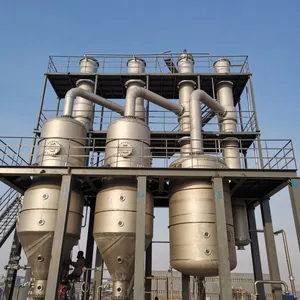
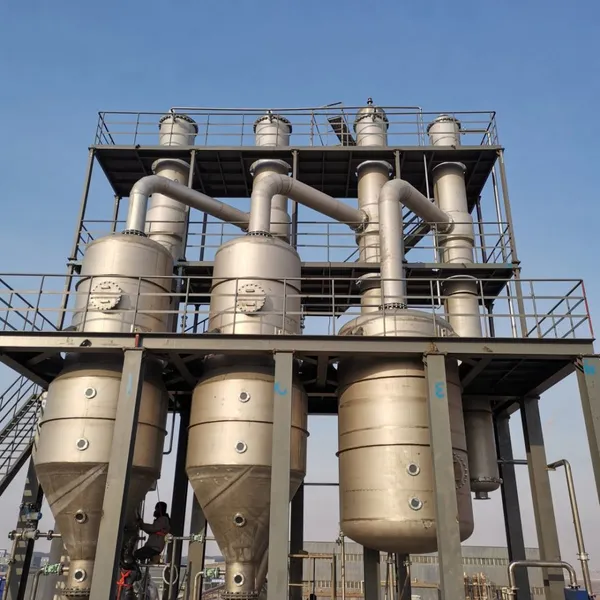
Triple-Effect Evaporator



Related Products
-
 Ethanol Recovery System (Ethanol Recovery From Waste Liquid Soap)NegotiableMOQ: 1 Set
 -
Sodium Sulfate Wastewater Evaporator-CrystallizerNegotiableMOQ: 1 Set
-
Triple-effect Forced Circulation Evaporator for Mix Salt Wastewater TreatmentNegotiableMOQ: 1 Set
-
Double-effect Central Circulation Evaporator for Metallurgy Effluent TreatmentNegotiableMOQ: 1 Set
-
Triple-effect Forced Circulation Evaporator for High Salinity Wastewater TreatmentNegotiableMOQ: 1 Set
Evaporation is one of the most important thermal separation processes in modern industry, widely used for concentrating solutions, recovering valuable products, reducing wastewater volume, and producing crystalline materials. However, conventional single-effect evaporation requires substantial amounts of live steam, resulting in high operating costs and increased environmental impact.
A triple-effect evaporator is an energy-efficient evaporation system designed to significantly reduce steam consumption while maintaining high production capacity. By recovering and reusing secondary steam across three evaporation stages, it provides an ideal solution for industrial concentration and crystallization processes. Its mature technology, reliable operation, and low operating costs make it one of the most widely used evaporation systems in the chemical, pharmaceutical, food, and environmental industries.
Fundamentals of Triple-Effect Evaporation
The operating principle of a triple-effect evaporator is based on maximizing the utilization of latent heat.
Fresh steam enters only the first evaporator, where it transfers heat to the feed solution. As the solution boils, water vapor, known as secondary steam, is generated. Rather than being condensed and discarded, this secondary steam becomes the heating medium for the second evaporator.
The same process occurs between the second and third effects, where the vapor generated in the second effect heats the third effect.
To enable this heat transfer, each effect operates at a progressively lower pressure and corresponding boiling temperature. This pressure gradient allows the secondary steam from one effect to possess sufficient thermal energy to evaporate liquid in the next effect.
Consequently, one unit of fresh steam can be utilized multiple times before leaving the system, dramatically improving steam economy.
Multiple-effect evaporator
System Configuration
A typical triple-effect evaporator consists of several integrated components designed to ensure efficient heat transfer, stable operation, and continuous production.
The main equipment includes:
Three heaters
Three separators
Condenser
Vacuum system
Material transfer pumps
Heat exchangers
Instrumentation
PLC automatic control system
CIP cleaning system (optional)
Depending on product characteristics, different evaporation technologies may be selected, including:
Falling Film Evaporator
Forced Circulation Evaporator
Natural Circulation Evaporator
Rising Film Evaporator
Each design offers unique advantages depending on viscosity, fouling tendency, crystallization characteristics, and heat sensitivity.
Heat Economy and Steam Consumption
The primary reason industries adopt triple-effect evaporators is their superior thermal efficiency.
In general:
These values vary depending on feed properties, operating conditions, and equipment design.
Compared with a single-effect evaporator, a triple-effect system can reduce steam consumption by approximately 60–65%, resulting in substantial long-term operating cost savings.
Major Industrial Applications
Triple-effect evaporators are highly versatile and can process a wide variety of industrial liquids.
Chemical Industry
Sodium chloride, Calcium chloride, Sodium sulfate, Caustic soda, Fertilizers, Organic chemicals
Pharmaceutical Industry
Antibiotics, Herbal extracts, API intermediates, Medicinal solutions
Food and Beverage Industry
Milk, Fruit juice, Sugar syrup, Starch, Glucose, Coffee extract
Environmental Protection
Industrial wastewater treatment has become one of the fastest-growing applications for triple-effect evaporators.
Typical wastewater includes:High-salinity wastewater, Chemical wastewater, Electroplating wastewater, Landfill leachate, Textile wastewater, Lithium battery wastewater
The evaporator significantly reduces wastewater volume while enabling salt recovery and supporting Zero Liquid Discharge (ZLD) systems.
Advantages of Triple-Effect Evaporators
Compared with conventional evaporation systems, triple-effect evaporators provide numerous advantages:
Excellent Steam Economy
The reuse of secondary steam greatly reduces fresh steam demand.
Lower Operating Cost
Reduced steam and cooling water consumption lead to significant utility savings.
Continuous Production
Most systems operate continuously with stable product quality.
High Processing Capacity
Suitable for both medium- and large-scale industrial production.
Flexible Design
Can be integrated with crystallizers, dryers, centrifuges, and other downstream equipment.
High Degree of Automation
Modern systems employ PLC control, enabling automatic operation, remote monitoring, and reduced labor requirements.
Engineering Design Considerations
The successful design of a triple-effect evaporator requires careful evaluation of several process parameters.
Feed Characteristics
Concentration, Viscosity, Density, Boiling point elevation, Crystallization tendency, Corrosiveness
Capacity Requirements
The evaporation rate determines the required heat transfer area and equipment size.
Material Selection
Depending on the process fluid, suitable construction materials may include: SS304, SS316L, Duplex Stainless Steel, Titanium, Hastelloy
Cleaning Requirements
Products prone to scaling or fouling may require:Online CIP systems, Forced circulation, Large-diameter tubes, Easy-access cleaning structures
Automation
Advanced control systems improve energy efficiency and maintain stable operating conditions.
Conclusion
The triple-effect evaporator has become one of the most reliable and energy-efficient evaporation technologies available for industrial liquid concentration and crystallization. By utilizing secondary steam across three successive evaporation stages, it substantially reduces fresh steam consumption while maintaining continuous operation, high processing capacity, and stable product quality.
Its broad applicability across the chemical, pharmaceutical, food, environmental, mining, and new energy sectors demonstrates its versatility and long-term value. With proper engineering design, material selection, and process optimization, a triple-effect evaporator can deliver significant economic and environmental benefits throughout its service life.
As industries continue to prioritize sustainability, energy conservation, and production efficiency, triple-effect evaporation will remain a key technology in modern process engineering.

Send Inquiry to This Supplier


You May Also Like
-
Triple-effect Forced Circulation Evaporator for Cobaltous Sulfate RecoveryNegotiableMOQ: 1 Set
-
Four-effect Falling Film Evaporator for Coffee Extract ConcentrationNegotiableMOQ: 1 Set
-
Titanium Triple-effect Evaporator for Lithium Battery RecycleNegotiableMOQ: 1 Set
-
Waste Heat EvaporatorNegotiableMOQ: 1 Set
-
TVR EvaporatorNegotiableMOQ: 1 Set
-
Multiple-effect Evaporator (MEE)NegotiableMOQ: 1 Set
-
Tubular Falling Film EvaporatorNegotiableMOQ: 1 Set
-
Mutiple-effect Forced Circulation EvaporatorNegotiableMOQ: 1 Set
-
Triple-effect Evaporating Crystalizer for Inorganic Salt ProductionNegotiableMOQ: 1 Set
-
Falling Film Evaporator With Molten Salt System for Caustic Soda 50% - 99% ConcentrationNegotiableMOQ: 1 Set

