








 Contact Platform Support
 Help Center
Steel Pipe & Tube & Cast Pipe,GB/T13295-2019、ISO2531、EN545、GB/T12772-2016、GB/T8492-2014、JG/T300-2011、ASTM A999、EN598


Related Products
-
 Galvanized Flat Bar&Flat Steel,GB/T 704, GB/T 13912, ASTM A123, JIS G3302NegotiableMOQ: 5 Metric Tons
 -
Steel Rebar&Deformed Steel Bar,HRB400、HRB400E、HRB500、HRB500E、Grade 40、Grade 60NegotiableMOQ: 5 Metric Tons
-
Steel Angle&Galvanized Angle Steel,Q235B, Q355B, S235JR, S355JR, A36, A572 Gr50NegotiableMOQ: 10 Metric Tons
-
Steel H Beam&H Beam ,Q235B, Q355B, S235JR, S235J0, S235J2, S355JR, S355J0, S355J2, A36, A572 Grade 50, A992NegotiableMOQ: 10 Metric Tons
-
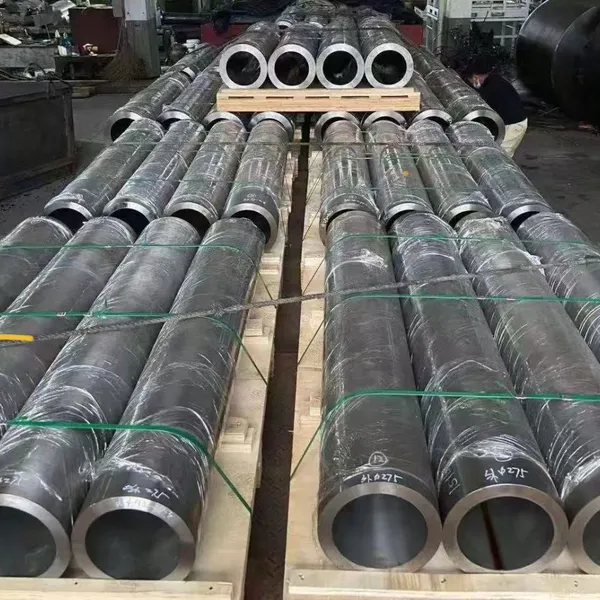
Steel Pipe & Tube&Seamless Steel Pipe,Q235B, Q355B, 10#, 20#, 16Mn, L245, L360, SS330, SS400, A53 Gr.BNegotiableMOQ: 5 Metric Tons
Detailed Description of Cast Pipes
1. Product Overview
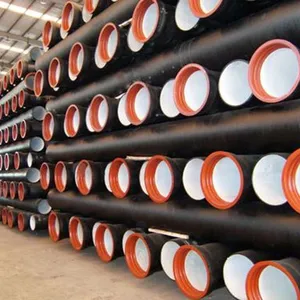
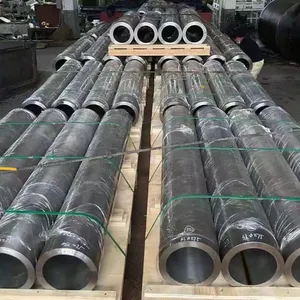
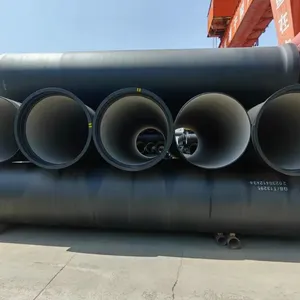
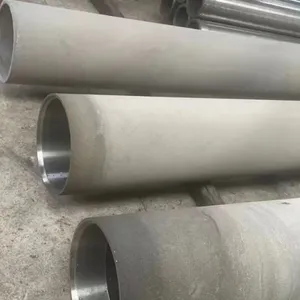
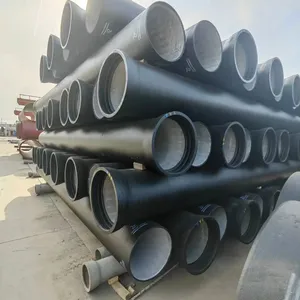
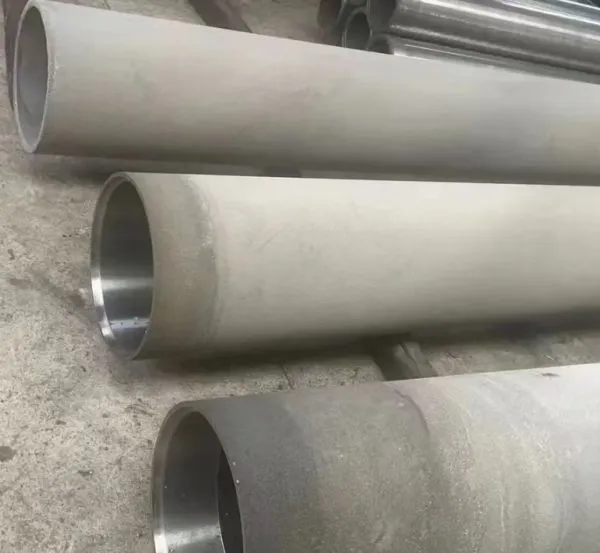
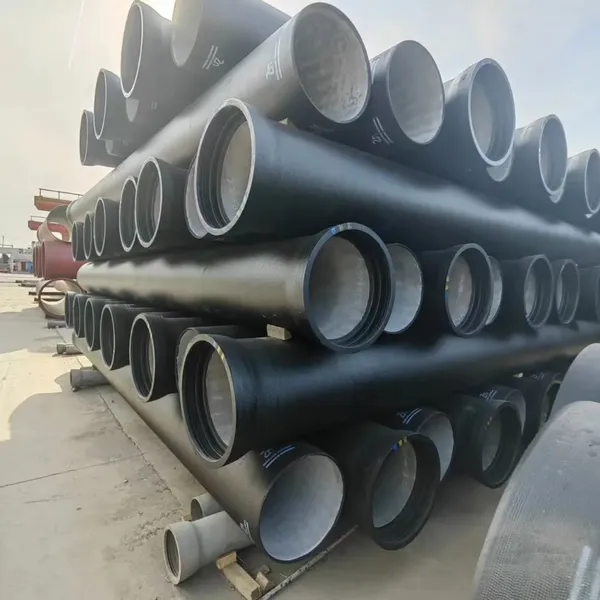
Cast pipe is a tubular component formed by pouring molten metal via casting technology. Its main materials include cast iron (grey cast iron, ductile iron) and cast steel (carbon steel, alloy steel). Featuring high structural strength, excellent corrosion resistance, long service life and reasonable cost, it is widely used in municipal water supply and drainage, gas transmission, delivery of industrial fluids and high-temperature media, building structures and fire protection systems. Centrifugal ductile iron pipe is the mainstream product, which combines the corrosion resistance of cast iron and the toughness of steel, making it the preferred pipe for municipal pipe networks.
2. Main Classifications
2.1 Classification by Material
2.1.1 Grey Cast Iron Pipe
With flake graphite structure, it has high brittleness and low tensile strength (≥150MPa) as well as average corrosion resistance, but comes with the lowest cost.Application: Low-pressure drainage, rainwater drainage, agricultural irrigation and other non-pressure or low-pressure scenarios. It is gradually replaced by ductile iron pipes.
2.1.2 Ductile Iron Pipe (D.I. Pipe)
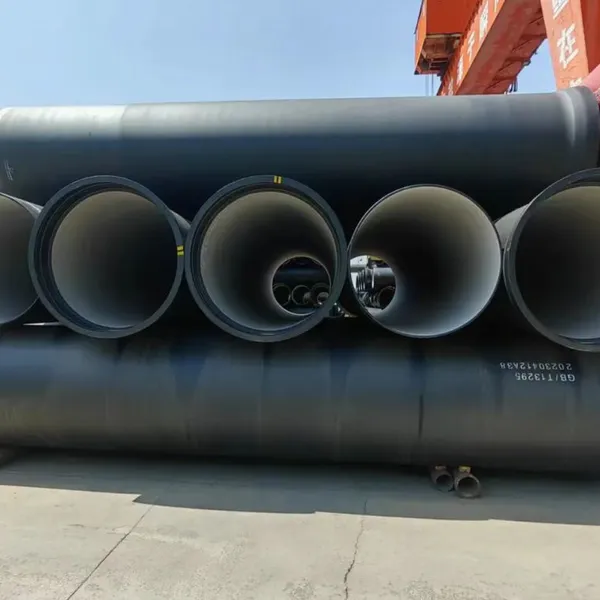
Magnesium or rare earth nodulizer is added into molten iron to form spherical graphite. It retains the properties of iron while possessing the performance of steel. Its tensile strength reaches ≥420MPa, elongation ≥7%, working pressure up to 6MPa. It boasts outstanding impact resistance, deformation resistance and superior sealing performance.Application: Municipal water supply, gas delivery, sewage discharge and industrial water transmission. It is the primary pipe for medium and high-pressure fluid transportation.
2.1.3 Cast Steel Pipe
Carbon Cast Steel Pipe (e.g. ZG230-450): High strength and good weldability, suitable for medium and low-pressure industrial pipelines and structural supports.
Alloy Cast Steel Pipe (e.g. ZG40Cr25Ni20, Cr5Mo): Containing chromium, nickel, molybdenum and other alloy elements, it can withstand high temperature (800–1200℃), acid and alkali corrosion and creep deformation. It is applied to pipelines of power plant boilers, petrochemical cracking furnaces and high-temperature wear-resistant systems in metallurgical industry.
2.2 Classification by Casting Process
2.2.1 Centrifugal Cast Pipe (Mainstream)
Molten metal is poured into a high-speed rotating mould (500–1500r/min). Centrifugal force attaches the metal to the mould wall for forming, followed by water cooling or coating cooling.Advantages: Dense structure, free of pores and sand holes, uniform wall thickness (tolerance ≤5%), smooth inner wall (Ra3.2–6.3μm) and high strength.Sub-types: Water-cooled metal mould, coating metal mould and resin sand-lined mould. Water-cooled metal mould is the first choice for high-pressure and water supply pipes.
2.2.2 Continuous Cast Pipe
Adopting horizontal continuous casting technology, long pipes are formed in one process with high production efficiency and low cost.Application: Small and medium-calibre grey cast iron drainage pipes and low-pressure pipelines.
2.2.3 Sand Cast Pipe (Obsolete Type)
Formed by manual or machine-made sand moulds. It has rough surface, numerous defects and low precision, and is gradually phased out, only used for non-critical low-pressure pipelines.
2.3 Classification by Joint Type
2.3.1 Flexible Joint (Mainstream, Type T / N1 / X)
Consists of socket, spigot and rubber sealing ring. It allows deflection (≤3°), axial displacement (±30mm) and radial misalignment, featuring excellent earthquake resistance (up to magnitude 9), settlement resistance and zero leakage.Application: Buried municipal pipelines, indoor drainage of high-rise buildings and pipe networks in earthquake-prone areas.
2.3.2 Flange Joint
Two ends are equipped with flange plates, fastened by bolts and sealed with rubber gaskets. It has high strength, easy disassembly and excellent high-pressure resistance.Application: Industrial pipelines, connection of pumps and valves, high-pressure and high-temperature working conditions.
2.3.3 Self-anchored Joint
Combines flexible joint with self-locking device. No concrete buttress is required, and axial sliding can be prevented. Suitable for pipelines with high water pressure, long distance and complex terrain.
2.3.4 Rigid Joint (Obsolete)
Sealed with cement or asbestos between socket and spigot. It has no deformation capacity, prone to leakage and poor seismic performance, and is basically eliminated.
2.4 Classification by Usage
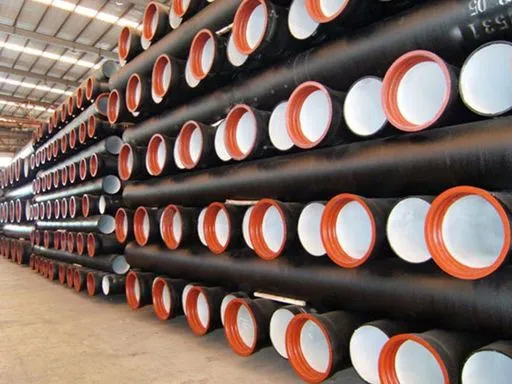
Water Supply Pipe: Grade K9 ductile iron pipe, DN80–DN2600. Working water pressure ≥0.6MPa. Cement mortar lining inside, zinc spray and asphalt coating outside, complying with drinking water standards.
Drainage Pipe: Grey cast iron or flexible ductile iron pipe (Type W/A/B), DN50–DN3000. Designed for non-pressure or low-pressure drainage with sound insulation and anti-aging performance.
Gas Pipe: Ductile iron pipe manufactured in accordance with GB/T13295. Applicable for Class A medium pressure and below, with reliable sealing and explosion-proof performance.
Industrial Pipe: Alloy cast steel pipe with high temperature resistance, corrosion resistance and wear resistance, used in chemical, electric power and metallurgical industries.
Structural Pipe: Building cast steel pipe complying with JG/T300, applied for steel structure columns, supports and curtain wall frames.
3. Main Specifications & Parameters (Mainstream Ductile Iron Pipe)
3.1 Dimension Range
Nominal Diameter: DN80–DN2600mm (customized up to DN3000mm)
Standard Length: 6m / 5.7m (custom lengths available)
Wall Thickness Grade: K7 / K8 / K9 / K10 (Grade K9 is the general standard)
3.2 Mechanical Properties (Grade K9 Ductile Iron Pipe)
Tensile Strength: ≥420MPa
Yield Strength: ≥300MPa
Elongation: ≥7%
Hydrostatic Test Pressure: ≥0.6MPa (water supply), ≥0.3MPa (drainage)
Hardness: ≤230HB
3.3 Chemical Composition (Ductile Iron)
Carbon (C): 3.0%–4.0%
Silicon (Si): 2.0%–3.0%
Manganese (Mn): 0.3%–0.8%
Sulfur (S): ≤0.03%
Phosphorus (P): ≤0.08%
Magnesium (Mg): 0.03%–0.06% (Nodulizing element)
4. Production Process (Centrifugal Ductile Iron Pipe)
Raw Material Melting: Smelt pig iron, scrap steel and alloys in intermediate frequency furnace, conduct desulfurization and chemical composition adjustment.
Nodulizing Treatment: Add magnesium or rare earth nodulizer into molten iron for graphite spheroidization to improve material toughness.
Centrifugal Casting: Pour quantitative molten metal into rotating mould, precisely control rotating speed and pouring rate, and form pipes by water cooling.
Heat Treatment: Anneal at 850–950℃ to convert chilled layer into ferrite, eliminate internal stress and enhance toughness.
Anti-corrosion Treatment: External surface with zinc spraying (≥130g/㎡) and asphalt paint coating; inner wall lined with cement mortar (thickness 5–10mm) to prevent scaling and corrosion.
Quality Inspection: Conduct hydrostatic test, dimensional inspection, ultrasonic testing, X-ray inspection, magnetic particle inspection and hardness test.
Packing & Warehousing: Seal both pipe ends and apply anti-corrosion protection, mark specifications, standards and batch numbers clearly.
5. Executive Standards
Ductile Iron Pipe: GB/T13295-2019 (China), ISO2531 (International), EN545 (EU)
Grey Cast Iron Pipe: GB/T12772-2016 (Drainage)
General Cast Steel Pipe: GB/T8492-2014, JG/T300-2011 (Building Structure)
Alloy Cast Pipe: ASTM A999, EN598
6. Product Advantages
High Reliability: Dense structure, zero leakage, excellent settlement resistance and seismic performance. The service life of buried pipes reaches more than 50 years.
Superior Corrosion Resistance: Inherent anti-corrosion property against soil. Combined with external zinc-asphalt coating and internal cement lining, it resists acid and alkali and scaling, requiring low maintenance.
Excellent Sealing Performance: Flexible rubber ring adapts to pipe deformation and ensures no leakage, ideal for buried pipelines and earthquake-prone areas.
Easy Installation: Socket-spigot joint requires no welding. One joint can be installed within 10 minutes, greatly improving construction efficiency.
Cost-effective: Long service life and low maintenance cost bring superior comprehensive economic benefits compared with stainless steel and carbon steel pipes.
Eco-friendly & Safe: Non-toxic inner lining meets drinking water standards. The material is fully recyclable, belonging to green building materials.
7. Application Fields
Municipal Engineering: Urban water supply, sewage, rainwater and gas main pipes and branch pipes; renovation of old pipe networks and rainwater-sewage diversion projects.
Industrial Field: Chemical wastewater pipelines, circulating water pipes for power plants, high-temperature medium pipelines for metallurgy, corrosion-resistant pipelines for oil and gas fields, boiler pipes and kiln pipelines.
Building Engineering: Indoor drainage and fire protection systems of high-rise buildings, steel structure columns, supports and curtain wall frames.
Agriculture & Transportation: Farmland irrigation, drainage pipes for expressway culverts and fire & drainage pipelines for tunnels.
8. Installation & Maintenance Guidelines
Foundation Treatment: Lay buried pipes on solid soil or sand cushion, avoid scratches on anti-corrosion layer caused by sharp objects.
Joint Installation: Clean socket and spigot → Place rubber ring in position → Lubricate spigot → Insert slowly → Check sealing condition. Reserve expansion allowance for flexible joints.
Backfill Protection: Use fine soil or sand for backfill within 30cm around and on the top of pipes to avoid mechanical damage.
-
Daily Maintenance: Regularly check joint leakage and damage of anti-corrosion coating. Avoid heavy load rolling and strong acid & alkali erosion.

Send Inquiry to This Supplier



You May Also Like
-
Steel Wire&Galvanized Steel Wire,Q195, Q235, 45#, 55#, 60#, 65#, 70#, 72A, 82BNegotiableMOQ: 5 Metric Tons
-
Steel Coil & Strip&Cold Rolled Steel Coil,Q195, Q215, Q235B, Q355B, SPCC, SPHC, DC01, DC04NegotiableMOQ: 5 Metric Tons
-
Ship Plate&Normal-Strength Ship Plates, A, B, D, E, AH32, DH32, EH32, AH36, DH36, EH36NegotiableMOQ: 5 Metric Tons
-
Hot-dip Galvanized Square Tubes&Steel Pipe & Tube,Q195, Q215, Q235B, Q355B, API 5L Gr.BNegotiableMOQ: 5 Metric Tons
-
Carbon Steel Pipe&Seamless Steel Pipe, A53 Gr.B, API 5L Gr.B, Q235B, Q355B, 10#, 20#NegotiableMOQ: 5 Metric Tons
-
Vessel Plate&Steel Sheet & Plate,A, B, D, E, AH32, DH32, EH32, AH36, DH36, EH36NegotiableMOQ: 5 Metric Tons
-
Alloy Steel Plate& Steel Sheet & Plate,GB/T 3077, ASTM A204, ASTM A387, EN 10028, JIS G4105NegotiableMOQ: 5 Metric Tons
-
Mild Steel Plate&Steel Sheet & Plate,GB/T 700, GB/T 912, ASTM A36, ASTM A283, JIS G3101, EN 10025NegotiableMOQ: 5 Metric Tons
-
Steel Rebar&Deformed Steel Bar,HRB400、HRB400E、HRB500、HRB500E、Grade 40、Grade 60NegotiableMOQ: 5 Metric Tons
-
Hot-dip Galvanized Steel Pipe&Steel Pipe & Tube,Q195, Q215, Q235B, Q355B, API 5L Gr.BNegotiableMOQ: 5 Metric Tons


