








 Contact Platform Support
 Help Center
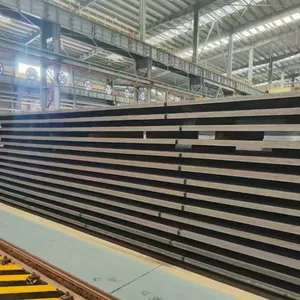
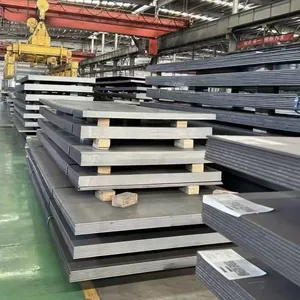
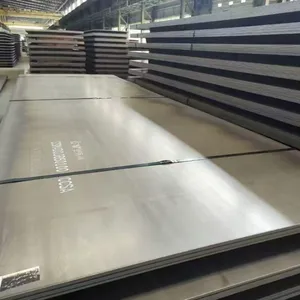
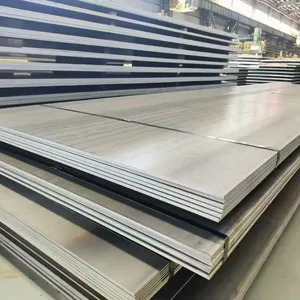
Steel Sheet & Plate & Shipbuilding Steel Plate,Q235、Q345、Q390、Q420



Related Products
-
 Steel Sheet & Plate & Steel Sheet Pile,Q355B、SY295、SY390、S320GP/S355GPNegotiableMOQ: 5 Metric Tons
 -
Steel Coil & Strip & Color Coated Steel Coil,GB/T 2518、GB/T 13912、GB/T 20123NegotiableMOQ: 5 Metric Tons
-
Steel Coil & Strip & Hot Rolled Coil,GB/T 709, GB/T 1591, GB/T 700, EN 10025, ASTM A36/A572, JIS G3101/G3116NegotiableMOQ: 5 Metric Tons
-
Steel Coil & Strip & Cold Rolled Steel Coil,DP590/780/980、HC340/590DP、Q235B、Q355BNegotiableMOQ: 5 Metric Tons
-
Steel Pipe & Tube & Hot Dip Galvanized Steel Pipe,Q195、Q215A/B、Q235A/B、Q355BNegotiableMOQ: 5 Metric Tons
I. Product Overview
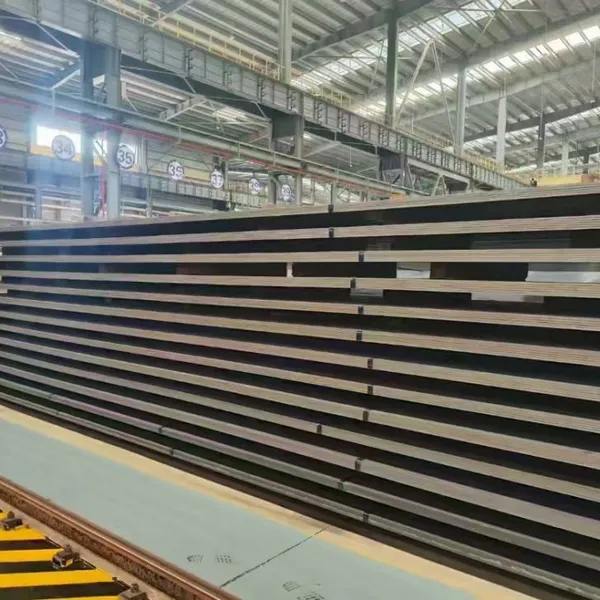
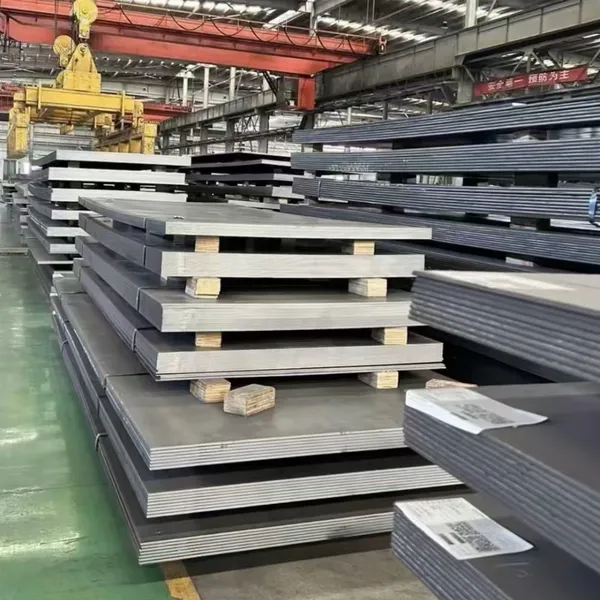
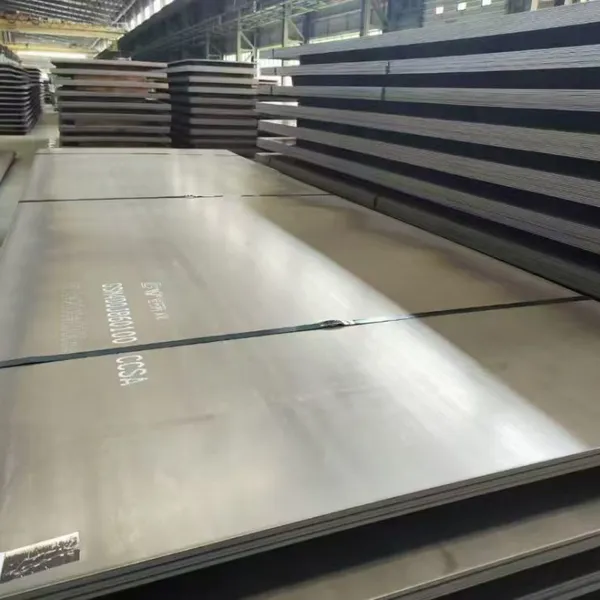
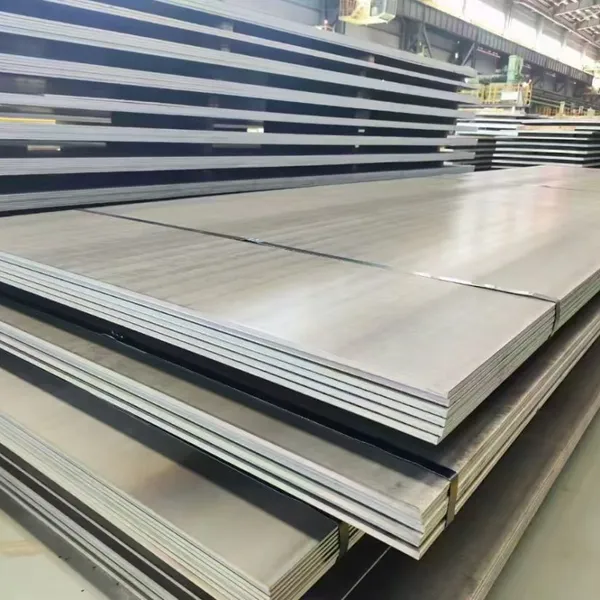
Ship plates are special steel plates specifically used for manufacturing key parts of ship hull structures, decks, cabins, sides, etc. They are high-strength, high-toughness, and corrosion-resistant special steel. Their production strictly follows marine industry standards and must meet core requirements such as corrosion resistance, impact resistance, and fatigue resistance in marine environments. They are indispensable core materials in ship manufacturing, directly determining the safety, durability, and service life of ships.
This series of ship plates is processed from high-quality billets through advanced rolling and heat treatment processes. According to different ship types (cargo ships, passenger ships, fishing boats, warships, etc.) and usage parts, customized specifications and performance configurations can be provided, which are widely used in the manufacture and maintenance of various civil and military ships.
II. Core Product Classification
According to usage, material and performance, ship plates are mainly divided into the following categories. Each type of product is specifically adapted to different ship scenarios to ensure the safety and economy of use:
(1) Classification by Usage
Hull Structure Plates: Mainly used for core load-bearing parts such as the outer plate, inner bottom plate, deck plate, and bulkhead plate of the ship hull. They are required to have high strength, good welding performance, and impact resistance, and can withstand wave impact, hull weight, and cargo load during ship navigation.
Deck Plates: Specifically used for ship deck paving, they need to have anti-slip, wear-resistant, and corrosion-resistant properties, and at the same time meet the load-bearing requirements of personnel walking and cargo stacking. The surface can be anti-slip treated (such as patterns, pitting) according to needs.
Cabin Plates: Used for the separation and decoration of internal cabins of ships (bridge, accommodation cabin, cargo cabin, etc.). In addition to meeting basic strength, they also need to have fire resistance, sound insulation, and heat insulation performance. Some special cabins (such as fuel tanks) need to have anti-leakage and oil corrosion resistance.
Special Ship Plates: Designed for special ships (such as icebreakers, deep-sea ships, chemical tankers), they have special performance. For example, icebreaker plates need to be low-temperature resistant and impact resistant; chemical tanker plates need to be acid and alkali resistant and corrosion resistant; deep-sea ship plates need to have higher strength and fatigue resistance.
(2) Classification by Material
Ordinary Carbon Ship Plates: The main material is Q235 series, with moderate strength and low cost. It is suitable for small ships, non-load-bearing parts or auxiliary structures, such as decks and auxiliary bulkhead parts of small fishing boats and barges.
Low Alloy High Strength Ship Plates: The material is Q345, Q390 and other series. Adding alloy elements such as manganese, silicon, and vanadium, the strength is higher than that of ordinary carbon ship plates, with excellent welding performance and stronger corrosion resistance. It is the mainstream plate for large and medium-sized ships, widely used in core parts such as hull structures and decks.
High Strength Alloy Ship Plates: The material is Q420 and above series, with higher alloy content. After special heat treatment (normalizing, quenching + tempering), it has extremely high strength, toughness, and fatigue resistance. It is suitable for large container ships, oil tankers, warships and other ships with high requirements on material performance.
Corrosion-Resistant Ship Plates: Adopting weathering steel material or surface anti-corrosion treatment (galvanizing, spraying anti-corrosion coating), it can effectively resist corrosion from marine salt spray and seawater immersion, extend the service life of ships, and is suitable for ships sailing in marine environments for a long time.
III. Specification Parameters
This series of ship plates has complete specifications and can be customized according to customer needs. The conventional specifications are as follows, and special specifications can be produced through negotiation:
(1) Dimensional Specifications
Specification Type |
Thickness Range |
Width Range |
Length Range |
Remarks |
Conventional Ship Plates |
6mm - 100mm |
1500mm - 4000mm |
6000mm - 18000mm |
Length can be cut on demand |
Thin Ship Plates |
3mm - 5mm |
1000mm - 2000mm |
4000mm - 12000mm |
Suitable for small ships and auxiliary parts |
Thick Ship Plates |
100mm - 200mm |
2000mm - 3500mm |
8000mm - 15000mm |
Suitable for load-bearing parts of large ships |
(2) Performance Parameters
The core performance of ship plates must meet marine industry standards (such as GB/T 712-2011 "Structural Steel for Ships and Marine Engineering"). The key performance parameters of ship plates of different materials are as follows:
Material |
Yield Strength (≥MPa) |
Tensile Strength (MPa) |
Elongation (≥%) |
Impact Energy (≥J) |
Applicable Environment |
Q235 |
235 |
375-500 |
26 |
27 (0℃) |
Normal temperature, nearshore small ships |
Q345 |
345 |
470-630 |
21 |
34 (-20℃) |
Large and medium-sized civil ships, offshore navigation |
Q390 |
390 |
510-660 |
20 |
34 (-40℃) |
Large cargo ships, oil tankers, offshore/open-sea navigation |
Q420 |
420 |
550-720 |
19 |
34 (-40℃) |
Warships, icebreakers, deep-sea ships |
IV. Core Characteristics
High Strength and Toughness: After professional rolling and heat treatment, the ship plates have excellent tensile, compressive, and impact resistance, which can withstand wave impact, hull vibration, and cargo load during ship navigation, avoiding hull deformation or fracture.
Excellent Welding Performance: Ship plate welding is the core process of ship manufacturing. This series of ship plates has good weldability. After welding, the strength and toughness of the joint are consistent with the base material, without welding defects such as cracks and pores, ensuring the integrity and safety of the hull structure.
Excellent Corrosion Resistance: Aiming at corrosive environments such as marine salt spray and seawater immersion, through material optimization (weathering steel) or surface anti-corrosion treatment, it can effectively delay steel corrosion, extend the service life of ships, and reduce maintenance costs.
High Dimensional Accuracy: Adopting advanced rolling equipment and testing technology, the thickness, width, and length errors of the ship plates are controlled within the industry standard range, with a flat surface and no obvious unevenness or scratches, which is convenient for subsequent processing and installation.
Customized Adaptation: According to the needs of ship type, usage part, navigation environment, etc., ship plates of different materials, specifications, and performances can be customized to meet the personalized manufacturing needs of various ships.
V. Application Scenarios
This series of ship plates is widely used in the manufacture, maintenance, and renovation of various ships, and the main scenarios include:
Civil Ships: Bulk carriers, container ships, oil tankers, passenger ships, fishing boats, barges, yachts, etc., used for hull structures, decks, cabins, sides, and other parts.
Military Ships: Destroyers, frigates, landing ships, supply ships, etc., used for core load-bearing parts of the hull, requiring extremely high strength and impact resistance.
Marine Engineering Equipment: Offshore platforms, drilling platforms, submarine pipeline supports, etc., which need to have corrosion resistance, fatigue resistance, and wind and wave impact resistance.
Ship Maintenance and Renovation: For the reinforcement of old ship hulls, deck replacement, cabin renovation, etc., it provides specifications and performance matching the original ship plates to ensure the safety of the ship after maintenance.
VI. Implementation Standards
This series of ship plate products strictly follows the following national and industry standards to ensure that the product quality meets the requirements of ship manufacturing:
GB/T 712-2011 "Structural Steel for Ships and Marine Engineering"
GB/T 3274-2017 "Hot-rolled Thick Steel Plates and Strips for Carbon Structural Steel and Low-alloy Structural Steel"
CCS "Rules for Classification of Ships and Offshore Installations"
International classification society standards such as ABS (American Bureau of Shipping) and DNV (Det Norske Veritas) (can be adapted on demand)
VII. Quality Inspection
To ensure the quality of ship plates, each batch of products undergoes strict quality inspection. The inspection items include:
Chemical Composition Inspection: Using methods such as spectral analysis to detect the content of elements such as carbon, manganese, silicon, and vanadium in the steel to ensure compliance with standard requirements.
Mechanical Performance Inspection: Detect mechanical indicators such as yield strength, tensile strength, elongation, and impact energy to ensure that they meet the requirements of use performance.
Appearance Inspection: Check the flatness of the ship plate surface, no cracks, no scratches, no inclusions and other defects, and the dimensional error is controlled within the standard range.
Welding Performance Inspection: Conduct tensile, impact, bending and other tests on the welded joints to ensure that the welding quality meets the standards.
Corrosion Resistance Inspection: For corrosion-resistant ship plates, conduct salt spray tests and seawater immersion tests to detect corrosion resistance.
Each batch of products is accompanied by a quality inspection report to ensure traceability of product quality.
VIII. Storage and Transportation
(1) Storage
1. Ship plates should be stored in a dry, ventilated, and rainproof warehouse or site, avoiding open-air stacking to prevent rainwater immersion and damp rusting;
2. When stacking, they should be placed separately by material and specification to avoid mixing. At the same time, place sleepers at the bottom to keep a distance from the ground to prevent the bottom from getting damp;
3. Corrosion-resistant ship plates need to be properly protected to avoid sharp objects scratching the surface anti-corrosion coating;
4. Regularly inspect during storage, and timely handle any rust, damage, etc.
(2) Transportation
1. During transportation, use flatbed trucks, containers and other transportation tools to ensure that the ship plates are placed flat, avoiding extrusion and collision to prevent deformation and scratches;
2. Take rainproof and moisture-proof measures during transportation, cover with tarpaulin to avoid rainwater immersion;
3. Use cranes, forklifts and other equipment for loading and unloading, lift and place gently to avoid impact and collision to prevent damage to the ship plates;
4. Do a good job in classification marking during transportation to ensure that materials and specifications can be quickly distinguished after delivery.
IX. Notes
The use of ship plates should select appropriate materials, specifications and performance according to the ship design requirements to avoid misuse and abuse;
Matching welding materials and welding processes should be used during welding, and welding specifications should be strictly followed to avoid welding defects;
Before installation, check the appearance, size and quality of the ship plates, and communicate with the supplier in a timely manner if any problems are found;
During the use of the ship, regularly inspect, maintain and anti-corrosion treat the ship plates to extend the service life;
The disposal of waste ship plates should comply with environmental protection requirements to avoid environmental pollution.
X. After-Sales Service
1. Provide professional technical consulting services to assist customers in selecting appropriate ship plate specifications, materials and performance according to ship needs;
2. Ensure product quality. If there is a quality problem (non-human damage), return and exchange services can be provided, and corresponding responsibilities shall be borne;
3. Provide technical guidance on product use, welding, maintenance, etc., to assist customers in solving problems during use;
4. Establish customer files, conduct regular return visits, understand the product use situation, and provide follow-up technical support and services.
5. Delivery Cycle: The delivery cycle for conventional specification ship plates is 5-7 days, and the delivery cycle for special customized specifications can be determined through negotiation according to the production difficulty to ensure timely and quantitative delivery.

Send Inquiry to This Supplier



You May Also Like
-
Steel Pipe & Tube & Alloy Steel Pipe,15CrMoG、12Cr1MoVG、1Cr5Mo、P91(10Cr9Mo1VNb)、12Cr2MoNegotiableMOQ: 5 Metric Tons
-
Steel Pipe & Tube & Petroleum Steel Pipe,H40、J55、K55、N80、L80、C90NegotiableMOQ: 5 Metric Tons
-
Steel H Beam & Steel Structure H Beam,GB/T 11263-2017、YB3301-2005NegotiableMOQ: 5 Metric Tons
-
Steel Pipe & Tube & Alloy Steel Pipe,Φ6mm-Φ630mm,Φ114-Φ273mm,Φ273-Φ630mmNegotiableMOQ: 5 Metric Tons
-
Steel Angle & Thick Wall Angle Steel,GB/T 706-2016、GB/T 9787-2008、GB/T 700-2006、GB/T 13912-2020NegotiableMOQ: 5 Metric Tons
-
Flat Steel & Steel Structure Flat Steel,20×3、25×4、40×5、50×6、60×8、80×10、100×12NegotiableMOQ: 5 Metric Tons
-
Steel Wire & National Standard Steel Wire,ASTM A36、JIS G3101、EN 10056NegotiableMOQ: 5 Metric Tons
-
Steel Rebar & Deformed Steel Bar,HRB400E、HRB500E、HRB600E、HRB400、HRB500、HRB600NegotiableMOQ: 5 Metric Tons
-
Steel Sheet & Plate & Checkered Steel Plate,Q235B、Q355B、Q355NH、Q345GNHNegotiableMOQ: 5 Metric Tons
-
Steel Sheet & Plate & Boiler Steel Plate,Q245R、Q345R、Q370R、15CrMoR、12Cr1MoVR、16MnDRNegotiableMOQ: 5 Metric Tons


