








 Contact Platform Support
 Help Center
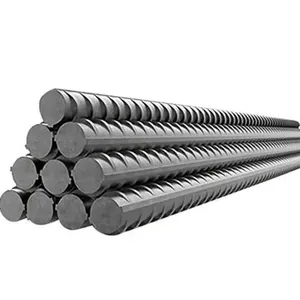
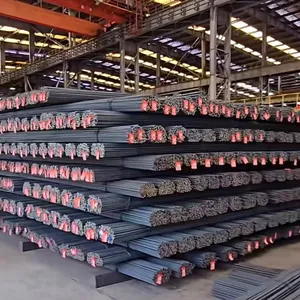
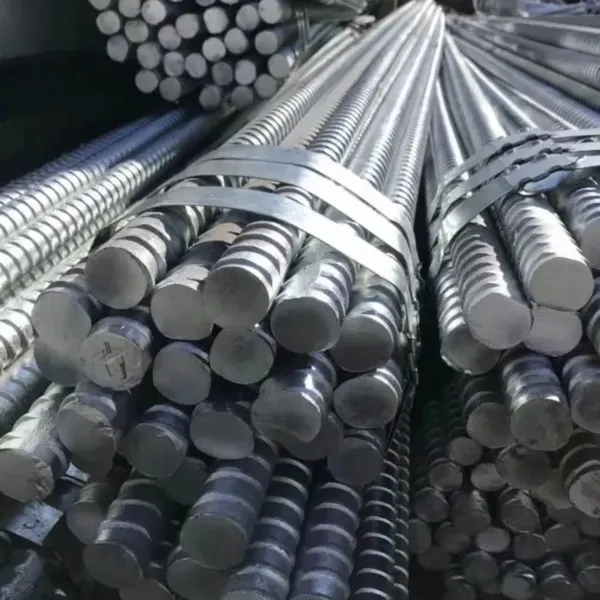
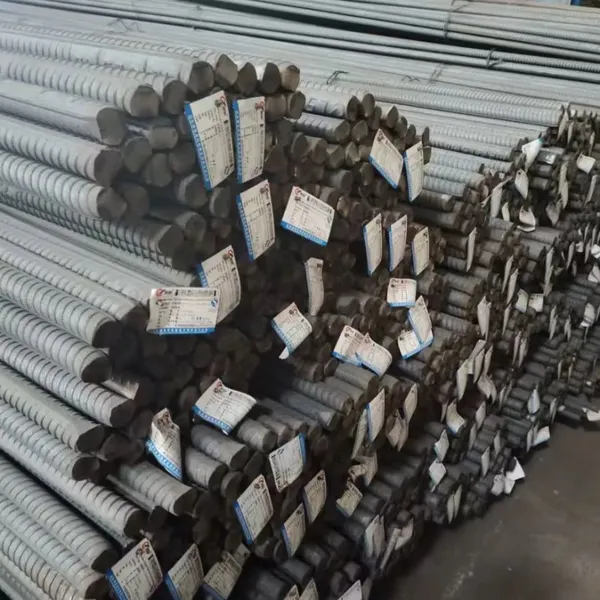
Steel Rebar & Deformed Steel Bar,HRB400E、HRB500E、HRB600E、HRB400、HRB500、HRB600


Related Products
-
 Steel Sheet & Plate & Checkered Steel Plate,Q235B、Q355B、Q355NH、Q345GNHNegotiableMOQ: 5 Metric Tons
 -
Steel Sheet & Plate & Boiler Steel Plate,Q245R、Q345R、Q370R、15CrMoR、12Cr1MoVR、16MnDRNegotiableMOQ: 5 Metric Tons
-
Steel Sheet & Plate & Shipbuilding Steel Plate,Q235、Q345、Q390、Q420NegotiableMOQ: 5 Metric Tons
-
Steel Sheet & Plate & Steel Sheet Pile,Q355B、SY295、SY390、S320GP/S355GPNegotiableMOQ: 5 Metric Tons
-
Steel Coil & Strip & Color Coated Steel Coil,GB/T 2518、GB/T 13912、GB/T 20123NegotiableMOQ: 5 Metric Tons
I. Product Overview
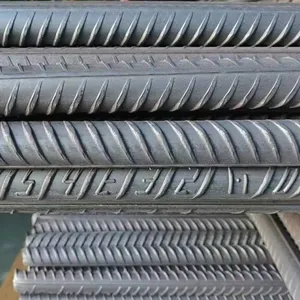
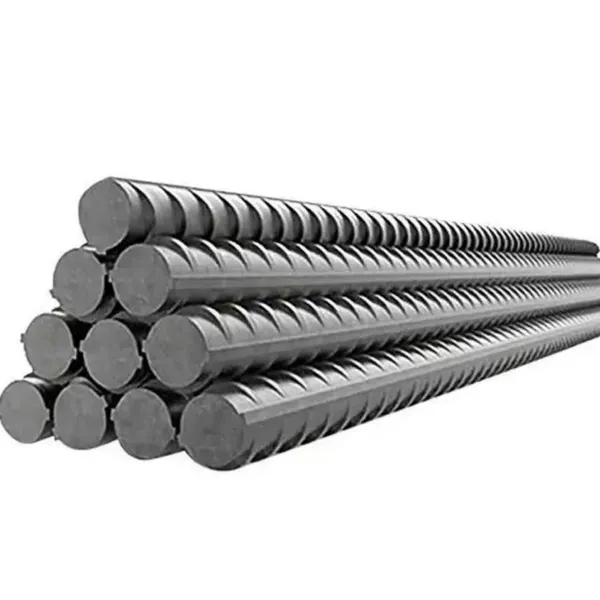
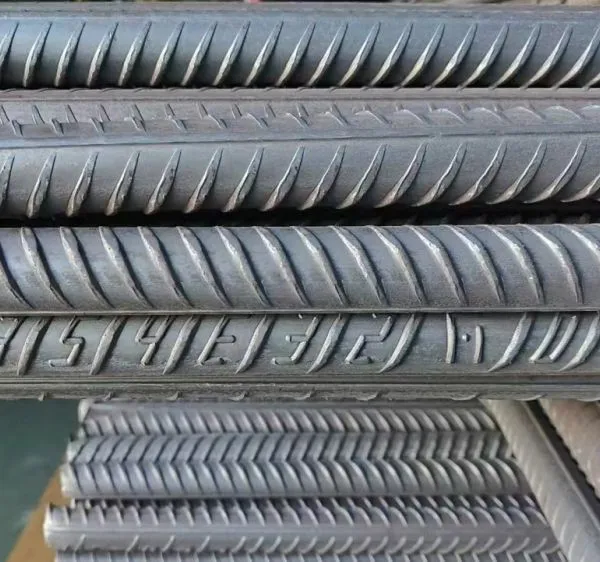
Threaded steel, officially named hot-rolled ribbed steel bars, is a strip-shaped steel product with longitudinal and transverse ribs on the surface and a circular cross-section, commonly known as "threaded steel". Its core function is to serve as the framework material of reinforced concrete structures, significantly improving the bond strength between steel and concrete, preventing slippage, ensuring the coordinated force of the structure, and it is widely used in infrastructure projects such as buildings, bridges, and roads.
II. Implementation Standards
Domestic Standard: GB 1499.2-2024 "Steel for Reinforced Concrete - Part 2: Hot-Rolled Ribbed Steel Bars"
International Reference: British Standard BS 4449:2005, American Standard ASTM A615/A615M
III. Grade and Specification Parameters
(I) Grade Nomenclature
It consists of HRB (Hot-Rolled Ribbed Steel Bars) + Yield Strength Value (MPa) + Suffix:
Ordinary Grades: HRB400, HRB500, HRB600
Seismic Grades: HRB400E, HRB500E, HRB600E (The "E" indicates seismic resistance, with a yield ratio ≥ 1.25 and an over-yield ratio ≤ 1.35)
Fine-Grained Grades: HRBF400, HRBF500 (The "F" indicates fine-grained)
(II) Specification and Dimensions
1. Nominal Diameter: Common specifications are Φ6, Φ8, Φ10, Φ12, Φ14, Φ16, Φ18, Φ20, Φ22, Φ25, Φ28, Φ32, Φ40mm.
2. Fixed Length: 9m, 12m (can be customized according to requirements).
3. Theoretical Weight (kg/m):
Diameter (mm) |
6 |
8 |
10 |
12 |
14 |
16 |
18 |
20 |
22 |
25 |
28 |
32 |
40 |
Theoretical Weight |
0.222 |
0.395 |
0.617 |
0.888 |
1.21 |
1.58 |
2.00 |
2.47 |
2.98 |
3.85 |
4.83 |
6.31 |
9.87 |
(III) Mechanical Properties (Core Indicators, Taking HRB400E as an Example)
Yield Strength (Rel): ≥ 400MPa
Tensile Strength (Rm): ≥ 540MPa
Elongation After Fracture (A): ≥ 16%
Cold Bending Performance: 180° cold bending without cracks
Seismic Indicators: Yield ratio ≥ 1.25, over-yield ratio ≤ 1.35, total elongation ≥ 9%
IV. Material and Production Process
(I) Material
The raw material is carbon structural steel or low-alloy structural steel (such as 20MnSi), which undergoes calm smelting treatment, with stable chemical composition and low content of harmful impurities (sulfur and phosphorus), ensuring weldability and toughness.
(II) Production Process
Steelmaking: Blast furnace ironmaking → converter/electric furnace steelmaking → continuous casting billet.
Hot Rolling: Heating the steel billet to 1100-1200℃ → multi-pass rolling → forming ribbed shape → online controlled cooling (grain refinement).
Finishing: Fixed-length cutting → bending/bundling → surface inspection → random inspection of mechanical properties → finished product storage.
V. Product Features
High Strength: Yield strength ≥ 400MPa, tensile strength ≥ 540MPa, meeting the bearing capacity requirements of modern buildings.
High Bond Strength: The crescent-shaped transverse ribs on the surface (mainstream) increase the friction force with concrete, prevent slippage, and have strong coordinated force.
Excellent Seismic Performance: Grade E steel meets the requirements of yield ratio and over-yield ratio, absorbs energy during earthquakes, and avoids brittle fracture.
Good Weldability: It can be connected by flash butt welding, arc welding, electroslag pressure welding, which is convenient for construction.
Corrosion Resistance: The low-alloy formula reduces the corrosion rate and extends the service life of the structure (anti-corrosion coating can be applied in harsh environments).
Flexible Construction: Straight bars (Φ10-40mm) are used for main reinforcement; coiled threaded steel (Φ6-16mm) is easy to straighten and used for stirrups and distribution reinforcement.
VI. Application Scope
(I) Construction Engineering
Civil Residential Buildings: Beams, columns, floor slabs, shear walls, foundation caps.
Public Buildings: Load-bearing structures of high-rise buildings such as office buildings, shopping malls, hospitals, and schools.
(II) Infrastructure Engineering
Transportation Facilities: Expressways, railways, bridges, culverts, tunnels.
Municipal Engineering: Roads, pipe networks, flood control facilities, ports and terminals.
(III) Industrial and Special Engineering
Workshops, warehouses, power stations, large equipment foundations, prestressed concrete components.
VII. Packaging, Marking, Storage and Delivery Cycle
(I) Packaging
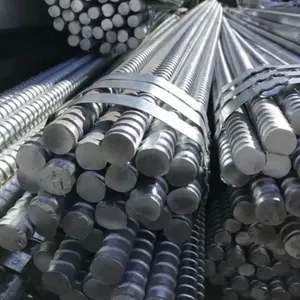
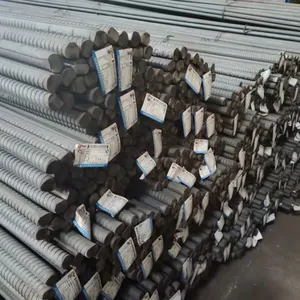
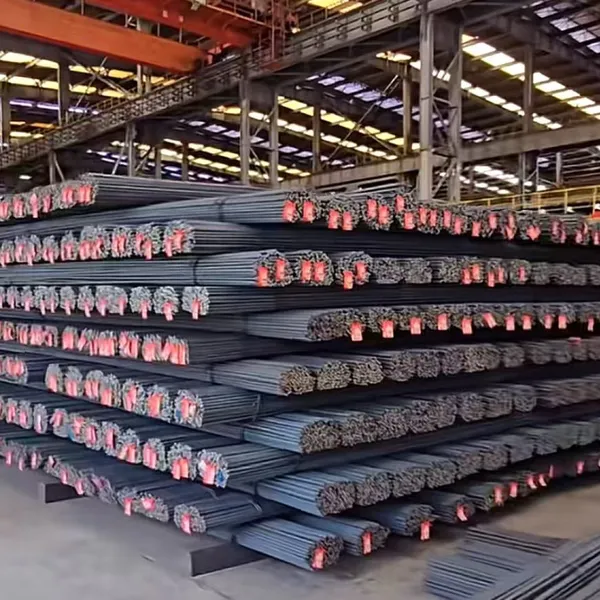
Straight Bars: Fixed length of 9m/12m, bundled into bundles (2-5 tons per bundle), with labels tied at both ends.
Coiled Threaded Steel: Coiled packaging (1-3 tons per coil), moisture-proof bundled.
(II) Marking
Each bundle/coil is hung with a metal label, indicating: manufacturer, grade, specification, implementation standard, batch number, production date, weight, and certificate number.
(III) Storage
Stored in a dry, ventilated, rainproof and moisture-proof warehouse, avoiding outdoor exposure to sun and rain to prevent rust.
Stacked separately according to specification, grade and batch number, raised more than 30cm above the ground to keep away from ground moisture.
Avoid mixing with acids, alkalis and corrosive substances, and regularly check for rust.
(IV) Delivery Cycle
The delivery cycle for regular orders is 5-7 days. If customized specifications are involved (such as special fixed length), the delivery cycle will be appropriately extended according to the production progress, which can be confirmed in advance through communication.
VIII. Quality Inspection and Acceptance
Visual Inspection: No cracks, scars, folds or excessive rust on the surface; uniform transverse ribs and qualified dimensional deviation.
Dimension Measurement: Measure diameter, rib height and rib spacing with calipers, which meet the tolerance requirements of GB 1499.2-2024.
Mechanical Test: Randomly sample each batch (≤ 60 tons) for tensile and cold bending tests, and the indicators can be accepted only if they are qualified.
Chemical Composition: Smelting analysis/finished product analysis, sulfur ≤ 0.045%, phosphorus ≤ 0.045%, in line with national standards.
IX. Notes
1. Transportation: Lift and place gently, avoid beating and bending to prevent deformation and damage; cover with tarpaulin to prevent moisture during transportation.
2. Processing:
Bending: Cold bending with special equipment, hot bending is strictly prohibited to avoid brittle fracture.
Welding: Use matching welding electrodes and control the current to prevent welding brittleness and slag inclusion.
3. Usage: Select specifications and grades according to the design drawings, and it is strictly prohibited to replace large ones with small ones or inferior ones with high-quality ones; Grade E steel must be used for seismic engineering.
4. Environmental Protection: Recycle processing waste to avoid environmental pollution; comply with safety regulations during construction.

Send Inquiry to This Supplier



You May Also Like
-
Steel Coil & Strip & Hot Rolled Coil,GB/T 709, GB/T 1591, GB/T 700, EN 10025, ASTM A36/A572, JIS G3101/G3116NegotiableMOQ: 5 Metric Tons
-
Steel Coil & Strip & Cold Rolled Steel Coil,DP590/780/980、HC340/590DP、Q235B、Q355BNegotiableMOQ: 5 Metric Tons
-
Steel Pipe & Tube & Precision Steel Pipe,10#、20#、35#、45#、40Cr、16MnNegotiableMOQ: 5 Metric Tons
-
Steel H Beam & Hot Rolled H Beam,HW100×100、HW200×200、HW250×250NegotiableMOQ: 5 Metric Tons
-
Steel Angle & Load Bearing Angle Steel,GB/T 700-2006、GB/T 1591-2018NegotiableMOQ: 5 Metric Tons
-
Flat Steel & Anti-Corrosion Flat Steel,Q235B、Q195、Q215、Q355B、20#、45#NegotiableMOQ: 5 Metric Tons
-
Steel Wire & High Tensile Steel Wire,Q195、Q215、Q235、35#、45#、65#、70#、82BNegotiableMOQ: 5 Metric Tons
-
Steel Rebar & Deformed Steel Bar,HRB400、HRB500、HRB400E、Grade 400、Grade 500NegotiableMOQ: 5 Metric Tons
-
Steel Sheet & Plate & Checkered Steel Plate,Q235C/D、Q355C/D、Z80、Z120、Z160NegotiableMOQ: 5 Metric Tons
-
Steel Sheet & Plate & Hull Structural Steel Plate,D36、E36、F36、D40、E40、A320、A36、B320、B36NegotiableMOQ: 5 Metric Tons


