








 Contact Platform Support
 Help Center
Pathology Wax Block Storage Cabinet – Stackable Steel Drawers for Laboratory & Hospital | Epoxy Coated, Lockable | Bespoke
Product Spotlights



Related Products
-
 Hospital Pathology Department Commercial Tissue Block Storage Cabinet With 5 Drawers 515mm Width Modular UnitUS$ 80 - 300MOQ: 5 Combos
 -
Medical School Lab Tissue Block Archive Cabinet Space Saving Vertical Design With Label Slot 6 Drawer 450mm WidthUS$ 80 - 300MOQ: 5 Combos
-
Forensic Pathology Steel Wax Block Storage Unit Hospital Grade Individual Lock Per Drawer 390mm Height StackingUS$ 80 - 300MOQ: 5 Combos
-
Third Party Medical Lab Tissue Block Filing Cabinet Modular Design With Transparent Label Slot 515mm 450mm Width OptionsUS$ 80 - 300MOQ: 5 Combos
-
Research Institute Pathology Cold Rolled Steel Tissue Block Cabinet Divider Slots 6 Large Drawers Per Unit Quick InstallUS$ 80 - 300MOQ: 5 Combos
When Archive Storage Becomes a Daily Friction Point
Most pathology labs don't realize they have a storage problem when a piece of equipment breaks down — they realize it when searching for things starts eating into their workday.
A technician needs to retrieve a block from eighteen months ago. The case number is in the system, but nobody knows where it physically is — maybe in a cardboard box under the bench, maybe on a shelf in the back room, or mixed in with last quarter's backlog. Twenty minutes of digging later, it's found. If this happens a few times a week, that's hours of lost productivity added up.
The bigger problem is that once this becomes the norm, compliance risks start piling up too. Samples mixed together, labels falling off, drawers overloaded, shelves crammed with paraffin cassettes from who-knows-when — when an audit comes around, there's no standardized storage record to show, and no clear explanation to give.
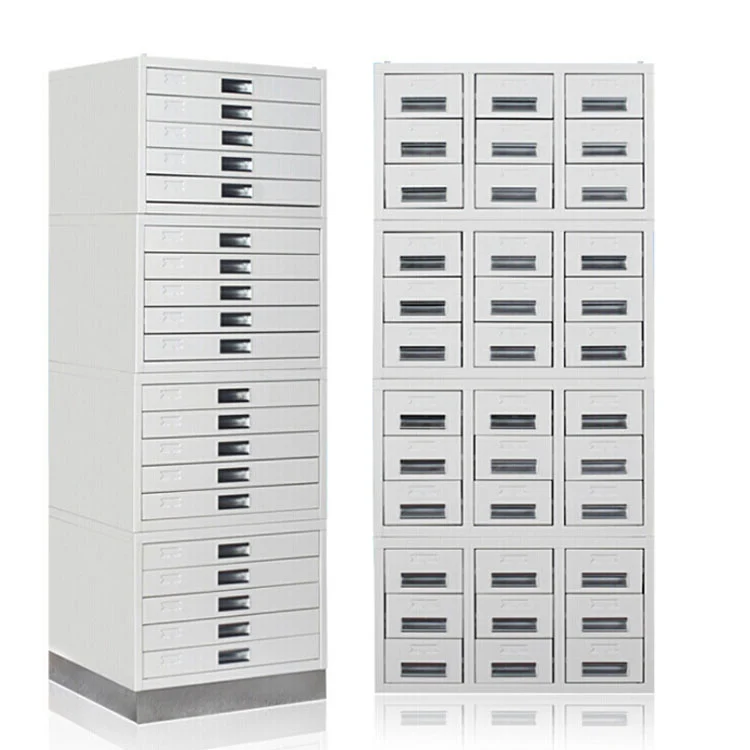
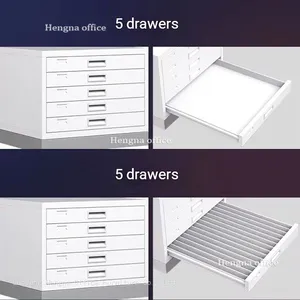
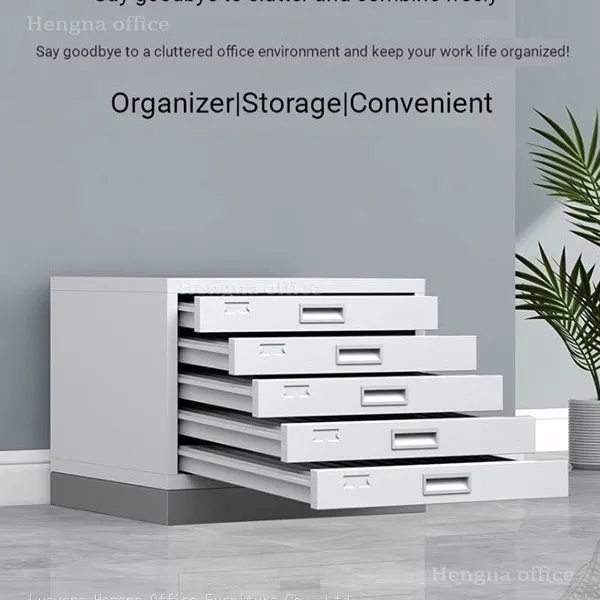
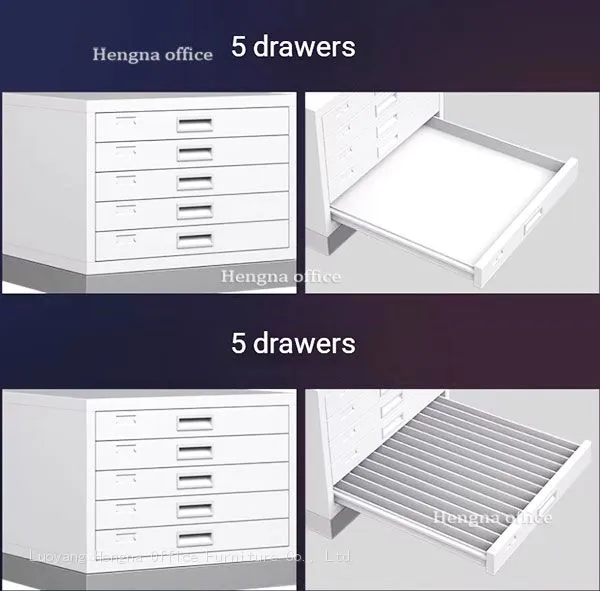
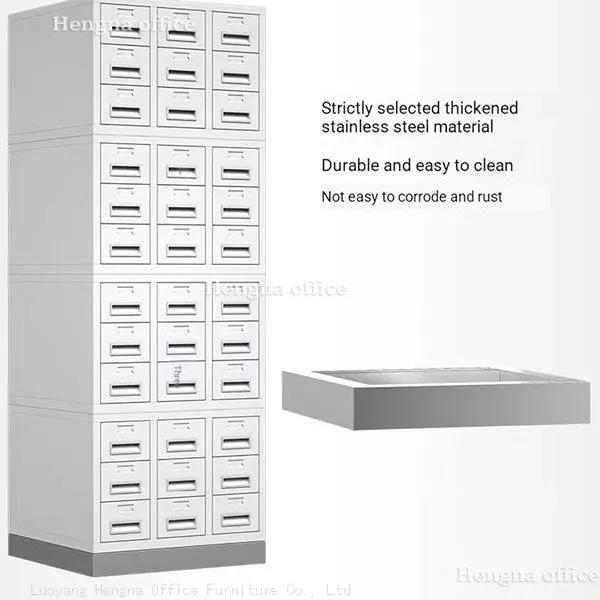
This steel drawer cabinet is designed to eliminate that friction. Five drawers per unit, modular stacking up to four sections, and a transparent label system that actually matches how pathology labs operate — not how they hope to operate with enough memory and experience.
What This Cabinet Actually Delivers
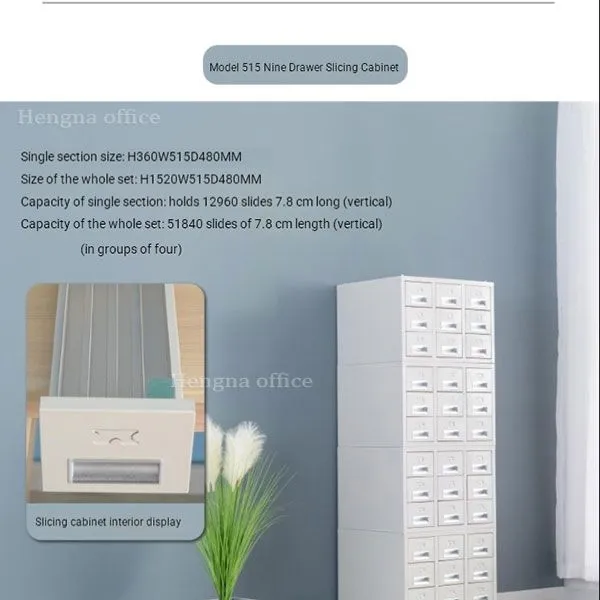
Single unit: H360 × W515 × D480mm (14.2" × 20.3" × 18.9")
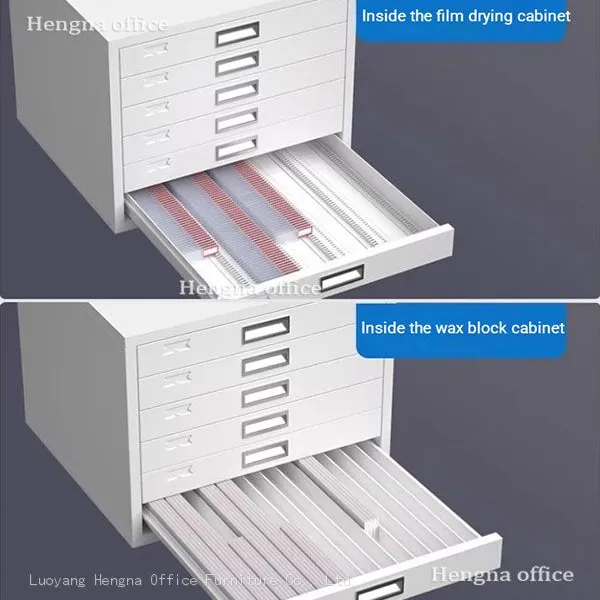
Each drawer holds 3,710 standard 7mm paraffin cassettes standing vertically. Vertical storage isn't just about density — it keeps cassette labels readable and protects block edges from damage during retrieval.
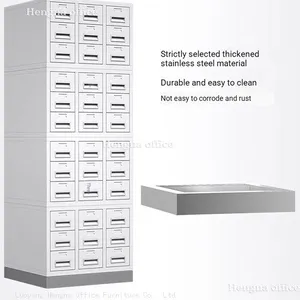
Four-unit stack (standard configuration): H1520 × W515 × D480mm (59.8" × 20.3" × 18.9")
Full stack capacity: 14,840 cassettes. Roughly a full year's archive volume for a mid-sized hospital pathology department, occupying less than 0.27 m² of floor space.
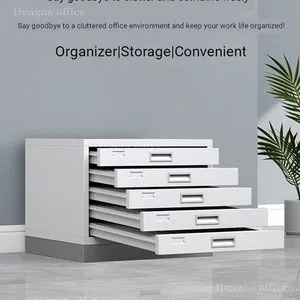
The drawer mechanism runs on a flat-pull track with consistent resistance throughout — no sticking, no tilting, no cassettes flying out when you pull too hard. Each drawer front has a transparent label slot for date ranges, batch numbers, or department codes. You know what's inside before you open it.
Both the exterior shell and drawer interiors are finished with epoxy powder coating — resistant to routine lab disinfectants (alcohol, chlorine-based agents, quaternary ammonium compounds), and wipes clean without staining.
Locking comes standard. The central locking system secures all five drawers with one key turn, suitable for archives containing patient-identifiable specimens where compliance requirements are strict. The lock core uses an anti-pick mechanism, and multiple keys can be issued — convenient for both supervisors and technicians.
Where This Cabinet Fits
Hospital pathology departments — Daily case volume generates cassette backlog fast. A four-unit stack in the archive corner holds a full year of accumulation. When procurement teams evaluate options, storage density and long-term durability are usually top priorities. This cabinet's single-unit height is relatively low, making it easier to maneuver through corridors and elevators compared to taller units.
Clinical laboratories and reference labs — High-throughput environments need fast retrieval. Vertical labeled drawers let a technician locate a specific wax block within thirty seconds instead of relying on memory. Many labs use zone-based management — tumor samples, routine biopsies, and teaching specimens in separate cabinets — multiple stacked units make functional zoning immediately clear.
Medical school teaching hospitals — Teaching specimens need long-term, stable storage. Steel construction and fully enclosed drawers keep teaching samples usable for years. University procurement often follows budget approval cycles; stock units shipping within 10 business days can meet urgent needs like semester-start inventory additions.
Research institutions and biobanks — Retrospective studies depend on sample traceability. Centralized, organized storage beats scattered freezers and improvised containers every time. Biobanks typically need to provide storage condition and location records for audits — this cabinet with its label system can generate an archive inventory quickly, making audit trails straightforward.
Private pathology practices — Smaller volume doesn't mean lower storage requirements. A single unit or two-unit configuration provides professional-grade storage without the footprint of industrial shelving. Clinic space is limited; the 515mm width and 480mm depth are standard pathology cabinet dimensions calculated for archive rooms or dedicated rooms, leaving adequate corridor clearance.
Specifications
| Single Unit | 4-Unit Stack | |
|---|---|---|
| Dimensions (H×W×D) | 360×515×480mm | 1520×515×480mm |
| Drawers | 5 | 20 |
| Capacity (7mm cassettes, vertical) | 3,710 | 14,840 |
| Surface finish | Epoxy powder coat | Epoxy powder coat |
| Locking | Central lock, all drawers | Central lock, all drawers |
| Stacking | 1–4 units, modular | Standard 4-unit |
Capacity based on standard 7mm paraffin cassettes stored vertically. For non-standard cassette thicknesses, calculate based on drawer interior depth — contact us for assistance.
FAQ
Q: What cassette thickness does this accommodate? A: Designed for standard 7mm paraffin cassettes in vertical orientation. For cassettes 25mm or thicker, contact us to verify interior drawer depth — custom drawer heights are available.
Q: Can I start with one unit and add more later? A: Yes. A single unit works as a standalone cabinet. Additional units stack directly on top when you need more capacity — no replacement or relocation of existing units required.
Q: How stable is a four-unit stack? A: Four units connected with interlocking hardware stand stably on level flooring. For high-traffic areas or uneven floors, we recommend wall anchoring or a rear support bracket.
Q: What about chemical resistance? A: Epoxy coating handles routine lab disinfectants — 70–75% ethanol, diluted sodium hypochlorite, quaternary ammonium compounds. Avoid prolonged contact with strong acids, alkalis, or organic solvents.
Q: Keyed alike or keyed different? A: Standard configuration is keyed alike per shipment (all drawers share one key). Keyed-different and master-key systems are available — specify when ordering.
Q: Does it need professional installation? A: No. Single units are ready to use immediately. Stacking each additional unit requires two people and is straightforward — hardware and instructions are included.
Q: Do you offer customization? A: Yes. Options include RAL color matching, drawer quantity adjustments, modified cabinet depth, and non-standard locking systems. MOQ and lead time depend on customization complexity — send your specs for a quote.
Q: What's the lead time? A: Stock units ship within 10 business days. Custom orders typically take 25–30 business days, confirmed at order placement.
A Note on Why This Matters
Paraffin tissue blocks aren't consumables — they're diagnostic records, research assets, and in many regions, legally regulated specimens.
Poor storage leads to damaged blocks, lost samples, and compliance failures. At the low end, it delays research progress. At the worst, it creates institutional-level risk when an external audit reveals no standardized storage documentation.
A purpose-built steel archive cabinet isn't an optional upgrade — it's infrastructure. The cost of one cabinet is negligible compared to the cost of losing a single irreplaceable specimen.
If you're planning a lab renovation or running out of archive space, send us your floor dimensions and current storage volume. We'll recommend the right configuration — cabinet quantity, stacking arrangement, and label system setup.

Send Inquiry to This Supplier



You May Also Like
-
Veterinary Pathology Lab Heavy Duty Anti Rust Tissue Block Storage Cabinet Lockable Unit 515mm Width Easy InstallUS$ 80 - 300MOQ: 5 Combos
-
Pathology Department Tissue Block Archive Cabinet Label Slot High Load Capacity 20 Drawer Stack 390mm Per UnitUS$ 80 - 300MOQ: 5 Combos
-
Medical Lab Tissue Block Storage Cabinet OEM Available Steel Construction 5 Drawer 515mm Width Hospital Lab UseUS$ 80 - 300MOQ: 5 Combos
-
Cold Rolled Steel Pathology Slide Cabinet - 14,000 Slides Capacity, Anti-Dust Dividers for Humid ClimatesUS$ 80 - 300MOQ: 5 Combos
-
Pre-Assembled 18-Drawer Slide Cabinet for Pathology Labs — OEM Available, Ships Fully Built WorldwideUS$ 80 - 300MOQ: 5 Combos
-
Paraffin Block Cabinet With Anti-Rust Steel Base — Moisture-Proof Tissue Block Storage for Hospital LabsUS$ 80 - 300MOQ: 5 Combos
-
Slide Drying Cabinet With Ventilated Drawers — Pre-Assembled, Stainless Steel Base, Custom Sizes AvailableUS$ 80 - 300MOQ: 5 Combos
-
Lockable Microscope Slide Cabinet With Key-Lock Drawers — Secure Long-Term Storage for High-Value SamplesUS$ 80 - 300MOQ: 5 Combos
-
Lockable Paraffin Block Cabinet for Tissue Samples — OEM Supported, Guaranteed Delivery on Bulk OrdersUS$ 80 - 300MOQ: 5 Combos
-
Pathology Cabinet Set for Hospital – Slide Storage + Paraffin Block Filing System, 20-Drawer SteelUS$ 80 - 300MOQ: 5 Combos

