








 Contact Platform Support
 Help Center
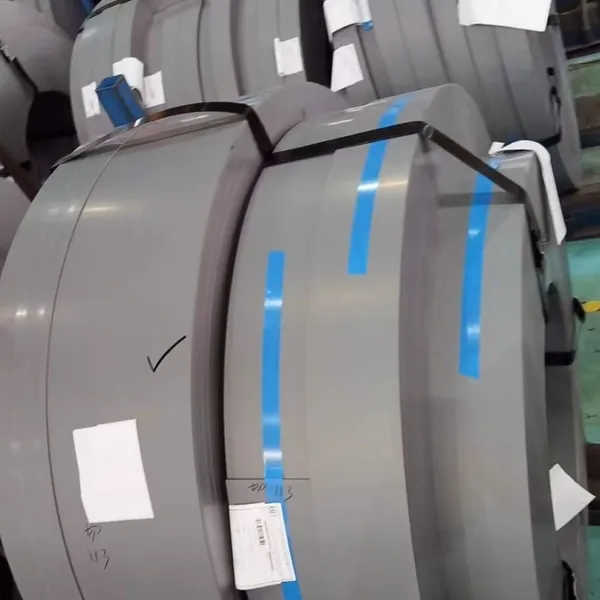
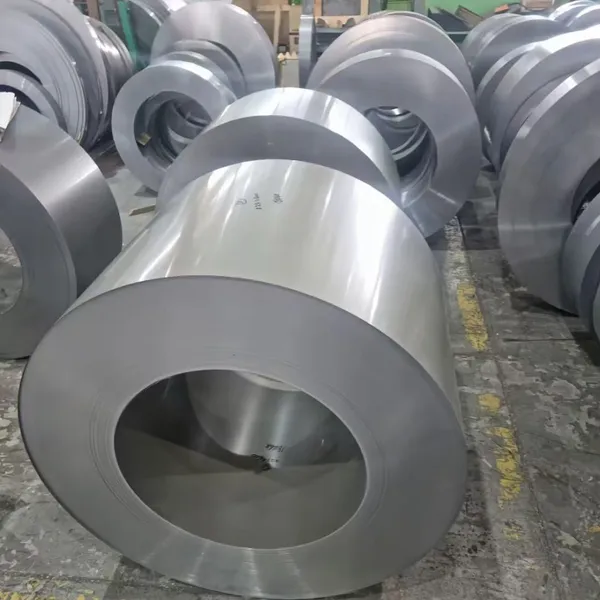
Silicon Steel & Silicon Steel Coil


Related Products
-
 Silicon Steel & Silicon Steel CoilNegotiableMOQ: 5 Metric Tons
 -
Steel Billet & Steel Semi-finished Product Q235 Steel Billet SAE1008 / SAE1010 Steel Billet 3SP / 5SP Prime BilletNegotiableMOQ: 5 Metric Tons
-
Steel Billet & Steel Semi-finished Product Q235 Steel Billet SAE1008 / SAE1010 Steel Billet 3SP / 5SP Prime BilletNegotiableMOQ: 5 Metric Tons
-
Steel Billet & Steel Semi-finished Product Q235 Steel Billet SAE1008 / SAE1010 Steel Billet 3SP / 5SP Prime BilletNegotiableMOQ: 5 Metric Tons
-
Steel Round Bar & Mold Steel Bar,Cr12MovNegotiableMOQ: 5 Metric Tons
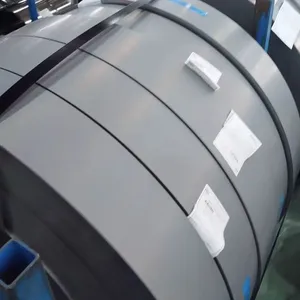
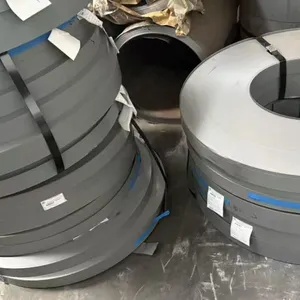
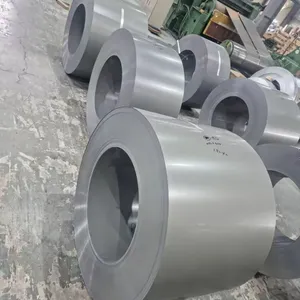
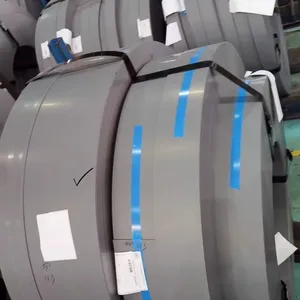
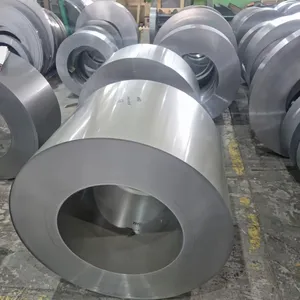
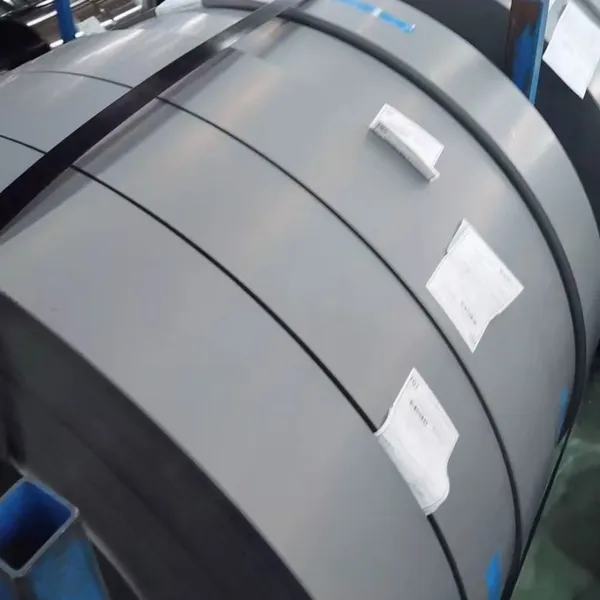
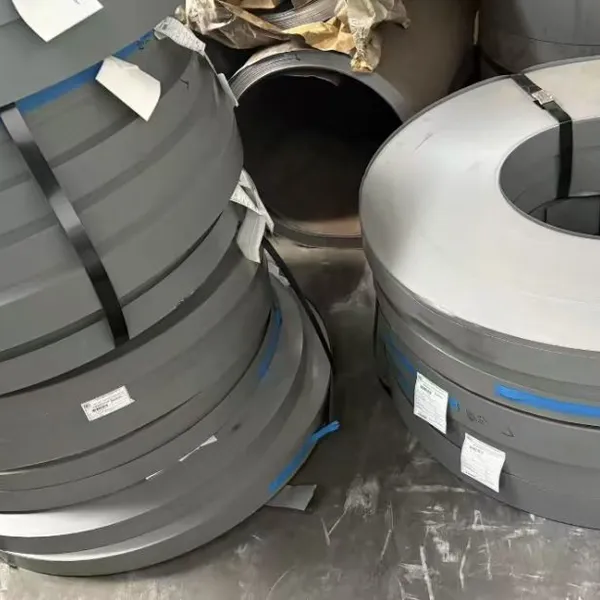
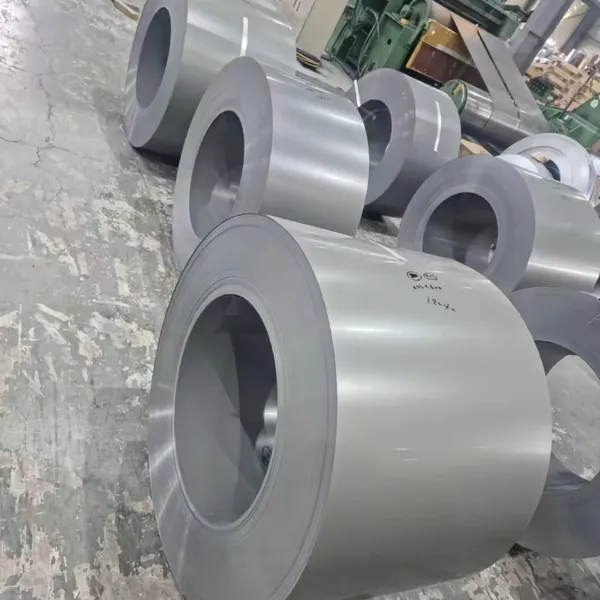
Silicon steel coils, also known as electrical steel coils, are low-carbon iron-silicon alloy strips hot-rolled or cold-rolled into coils, with a silicon content ranging from 0.5% to 6.5%. The addition of silicon greatly increases electrical resistivity, reduces iron loss, and optimizes magnetic permeability. As high-end special steel materials, they serve as the core functional raw materials for manufacturing iron cores of various motors and transformers.
1. Core Classification and Characteristics
Non-oriented Silicon Steel Coil
Randomly distributed crystal grains, uniform magnetic properties in all directions, suitable for rotating magnetic fields; the silicon content is mostly 1.5%–3.0%.
Common thicknesses: 0.35 mm, 0.50 mm; thin specifications of 0.20 mm/0.25 mm are applied to drive motors of new energy vehicles.
Typical grades (GB/T 2521): 35W250 (iron loss: 2.50 W/kg at 50 Hz and 1.5 T with a thickness of 0.35 mm).
Applications: Household appliance motors, industrial motors, stators and rotors of generators.
Grain-oriented Silicon Steel Coil (including High-induction Hi-B Grain-oriented Steel)
Underwent special secondary recrystallization annealing. Crystal grains are highly oriented along the rolling direction, featuring extremely low iron loss and high magnetic permeability in the rolling direction, applicable to unidirectional alternating magnetic fields; the silicon content is about 3.0%.
Common thicknesses: 0.23 mm, 0.30 mm; ultra-thin specifications below 0.20 mm for extra-high voltage power facilities.
Typical grades: 30Q130 (iron loss: 1.30 W/kg at 50 Hz and 1.7 T with a thickness of 0.30 mm); Hi-B steel is used for extra-high voltage transformers.
Applications: Power transformers, instrument transformers, reactor iron cores.
2. Key Performance Indicators
Iron Loss (P): Sum of hysteresis loss and eddy current loss in alternating magnetic fields, unit: W/kg. Lower iron loss indicates better performance. Conventional test standards: P1.5/50 (1.5 T, 50 Hz for non-oriented steel), P1.7/50 (1.7 T, 50 Hz for oriented steel).
Magnetic Induction Density (B50/B100): Magnetic flux density under a specific magnetic field strength. A higher B value enables a smaller size of the iron core.
Coating and Insulation: The surface is covered with inorganic/organic composite insulating coatings (e.g., magnesium oxide base layer and phosphate coating) to reduce inter-laminar eddy current and prevent rust, requiring excellent adhesion and punching performance.
Thickness Uniformity and Flatness: Directly determine the stacking factor and operating noise of laminated iron cores.
3. Specifications and Grade Naming Rules
Standard inner coil diameter: 508 mm; coil weight: 2–6 tons; common width: 800–1250 mm, customized sizes available.
National standard naming rules:
Non-oriented steel: XXWXXX (e.g., 35W250: 35 represents 0.35 mm thickness, W stands for non-oriented, 250 means iron loss of 2.50 W/kg).
Oriented steel: XXQXXX (e.g., 30Q130: 30 represents 0.30 mm thickness, Q stands for grain-oriented, 130 means iron loss of 1.30 W/kg).
4. Production Process
Process flow for cold-rolled silicon steel: Hot metal desulfurization → converter steelmaking → continuous casting → hot rolling → pickling and descaling → cold rolling to target thickness → decarburization annealing (carbon content controlled ≤ 30 ppm) → coating and high-temperature annealing (key procedure for oriented steel) → finishing, slitting and shearing. Secondary recrystallization annealing is the critical process to realize low iron loss and high magnetic induction for grain-oriented silicon steel.
5. Executive Standards
China: GB/T 2521 Cold-rolled electrical steel strips and sheets
International: IEC 60404 series; the United States: ASTM A876/A877; Japan: JIS C2552
6. Application Fields
Non-oriented silicon steel: Compressor motors for air conditioners and refrigerators, washing machine motors, drive motors of new energy vehicles, wind power generators, industrial water pump motors.
Grain-oriented silicon steel: Power transformers (power grids of 110 kV and above), distribution transformers, instrument transformers, large-scale reactors.
7. Storage and Transportation Requirements
Keep dry and avoid condensation and coating rusting; long-term outdoor stacking is prohibited.
Place steel coils upright to prevent deformation; use special lifting tools to avoid scratching the surface coating.
Storage environment: temperature 0–40 ℃, relative humidity ≤ 70%.
8. Industry Development Trend
Developing towards ultra-thin specifications (e.g., 0.10 mm ultra-thin non-oriented steel), ultra-low iron loss, high magnetic induction, low loss at high frequency (adapting to high-speed motors), and low-carbon green manufacturing.
9. Delivery time
5-7 days.

Send Inquiry to This Supplier



You May Also Like
-
Steel Round Bar & Mold Steel Bar,Cr12MovNegotiableMOQ: 5 Metric Tons
-
Steel Round Bar & Mold Steel Bar,Cr12MovNegotiableMOQ: 5 Metric Tons
-
Steel Billet & Square Steel Billet,A36、A572、ST37、ST52、S235JR、S355JRNegotiableMOQ: 5 Metric Tons
-
Steel Billet & Square Steel Billet,A36、A572、ST37、ST52、S235JR、S355JRNegotiableMOQ: 5 Metric Tons
-
Steel Billet & Square Steel Billet,A36、A572、ST37、ST52、S235JR、S355JRNegotiableMOQ: 5 Metric Tons
-
Silicon Steel & Electrical Steel,23Q085, 23Q095, 23Q110,35WW250, 35WW300, 35WW400NegotiableMOQ: 5 Metric Tons
-
Silicon Steel & Electrical Steel,23Q085, 23Q095, 23Q110,35WW250, 35WW300, 35WW400NegotiableMOQ: 5 Metric Tons
-
Silicon Steel & Electrical Steel,23Q085, 23Q095, 23Q110,35WW250, 35WW300, 35WW400NegotiableMOQ: 5 Metric Tons
-
Steel Round Bar & Round Steel Bar,Φ5.5mm ~ Φ300mmNegotiableMOQ: 5 Metric Tons
-
Steel Round Bar & Round Steel Bar,Φ5.5mm ~ Φ300mmNegotiableMOQ: 5 Metric Tons


