








 Contact Platform Support
 Help Center
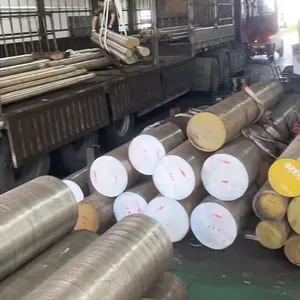
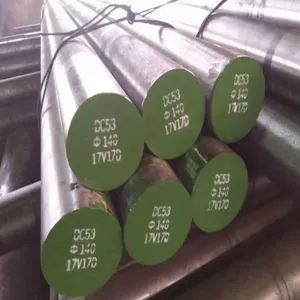
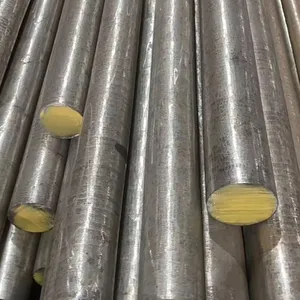
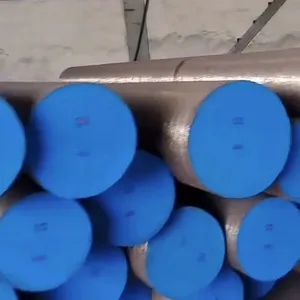
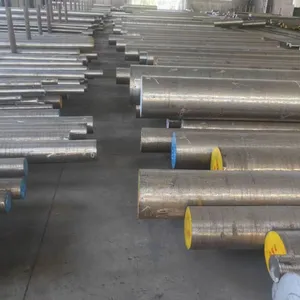
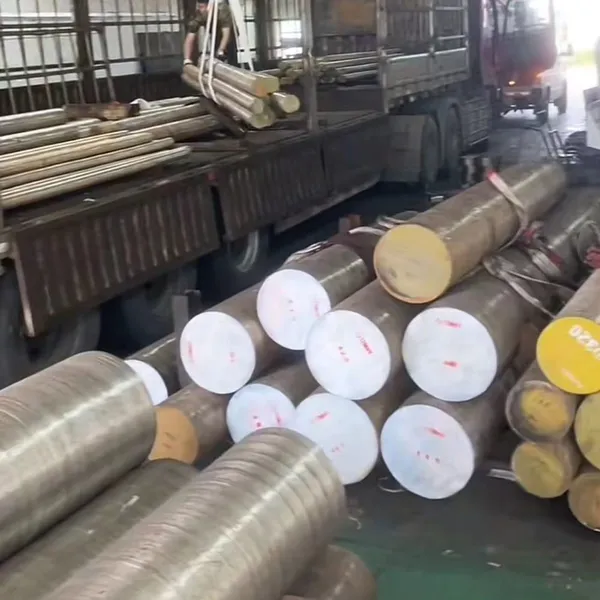
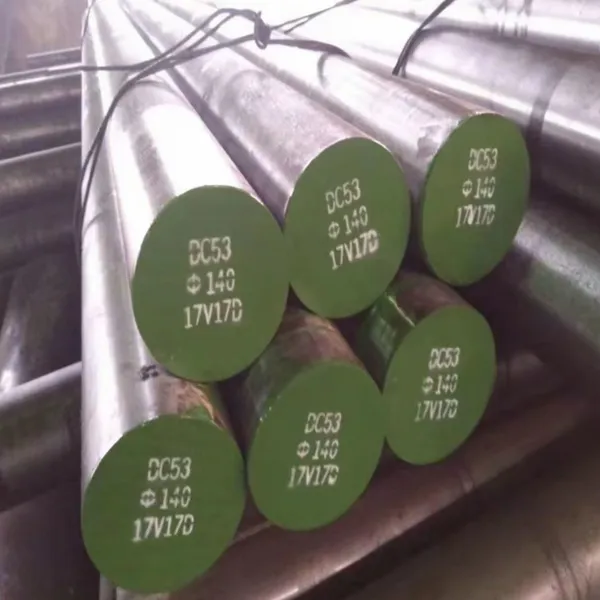
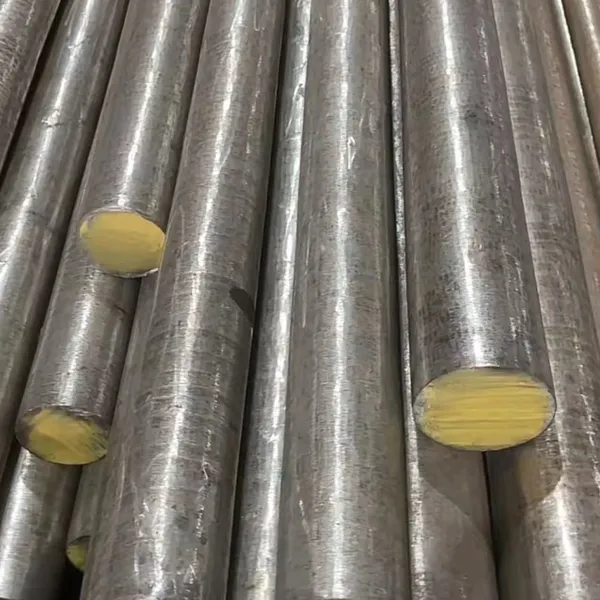
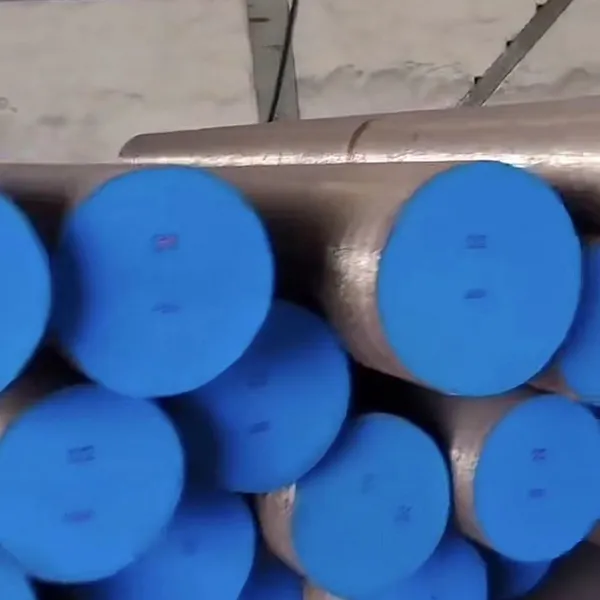
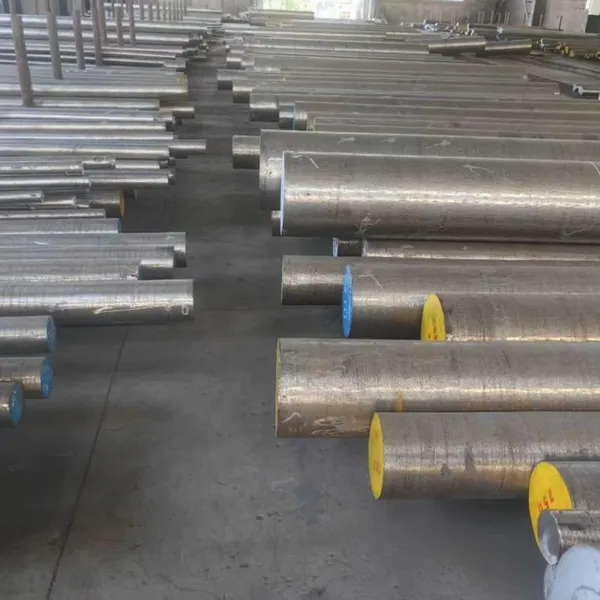
Steel Round Bar & Mold Steel Bar,Cr12Mov


Related Products
-
 Steel Round Bar & Mold Steel Bar,Cr12MovNegotiableMOQ: 5 Metric Tons
 -
Steel Round Bar & Mold Steel Bar,Cr12MovNegotiableMOQ: 5 Metric Tons
-
Steel Billet & Square Steel Billet,A36、A572、ST37、ST52、S235JR、S355JRNegotiableMOQ: 5 Metric Tons
-
Steel Billet & Square Steel Billet,A36、A572、ST37、ST52、S235JR、S355JRNegotiableMOQ: 5 Metric Tons
-
Steel Billet & Square Steel Billet,A36、A572、ST37、ST52、S235JR、S355JRNegotiableMOQ: 5 Metric Tons
Detailed Product Description of Cr12MoV Alloy Steel Round Bars
Cr12MoV alloy steel round bars are circular section steel products made of high-quality alloy tool steel base material and processed by forging, hot rolling, cold drawing and other technologies. As a typical cold work die steel round bar, it features excellent hardness, wear resistance and hardenability, as well as good dimensional stability and machinability after heat treatment. As a core structural and functional material for mold manufacturing, machinery manufacturing, precision parts processing and other fields, it complies with core execution standards including GB/T 1299-2014, ASTM A681, JIS G4404, DIN 17350, etc.
I. Core Technical Parameters
(1) Chemical Composition Index
Chemical composition is the core factor determining the performance of Cr12MoV alloy steel round bars, with the unit of mass fraction (%). The typical composition and content range are strictly controlled to ensure the stability of product hardness, wear resistance and hardenability. The specific indicators are as follows:
• Core alloy elements: Carbon (C) 1.45~1.75%, Chromium (Cr) 11.0~13.0% (the core anti-wear element, forming hard chromium carbides), Molybdenum (Mo) 0.40~0.60%, Vanadium (V) 0.15~0.30% (grain refinement, improving dimensional stability).
• Auxiliary elements: Silicon (Si) 0.35~0.45% (enhancing strength and oxidation resistance), Manganese (Mn) 0.40~0.60% (improving hardenability and toughness).
• Harmful impurities: Phosphorus (P) ≤0.030%, Sulfur (S) ≤0.030% (strictly controlled to avoid reducing toughness and ductility, preventing hot brittleness).
• Quality requirements: The chemical composition shall be uniform and stable, and the deviation shall comply with the requirements of the corresponding execution standard. For customized needs, the content of partial elements can be adjusted after prior communication. A third-party test report (such as SGS, BV) can be provided to ensure that the composition meets the standard.
• Execution standard: The chemical composition shall comply with the requirements of GB/T 1299-2014 (China), ASTM A681 (USA), JIS G4404 (Japan) and DIN 17350 (Germany). For high-precision mold scenarios, the impurity content can be further controlled to improve product performance.
(2) Mechanical Properties Grade
Divided according to the mechanical properties after standard heat treatment (annealing, quenching and tempering), the key indicators are measured in HB (Brinell hardness), HRC (Rockwell hardness), MPa (tensile strength) and J/cm² (impact toughness). The specific grades and application scenarios are as follows:
• Annealed state (delivery state): Hardness 207~255HB, with good machinability, suitable for subsequent turning, milling, drilling, grinding and other processing operations.
• Quenched and tempered state (conventional grade): Hardness 58~62HRC, tensile strength ≥1800MPa, yield strength ≥1600MPa, impact toughness (αk) ≥20J/cm², suitable for most cold work molds, cutting tools and wear-resistant parts.
• Custom grade: The hardness can be adjusted to 55~65HRC according to customer needs; for low-temperature or high-impact scenarios, the impact toughness can be optimized, and the impact toughness (αk) can reach ≥25J/cm².
• Hardenability: For round bars with a diameter of ≤80mm, it can be completely hardened by oil quenching, with uniform hardness, which is suitable for manufacturing large-size mold parts and wear-resistant components.
(3) Conventional Size Specifications
The nominal diameter of Φ8mm-Φ500mm is the mainstream in the market, with a fixed length of 2 meters/6 meters (can be cut to 1-12 meters according to customer requirements). The key commonly used specifications and applicable scenarios are as follows:
Nominal Diameter — Core Application Scenarios
Φ8mm-Φ30mm — Small mold inserts, cutting tools, precision measuring tools, small wear-resistant parts
Φ30mm-Φ100mm — Mold cores, mold bases, cold stamping dies, cold extrusion dies
Φ100mm-Φ200mm — Large mold bases, heavy-duty wear-resistant parts, mechanical shafts
Φ200mm-Φ500mm — Forged mold blanks, large-scale cold work die components, heavy machinery wear parts
• Dimensional tolerance: The diameter tolerance of Φ8-20mm is ±0.3mm, Φ20-50mm is ±0.4mm, Φ50-100mm is ±0.5mm, and Φ100-500mm is ±0.8mm; the length tolerance of fixed-length products is 0-30mm, and the tolerance of customized cut-length products can be adjusted according to requirements.
• Surface treatment: Black surface (hot-rolled/forged, default delivery state), peeled/turned surface (improved surface finish, suitable for general processing), ground polished surface (high finish, suitable for precision mold parts).
II. Packaging, Storage and Transportation Specifications
Packaging specifications directly affect transportation safety and product quality. The packaging form, net weight per bundle and packaging materials shall be clearly marked to ensure safe transportation and convenient warehouse management:
1. Packaging form: Straight bar bundle is the mainstream; for small-diameter (Φ8mm-Φ30mm) products, coil packaging can be selected on demand. The straight bars are neatly arranged and bundled to avoid collision and deformation during transportation.
2. Net weight per bundle: Shall be clearly marked (e.g., 100kg/bundle, 500kg/bundle, 1000kg/bundle) for convenient logistics billing, loading and unloading, and warehouse inventory management.
3. Packaging materials: The mainstream is steel strip bundling + waterproof film wrapping; for high-precision polished surface products, additional foam padding or plastic film wrapping is added to prevent surface scratches. Heavy-duty large-diameter products can be packaged in wooden cases to enhance protection.
4. Storage and transportation requirements: Store in a dry and ventilated warehouse, elevate to prevent moisture and rust, and avoid rainwater immersion; prevent severe collision and extrusion during transportation, slight surface scratches can be ignored, and deep scratches shall be repaired by grinding or anti-rust treatment in a timely manner; avoid direct contact with strong acids, alkalis and other corrosive substances, and separate from other materials to prevent contamination.
III. Typical Application Scenarios
Relying on the advantages of high hardness, wear resistance, good dimensional stability and excellent hardenability, Cr12MoV alloy steel round bars are widely used in mold manufacturing, machinery processing and other industrial fields. The core applicable scenarios are as follows:
1. Mold manufacturing: Cold work molds (stamping dies, cutting dies, drawing dies, cold extrusion dies), mold inserts, mold cores, mold bases, suitable for manufacturing precision molds with long service life and high dimensional requirements.
2. Cutting tools and measuring tools: Various cutting tools (turning tools, milling tools, drilling tools), precision measuring tools (gauges, templates), which have good wear resistance and dimensional stability, and can ensure the accuracy of cutting and measurement.
3. Machinery manufacturing: Wear-resistant mechanical parts (gears, shafts, bushings), heavy-duty equipment components, industrial plant transmission parts, which can resist friction and impact, and extend the service life of equipment.
4. Other scenarios: Plastic mold accessories (high-hardness mold cores), precision mechanical parts, cold work processing auxiliary parts, and other fields requiring high wear resistance and dimensional accuracy.
IV. Processing and Usage Notes
1. Heat treatment requirements: The standard heat treatment process is recommended: quenching temperature 1050~1080℃ (oil cooling), tempering temperature 180~220℃ (heat preservation for 2~3 hours, air cooling). The heat treatment process can be customized according to the product size and use requirements; overheating or underheating during heat treatment shall be avoided to prevent the decline of product performance.
2. Processing requirements: Drilling, bending, tapping, grinding and other processing can be carried out according to demand. The delivery state is annealed, which is easy to process; after processing, the local burrs shall be removed, and the damaged surface shall be treated with anti-rust treatment in a timely manner. For precision parts, finish grinding is recommended to ensure dimensional accuracy.
3. Welding requirements: Welding is not recommended for Cr12MoV alloy steel round bars (welding is easy to cause cracks and performance degradation); if welding is necessary, preheating (200~300℃) and post-welding tempering shall be carried out, and professional welding materials shall be used to reduce welding defects.
4. Acceptance key points: Check the Material Test Certificate (MTC), heat treatment test report and chemical composition test report upon delivery; conduct visual inspection for uniform surface, no rust, no cracks, no defects such as shrinkage holes; spot check the hardness with a hardness tester and the diameter deviation with an oil caliper; for high-precision products, dimensional detection with a micrometer is recommended.
5. Special scenarios: In low-temperature environments (below -20℃), the impact toughness of the product may decrease, and it is recommended to optimize the heat treatment process; for high-precision mold scenarios, the dimensional expansion caused by heat treatment shall be considered in the design, and appropriate tolerances shall be reserved.
V. Quality Assurance
Formal products provide a complete test report for each batch, including chemical composition test, mechanical properties (hardness, tensile strength, impact toughness) test, dimensional deviation test and heat treatment effect test; the product material purity and impurity content meet the national and international standard requirements, and the surface quality and performance indicators are strictly inspected before delivery.
We support re-inspection by third-party testing institutions (such as SGS, BV, TUV). If the product does not meet the standard due to our reasons, we will provide replacement, return and other after-sales services to ensure the legitimate rights and interests of customers. The delivery time is 5-7 days for regular specifications; for customized products, the delivery time will be adjusted according to the customization difficulty and order quantity. At the same time, we can provide customized production services according to the specific needs of customers (such as customized chemical composition, size, heat treatment process) to meet the personalized needs of different fields.

Send Inquiry to This Supplier



You May Also Like
-
Silicon Steel & Electrical Steel,23Q085, 23Q095, 23Q110,35WW250, 35WW300, 35WW400NegotiableMOQ: 5 Metric Tons
-
Silicon Steel & Electrical Steel,23Q085, 23Q095, 23Q110,35WW250, 35WW300, 35WW400NegotiableMOQ: 5 Metric Tons
-
Silicon Steel & Electrical Steel,23Q085, 23Q095, 23Q110,35WW250, 35WW300, 35WW400NegotiableMOQ: 5 Metric Tons
-
Steel Round Bar & Round Steel Bar,Φ5.5mm ~ Φ300mmNegotiableMOQ: 5 Metric Tons
-
Steel Round Bar & Round Steel Bar,Φ5.5mm ~ Φ300mmNegotiableMOQ: 5 Metric Tons
-
Steel Round Bar & Round Steel Bar,Φ5.5mm ~ Φ300mmNegotiableMOQ: 5 Metric Tons
-
Square Steel & Square Hollow Section (SHS) ,GB/T 3091-2015、ASTM A500、EN 10219NegotiableMOQ: 5 Metric Tons
-
Square Steel & Square Hollow Section (SHS) ,GB/T 3091-2015、ASTM A500、EN 10219NegotiableMOQ: 5 Metric Tons
-
Square Steel & Square Hollow Section (SHS) ,GB/T 3091-2015、ASTM A500、EN 10219NegotiableMOQ: 5 Metric Tons
-
Steel Channel & Structural Channel,Q235、Q355、S235JR、S355JR、ASTM A36NegotiableMOQ: 5 Metric Tons


