








 Contact Platform Support
 Help Center
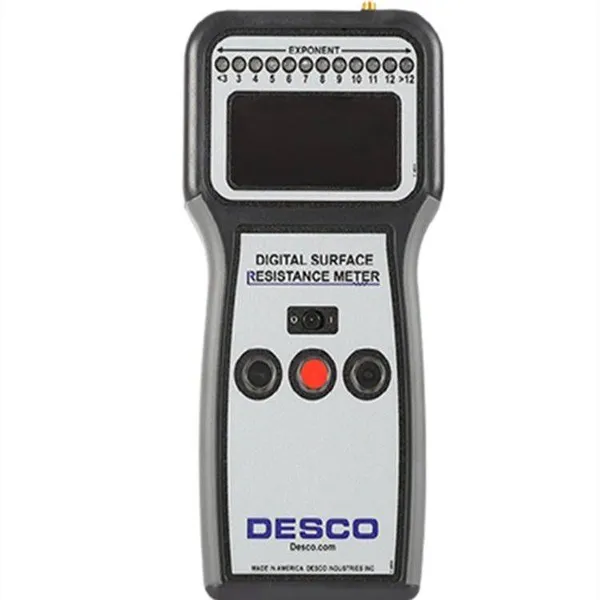
Imported From Abroad/imported From the United States, Desco 50890 Hammer-type Surface Resistance Tester



Related Products
-
 Supply Aegir 50556 Digital Display Networked Supporting Wing Gate Access Control SystemNegotiableMOQ: 0 Set
 -
Office Building Entrance and Exit Gate - Fast Access by Card Swiping or Face Recognition, Anti - Pinch and Anti - TailgatingNegotiableMOQ: 1 Set
-
Pedestrian Passage Swing Gate for Personnel Access Management in Office Buildings - Dynamic Face Recognition SystemNegotiableMOQ: 1 Set
-
Supply and Wholesale of Intelligent Access Control and Attendance System Aegir50556 / Domestic 50556 Intelligent Access ControlNegotiableMOQ: 1 Set
-
Esd Three-roller Gate Access Control Passage + Static Electricity Testing KitNegotiableMOQ: 1 Set
19290 Heavy Hammer Surface Resistance Tester
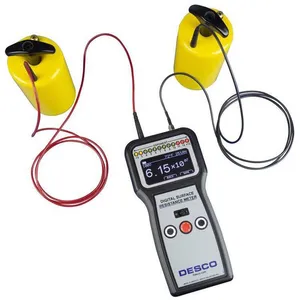
DESCO 50890 Heavy Hammer Resistance Tester
Introduction: Only used to test surface resistance/surface resistivity, volume resistance/volume resistivity, ground resistance, etc. (50890 replaces 19290)
1. Instrument Description
The 50890 can be used for the following ESD tests and complies with relevant specifications:
☆ Electrostatic resistance compliance testing (ESD TR53 specification manual)
☆ Anti-static workbench surface testing (ESD S4.1 B standard)
☆ Anti-static floor testing (ANSI/ESD S7.1 standard)
☆ Anti-static footwear testing (ESD S9.2 standard)
☆ Anti-static work clothing testing (ESD STM2.1 standard)
☆ Anti-static shoes + anti-static floor + human body system resistance testing (ESD STM97.1 standard)
2. Product Parameters
Test point-to-point resistance, surface resistance, and ground resistance
Comply with IEC61340-2-3, ESD TR53, ANSI/ESD S4.1/7.1, ANSI/ESD STM2.1/12.1/97.1, ESD SP9.2 specifications
Test voltage: 10V/100V (automatic, 10V for less than 1MΩ, 100V for greater than or equal to 1MΩ)
Test time: 15 seconds/fast (optional)
Test range: 1KΩ~1TΩ
Test accuracy: ±10% (less than 1TΩ), ±20% (greater than or equal to 1TΩ)
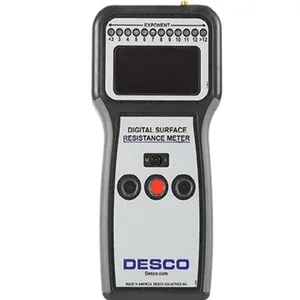
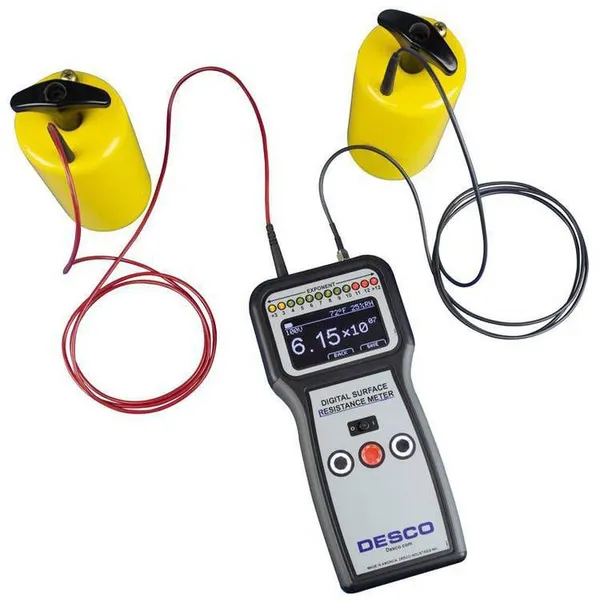
Reading display: OLED digital display and LED indicator lights, exponential expression
Test the temperature and humidity of the environment. Temperature test accuracy is +/-10%, humidity test accuracy is +/-10 digits
Can save 100 groups of test data (saved in the instrument's internal memory, cannot be exported)
4 AA batteries, with a service life of 1500 tests
Standard configuration includes 2 5-pound heavy hammer electrodes (item number 50003)
Optional concentric circle heavy hammer electrode for testing surface resistance/surface resistivity (ANSI/ESD STM11.11 specification)
Optional two-point electrode for testing electrostatic resistance of small items
Optional clamp electrode for testing electrostatic resistance of pipes or irregular items
Optional metal handle for testing the comprehensive resistance of wrist straps and human body + shoes + floor
Optional hanging electrode for testing electrostatic resistance of gloves and finger cots
3.
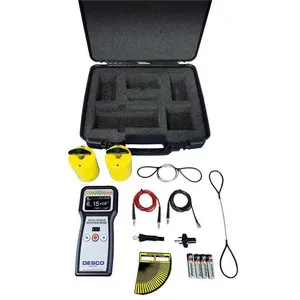
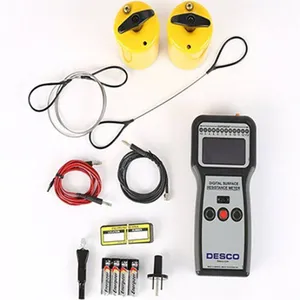
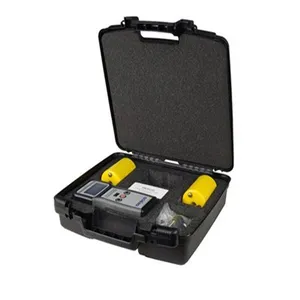
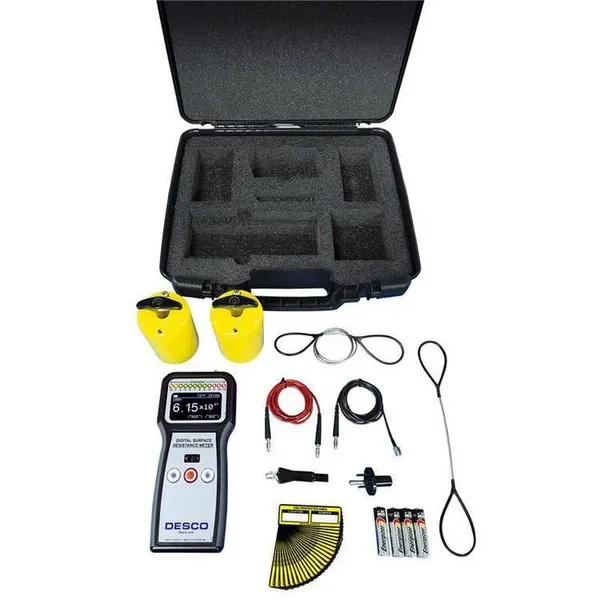
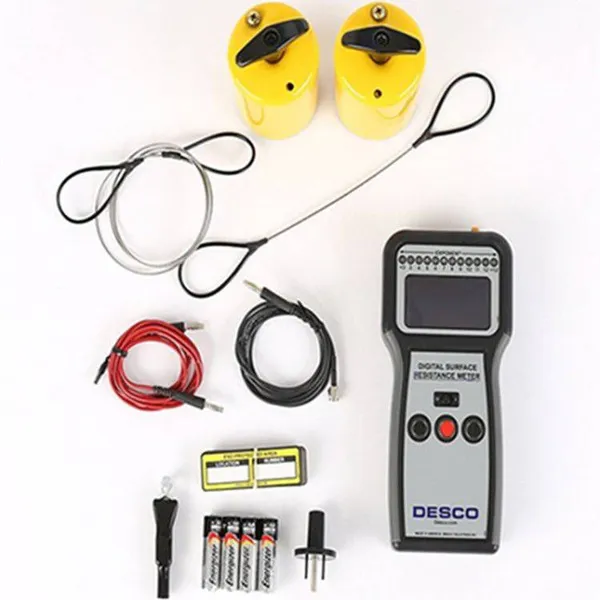
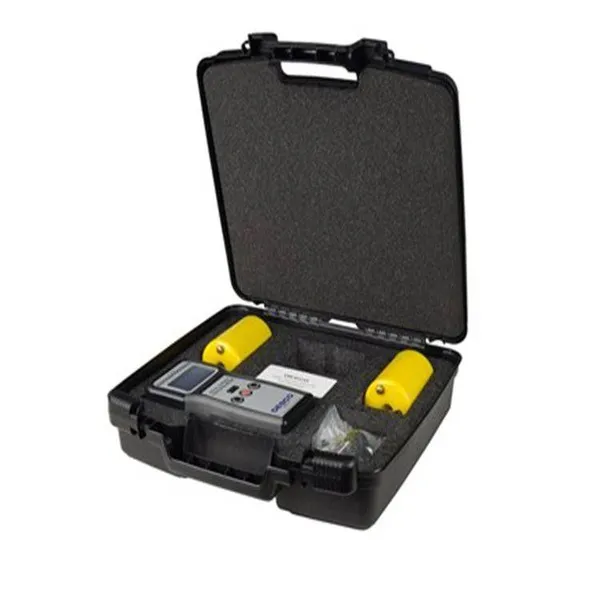
50890: Hammer-type resistance test kit, standard with the following items
Part number: 50890, Test meter, 1 piece
Part number: 50003, Point-to-point hammer electrode, 2 pieces
Part number: 19300, 1.5-meter long test cable (silver cable with SMA terminal/red cable with 4mm plug), 2 pieces
Part number: 19293, 10-inch/36-inch distance marking line, 2 pieces
Part number: 19296, Label paper, 25 pieces
Part number: 09750, Grounding clamp, 1 piece
Part number: 09838, Grounding plug (US standard plug), 1 piece
Part number: N/A, AA alkaline batteries, 4 pieces
Part number: 19292, Carry case (all the above items are packed in this case), 1 piece
Optional accessories:
19295: Metal handle
SPP1: Single-point pen-shaped electrode, used to test the point-to-point resistance and grounding resistance of small or irregular-shaped materials
SPP2: Two-point pen-shaped electrode, used to test the resistance between two fixed points of small materials or in narrow spaces
SPP3: Concentric point pen-shaped electrode, used to test the surface resistance/surface resistivity of small materials
REM005: Concentric circle hammer electrode, used to test the surface resistance/surface resistivity of medium/large materials
832: Clamp electrode (1 pair), used to test the resistance of the inner/outer wall of tubular materials
19298: Hanging electrode (1 set), used to test the resistance of gloves/finger cots
S11: Wrist strap test stand, used to test the inner and outer resistance of wrist straps in accordance with ANSI/ESD S1.1 specification
50004: Handle for 50003 point-to-point hammer electrode (1 pair)
HR10: Standard resistance, used for calibrating the tester
4. Test operation
Basic precautions:
☆ Ensure that the material to be tested is not charged.
☆ Place the hammer electrode at least 2 inches away from the edge of the material.
☆ Place the hammer electrode at least 3 inches away from the grounding terminal on the material.
☆ When testing the point-to-point resistance on the test table, keep the two hammer electrodes at least 10 inches apart (the included 10-inch distance marking line can be used).
☆ When testing the point-to-point resistance on the ground, keep the two hammer electrodes at least 36 inches apart (the included 36-inch distance marking line can be used).
☆ The placement points of the hammer electrode are usually selected as follows to better evaluate whether the material is qualified
◆ The most commonly used position
◆ The severely worn position
◆ The center position
◆ A position far from the grounding point
☆ If the material to be tested has seams, such as block floors, clothes, etc., the two hammer electrodes should be placed on different splicing blocks respectively.
☆ When testing materials in the laboratory, pre - cleaning treatment can be carried out. For materials with wires laid and put into operation, do not clean them before testing. Only when the test fails, clean them and then test again.
Test the point - to - point resistance of the surface
☆ Test the tabletop or small - area materials:
◆ Connect the tester and two 50003 hammer electrodes.
◆ Place the hammer electrodes in suitable positions, about 10 inches apart.
◆ Press the red button in the middle of the instrument to test.
◆ If the test fails, clean the surface and then test again.
◆ You can write the test results on the accompanying label paper and paste it at the corresponding location.
☆ Test the ground or large - area materials:
◆ Connect the tester and two 50003 hammer electrodes.
◆ Place the hammer electrodes in suitable positions, about 36 inches apart.
◆ Press the red button in the middle of the instrument to test.
◆ If the test fails, clean the surface and then test again.
◆ You can write the test results on the accompanying label paper and paste it at the corresponding location.
☆ Test the grounding resistance
◆ Connect the tester and one 50003 hammer electrode, and place the hammer electrode at a suitable position on the material surface.
◆ Connect another test lead to the grounding clamp and clamp it to the grounding point of the material to be tested.
◆ Press the red button in the middle of the instrument to test.
◆ If the test fails, clean the surface and then test again.
◆ You can write the test results on the accompanying label paper and paste it at the corresponding location.
☆ Material qualification/compliance test
Conduct a qualification test on newly purchased or newly installed materials, and save each test data (the instrument can save 100 sets of data). Write the record number of each test data on the label paper and then paste it in a suitable position. In the future, conduct regular compliance tests on these materials, and compare them with the qualification test data initially saved in the instrument to understand the wear and performance attenuation of the materials.
5. Optional electrodes
☆ REM005 concentric circle electrode (including BNC conversion connector) (upgraded product of 50005)
50005 and 770007 need a BNC conversion head for wiring. REM005 has two lantern - head jacks directly and does not need a conversion head
Meet the requirements of ESD-S 11.11, IEC 61340-5-1, and IEC 61340-2-3 specifications
Test lead jacks: 2 lantern head jacks with a 4mm aperture
Electrode weight: 2.3kg
Outer diameter of the outer ring rubber pad: 63mm
Inner diameter of the outer ring rubber pad: 57mm
Diameter of the inner circular rubber pad: 30mm
Hardness of the rubber pad: Shore 70+/-5
Resistance of the rubber pad:
Resistance between electrodes: >10TΩ at 1000V
Conversion coefficient of surface resistivity: Surface resistivity = Surface resistance x 10
6. SPP1/SPP2/SPP3 pen-shaped electrodes
☆Test the electrostatic resistance of small materials according to ANSI/ESD STM11.11, 11.12, 11.13 specifications
Test lead jacks: SPP1 has a direct 4mm jack, and SPP2/SPP3 are equipped with BNC to 2 4mm jacks, which are compatible with resistance testers using lantern head test leads
SPP1: 1 elastic probe, used to test the grounding resistance of small materials, or use 2 SPP1s to test the point-to-point resistance at any position of small materials
SPP2: 2 elastic probes, used to test the resistance between two fixed points of small materials
SPP3: Inner probe and concentric outer ring, used to test the surface resistance of small materials
The probes can be plugged and replaced
The conductive rubber sleeve on the probe can be replaced

Send Inquiry to This Supplier


You May Also Like
-
Aegir Customized Access Control and Attendance One-card System for Office Buildings and GatesNegotiableMOQ: 1 Set
-
Aegir Intelligent Networked Turnstile Access Control SystemNegotiableMOQ: 1 Set
-
Access Control All-in-one MachineNegotiableMOQ: 0 Set
-
Supply Desco 19270 19271 Human Body Electrostatic Tester Esd Aegir Anti-static ProductsNegotiableMOQ: 1 Set
-
Intelligent Networked Digital Display Electrostatic Tester (aegir50556)NegotiableMOQ: 1 Set
-
Desco 19270 Electrostatic Tester, an Electrostatic Device Supplied by Boyuanhong ElectronicsNegotiableMOQ: 1 Set
-
Esd Anti-static Products - Static Tester - Supplied by Aegir Boyuanhong ElectronicsNegotiableMOQ: 1 Unit
-
Human Body Comprehensive Electrostatic Tester (intelligent Networked Version)NegotiableMOQ: 1 Set
-
Aegir-supplied Acl800 Hammer-type Surface Electrical Impedance Detector InstrumentNegotiableMOQ: 1 Unit
-
Access Control System - One-stop Service Including Installation, Debugging, After-sales Maintenance of Access Control SystemNegotiableMOQ: 0 Set


