








 Contact Platform Support
 Help Center
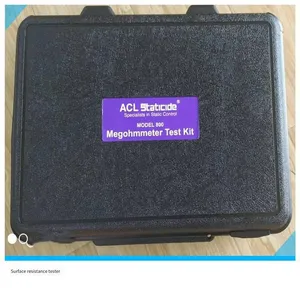
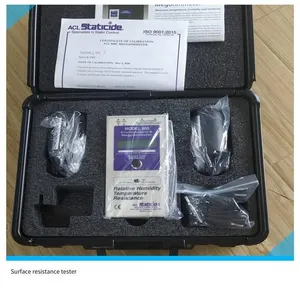
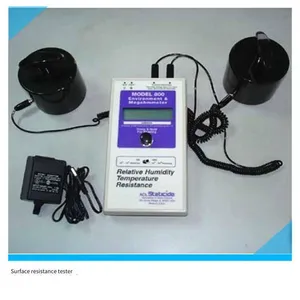
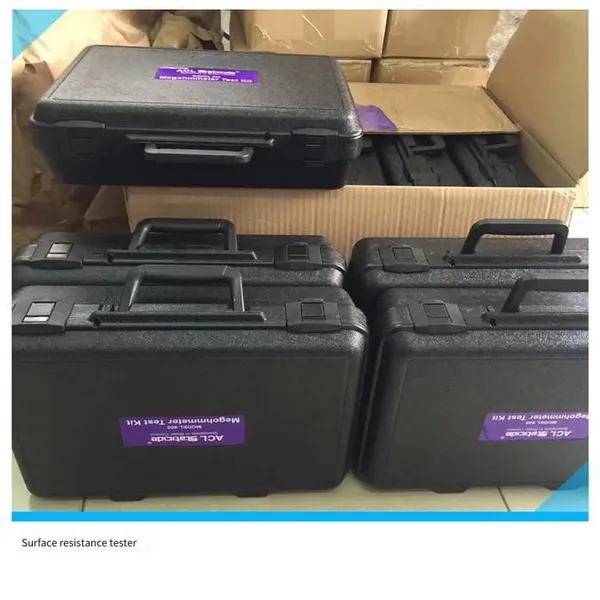
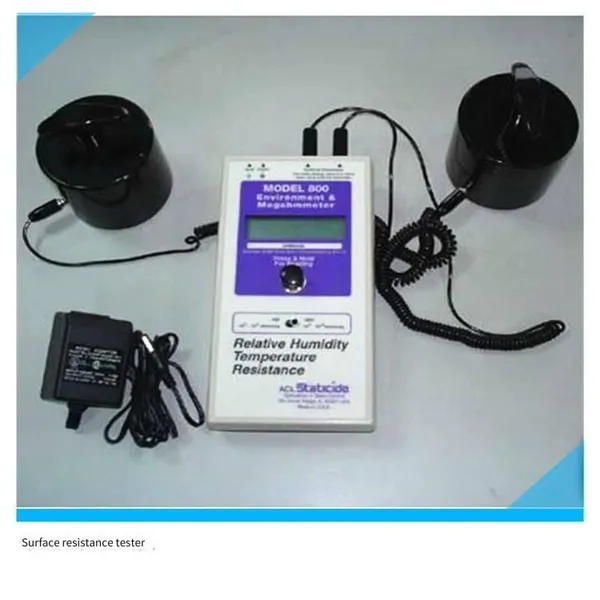
Aegir-supplied Acl800 Hammer-type Surface Electrical Impedance Detector Instrument


Related Products
-
 Access Control System - One-stop Service Including Installation, Debugging, After-sales Maintenance of Access Control SystemNegotiableMOQ: 0 Set
 -
Tom-610-se Hammer-type Surface Resistance Test KitNegotiableMOQ: 1 Unit
-
Aegir50682 Intelligent Grounding MonitorNegotiableMOQ: 1 Set
-
Supply Pipeline Wrist Strap Monitoring System Esd Anti-static Aegir50682NegotiableMOQ: 1 Unit
-
Esd Aegir 50556 Anti-static Intelligent Networked Digital Display Static TesterNegotiableMOQ: 1 Set
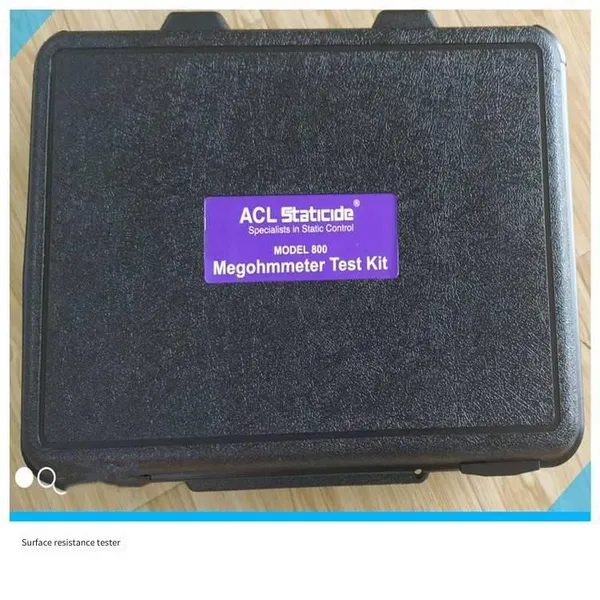
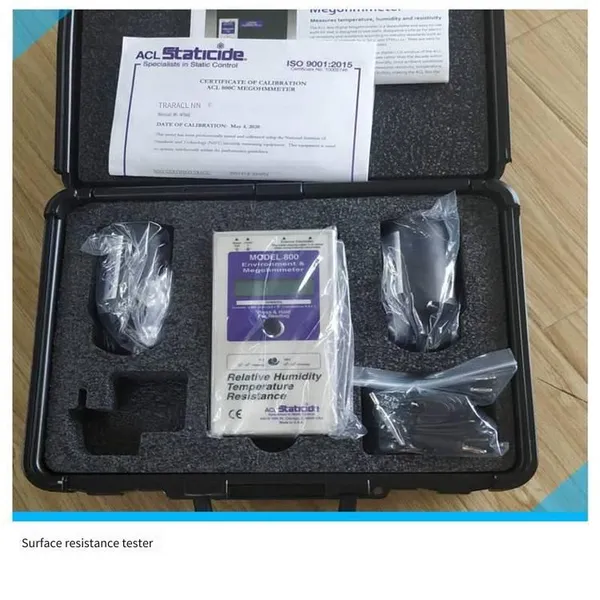
ACL-800 Hammer-type Surface Resistance Tester
ACL-800 Megohmmeter(Impedance-Temperature-Humidity Test Meter)Q&A 1. Why is the measurement of temperature and humidity important?
Since temperature and humidity can directly affect the electrical properties of the object being measured. Under conditions of low temperature and humidity, the resistance of the object will increase significantly, slowing down the electrostatic discharge speed and increasing the time. Under high humidity conditions, a thin water film condenses or adsorbs on the surface of the object. This hygroscopicity enhances the conductivity of the material, especially for those materials that can absorb water vapor. As the temperature rises, the mobility of free electrons increases, thus enhancing the conductivity of the material, especially for those materials with added carbon black, metal oxides, metals or other conductive substances. When the temperature is low, the material will generate internal stress, increasing the distance between the conductive additives in it, thereby increasing its resistance. Therefore, it is necessary to understand the humidity and temperature. When testing a material under high humidity conditions, it may pass all the measured indicators. However, when the user purchases the material and uses it under low humidity or temperature conditions, it may not meet the requirements, resulting in waste products and losses. Another reason for measuring and recording temperature/humidity is that the ANSI/ESD Association and European CECC also recognize the influence of ambient temperature/humidity and require these data to be measured and recorded in the standards they formulate.
For example: In ESD DS4.1 ESD Protective Work Surface, Section 6.2.4 and ESD S7.1-1994 Material Impedance Parameters, Grounding Materials Section5.2.4 Section and 5.3.3 Section both require, "Report the temperature and relative humidity during the test at the same time."
ANSI/EOS/ESD-S11.11-1993 Measurement of Surface Resistance of Static Dissipative Planar Materials, Section 11.0 .B. "Report the conditioning period, relative humidity and temperature."
These data must be measured and recorded simultaneously to avoid errors. Manufacturers, distributors, salespeople and users must understand the environmental humidity and temperature parameters to avoid rejecting or scrapping some special materials.
2. Why or under what circumstances should the measurement be carried out simultaneously under the conditions of 10 volts and 100 volts?
In the past, people had to follow standards such as ASTM D264, ASTM 991A or NFPA 56A or 99 to measure impedance. During these measurement processes, the measurement voltage was required to be 500 or 1000 volts, which had
a certain impact on the safety of experimental personnel. Therefore, people hoped to use a smaller and more economical measuring instrument to measure at 9 volts.
However, at 9 volts, when the impedance value is greater than 107 ohms, the accuracy is difficult to guarantee, and the obtained results are inaccurate. Finally, the ESD Association standardized the measurement process.
The standard process stipulates that when the impedance value is greater than 106 ohms/square, the measurement must be carried out at a stable 100-volt voltage
When the impedance value is less than 106 ohms /square , 10 volts must be used for measurement. This regulation is stipulated in ANSI/EOS/ESD standards DS4.1, S7.1 andS11.11 is explained here.
3、Why is digital display superior to analog display or light-emitting diode(LED) display?It is difficult to read the analog display, and it is difficult to determine the magnitude of the LED display.
4. Can rechargeable batteries be used with this meter?Yes.
5. Can this meter be used without an external probe?
Yes, there is a built-in or parallel probe at the bottom of the meter. The unit of the measured value is ohm/square. It can quickly measure the surface impedance, fully comply with the ASTM D-257 test method, and require a pressure of about 5 pounds.
6. When the button is released and the reading is still displayed, will it consume the battery?No.
7. Is this meter manufactured in the United States, the United Kingdom, or the Far East?
This meter is manufactured in the United States. It is reliable and shipped quickly.
8. If measuring continuously, must it be zeroed?No, this meter automatically zeros.
9. What are RTT and RTG, and what is their relationship with impedance?
RTT is the resistance between two points, RTG is the resistance from one point to the ground. Resistance determines whether the product can work in actual use.
10. Can this meter still be used when the battery power is low?
Yes. If the battery power is low, the meter displays "low battery". But even in this case, this meter will still give accurate readings. When the battery power is too low to maintain a stable100 volts output, the instrument will work fully. At this time, there is still a certain amount of electricity in the battery, which can be used for other instruments and equipment with low power requirements.
11. If testing a material with high resistance, will the measured voltage be lower than 100 volts?
No, the transformer of this instrument will maintain a stable100 volts voltage in the full impedance range. The same is true for the 10-volt voltage test.
12. If the parallel electrodes are broken, can they be replaced?Yes.
13. Can this instrument be used under 220 volts?
Yes, a 120-volt interface is provided with the instrument. If used under 220 volts, you need to buy a 12-volt DC/220-volt AC transformer.
14. If the instrument is broken, can it be repaired?
If the fault is not caused by improper use or dropping, a one-year warranty service is provided.
15. When the instrument is brought from a cold place to a warm place and the temperature changes greatly, you must wait for half an hour to let it adapt to the environmental conditions. Therefore, it can work normally after half an hour.
16. What is the application scope of this instrument?
This instrument can be used for testing any flat materials in aspects such as engineering manufacturing, protection, quality control, incoming inspection, scientific research, and sales.
17. In which industries can this instrument be used?
Film, medicine, clean rooms, electronic automation, pharmacy, scientific research, and coatings, etc.
18. What kind of materials can be tested with this instrument?
Any electrostatic discharge materials, including conductor materials with a resistance greater than 1000 ohms, can be tested. Such as floor mats, table mats, floor tiles, surface coatings, floor paints, bags, containers, work clothes, shoe covers, ankle bracelets, wristbands, grounding wires, etc.
19. What standards does this meter comply with?
This meter complies with the following standards: EOS/ESD-S4.1, S11.11, S7.1, NFPA-99A, UL, ASTM-D-257, ASTM-F150, military standards, EIA-541, and CECC (Europe).
20. What measures should be taken for accurate measurement, especially when measuring materials with high resistance (10¹² ohms)?When measuring materials with high resistance, do not touch the connecting wires or external electrodes, and do not let the connecting wires touch each other.
The ACL-800 megohmmeter is designed according to the test procedures of EOS/ESD, CECC, ASTM, and UL, and is used to measure the impedance or resistance of all conductive, anti-static, and static-dissipative surfaces. It is easy to use and highly reliable. This meter can also measure the relative humidity and temperature that affect electrical performance.
Measure impedance, temperature, and humidity. "Humidity and temperature can affect impedance, so impedance, temperature, and humidity must be measured."
Measure surface impedance from 10³ to 10¹² ohms/square, and measure resistance from 10³ to 10¹² ohms
·Relative humidity: 10% - 90% RH
·Temperature: 32°F - 100°F (0°C - 37.8°C)
· - Throughout the full range
· Includes electrodes:
-- Two 5-pound, 2.5-inch RTT, RTG disc electrodes
-- Two 3-inch parallel surface impedance test electrodes
· LCD digital display
·Rechargeable battery
·Can measure table mats, floor paint layers, paint surfaces, wristbands, work clothes, shoes (shoe covers), bags, and containersFeatures:
·Measure impedance, temperature, and humidity, complying with ESD standards, S4.1, S7.1 and S11.11
· 103 - 1012 Ohm/square range, capable of testing the electrical properties of various materials.
· 10 Volts / 100 Volts measurement scale, suitable for workbenches and floors specified by the standards.
·Plastic instrument protection case to prevent the instrument from damage
·Lightweight, only 150Z (425g), easy to carry
·Liquid crystal digital display, easy to use and convenient to read
·Automatic power-off function to extend the battery life
·Automatic zero return
·Parallel electrodes, 5 pound - weight probe and built - in impedance probe, all comply with ASTM, EOS and CECC standards
·One - year quality warranty
·Made in the USA, a symbol of confidence, quality, and service
· NIST traceability, ISO9000
·Replaceable probe to extend the service life
9V DC power supply, nickel - cadmium rechargeable battery, or AC transformer, universally applicable in the USA and overseas.

Send Inquiry to This Supplier


You May Also Like
-
Manufacturer of Three-roller Gates and Swing Gates, Access Control SystemsNegotiableMOQ: 1 Set
-
Supply of Esd Aegir Anti - Static Access Control System for Pedestrian Passage Wing GatesNegotiableMOQ: 1 Set
-
Usage Methods and Precautions of the TesterNegotiableMOQ: 1 Unit
-
Aegir50556 Intelligent Digital Display Electrostatic TesterNegotiableMOQ: 1 Set
-
Surface Resistance - Resistivity Tester - Suzhou BoyuanhongNegotiableMOQ: 1 Set
-
Supply Esd Blue Light Swing Gate PassageNegotiableMOQ: 1 Set
-
Desco 19270 19271 Human Body Comprehensive Static Tester Supplied From SuzhouNegotiableMOQ: 1 Set
-
Supply Spi94001 Static Eliminator Imported From the United StatesNegotiableMOQ: 1 Set
-
Supply of Intelligent Networked Esd Aegir Anti-static Access Control System With Three-roller GateNegotiableMOQ: 1 Set
-
Wing Gate Access Control System - Prevent Static Electricity From Being Brought Into the WorkshopNegotiableMOQ: 1 Set

