








 Contact Platform Support
 Help Center
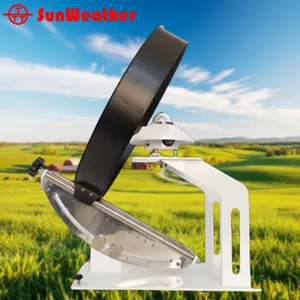
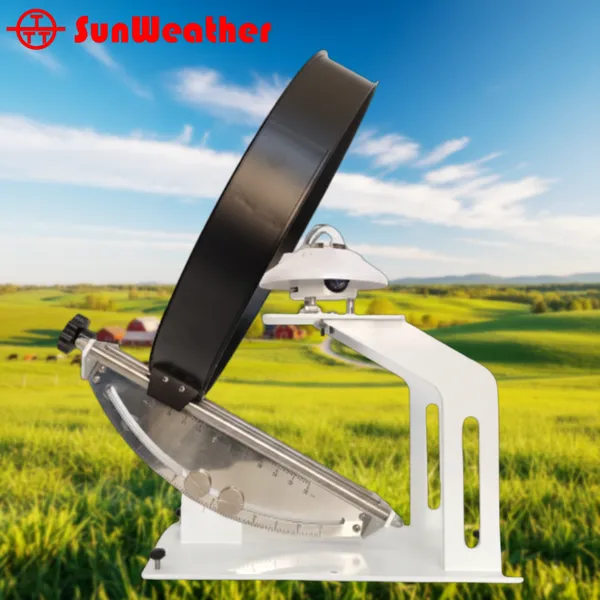
TBD-1 Diffuse Radiation Sensor


Related Products
-
 TBS-2-2 Direct Radiation SensorNegotiableMOQ: 1 Unit
 -
TBL-1 Longwave Radiation SensorNegotiableMOQ: 1 Unit
-
TBB-1 Net Radiation SensorNegotiableMOQ: 1 Unit
-
TBB-2 Four-Component Net Radiometer / Net Total Radiation SensorNegotiableMOQ: 1 Unit
-
Weather Station: PC-4GF Integrated PV Environmental MonitoringNegotiableMOQ: 1 Unit
1. Product Overview
Diffuse radiation refers to the portion of solar radiation that reaches the Earth’s surface after being scattered by atmospheric molecules, clouds, and aerosols (sky radiation), as well as reflected from the ground (ground-reflected radiation). To study diffuse radiation, accurate observation of solar diffuse irradiance is essential.
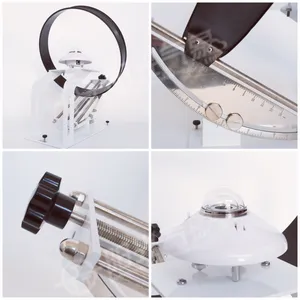
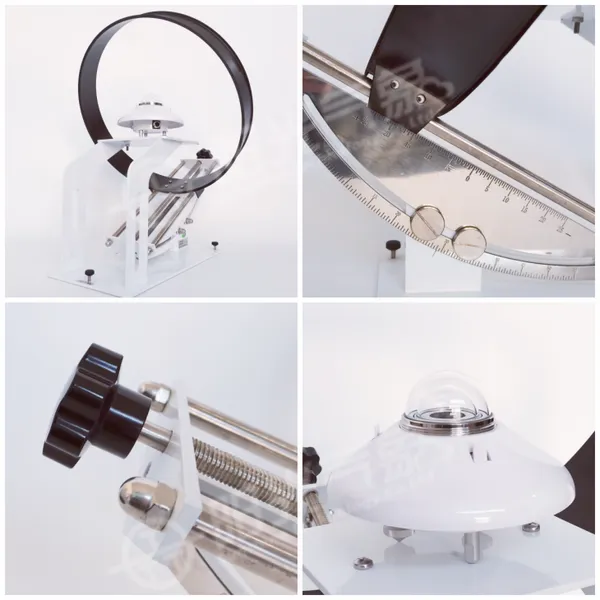
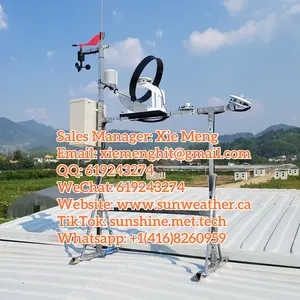
The TBD-1 Diffuse Radiation Sensor, used together with the TBQ-2 total radiation sensor, enables precise measurement of solar diffuse radiation. The system consists of a shading ring, indicator, fine-adjustment screw, mounting bracket, and base plate, which effectively block direct solar radiation from sunrise to sunset. This ensures that the sensor surface remains within the shading center and accurately measures diffuse radiation.
The TBD-1 is widely used in meteorological stations, scientific research institutions, agriculture, forestry, and environmental monitoring.
2. Operating Principle
The TBD-1 is equipped with a precision shading ring with a width of 65 mm and an inner diameter of 400 mm. The ring is fixed on a threaded rod with graduated scales and red reference markings. The indicator and bracket are secured to the base plate and adjusted according to the geographical latitude of the installation site.
The total radiation sensor is mounted on the bracket so that its sensing surface (black body) is positioned at the center of the shading ring. By adjusting the threaded rod, the shading ring can continuously block direct solar radiation throughout the day.
The sensor operates based on the thermoelectric principle. Its sensing element consists of a multi-junction thermopile with a high-absorptivity black coating on the surface. The hot junction is located on the sensing surface, while the cold junction is inside the body, generating a temperature difference and producing a corresponding electrical signal proportional to solar irradiance.
To minimize environmental temperature effects, the sensor includes a built-in temperature compensation circuit. The outer shell is made of high-precision ground optical glass with a double-layer hemispherical structure, significantly reducing infrared radiation interference.
3. Product Features
All-metal body with electrostatic spray coating for strong corrosion resistance.
Dual calibration for latitude and solar declination angle, ensuring continuous blocking of direct solar radiation.
Thermoelectric measurement principle, high precision and low environmental interference.
Zero-power operation, no external power supply required.
Standard signal output (0–20 mV); can be paired with transmitters for 4–20 mA or RS485 output, or customized upon request.
Can be used independently or integrated with other radiation sensors.
4. Technical Specifications
| Parameter | Specification |
|---|---|
| Sensitivity | 7–14 µV / W·m⁻² |
| Response Time | ≤ 30 s (99%) |
| Internal Resistance | ~350 Ω |
| Stability | ±2% (annual sensitivity drift) |
| Cosine Response | ≤ 5% (solar elevation angle 10°) |
| Spectral Range | 0.28–3 µm |
| Temperature Characteristic | ±5% (-20°C to +40°C) |
| Weight | 10 kg |
| Measurement Range | 0–2000 W/m² |
| Signal Output | 0–20 mV (optional RS485 or 4–20 mA with transmitter) |
| Measurement Accuracy |
5. Solar Radiation Observation Site
The company operates a standardized 1500 m² solar radiation observation field with flat terrain, open surroundings, and no obstructions or human interference. This site fully complies with ground observation requirements for solar radiation instruments, providing a standardized testing environment that ensures the accuracy and reliability of measurement data.
6. Typical Applications
The TBD-1 Diffuse Radiation Sensor is widely used in:
Solar photovoltaic power generation
Solar energy laboratories
Solar architecture research
Solar water heating systems
Solar energy engineering
Agricultural and ecological research
Meteorology and climate studies
Polar and oceanic climate research
7. About Company
Need more information? Feel free to leave a message or contact us.
Sales Manager: Xie Meng
Email: xiemenghit@gmail.com
Whats app: +1(416)8260959
Website: www.sunweather.ca
TikTok: sunshine.met.tech
QQ: 619243274
WeChat: 619243274

Send Inquiry to This Supplier

You May Also Like
-
Weather Station: PC-5GF Distributed PV Environmental MonitoringNegotiableMOQ: 1 Unit
-
Weather Station: PC-2-T2 PV Environmental Monitoring StationNegotiableMOQ: 1 Set
-
TBQ-2-A Solar Pyranometer Radiation SensorNegotiableMOQ: 1 Unit
-
TBS-4 Automatic Sun PhotometerNegotiableMOQ: 1 Unit
-
TBS-YG5 Automatic Solar Radiation Tracking SystemNegotiableMOQ: 1 Unit
-
TBQ-2WX Solar Radiation CalibratorNegotiableMOQ: 1 Set
-
TBS-3 Automatic Direct Solar Radiation TrackerNegotiableMOQ: 1 Set
-
PC-2-T Solar Radiation Standard Observation StationNegotiableMOQ: 1 Set
-
EC-8SX Integrated Wind Speed & Direction SensorNegotiableMOQ: 1 Set
-
EC-9XA Wind Direction Sensor, Wind Vane SensorNegotiableMOQ: 1 Unit


