








 Contact Platform Support
 Help Center
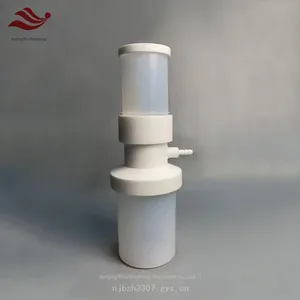
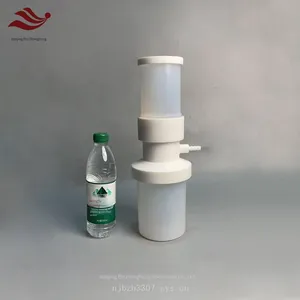
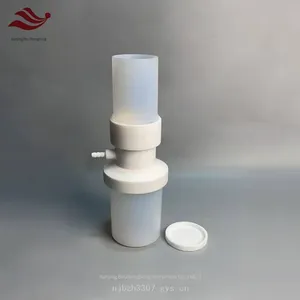
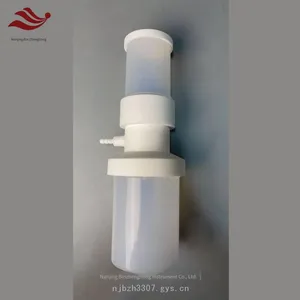
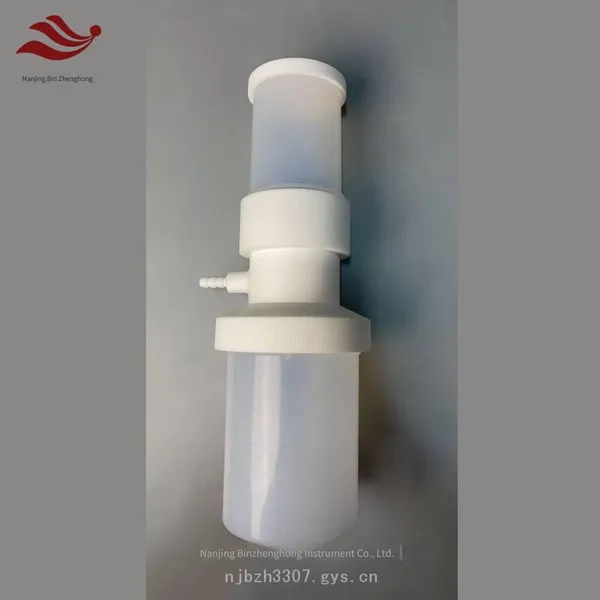
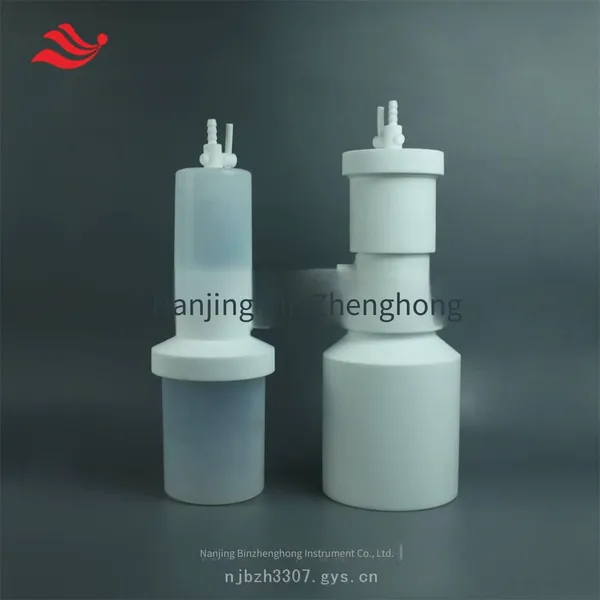
Customized Vacuum Filtration System for Trace Analysis: High-purity Pfa Filter With Teflon Sintered Core Filtration Device



Related Products
-
 Anti-corrosion Pfa Distillation Flask Customized With Distillation Apparatus, Alkyl Mercury Distillation Device, and Methyl Mercury Separation and Purification SystemUS$ 1200 - 1353.85MOQ: 1 Set
 -
Polytetrafluoroethylene Pfa Isolation Buffer Bottle, High-purity Anti-corrosion Gas Absorption Bottle, Fluororesin Plastic Reaction BottleUS$ 229.23 - 246.15MOQ: 1 Piece
-
Ptfe Square Box With Handle for Chemical Storage and Containment, High Purity, Non-leachingUS$ 338.46 - 384.62MOQ: 1 Piece
-
Customized Pfa Distillation Column for Pfa Distillation Unit, Teflon Distillation Tower, Fluoride Vacuum Distillation and Purification SystemUS$ 2392.31 - 3784.62MOQ: 1 Set
-
10l Ptfe Reaction Flask, 5l Round-bottomed Flask for Fluorination Reaction Experiments, Three-necked Ptfe Reaction FlaskUS$ 1076.92 - 1230.77MOQ: 1 Piece
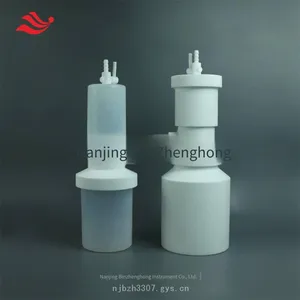
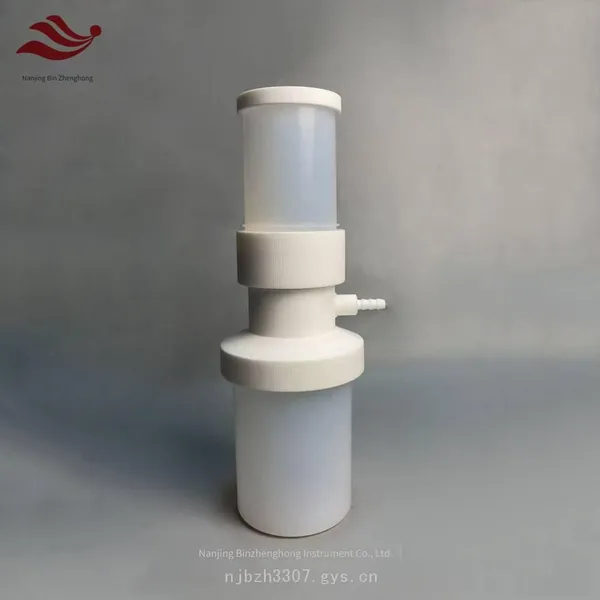
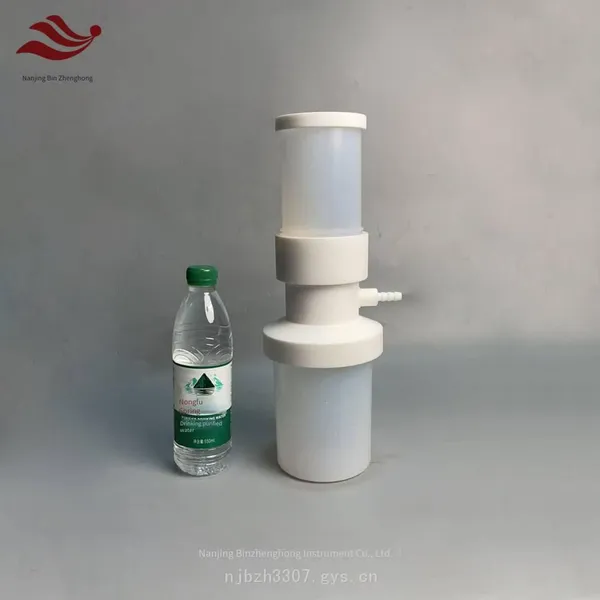
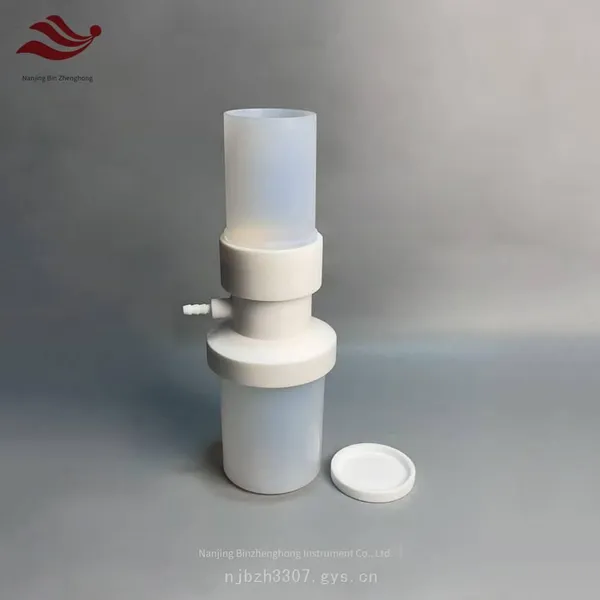
PFA Suction Filtration Device. It is a filtration system composed of PFA components. The entire system uses the negative pressure generated by the vacuum pump to accelerate the liquid through the filter membrane for rapid separation.
Core function: Achieve solid-liquid separation while ensuring that the sample is not contaminated by metal ion impurities.
Working principle:
1. Place a filter membrane with a suitable pore size (such as 0.45μm or 0.22μm) on the PFA filter membrane holder.
2. Assemble the PFA filter cup and connect it to the suction flask and the vacuum pump.
3. Pour the liquid sample to be filtered into the PFA filter cup.
4. Turn on the vacuum pump to create negative pressure inside the system. Under the action of the pressure difference, the liquid component (filtrate) will quickly pass through the filter membrane and flow into the suction flask below.
5. Solid particles, precipitates or microorganisms will be retained on the surface of the filter membrane.
6. After filtration is completed, turn off the vacuum pump and disassemble the device. At this time, you can obtain:
· Solids retained on the filter membrane: Used for subsequent analysis (such as weighing, electron microscopy observation, component analysis, etc.).
· Filtrate collected in the suction flask: Used for subsequent analysis (such as trace element analysis by ion chromatography, ICP-MS, etc.).
Why choose a suction filtration device made of PFA material?
1. PFA material has strong inertness and does not adsorb trace ions in the solution (such as K, Na, Ca, Mg, Fe, Al, etc.). At the same time, it does not dissolve out metal impurities by itself. This is crucial for the analysis of ultra-trace elements in geological, environmental, semiconductor and biological samples, ensuring the authenticity and accuracy of the analysis results.
2. Strong chemical corrosion resistance: Resistant to strong acids, strong alkalis, strong oxidants and organic solvents. This allows it to be used for filtering highly corrosive samples, such as sample solutions after digestion with concentrated nitric acid or aqua regia.
3. Ultra-low background value: In analytical experiments, the contamination background introduced by PFA itself is very low, which helps to obtain a lower detection limit.
4. Semi-transparent and visible: It is convenient to observe the filtration process, such as the sample volume, filtration speed and whether there is solid blockage.
5. Smooth surface without wall-hanging: There is little sample residue, high recovery rate and it is easy to clean.
Main application fields of the PFA suction filtration device:
1. Trace/ultra-trace element analysis:
· Sample pretreatment for ICP-MS (Inductively Coupled Plasma Mass Spectrometry): Before sending the water sample or acid digestion solution to ICP-MS, remove the particulate matter to prevent clogging of the nebulizer and ensure that the analysis is of dissolved elements. · IC (Ion Chromatography) sample pre-treatment: Remove particulate matter from water samples to protect the chromatographic column.
2. Environmental monitoring:
· Filtration of environmental water samples (river water, lake water, seawater, rainwater) to distinguish "dissolved" and "particulate" pollutants.
· Collection and weighing analysis of atmospheric particulate matter (such as PM2.5, PM10).
3. Geological science:
· Component analysis of groundwater, geothermal water, and mineral water.
· Filtration of solutions after digestion of rock and soil samples.
4. Semiconductor and high-purity chemical industries:
· Particle size detection and purification of ultrapure water and high-purity chemical reagents.
5. Microbiology:
· Although not as common as disposable sterile filters, it is occasionally used in specific microbiological studies where metal contamination needs to be avoided or corrosive solvents are used for sterilization.

Send Inquiry to This Supplier

You May Also Like
-
High-purity Pfa Filter Tank With Ptfe Seal, Outer Tank for Collecting High-purity Crystals in an Inert Gas EnvironmentUS$ 1415.38 - 1523.08MOQ: 1 Set
-
Pfa Chromatography Column, Teflon Series Filter Column for Semiconductor High-purity Chemical Preparation, Microcolumn Resistant to Acid CorrosionUS$ 1369.23 - 1476.92MOQ: 1 Rod
-
High-purity Pfa Purge Bottle for Inert Gas Purging of Reaction Tanks, With 1/4 Connector, Anti-siphon Buffer Bottle, Can be Equipped With ValvesUS$ 92.31 - 169.23MOQ: 1 Piece
-
6l Multi-necked Reaction Flask With Flat Bottom Made of High-purity Transparent Pfa, Corrosion-resistant to Fluoride and Free of Dissolution PollutionUS$ 1743.08 - 2076.92MOQ: 1 Piece
-
Polytetrafluoroethylene Buchner Funnel Suction Filtration Device for Solid-liquid Separation in the Laboratory, High-purity Ptfe Suction Filtration Equipment, Anti-corrosionUS$ 892.31 - 953.85MOQ: 1 Set
-
Teflon Sampling Cup, Ptfe Long-handled Sampling Spoon, Sampling Tools for Highly Corrosive SolutionsUS$ 104.62 - 120MOQ: 1 Piece
-
Nanjing Binzhenghong pp Colorimetric Tube Stoppers for 10ml Test Tubes, Polypropylene pp Plastic StoppersUS$ 0.15 - 0.31MOQ: 1 Piece
-
Pfa Distillation Unit, Anhydrous Hydrogen Fluoride Reaction Unit, Fluoride Rectifier, Compound Organic Synthesis SystemUS$ 2290.77 - 3384.62MOQ: 1 Set
-
Hydrogen Fluoride Distillation Device, Transparent Pfa Distillation Device, Pfa Distillation Tower, Rectification Tower, Low Metal Impurities, Resistant to Strong CorrosionUS$ 1615.38 - 2584.62MOQ: 1 Set
-
Customized Imported High-purity Pfa Sampling Tubes and Transparent Teflon Sampling Cups for Automatic Samplers, Acid and Alkali Corrosion ResistantUS$ 57.69 - 61.54MOQ: 1 Rod


