








 Contact Platform Support
 Help Center
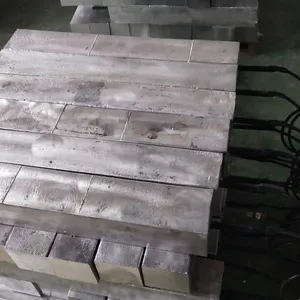
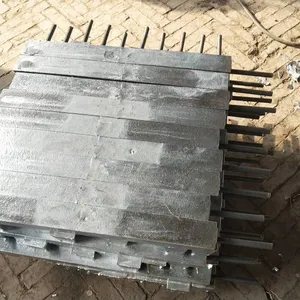
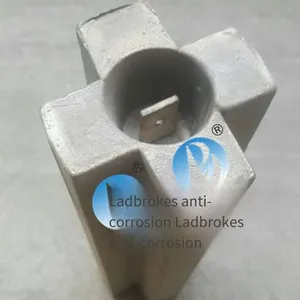
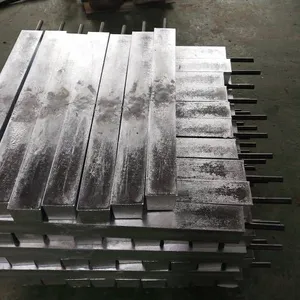
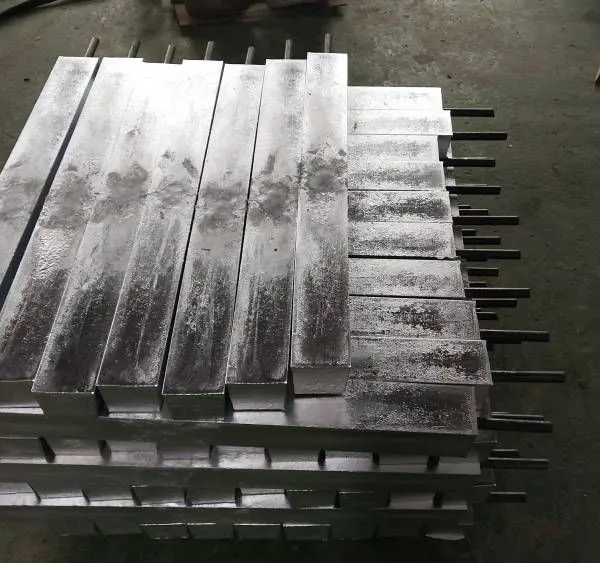
West - to - East Gas Pipeline Magnesium Anode Set Combination, mg - 14 Magnesium Anode, Libo Anti - Corrosion



Related Products
-
 14kg High-activation Long-lasting Anti-corrosion Magnesium Anode for Oil FieldsUS$ 3.08MOQ: 2 Pieces
 -
Supply of Anti-corrosion Aluminum Anodes for Ballast Water Tanks, Manufacturer of Aluminum Alloy Sacrificial AnodesUS$ 3.23 - 3.38MOQ: 6 Kilograms
-
National Standard Magnesium Anodes for Tank Anti - Corrosion, 14kg Buried Magnesium AnodesUS$ 3.38MOQ: 1 Piece
-
Cathodic Protection Magnesium Anode Sacrificial Anode, 22kg Magnesium AnodeUS$ 0.46MOQ: 10 Pieces
-
Shandong Dongying Aluminum-zinc-indium-magnesium-titanium Sacrificial AnodesUS$ 3.54MOQ: 1 Piece
Shenyang West-East Gas Pipeline Magnesium Anode Set Combination
Magnesium-based sacrificial anodes are widely used for cathodic protection of metal structures in soil, seawater, sea mud, and industrial water due to their very negative open-circuit potential and large driving voltage.
The exposed end of the steel core must be suitable for installation and welding.
Jiaozuo Libo Light Alloy Co., Ltd.:
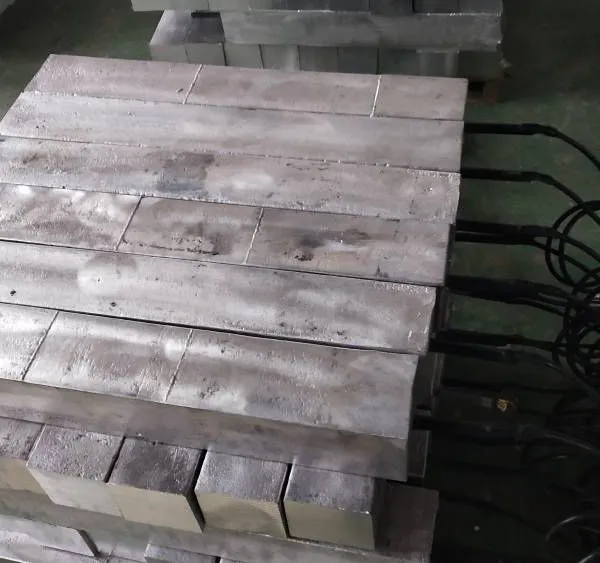
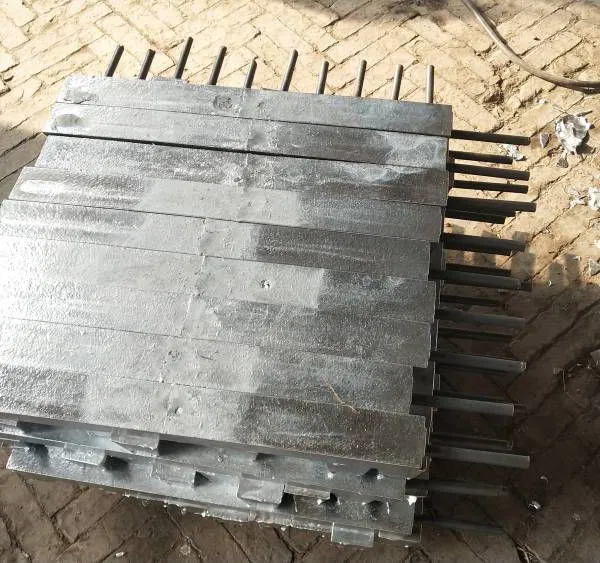
There is a steel core inside the magnesium alloy sacrificial anode, whose function is to increase the strength and stiffness of the anode and conduct electricity. The surface of the steel core must be clean, free of rust and burrs.
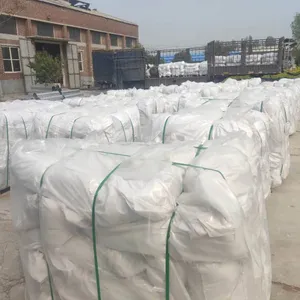
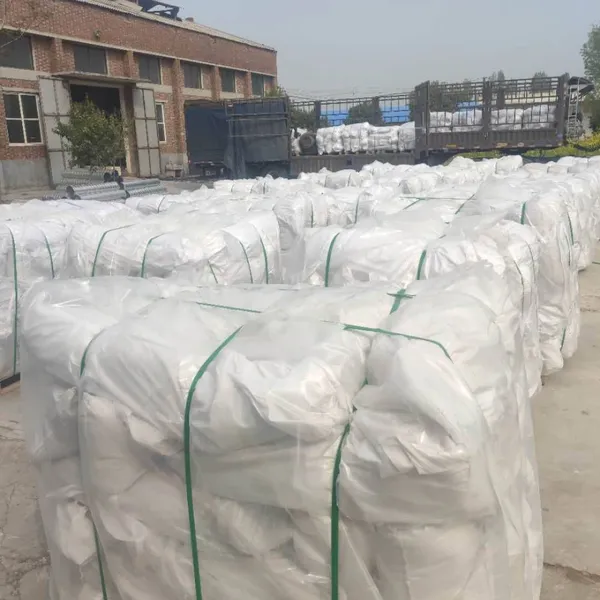
The length of the steel core should be longer than that of the anode so that both ends are exposed outside the anode body for welding or bolting. For hanging anodes, only one end of the steel core needs to be exposed outside the anode body. Only in special cases, such as when welding is not allowed, are bolt connections used. Since the anode metal will creep under stress, there is a risk of the bolts loosening, which may cause the contact resistance between the bolts and the anode metal to become very large. Therefore, special measures need to be taken for reinforcement. The sacrificial anodes used for protection inside storage tanks usually still need to be clamped with clips and cable connectors to facilitate anode replacement and avoid welding. In the case of direct installation, it should be ensured that the installed anode can resist electric shock current and vibration. Magnesium sacrificial anodes are suitable for the cathodic protection of steel facilities working in media such as soil, fresh water, and seawater. One plastic woven bag is put outside the cotton cloth bag. 50kg of backfill material is evenly distributed around the magnesium sacrificial anode ingot. The steel core is generally made of galvanized, phosphated, or ordinary steel bars, rods, or pipes, and is embedded inside during the casting of the anode.
There are two methods for the backfill material of sacrificial anodes: bagging and on-site drilling and filling. Note that the bags for bagging must be made of natural fiber fabrics. The use of chemical fiber fabrics is strictly prohibited.
The distribution of sacrificial anodes can be in two ways: single or grouped together. The anodes can be buried vertically or horizontally, and the burial directions can be axial or radial. When buried in groups, the anode spacing is preferably 2 - 3m. The basic requirements for the chemical backfill material are:
⑴ Anode ground bed structure
(Soil environment)
Anode installation method
The spacing of sacrificial anode groups on the pipeline is 1 - 2 groups/km for long-distance pipelines, and 200 - 300 groups are appropriate for urban pipelines and station pipe networks. The commonly used backfill material formulas are shown in the attached table:
To ensure the stable performance of the sacrificial anode in the soil, appropriate chemical backfill material should be filled around the anode. The anode is adjacent to the backfill material instead of the soil, which improves the working environment of the anode; reduces the grounding resistance of the anode and increases the output current of the anode; the chemical composition of the backfill material is beneficial to the dissolution of anode products, prevents crusting, and reduces unnecessary anode polarization; maintains the long-term moisture of the anode ground bed.
⑵ Arrangement of the anode ground bed
It has low resistivity, good permeability, and is not easy to lose; it has good moisture retention. The anode is generally buried 3 - 5m away from the outer wall of the pipeline, and the minimum distance should not be less than 0.3m. The burial depth is preferably such that the top of the anode is not less than 1m from the ground. In northern regions, it must be below the frozen soil layer. Although the on-site drilling and filling method has good effects, the amount of backfill material used is large. If not careful, soil particles may be brought into the backfill material, affecting the quality of the backfill. The thickness of the backfill material should be maintained at 5 - 10cm in all directions. In dry areas where the groundwater level is below 3m, the sacrificial anodes should be buried deeper. In river and lake areas, the sacrificial anodes should be buried in a safe part of the riverbed (lake bottom) as much as possible to prevent damage from floods and dredging. When using sacrificial anodes in cities and pipe network areas, it should be noted that there should be no other structures, such as cables, water, steam, and pipelines, between the anode and the protected structure.
Magnesium anodes are made into long rods with a steel core or as load - bearing steel core components. The steel core can pass through the entire rod or penetrate into one end. They can be made by casting or by extrusion. Their main uses are the protection of buried structures in the soil and the internal protection of storage tanks. The thickness of the anode rods varies greatly. They can be made into thin filaments or rods with a diameter of 70mm. The longest single anode is 1.5mm. The quality of the anode depends on the alloy.
The simple installation process of magnesium anodes:
Production of bagged anodes → Positioning of the anode bed → Excavation of the anode bed → Burial of the anode → Watering the anode until it is fully saturated and testing various parameters → Treatment and welding of the anode energizing point → Conduction test of the energizing point → Anticorrosion of the joint at the energizing point (the anticorrosive material at the joint matches the anticorrosive material of the pipe body) → Backfilling of the anode → Marking and recording.
Jiaozuo Libo Light Alloy Co., Ltd.
is a professional company engaged in anti - corrosion materials. It is a high - tech anti - corrosion company integrating services, production, sales, and comprehensive anti - corrosion design, construction, and installation technical services. It guarantees product quality and after - sales service.
Main uses:
Magnesium alloy sacrificial anodes are suitable for the anti - corrosion protection of oil and gas pipelines, water supply and drainage pipelines, underground cables, chemical engineering, communication, harbors, ships, reservoir gates and other projects in the ground and fresh water.
Product features:
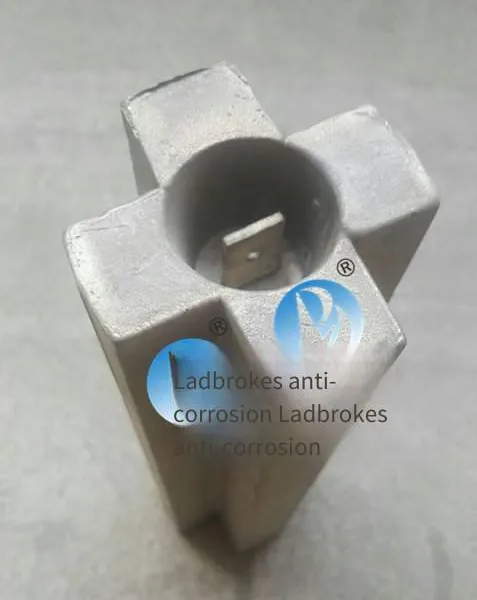
The magnesium alloys produced by our company are made of high - quality raw materials. The anode potential is negative, and the electricity generated per unit mass is large. They are ideal sacrificial anode materials. They are suitable for the cathodic protection of metal structures in media such as soil, fresh water, and seawater, such as oil and gas pipelines, storage tanks, hot water exchangers, condensers, etc.

Send Inquiry to This Supplier


You May Also Like
-
Zinc Alloy Anodes for Ballast Tanks, Flat Iron Zinc Sacrificial Anodes, 5kgUS$ 2.77MOQ: 1 Piece
-
High-efficiency Aluminum Anode, High-temperature Resistant Aluminum Alloy Sacrificial Anode, 23kg Aluminum Block ManufacturerUS$ 2.92 - 3.08MOQ: 3 Pieces
-
Zinc Anode, Zinc Anode for Anti - Corrosion of Buried PipelinesUS$ 0.46MOQ: 10 Kilograms
-
Zinc Alloy Sacrificial Anode Manufacturer, 5kg Flat Iron Zinc Anode, Wholesale of Marine Zinc BlocksUS$ 3.92 - 4MOQ: 10 Kilograms
-
Commonly Used Aluminum Sacrificial Anodes for Drilling Platforms, High-temperature Resistant Aluminum AnodesUS$ 2.31MOQ: 3 Pieces
-
250*50 Disc Zinc Anode for CondensersUS$ 0.46MOQ: 10 Pieces
-
West - to - East Gas Transmission Magnesium Anode Kit Combination, Trapezoidal Magnesium AnodeUS$ 0.31MOQ: 13 Kilograms
-
Disc-shaped Aluminum Alloy Sacrificial Anode, 200*30mmUS$ 0.46MOQ: 10 Pieces
-
Aluminum Alloy Sacrificial Anodes for Ocean Engineering, 235kg Aluminum AnodesUS$ 3.23MOQ: 1 Kilogram
-
16kg Aluminum Alloy Sacrificial Anode for Storage TanksUS$ 0.46MOQ: 10 Pieces
