








 Contact Platform Support
 Help Center
Cathodic Protection Magnesium Anode Sacrificial Anode, 22kg Magnesium Anode



Related Products
-
 Shandong Dongying Aluminum-zinc-indium-magnesium-titanium Sacrificial AnodesUS$ 3.54MOQ: 1 Piece
 -
Zinc Alloy Anodes for Ballast Tanks, Flat Iron Zinc Sacrificial Anodes, 5kgUS$ 2.77MOQ: 1 Piece
-
High-efficiency Aluminum Anode, High-temperature Resistant Aluminum Alloy Sacrificial Anode, 23kg Aluminum Block ManufacturerUS$ 2.92 - 3.08MOQ: 3 Pieces
-
Zinc Anode, Zinc Anode for Anti - Corrosion of Buried PipelinesUS$ 0.46MOQ: 10 Kilograms
-
Zinc Alloy Sacrificial Anode Manufacturer, 5kg Flat Iron Zinc Anode, Wholesale of Marine Zinc BlocksUS$ 3.92 - 4MOQ: 10 Kilograms
Cathodic Protection Magnesium Anode Sacrificial Anode 22kg Magnesium Anode
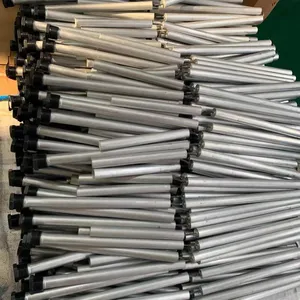
Magnesium sacrificial anodes are suitable for the cathodic protection of steel structures operating in media such as soil, fresh water, and seawater.
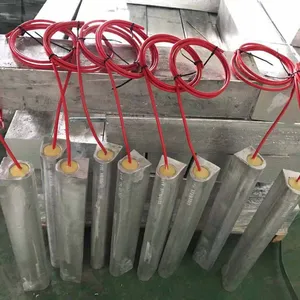
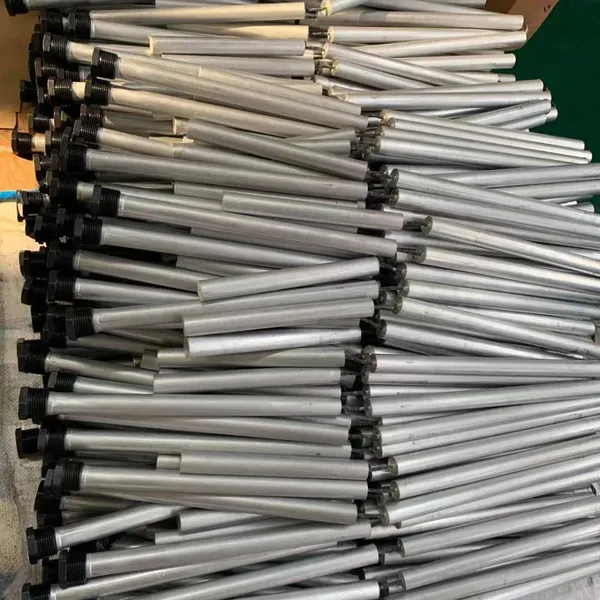
In the cathodic protection of water tanks, only magnesium anodes are actually available because they have sufficient driving voltage. In the later stage of the use of stainless - steel water tanks, magnesium anodes are often used as an additional protective measure. In this case, connect the anode to the water tank with a 5 - 10 ohm resistor in series to avoid unnecessarily high current and reduce the rapid consumption of the anode. Magnesium alloy sacrificial anodes all have a steel core inside, which serves to increase the strength and stiffness of the anode and conduct electricity.
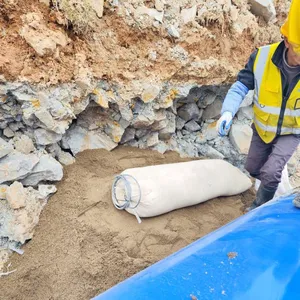
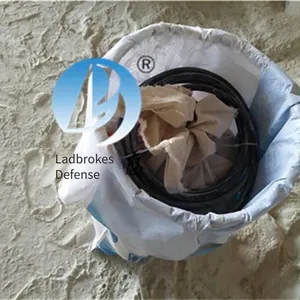
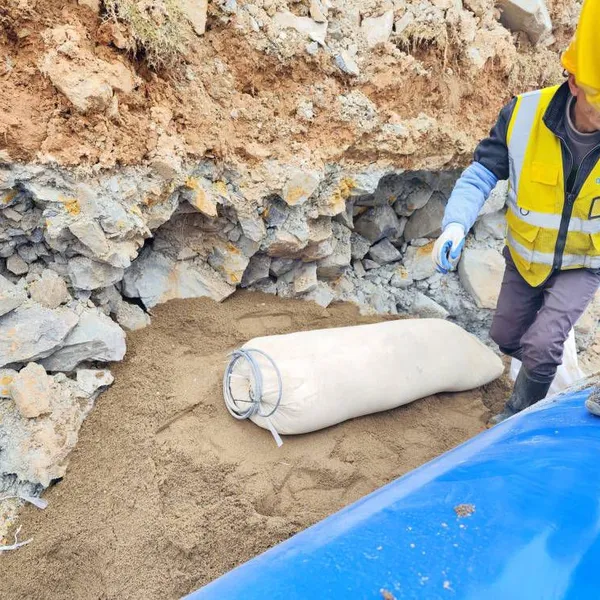
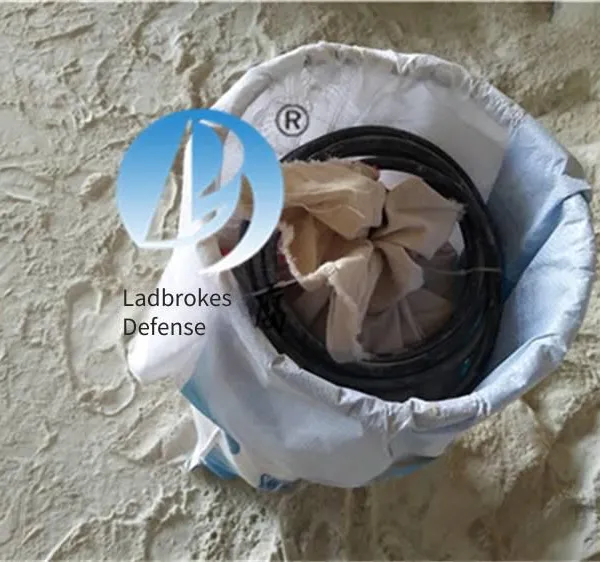
During the construction of magnesium anodes, the backfill material can be poured into the pre - drilled holes, or the anode can be pre - installed in a bag filled with backfill material made of water - permeable fabric, and then the bag containing the anode is placed in the drill hole, watered, and backfilled with fine soil. Due to the potential difference between the anode and coke, a strong corrosion cell can be formed, leading to the rapid destruction of the anode. The thickness of anode rods varies greatly. They can be made into filaments or rods with a diameter of 70mm. The longest single anode is 1.5mm. The quality of the anode depends on the alloy. Zinc anodes and aluminum anodes are not suitable for fresh water because their driving voltages are too low and they are easily passivated. Although mercury - containing aluminum anodes have a sufficiently negative static potential and low polarization, they cannot be used for drinking water because they contain mercury. The steel core is generally made of galvanized, phosphated, or ordinary steel bars, rods, or pipes, and is embedded inside during the casting of the anode. However, its low current efficiency is a major drawback.
Magnesium - based sacrificial anodes are widely used in the cathodic protection of metal structures in soil, seawater, seabed mud, and industrial water due to their functions such as a very negative open - circuit potential and a large driving voltage.
The application scope of magnesium anodes includes the protection inside boilers, water supply tanks, filter tanks, coolers, tubular heat exchangers, and condensers. Their main uses are the protection of buried structures in the soil and the internal protection of storage tanks.
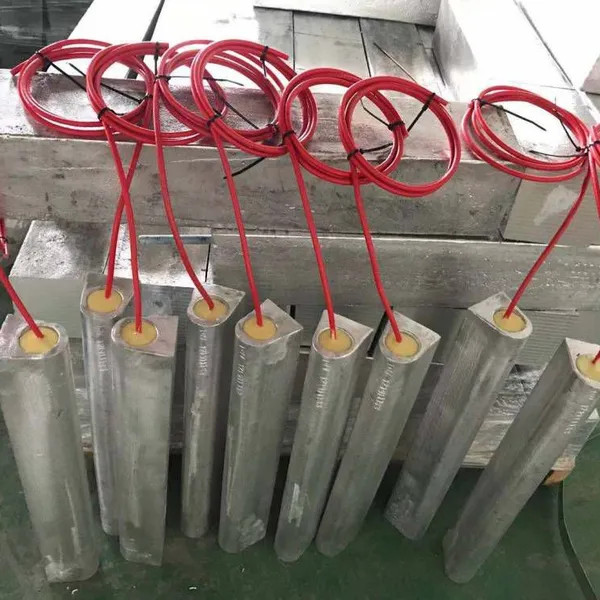
Jiaozuo Libo Light Alloy Co., Ltd. has established a relatively complete sales and after - sales service system. Its products are widely distributed. The company's products and technologies are mainly applied in the fields of cathodic protection projects such as long - distance pipelines, petrochemicals, offshore platforms, urban pipe networks, steel piles at docks, ships, and storage tanks, as well as in the production of deformed magnesium alloy extrusion. The anode installed in this way can reach its current output within a few days. The magnesium alloys produced by our company are made of high - quality raw materials. The anode potential is negative, and the electricity generated per unit mass is large. It is an ideal sacrificial anode material. Magnesium anodes are made into long rods with a steel core or as load - bearing steel core components. The steel core can pass through the whole rod or penetrate one end. It is suitable for the anti - corrosion protection of oil and gas transmission, water supply and drainage pipelines, underground cables, chemical industry, communication, harbors, ships, reservoir gates and other projects in fresh water. The surface of the steel core must be clean, free of rust and burrs. Sacrificial anodes must never be backfilled with coke slag like impressed current auxiliary anodes. They can be made by casting or extrusion processes.
Disadvantages
6. Provide average current distribution;
5. It is easy to add anodes in most cases;
4. Easy to install;
3. Small current output results in little or no stray current interference;
2. Requires little maintenance;
1. Does not require an external power supply;
Advantages
In addition to the protection of seawater or pipeline equipment, the application of electrochemical protection method is also used to prevent the corrosion of cables and chemical equipment, etc.
Definition 5: Sacrificial anode method A sacrificial anode (sacrificial anode) is made of a metal material with a relatively negative potential. When it is connected to the pipeline to be protected, it dissociates preferentially, thereby inhibiting the corrosion of the pipeline, so it is called a sacrificial anode. The sacrificial anode should have a sufficiently negative and stable potential to maintain a sufficiently large driving voltage; at the same time, it should have a large theoretical generated electricity and a high and stable current efficiency. Use a metal or alloy part as the anode and use an electrolytic method to form an oxide film on its surface.
(3) Areas where electrical shielding occurs, where the effective current from the remote impressed current system has been weakened;
(2) Parts where short sleeves or coatings are severely damaged;
(1) Valves on buried pipelines with poor or no anti-corrosion coatings;
Applications
After anodizing, the hardness and wear resistance of aluminum or its alloys are improved, reaching 250 - 500 kg/mm². It has good heat resistance, with the melting point of the hard anodized film as high as 2320K, excellent insulation, with a breakdown voltage resistance of up to 2000V, and enhanced corrosion resistance. It does not corrode after thousands of hours in a salt spray of ω = 0.03 NaCl.
(8) Install a certain number of zinc blocks on the stern of the ship and the part below the waterline of the hull to prevent the corrosion of the hull, etc. (7) For deep - sea structures, large sacrificial anodes can be used to protect underwater components. The anodic oxide film has a large number of micropores that can adsorb various lubricants, making it suitable for manufacturing engine cylinders or other wear - resistant parts; the strong adsorption capacity of the film micropores allows it to be colored into various beautiful and bright colors. For example, in aluminum anodizing, aluminum and its alloys are placed in a corresponding electrolyte (such as sulfuric acid, chromic acid, oxalic acid, etc.) as the anode and electrolyzed under specific conditions and the action of an impressed current.
(6) Sacrificial anodes are widely used for the protection of the inner walls of heat exchangers and other containers.
(5) In areas with many and complex buried structures, it is very difficult to use impressed current cathodic protection without interfering with adjacent structures.
Definition 6: Metals or alloys with a sufficiently negative potential are called sacrificial anodes. Considering the explosive danger of crude oil and gas itself, it is not reliable to use impressed current anti - corrosion methods inside crude oil storage tanks.
Definition 7: While the cathode (the protected structure) is being protected, the anode is constantly being consumed, so it is called a sacrificial anode. Three ideal anode materials are magnesium, aluminum, and zinc. Their corrosion potential in the natural environment reaches -10V (relative to Cu|CuSO4, the same below).
Electrochemical oxidation of metals or alloys.
Definition 4: Since the corrosion of this metal provides protection to the original corrosion cell and accelerates its own corrosion, it is called a sacrificial anode. Sacrificial anode materials should meet the following requirements: (1) They should have a sufficiently negative potential and be very stable. Non-ferrous metals or their alloys (such as aluminum, magnesium, and their alloys, etc.) can all be subjected to anodizing treatment. This method is widely used in mechanical parts, aircraft and automobile components, precision instruments, radio equipment, daily necessities, and architectural decoration. The metal oxide film changes the surface state and properties, such as surface coloring, improving corrosion resistance, enhancing wear resistance and hardness, and protecting the metal surface. When aluminum or its alloy at the anode is oxidized, a thin layer of aluminum oxide is formed on the surface, with a thickness of 5 - 20 microns. The hard anodized film can reach 60 - 200 microns.

Send Inquiry to This Supplier


You May Also Like
-
Commonly Used Aluminum Sacrificial Anodes for Drilling Platforms, High-temperature Resistant Aluminum AnodesUS$ 2.31MOQ: 3 Pieces
-
250*50 Disc Zinc Anode for CondensersUS$ 0.46MOQ: 10 Pieces
-
West - to - East Gas Transmission Magnesium Anode Kit Combination, Trapezoidal Magnesium AnodeUS$ 0.31MOQ: 13 Kilograms
-
Disc-shaped Aluminum Alloy Sacrificial Anode, 200*30mmUS$ 0.46MOQ: 10 Pieces
-
Aluminum Alloy Sacrificial Anodes for Ocean Engineering, 235kg Aluminum AnodesUS$ 3.23MOQ: 1 Kilogram
-
16kg Aluminum Alloy Sacrificial Anode for Storage TanksUS$ 0.46MOQ: 10 Pieces
-
Aluminum Alloy Sacrificial Anodes for Marine Engineering Anti - Corrosion. Manufacturer of Aluminum Anodes for Steel PipesUS$ 2.92 - 4.62MOQ: 10 Pieces
-
Cathodic Protection Anti-corrosion Aluminum Anodes, Supplier of High-efficiency Aluminum AnodesUS$ 0.46MOQ: 10 Kilograms
-
Magnesium Anode. Magnesium Anode for Grounding GridUS$ 3.08MOQ: 3 Kilograms
-
Anti-corrosion Aluminum-zinc-indium-magnesium-titanium Sacrificial Anodes for Steel Pile WharvesUS$ 3.08MOQ: 1 Piece
