








 Contact Platform Support
 Help Center
How to Obtain FCC ID Certification for a WiFi Jammer



Related Products
-
 How to Obtain FCC Certification for a Robot VacuumNegotiableMOQ: 1 Piece
 -
Bluetooth BQB Certification Process and Testing CycleUS$ 100MOQ: 1 Piece
-
Introduction to PTCRB Certification Process, Cycle, and StandardsUS$ 100MOQ: 1 Piece
-
Introduction to FCC Certification Process, Cycle, and StandardsUS$ 100MOQ: 1 Piece
-
Bhutan Telecom Equipment Certification: BICMA Type Approval and RF Testing RequirementsUS$ 100MOQ: 1 Piece
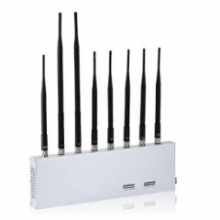
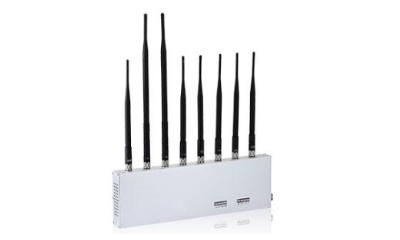
How to obtain FCC ID certification for a WiFi jammer
A WiFi jammer is a device used to block or shield WiFi signals. It primarily shields WiFi wireless signals, preventing unauthorized access and data leakage. It covers common WiFi frequency bands, such as 2.4GHz and 5GHz, ensuring effective shielding of WiFi signals when needed. This device is widely used in offices, conference rooms, hotel rooms, and other locations, helping to protect confidential information from theft and leakage.
The FCC, or Federal Communications Commission (FCC), was established in 1934 by the Communications Act. It is an independent agency of the U.S. government, directly reporting to Congress. The FCC coordinates domestic and international communications by regulating radio broadcasting, television, telecommunications, satellite, and cable. The FCC's Engineering and Technology Division provides technical support to the Commission to ensure the safety of radio and wireline communications products that affect life and property. The FCC's Division of Engineering and Technology oversees the Commission's approval of equipment. Many radio, communication, and digital products require FCC approval to enter the U.S. market.
Application Process for an FCC ID for a WiFi Jammer:
1. Apply for a FRN. This is your first FCC ID application and you'll need to apply for a Grantee Code. ;
II. Required Documents:
1) FCC Application Form: The company name, address, contact information, product name and model, and applicable standards must be accurate.
2) Product User Manual: The FCC warning label must be included.
3) Label and Label Location: The label must include the FCC ID number and statement, and the label must be prominently located.
4) Block Diagram: All crystal oscillators and their frequencies must be included and consistent with the circuit diagram.
5) Circuit Diagram: The crystal frequency, number of crystals, and crystal locations must be consistent with those in the block diagram.
6) Circuit Description: This must be in English and clearly describe the product's functional principles.
7) PCB Trace Diagram
8) Frequency-setting Software or Bluetooth Test Fixture
9) Antenna Specifications
III. Document Review
IV. Product Testing
V. Report Preparation: The certification engineer will prepare a report based on the qualified test data.
VI. The laboratory will submit the test report and technical documentation to the TCB.
VII. The TCB will issue a certificate.
Notes:
1. Provide at least one qualified prototype and one fixed-frequency prototype.
2. The prototype provided must be an official qualified prototype. Its internal electrical structure and appearance must be identical to the batch prototypes to be exported.
3. The trademark and model number on the prototype must be clear and reliable.

Send Inquiry to This Supplier

You May Also Like
-
Russian FAC Certification Guide: Market Access Requirements for Telecommunications EquipmentUS$ 100MOQ: 1 Piece
-
Qatar CRA CertificationUS$ 100MOQ: 1 Piece
-
Saudi Arabia's SABER Certification Vs. CST CertificationNegotiableMOQ: 1 Piece
-
Jordan TRC Certification Explained: How Do Wireless Products Comply With Jordanian Regulations?NegotiableMOQ: 1 Piece
-
BTK Certification Process in Turkey: A Guide to Type Acceptance for Wireless and Telecommunications Products Entering the Turkish MarketNegotiableMOQ: 1 Piece
-
Wireless Certification in Singapore: IMDA CertificationNegotiableMOQ: 1 Piece
-
WPC Certification ProcessNegotiableMOQ: 1 Piece
-
3G\4G\NB-IOT\CAT M\5G SA NSA Real Mobile Network - Interoperability Testing ServiceNegotiableMOQ: 1 Piece
-
CTA Network Access Permit Application Process and Required DocumentsNegotiableMOQ: 1 Piece
-
Bluetooth Headset NBTC Certification ProcessNegotiableMOQ: 1 Piece
