Home > Electrical & Electronics > Electrical Control System > WOODWARD BUM60-1224-54-B-001-VC-A0-0093-0013-G003-000 Controller
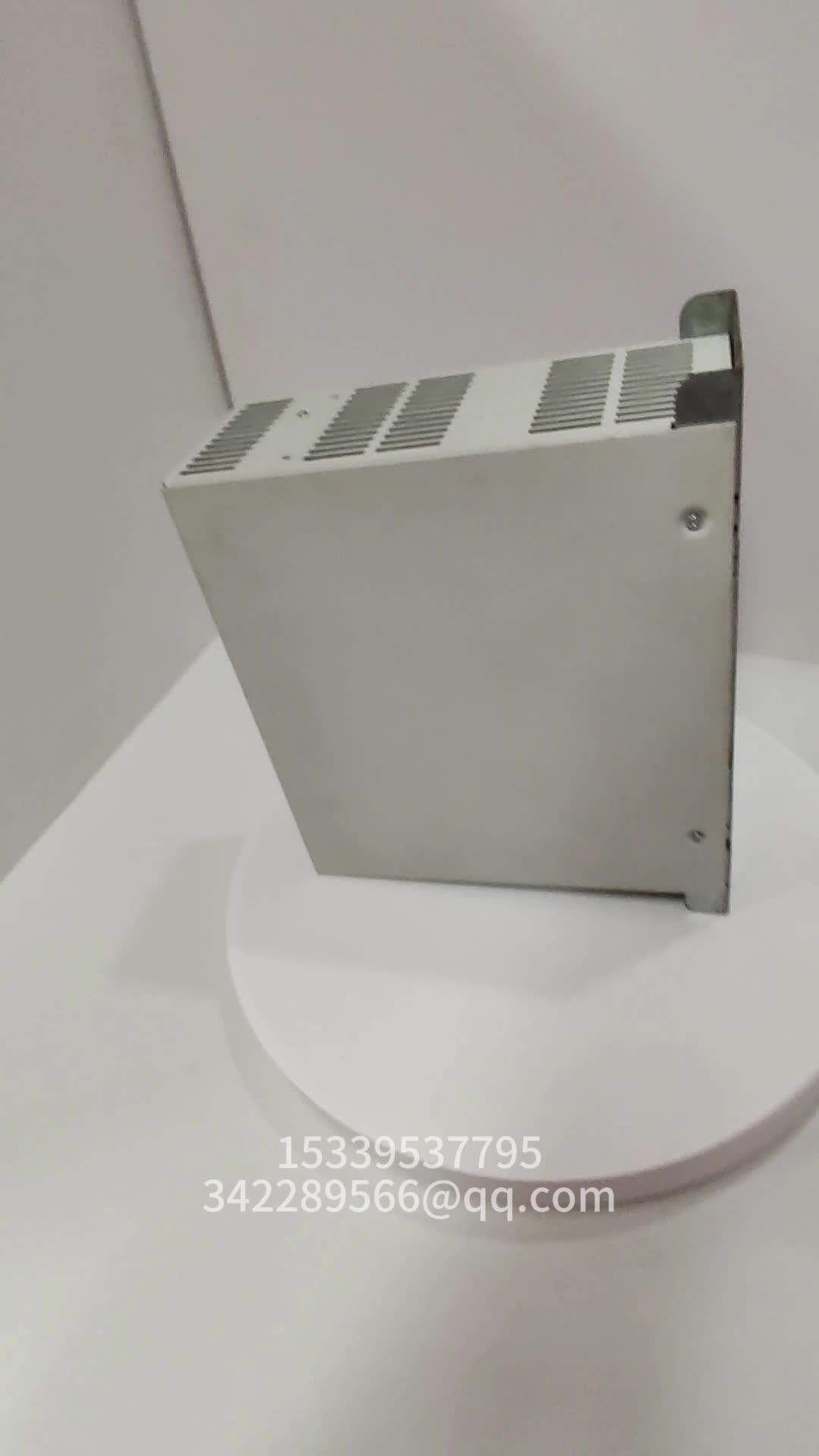
WOODWARD BUM60-1224-54-B-001-VC-A0-0093-0013-G003-000 Controller
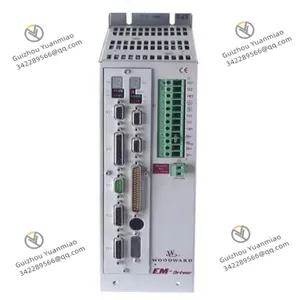
WOODWARD BUM60-1224-54-B-001-VC-A0-0093-0013-G003-000 Controller photo-1
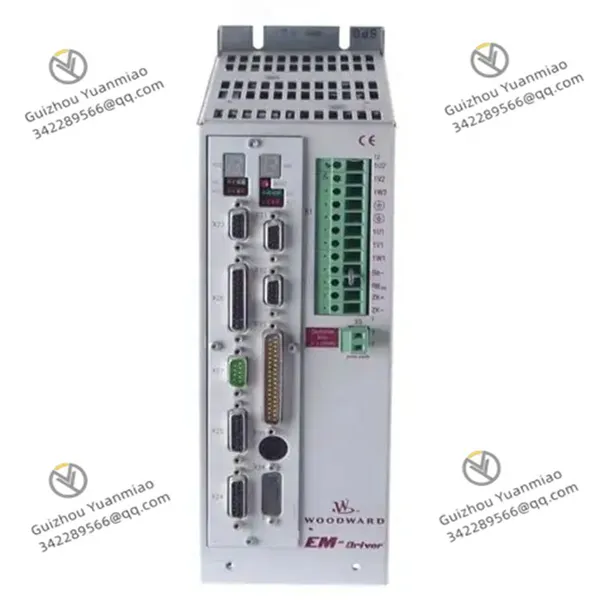
Negotiable MOQ: 1 Unit (Price negotiable depending on order volume and customization)
Key Specifications
Get Latest Price
Material:
Other, Global universal model
Condition:
Other, Global universal model
Task:
Other, Global universal model
Payment & Shipping
Payment Methods:
Port of Shipment:
China
Delivery Detail:
Delivery time depends on order quantity.
Material Other, Global universal model
Condition Other, Global universal model
Task Other, Global universal model
Mathematical Model Other, Global universal model
Signal Other, Global universal model
Customized Non-Customized
Structure Other, Global universal model

Functional Features


It typically has functions such as A/D conversion, D/A conversion, and input/output signal conversion. It can control the flow and direction of liquids through electronic or mechanical signals to achieve accurate control of the actuator's position, speed, and force, thereby precisely regulating the equipment's rotational speed. Based on speculation from other similar Woodward products, the 3522-1004 may also support multiple input/output signal types, be compatible with various sensors and actuators, and have certain communication capabilities for data interaction with upper computers or other control systems.


Working Principle


I. Overall System Positioning and Functional Framework

The Woodward 3522-1004 is a speed/load controller commonly used in industrial power equipment (such as gas turbines, diesel engines, and steam turbines), belonging to the Woodward 3500 series of control modules. Its core function is to collect equipment operation parameters (such as rotational speed, pressure, temperature, etc.) in real time, combine preset control logic and algorithms, output adjustment signals to maintain stable equipment operation, and trigger protection mechanisms in case of abnormalities.


II. Core Working Principle by Module


1. Signal Acquisition and Preprocessing

  • Input Signal Types:

    • Rotational speed signals (such as pulse signals output by magnetoelectric sensors), analog signals (4-20mA/0-10V from pressure/temperature transmitters), and switching signals (start/stop commands, interlock signals).

    • Example: The pulse frequency of the engine flywheel ring gear is detected by a magnetoelectric sensor and converted into a real-time rotational speed value.

  • Signal Processing Flow:

    • Input signals are filtered by a filter circuit to eliminate electromagnetic interference, then analog signals are converted to digital signals through an A/D converter, and pulse signals are directly read for frequency by a counter.

    • Built-in hardware diagnostic functions trigger alarms and record fault codes if signal disconnection, out-of-range, or abnormal fluctuations are detected.

2. Control Algorithm Execution and Logical Operation

  • Core Control Logic:

    • Based on rotational speed control, closed-loop regulation is achieved through the PID (Proportional-Integral-Derivative) algorithm. When there is a deviation between the actual rotational speed and the set value, the controller calculates the output to adjust the opening of the actuator (such as a fuel valve or servo motor) until the deviation is eliminated.

    • Supports multi-mode control switching (such as manual/auto mode, speed control/load control mode) to adapt to different working conditions. For example, when connecting to the power grid, it can switch from speed control to load control to maintain stable power.

  • Algorithm Optimization Mechanism:

    • Built-in adaptive parameter adjustment function automatically optimizes PID parameters according to equipment load changes to avoid excessive adjustment or slow response.

    • Equipped with anti-integral saturation design to prevent controller output saturation caused by long-term deviations and improve system stability.

3522-1004

3. Output Adjustment and Actuator Driving

  • Output Signal Types:

    • Analog output (4-20mA): Used to drive electro-hydraulic servo valves, electric actuators, etc., to adjust fuel supply or valve opening.

    • Digital output (relay contacts): Used to start/stop equipment, trigger alarms, or safety interlocks (such as cutting off fuel in case of overspeed).

  • Driving and Protection Design:

    • Output circuits have short-circuit protection and overload protection to prevent controller damage caused by actuator failures.

    • Supports redundant output configurations (such as dual analog outputs) to improve system reliability.

4. Communication and System Integration

  • Data Interaction Mechanism:

    • Communicates with upper computers (PLC, DCS) or other control modules via RS485 (Modbus RTU) or Ethernet interfaces, uploads real-time operation data (rotational speed, output value, fault status), and receives remote set values or control commands.

    • Example: Operators can modify the rotational speed set value through the upper computer, and the controller responds in real time to adjust the output.

  • Interlock and Collaborative Control:

    • Supports linkage with safety systems (such as ESD). When an emergency shutdown signal is received, it immediately cuts off fuel output and triggers the shutdown process.

5. Fault Diagnosis and Protection Mechanism

  • Hardware-Level Protection:

    • Built-in Watchdog timer automatically restarts or switches to a safe output mode if the CPU program is abnormal or crashes.

    • The power monitoring circuit real-time detects voltage fluctuations and triggers protection and records faults when the voltage exceeds the allowable range (such as 24VDC±10%).

  • Software-Level Diagnosis:

    • Continuously monitors the rationality of input/output signals (such as rotational speed signal jumps, output value out-of-range), and prompts specific problems through fault codes (such as E01, E03) for easy maintenance and troubleshooting.


Common Faults


  • Abnormal Rotational Speed Signal: Similar to other Woodward speed controllers, there may be cases where no rotational speed signal is received. For example, after the diesel engine starts, the relevant indicator light on the controller remains on, prompting no rotational speed signal input, which may be caused by rotational speed sensor failure, sensor line short circuit or open circuit, etc.

  • Output Signal Fault: The controller cannot output correct control signals, causing the actuator (such as fuel valve, servo motor) to not act or act abnormally. It may be caused by damaged output interfaces, internal circuit failures, or program parameter errors.


  • Communication Fault: When communicating with upper computers (such as PLC, DCS systems) or other devices, problems such as communication interruption or data transmission errors may occur. The causes may be poor communication cable contact, incorrect communication parameter settings, damaged communication interface chips, etc.

  • Control Accuracy Deviation: During equipment operation, the controlled parameters (such as rotational speed, power) cannot be stabilized near the set value, and the control accuracy exceeds the allowable range. It may be caused by reduced sensor accuracy, improper PID parameter settings, or external signal interference.

  • Overheating Fault: Long-term operation in high-temperature environments or poor module heat dissipation may cause internal components to overheat and trigger overheat protection. It is manifested as excessive module temperature, possibly accompanied by alarm prompts, which may be caused by poor installation environment ventilation, blocked heat dissipation holes, or long-term full-load operation.


  • Parameter Setting-Related Faults: Incorrect parameter settings may lead to abnormal equipment operation, such as unstable idle speed and poor acceleration performance. For example, unreasonable compensation value settings may cause idle speed hunting.

  • Hardware Damage Faults: Internal electronic components such as capacitors, resistors, and chips may be damaged due to aging, overvoltage, overcurrent, etc., resulting in the module being unable to work normally or various abnormal phenomena.

Product Tags: WOODWARD , 3522-1004 , BUM60-1224-54-B-001-VC-A0-0093-0013-G003-000

Send Inquiry to This Supplier

Message
0/5000
Want the best price? Post an RFQ now!
1Yr
Business Type
Trading Company
Year Established
2014
Factory Size
1,000-3,000 square meters
Product Certifications
SA8000