Home > Electrical & Electronics > Electrical Control System > Woodward 9905-973 Controller

Woodward 9905-973 Controller

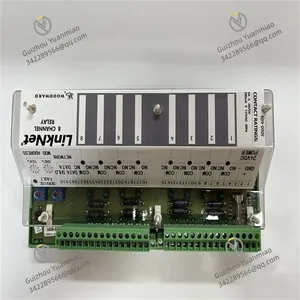
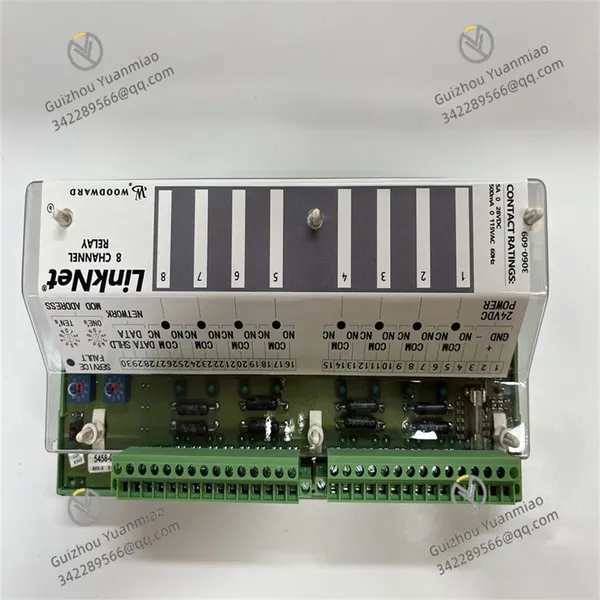
Woodward 9905-973 Controller photo-1
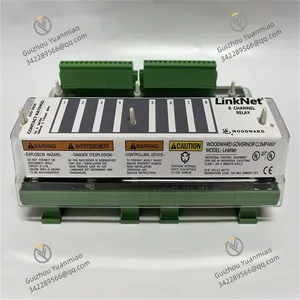
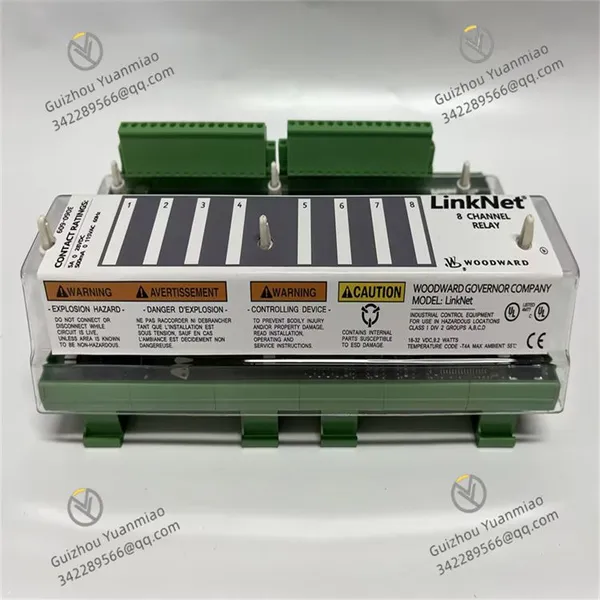
Woodward 9905-973 Controller photo-2
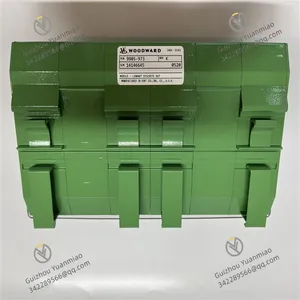
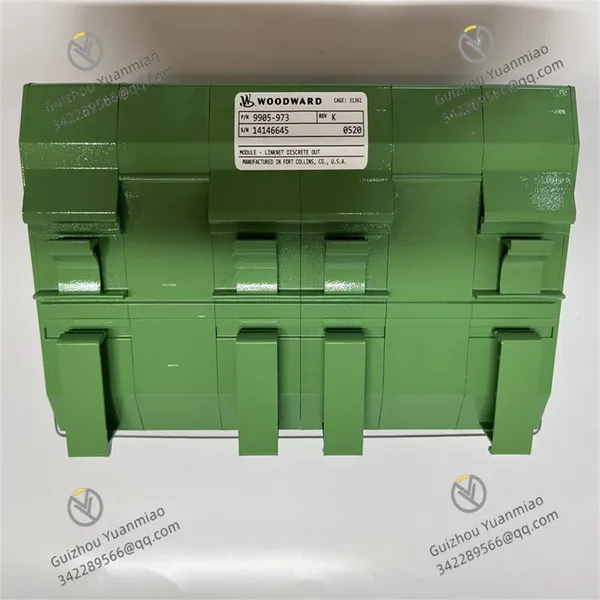
Woodward 9905-973 Controller photo-3
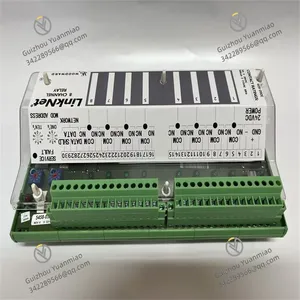
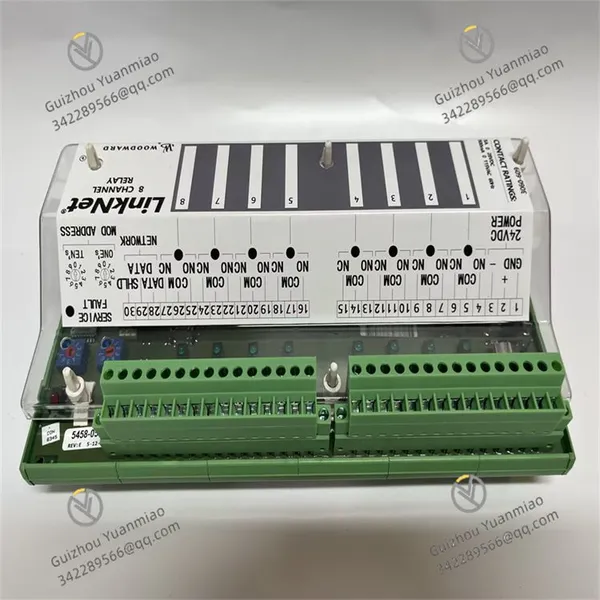
Woodward 9905-973 Controller photo-4
Negotiable MOQ: 1 Piece (Price negotiable depending on order volume and customization)
Key Specifications
Get Latest Price
Material:
Other, Global universal model
Condition:
Other, Global universal model
Task:
Other
Payment & Shipping
Payment Methods:
Port of Shipment:
China
Delivery Detail:
Delivery time depends on order quantity.
Material Other, Global universal model
Condition Other, Global universal model
Task Other
Mathematical Model Other, Global universal model
Signal Other, Global universal model
Customized Other, Global universal model
Structure Other, Global universal model
Operating temperature -20°C to 70°C
Dimensions Approximately 100mm x 50mm x 25mm
Weight 1.3kg
Product Types and Functions8-Channel Relay Module
It is a Linknet 8-channel relay module containing eight independent relays, each controllable via digital signals. It enables remote or programmable control of multiple electrical devices, commonly connected to microcontrollers or other digital control systems through General-Purpose Input/Output (GPIO) pins or serial communication protocols (e.g., I²C, SPI). It finds wide applications in home automation, industrial automation, robotics, and other fields.
Speed Controller
As a speed controller, it is used for speed control of diesel engines, gas engines, steam turbines, or gas turbines. It features wide-range signal input capabilities, allowing equipment speed or load setting based on computer control signals of 4-20mA or 1-5Vdc. It has two working modes: isochronous regulation and droop regulation, as well as additional functions such as synchronization/deceleration control, high-low speed adjustment, and fuel limiting. The output signal is proportional to the fuel setting required to achieve the desired speed/load, ensuring high control accuracy.
Servo Controller
As a servo controller, it is a high-performance controller designed for high-precision and high-speed control tasks. Its main functions include signal conditioning and data acquisition, ensuring correct communication between sensors and equipment. It achieves effective control of system actuators through precise signal processing, widely applied in fields requiring high control accuracy and stability, such as power electronics.

9905-973 (4)

9905-973 (3)

Technical Parameters
  • Power Input: Typically 18-32Vdc; some sources mention compatibility with 95-130V power, with a power consumption of approximately 14W.

  • Output Characteristics: Rated output voltage is generally 24Vdc. Current specifications may include 16A, or an output current range of 0.5A-5A.

  • Temperature Range: The operating temperature range is generally -20°C to 70°C, varying by version (e.g., low-temperature versions of similar models can operate at -40°C to 70°C).

  • Dimensions and Weight: Approximately 100mm x 50mm x 25mm in size, weighing about 1.3kg. Some sources list external dimensions as 8.75"w x 14.625"d x 5.375"h.

  • Others: Features network isolation up to 1000Vrms (0-60Hz), a maximum of 64 nodes per bus, a network-to-I/O channel voltage of 277V ac, and a potential voltage range of 80-150V.

Product Features
  • Robust and Durable: Constructed with reliable components, possibly an aluminum alloy housing, and an IP65 protection rating, it withstands harsh industrial environments, ensuring stable operation in various complex conditions.

  • High-Precision Control: Whether as a speed or servo controller, it incorporates advanced algorithms and precise signal processing to achieve high-precision control and monitoring.

  • Strong Compatibility: With a compact design, it is easy to install and wire, compatible with multiple control systems, and can be conveniently integrated into existing industrial automation, process control, and other systems requiring relay control or precise speed/servo control.

9905-973 (2)

9905-973 (1)

Working PrincipleSpeed Sensing
The speed controller connects to speed sensors (e.g., optical or magnetic sensors) that monitor the equipment's rotational speed. The sensors continuously detect the current speed and transmit corresponding signals to the controller.
Reference Speed Setting
Operators or the control system set a reference speed as the target speed for the equipment. For example, in generator sets, a specific engine speed is set to ensure stable power frequency output.
Comparison and Calculation
The speed controller compares the actual speed signal from the sensor with the reference speed, then uses control algorithms to calculate the adjustment needed to align the equipment speed with the reference. The algorithms consider factors like load changes, external disturbances, and the equipment's response characteristics. For instance, when the load on a generator set suddenly increases, the controller calculates how to adjust fuel supply or air intake to maintain speed stability.
Output Control Signal
Based on the calculation, the speed controller outputs a corresponding control signal (electrical, hydraulic, or other forms), depending on the actuator type of the controlled equipment. For example, it may send an electrical signal to control fuel injection for a diesel engine or a hydraulic signal to adjust steam valve opening for a steam turbine.
Execution and Feedback
The control signal reaches the equipment's actuator, which adjusts actions (e.g., fuel injection, valve opening) to change the equipment speed. Meanwhile, the speed sensor continues to monitor the speed in real time, feeding back new signals to form a closed-loop control system, continuously optimizing the speed to approach the reference value.
Application Fields
  • Industrial Automation: Used for equipment control on factory production lines, circuit switching in automated processes, and motor speed regulation, improving production efficiency and product quality consistency.

  • Energy Sector: In power stations, it controls the speed of steam turbines, gas turbines, etc., ensuring stable operation and power output of generator sets.

  • Process Control: In chemical and petrochemical industries, it precisely regulates the speed of pumps, compressors, and other equipment to meet strict requirements for flow, pressure, and other parameters in production processes.

  • Building Automation: Enables intelligent control of air conditioning, elevators, ventilation systems, etc., in buildings, enhancing energy efficiency and comfort.

Product Tags: 9905-973 , PPD512A10-150000 , 5SHY3545L0010

Send Inquiry to This Supplier

* Message
0/5000

Want the best price? Post an RFQ now!
Verified Business License
Business Type
Trading Company
Year Established
2014
Factory Size
1,000-3,000 square meters
Product Certifications
SA8000