Home > Electrical & Electronics > Electrical Control System > Woodward 8273-140 2301D Hydraulic Actuator

Woodward 8273-140 2301D Hydraulic Actuator

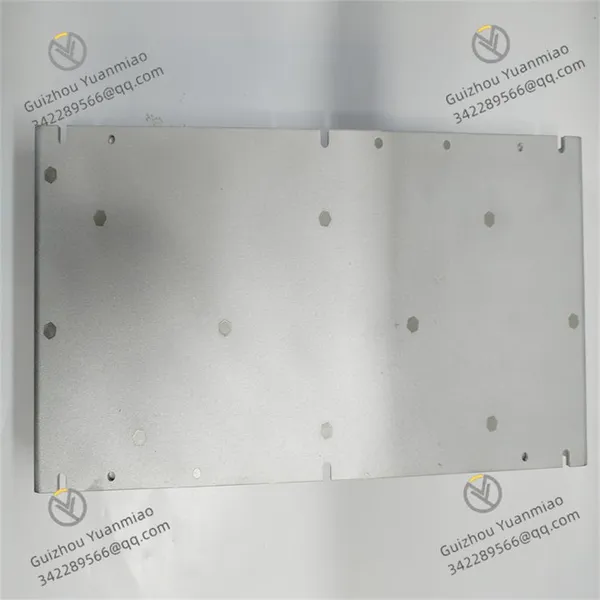
Woodward 8273-140 2301D Hydraulic Actuator photo-1
Woodward 8273-140 2301D Hydraulic Actuator photo-2
Negotiable MOQ: 1 Piece (Price negotiable depending on order volume and customization)
Key Specifications
Get Latest Price
Material:
Other, Global universal model
Task:
Other, Global universal model
Mathematical Model:
Other, Global universal model

Payment & Shipping
Payment Methods:
Port of Shipment:
China
Delivery Detail:
Delivery time depends on order quantity.
Material Other, Global universal model
Task Other, Global universal model
Mathematical Model Other, Global universal model
Signal Other, Global universal model
Customized Non-Customized
Structure Other, Global universal model
Weight Approximately 3.2kg
Operating Temperature -40°C to +85°C
Stroke ≤0.5 seconds (typical)
Woodward 8273-140 2301DI. Equipment Positioning and Functional Overview
The Woodward 8273-140 2301D is a hydraulic actuator and a core component of the fuel regulation system for power equipment. It primarily receives signals from electronic controllers (such as the Woodward 5501-365) and converts them into mechanical movements to precisely adjust the fuel valve opening of diesel engines and gas turbines, thereby controlling equipment speed and load. Its core functions include:


  • Signal-mechanical conversion: Converts electrical signals (e.g., 4-20mA or PWM signals) into linear displacement to drive fuel valve action.

  • Closed-loop feedback: Real-time feedback of valve opening via built-in position sensors (e.g., LVDT) to ensure regulation accuracy.

  • Emergency protection: Supports manual adjustment and mechanical limiting to maintain safe equipment operation in case of electrical control system failures.

II. Technical Parameters
Parameter Type Detailed Description
Drive Type Hydraulic drive (requires external hydraulic oil source, operating pressure range: 1.4-6.9 bar)
Input Signal - Standard signals: 4-20mA analog or PWM pulse signals (frequency 50-400Hz)
- Impedance: 250Ω
Output Displacement Linear stroke: 12.7 mm (0.5 in), displacement accuracy: ±0.5% of full scale
Response Time - 0% to 100% stroke: ≤0.5 seconds (typical)
- Step response overshoot: ≤5%
Operating Temperature Range -40°C to +85°C, suitable for high-temperature engine rooms, outdoor scenarios, etc.
Protection Level IP65 (dustproof and water splash-resistant), resistant to liquid splashing and dust intrusion in harsh environments
Feedback Signal LVDT displacement feedback: 0-10V or 4-20mA, resolution 0.1% of full scale
Mechanical Characteristics - Housing: Die-cast aluminum alloy (vibration-resistant 5-200Hz, ≤5g)
- Weight: Approximately 3.2kg
- Installation: Flange or bracket type
Power Requirements For internal electronic modules: DC 24V (±10%), power consumption ≤10W

8273-140 2301D (2)

III. Working Principle and Control Logic1. Signal Reception and Processing
  • Receives 4-20mA or PWM signals from electronic controllers (e.g., Woodward 5501-365) and converts them into electrical signals for driving hydraulic valves via built-in amplifiers.

  • Built-in microprocessors filter and calibrate signals to reduce interference.

2. Hydraulic Drive Execution
  • Hydraulic circuit: Electrical signals drive proportional solenoid valves to control hydraulic oil flow into/out of the actuator cylinder, pushing the piston to generate linear displacement.

  • Mechanical transmission: The piston connects to the fuel valve via a linkage, with a displacement range of 0-12.7mm corresponding to a fuel valve opening of 0-100%.

3. Closed-loop Feedback Mechanism
  • LVDT sensor: Monitors piston position in real time, generates 0-10V feedback signals, and transmits them back to the controller to form a "input signal-execution-feedback" closed loop, ensuring displacement accuracy.

  • Error correction: If a deviation exists between the feedback value and the target value, the controller automatically adjusts the input signal until the displacement reaches the set value (error ≤±0.5%).

4. Safety Protection Functions
  • Mechanical limiting: Built-in physical stops prevent excessive fuel valve opening due to piston over-travel.

  • Manual override: Equipped with a manual adjustment knob to manually adjust the fuel valve opening and maintain minimum equipment operation in case of electrical control system failures.

IV. Application Scenarios and Typical Configurations1. Core Application Areas
  • Power Generation Industry:
    • Fuel regulation for diesel/gas turbine generator sets (100kW-10MW), working with Woodward 5501-365 to achieve stable speed control.

    • Load distribution during parallel operation of multiple units to ensure grid frequency fluctuation ≤±0.1Hz.

  • Marine and Offshore Engineering:
    • Fuel control for marine main engines (e.g., MAN, Cummins diesel engines) to resist load fluctuations caused by wave impacts.

    • Emergency speed control systems for offshore platform power stations, adapted to high salt fog and vibration environments.

  • Industrial Drive Equipment:
    • Compressors and fans driven by engines (e.g., natural gas pipeline booster stations), adjusting fuel supply according to process requirements.

    • Power equipment in oilfield well sites, maintaining speed stability during load fluctuations of oil pumps.

2. Typical Matching Solutions
  • Controller + Actuator Combination:

    plaintext
    Woodward 5501-365 (electronic controller) → 4-20mA signal → Woodward 8273-140 2301D (actuator) → drives fuel valve                                                                      ↑                                                                      └─ LVDT feedback (0-10V) → 5501-365


  • Redundancy System Configuration: In critical scenarios (e.g., nuclear power plants, offshore platforms), two sets of 8273-140 actuators can be connected in parallel, and the controller enables automatic primary-backup switching to enhance system reliability.

8273-140 2301D (1)

V. Comparative Advantages over Similar Products
Advantage Dimension 8273-140 2301D Features Deficiencies of Traditional Actuators
Regulation Accuracy Displacement accuracy ±0.5%, suitable for high-precision speed regulation scenarios (e.g., grid frequency modulation) Mechanical actuator accuracy ≤±2%, prone to speed fluctuations
Response Speed Completes full stroke within 0.5 seconds, rapidly responding to sudden load changes Hydraulic actuator response ≥1 second, possibly causing speed overshoot
Environmental Adaptability IP65 protection + wide-temperature design (-40℃~+85℃), vibration and salt fog resistant Ordinary actuators with protection level ≤IP54, prone to failure in high-temperature environments
Intelligent Integration Supports Modbus communication, enabling remote monitoring via DCS/SCADA systems Most only support analog signals, unable to achieve digital operation and maintenance
Maintenance Convenience Built-in fault diagnosis LEDs (e.g., power abnormality, feedback disconnection alarm), supporting online calibration Requires disassembly for inspection, high maintenance costs
VI. Installation and Maintenance Key Points1. Installation Precautions
  • Hydraulic Oil Requirements: Use ISO VG 32 anti-wear hydraulic oil, replace regularly (recommended every 2,000 hours) to avoid contamination causing jamming.

  • Mechanical Connection: Ensure the actuator linkage is parallel to the fuel valve axis, with installation error ≤0.5mm to prevent component damage from additional stress.

  • Electrical Wiring: Input signals and feedback lines should use shielded cables, kept away from power cables to reduce electromagnetic interference.

2. Common Faults and Solutions
Fault Phenomenon Possible Cause Solution
Actuator does not move Power failure/input signal disconnection Check DC 24V power supply and 4-20mA circuit continuity
Displacement deviation exceeds tolerance LVDT sensor offset/hydraulic oil contamination Recalibrate LVDT, replace hydraulic oil, and clean the oil circuit
Slower response speed Hydraulic oil leakage/proportional valve jamming Check cylinder tightness, disassemble and clean the proportional valve
Abnormal vibration or noise Loose mechanical installation/hydraulic system air intake Tighten installation bolts and remove air from the hydraulic circuit
VII. Technical Evolution of Woodward Actuators
The 8273 series is a classic hydraulic actuator product of Woodward, whose technical features continue the pursuit of reliability and precision in the field of industrial power control. Compared with new-generation electric actuators (such as Woodward eSOV series), the 8273-140 2301D still has advantages in high power density and vibration-resistant scenarios, while electric actuators are more advanced in energy efficiency and digital integration. Users can select suitable solutions based on equipment power, environmental requirements, and intelligent needs.
Product Tags: 8273-140 , 2301D , 1MRB150011R1

Send Inquiry to This Supplier

* Message
0/5000

Want the best price? Post an RFQ now!
Verified Business License
Business Type
Trading Company
Year Established
2014
Factory Size
1,000-3,000 square meters
Product Certifications
SA8000