Home > Electrical & Electronics > Electrical Control System > Woodward 2301A 9907-018 Speed Control Controller

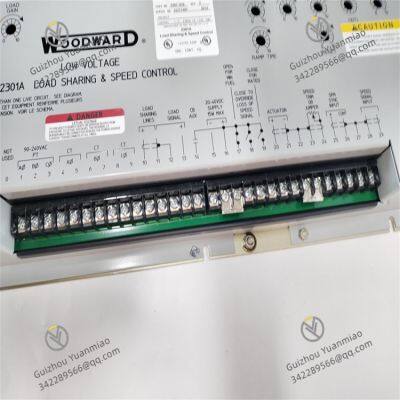
Woodward 2301A 9907-018 Speed Control Controller
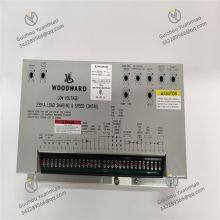
Woodward 2301A 9907-018 Speed Control Controller photo-1
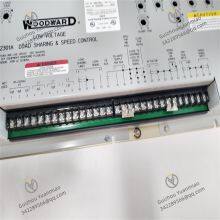
Woodward 2301A 9907-018 Speed Control Controller photo-2
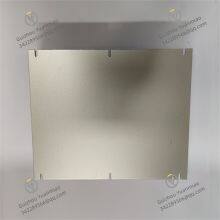
Woodward 2301A 9907-018 Speed Control Controller photo-3
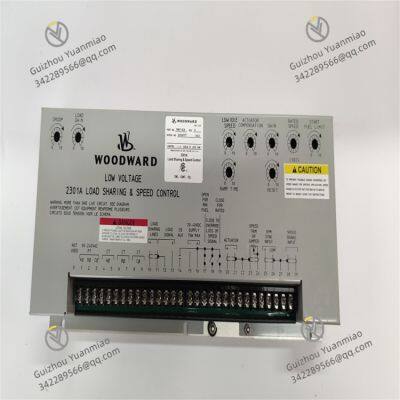
Negotiable MOQ: 1 Piece (Price negotiable depending on order volume and customization)
Key Specifications
Get Latest Price
Material:
Other, Global universal model
Condition:
Other, Global universal model
Task:
Other, Global universal model
Payment & Shipping
Payment Methods:
Port of Shipment:
China
Delivery Detail:
Delivery time depends on order quantity.
Material Other, Global universal model
Condition Other, Global universal model
Task Other, Global universal model
Mathematical Model Other, Global universal model
Signal Other, Global universal model
Customized Non-Customized
Structure Other, Global universal model
Power Consumption ≤15W
Dimensions 15.25 in (W) × 7.125 in (H) × 2.5 in (D)
Weight 1.8kg
Woodward 2301A 9907-018Woodward 9907-018 is a digital controller mainly used for speed control, load distribution, and protection systems of power equipment such as industrial gas turbines, steam turbines, and diesel engines. Its core function is to collect sensor signals in real time, process them through calculations, and output control commands to ensure the stable operation of power equipment under different working conditions.1. Product Features
  • Wide Application Range: Applicable to diesel engines, gas engines, steam turbines, or gas turbines, suitable for fields such as generator sets, compressors, pump stations, ships, and locomotives.

  • Flexible Signal Input: Can set equipment speed or load based on 4–20mA or 1–5Vdc computer control signals.

  • Multiple Working Modes:

    • Isochronous Control (Isoch.): For constant speed control, suitable for single-unit operation or multiple prime movers acting on an isolated power grid.

    • Droop Control (Droop): Provides more control flexibility.

  • High Integration: Can be used with a series of Woodward devices such as Power Auto-Shift, Input/Output Controllers, and Generator Load Controllers to achieve comprehensive system control.

  • Rich Additional Functions: Includes synchronization or speed reduction control, high/low speed adjustment, override start fuel limit, etc.

  • High-Precision Output Signal: The output signal is proportional to the fuel setting required to achieve the desired speed/load, ensuring precise control.

  • Robust and Durable: Designed for complex industrial environments, it operates stably under harsh conditions, with built-in protection against electromagnetic interference/radio frequency interference (EMI/RFI), humidity, dust, and vibration.

2301A 9907-018 (3)

2. Hardware Design
  • Control Unit: The control part is installed in a sheet metal chassis, composed of a printed circuit board, with all potentiometers operable from the front of the chassis.

  • Power Requirements:

    • Low-voltage model: Requires 20–40Vdc external power supply.

    • High-voltage model: Requires 90–150Vdc or 88–132Vac, 45–440Hz power supply.

3. Software Functions
  • Toolkit Software: Supports 14 languages including English, French, German, and Japanese.

  • Built-in Human-Machine Interface (HMI): Equipped with a color LCD display and soft keys (now with dedicated buttons) for controlling the 9907-018, with multi-level password protection to prevent unauthorized changes.

  • EasyYgen 3000XT Model: Features three freely configurable PID controllers, providing input/output control (kW and kvar), MCB and GCB synchronization (slip/phase matching), four generator set operation modes, and optional manual circuit breaker control.

Technical Parameters
  • Power Supply:

    • Low-voltage: 20–40Vdc; High-voltage: 88–132Vac or 90–150Vdc.

  • Power Consumption: ≤15W.

  • Operating Temperature: -20°C to 70°C.

  • Storage Temperature: -40°C to 85°C.

  • Dimensions: 15.25 in (W) × 7.125 in (H) × 2.5 in (D).

  • Weight: 1.758kg.

  • Protection Level: CE certified (complies with EU Low Voltage and EMC directives); CSA certified (suitable for general locations in the U.S. and Canada).

  • Control Modes: Isochronous (Isoch.) and Droop control.

  • Signal Input: Accepts 4–20mA or 1–5Vdc computer control signals for speed/load setting.

  • Signal Output: 0–200mA for driving Woodward EG, PB, EGB, 2301, and TM actuators.

  • Other Functions: Synchronization/speed reduction control, high/low speed adjustment, override start fuel limit, etc.

2301A 9907-018 (2)

Working Principle of Woodward 9907-018I. Hardware Architecture and Key Components
  • Main Control Unit:

    • Built-in microprocessor (e.g., industrial-grade MCU) supports high-speed data processing and logic operations, executing algorithms like PID control and sequential logic.

    • Storage module: Includes non-volatile memory (EEPROM/Flash) for saving control parameters, program firmware, and fault records.

  • Input/Output (I/O) Interfaces:

    • Analog Input: Receives 4–20mA or 0–10V signals from speed sensors (e.g., reluctance, photoelectric) and temperature/pressure sensors, with 12–16-bit sampling accuracy.

    • Digital Input: Detects switch signals (e.g., start/stop commands, limit switch status).

    • Analog Output: Outputs 4–20mA signals to actuators (e.g., electro-hydraulic servo valves, solenoid valves) to control fuel valve or steam regulator openings.

    • Digital Output: Drives relays or solid-state relays for alarms, interlock protection, etc.

  • Communication Interfaces: Supports industrial protocols like MODBUS RTU and EtherNet/IP for data interaction with upper computers (e.g., DCS, PLC) or monitoring systems (SCADA).

II. Core Control Principle: Closed-Loop Feedback Mechanism
The Woodward 9907-018 operates based on a closed-loop control system, with the specific process as follows:
  1. Signal Acquisition and Processing:

  • Speed Detection: Measures spindle speed via a reluctance sensor, converts mechanical speed into pulse signals, and inputs them to the controller after hardware filtering and frequency-voltage conversion.

  • Working Condition Parameter Acquisition: Synchronously collects signals from temperature, pressure, flow sensors (e.g., gas turbine inlet pressure, exhaust temperature) as auxiliary inputs for control logic.

  • Control Algorithm Operation:

    • When actual speed is lower than the set value, the controller outputs an increased signal to increase fuel supply and raise speed.

    • When speed exceeds the set value, it reduces fuel supply to suppress overspeed.

    • Target Value Comparison: Compares actual speed (or load) with preset values (e.g., rated speed, set load) to calculate deviation.

    • PID Control Adjustment: Generates control quantities via Proportional (P), Integral (I), and Derivative (D) algorithms to eliminate deviations. For example:

    • Logic Limitation and Protection: Built-in multiple protection algorithms (e.g., overspeed limit, temperature override interlock) automatically trigger safe shutdown or load reduction commands upon detecting abnormal conditions.

  • Execution Output and Feedback:

    • Control Signal Output: Converts calculated control quantities into analog (4–20mA) or digital signals to drive actuators (e.g., electro-hydraulic servo valves) for adjusting fuel/steam flow.

    • Real-time Feedback Verification: After actuator action, feedback actual opening via position sensors (e.g., potentiometers) and compare with control commands to ensure control accuracy.

    2301A 9907-018 (1)

    III. Typical Working Modes and Application Scenarios
    • Speed Control Mode:

      • For single-unit operation (e.g., independent generator sets), maintaining equipment speed stability at the rated value (e.g., 3000rpm) regardless of load fluctuations.

      • Principle: When increased load causes speed drop, the controller automatically increases fuel supply to boost output power and maintain constant speed.

    • Load Distribution Mode:

      • When multiple units operate in parallel (e.g., grid-connected power generation), distributes loads according to unit capacity ratios or preset logic to avoid overload or uneven loading.

      • Principle: Receives grid frequency signals via communication interfaces, adjusts fuel supply for each unit by combining real-time load data, achieving dynamic load balancing.

    • Protection Interlock Function:

      • When detecting faults such as overspeed (e.g., exceeding 110% of rated speed), high bearing temperature, or low lubricating oil pressure, the controller immediately triggers a shutdown command and outputs alarm signals via relays.

    IV. Communication and Configuration Logic
    • Parameter Configuration: Connects to the controller via dedicated software (e.g., Woodward Pro-Series or Insight) to set PID parameters, protection thresholds, communication protocols, etc., with configuration files storable in the controller or upper computer.

    • Data Interaction: When communicating with upper computers, the controller packages and transmits real-time operation data (speed, load, temperature, etc.) while receiving control commands (e.g., remote start/stop, parameter modification) from the upper computer.

    V. Fault Diagnosis and Self-Maintenance Mechanism
    • Self-Diagnosis Function: Monitors internal hardware status (e.g., power voltage, I/O interface faults) in real time, reporting errors via panel indicators or communication interfaces.

    • Fault Recording: Stores the time, type, and related parameters of recent fault events for maintenance personnel to analyze issues.

    • Redundancy Design (Partial Models): Supports hot-swapping of primary and backup controllers, enhancing system reliability for critical applications (e.g., petrochemical, power energy).

    VI. Technical Differences from Similar Products
    Compared with traditional mechanical hydraulic controllers (e.g., Woodward speed governors), the digital advantages of 9907-018 include:
    • Higher Precision: Digital algorithms eliminate errors caused by mechanical wear, with control accuracy up to ±0.1% of rated speed.

    • Greater Flexibility: Control logic can be modified via software to adapt to different equipment working conditions without hardware modification.

    • Superior Communication Capability: Supports industrial network protocols, facilitating integration into smart factories or remote monitoring systems.

    Product Tags: 2301A , 9907-018 , 1MRB150011R1

    Send Inquiry to This Supplier

    Message
    0/5000

    Want the best price? Post an RFQ now!
    Gold Verified Supplier
    1Yr
    Verified Business License
    Business Type
    Trading Company
    Year Established
    2014
    Factory Size
    1,000-3,000 square meters
    Product Certifications
    SA8000