Home > Electrical & Electronics > Electrical Control System > Woodward 9907-028 Speed and Phase-Matched Synchronizer

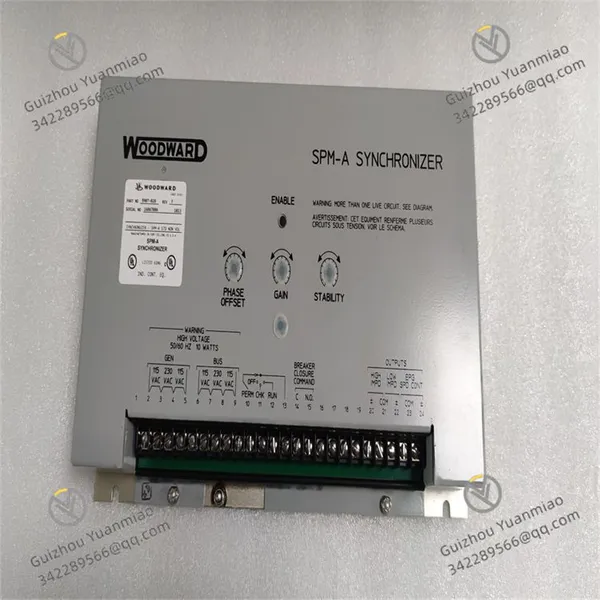
Woodward 9907-028 Speed and Phase-Matched Synchronizer
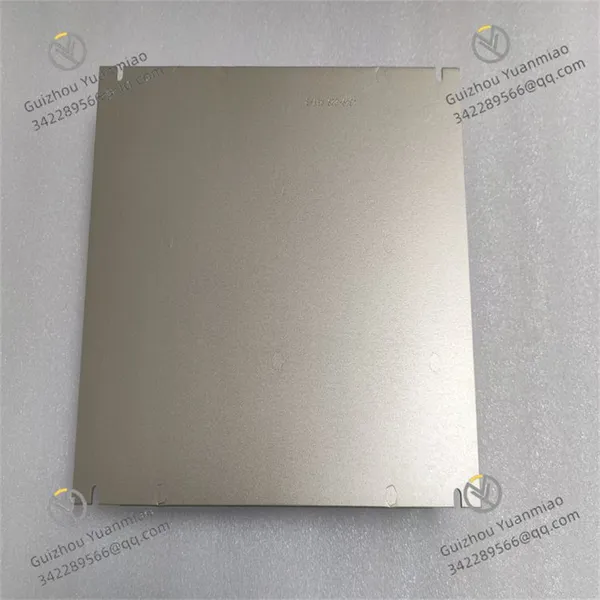
Woodward 9907-028 Speed and Phase-Matched Synchronizer photo-1
Woodward 9907-028 Speed and Phase-Matched Synchronizer photo-2
Negotiable MOQ: 1 Piece (Price negotiable depending on order volume and customization)
Key Specifications
Get Latest Price
Material:
Other, Global universal model
Condition:
Other, Global universal model
Task:
Other, Global universal model

Payment & Shipping
Payment Methods:
Port of Shipment:
China
Delivery Detail:
Delivery time depends on order quantity.
Material Other, Global universal model
Condition Other, Global universal model
Task Other, Global universal model
Mathematical Model Other, Global universal model
Signal Other, Global universal model
Customized Non-Customized
Structure Other, Global universal model
Power Input 120V or 208/240V AC
Dimensions Approximately 16cm×16cm×12cm
Weight 0.8kg
Basic Information
  • Brand: Woodward.

  • Origin: USA.

  • Dimensions: Approximately 16cm×16cm×12cm.

  • Weight: 0.8kg.

Functional Features
  • Speed and Phase Matching: It can bias the speed of the prime mover of an offline generator set to match the frequency and phase of the generator with those of another generator or the grid bus. As a phase-locked loop synchronizer, it strives for perfect matching of frequency and phase.

  • Voltage Matching (Optional): The SPM-A synchronizer with voltage matching function generates additional raise and lower signals (relay contact closures) to the generator's voltage regulator. Before the circuit breaker closes, the voltage must match within the SPM-A's tolerance range.

  • Multiple Output Options: There are three output options: high impedance, low impedance, and EPG, which can be selected according to different engine control types. For example:

    • Select high-impedance output for single-unit synchronization when the engine is controlled by Woodward 2301.

    • Select low-impedance output for single-unit synchronization when the engine is controlled by Woodward 2301A, 2500, or an Electric Governor (EPG) via a generator load sensor.

    • Use EPG output when controlled by a Woodward EPG without load sensing.

  • Signal Processing: The synchronizer checks the phase angle and frequency of the bus and the offline generator to be paralleled. The voltage inputs from the bus and generator are first applied to separate signal conditioning circuits, which act as filters to reshape the voltage input signals for precise measurement. They also amplify the bus and generator signals and apply them to the phase detector. Additionally, the phase shift potentiometer in the signal conditioning circuit can be adjusted to compensate for phase errors.

Working Principle
The SPM-A synchronizer monitors the relevant parameters of the bus and the offline generator, adjusts the speed and phase of the generator through links such as signal conditioning and phase detection to match the bus. When the frequency and phase match within the specified range for the designated matching time, it automatically sends a closing signal to close the circuit breaker between them, achieving the paralleling of the generator with the bus.
Technical Parameters
  • Power Input: Typically 120V or 208/240V AC.

Application Scenarios
It is mainly applied to scenarios where generators need to be paralleled with the power grid or other generators, ensuring the matching of frequency, phase, and voltage during the paralleling process. It is widely used in industrial power generation, power systems, and other fields.

9907-028 (2)

9907-028 (1)

Common Faults and Solutions for Woodward 9907-028Speed Sensor Failure
  • Fault Phenomenon: The speed controller displays alarms like "Speed Probe #1 Failed," possibly accompanied by stable actual speed and LCD display speed on-site, but significant fluctuations in the speed displayed on the DCS and local tachometer.

  • Solutions: First, check if the connection circuit of the speed sensor has open circuits, short circuits, or poor contact. If the circuit is normal, consider replacing the speed sensor, as the sensor itself may be faulty. If the problem persists after replacement, further inspect whether the speed signal processing circuit in the speed controller body has faults.

Actuator Failure
  • Fault Phenomenon: The alarm "Actuator #1 Fault" appears, and the actuator may fail to act normally according to the speed controller's control signals, resulting in ineffective speed regulation of the equipment.

  • Solutions: Check if the connection lines of the actuator are normal, including power lines and control signal lines. Verify whether the driving power supply of the actuator is normally supplied. If the lines and power supply are both problem-free, the internal motor, valve, or other mechanical components of the actuator may be faulty, requiring maintenance or replacement of the actuator.

Power Failure
  • Fault Phenomenon: The speed controller cannot start normally or works unstably, with various abnormal alarms, possibly caused by too low/high power voltage, phase loss, or power module failure.

  • Solutions: Use a voltmeter to measure the input voltage of the power supply, ensuring it is within the specified working voltage range of the speed controller, such as 18-32VDC or 180-264VAC. If the voltage is abnormal, inspect the power supply lines and equipment, and repair or replace the problematic parts. If the voltage is normal, the power module inside the speed controller may be faulty, requiring professional maintenance or replacement.

Communication Failure
  • Fault Phenomenon: The speed controller cannot communicate normally with the DCS system or other monitoring devices, leading to inability to transmit data or issue monitoring commands.

  • Solutions: Check if the communication lines are correctly connected and undamaged, and whether the communication interfaces are loose. Confirm that the communication protocol and parameter settings match the connected devices. For network communication, check if the network devices and settings are normal. If all the above are fine, the communication module of the speed controller may be faulty, requiring maintenance or replacement.

Electronic Component Failure
  • Fault Phenomenon: Due to aging or failure of electronic components, the speed controller may experience various unexplained faults, such as reduced control accuracy or abnormal output.

  • Solutions: For simple electronic components like capacitors and resistors, if damage is detected through testing, they can be replaced. However, for complex circuit board and chip-level faults, professional electronic maintenance personnel or return to the manufacturer for repair is generally required.

External Interference Failure
  • Fault Phenomenon: The speed controller works unstably, with false alarms or abnormal control, possibly affected by external electromagnetic interference, radio frequency interference, etc.

  • Solutions: Check if there are potential interference sources around the speed controller, such as large motors, frequency converters, or high-frequency equipment. Install the speed controller as far away from these interference sources as possible, or take shielding measures for it, such as using shielded wires or installing a shield. If radio frequency interference is suspected, use a radio frequency tester to detect and take corresponding filtering measures.

Product Tags: 9907-028 , PCD231B101 , GFD563A102

Send Inquiry to This Supplier

Message
0/5000

Want the best price? Post an RFQ now!
Gold Verified Supplier
1Yr
Verified Business License
Business Type
Trading Company
Year Established
2014
Factory Size
1,000-3,000 square meters
Product Certifications
SA8000