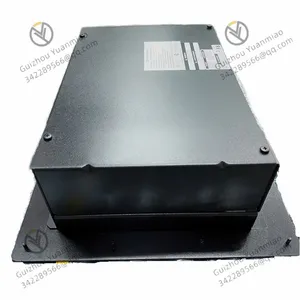
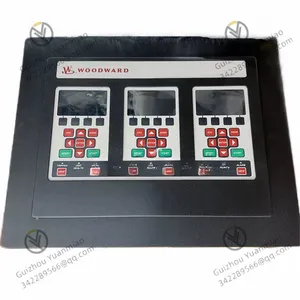
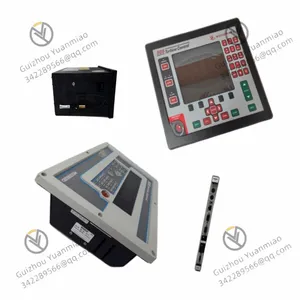
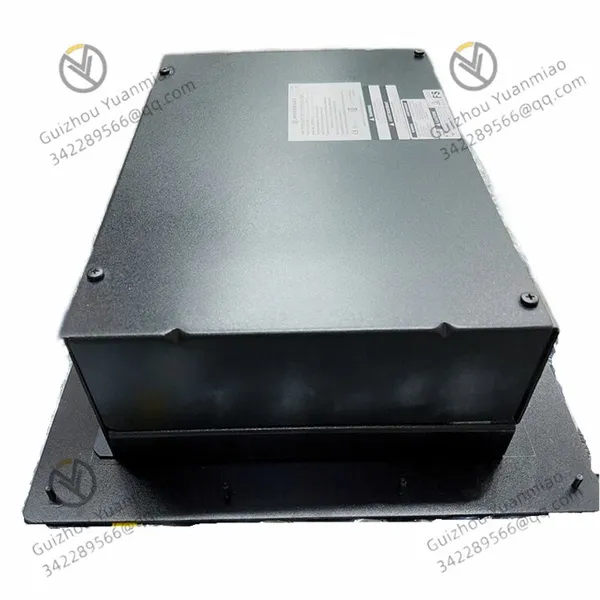
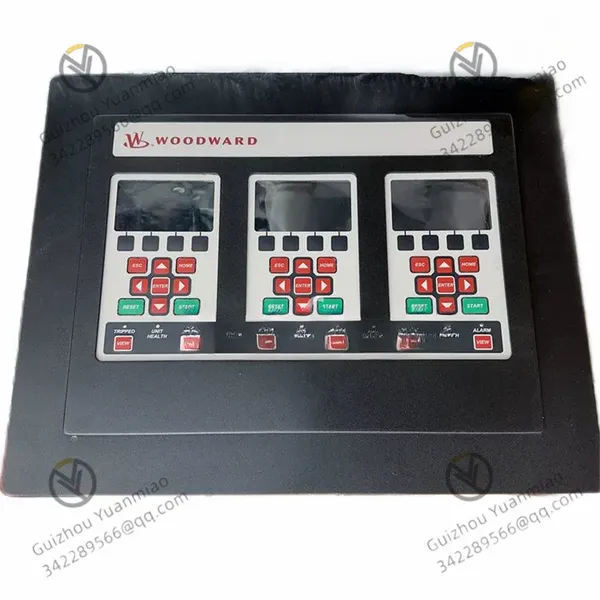
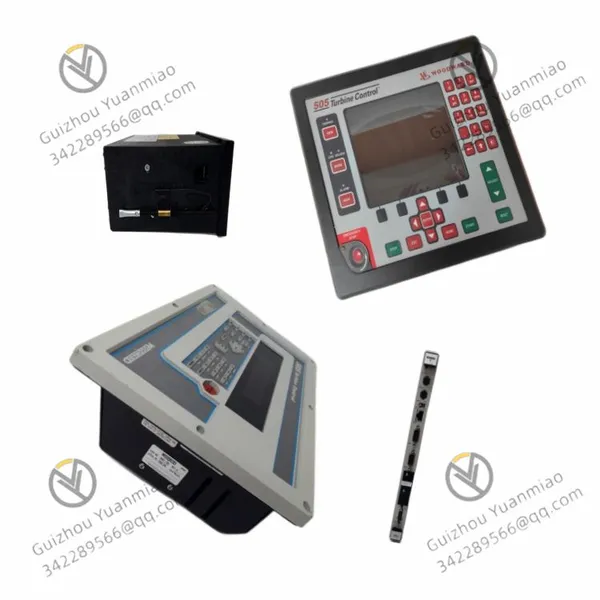
WOODWARD 8237-1600 High-performance control module

Functional Features
Over-speed Safety Protection: As an over-speed safety device in the Protech-GII series, it can real-time monitor the rotational speed and acceleration of steam, gas, and water turbines. When over-speed or excessive acceleration is detected, it can quickly send a signal to safely shut down the turbine to prevent accidents.
High-Precision Control: Equipped with Proportional-Integral-Derivative (PID) control function, it has flexible control modes, which can be either open-loop or closed-loop. The control range is 0~100%, the control accuracy is as high as ±0.5%, and the response time is less than 20ms, enabling precise adjustment of key parameters such as equipment speed and load.
Multi-Function Integration: Integrates multiple functional modules such as protection, monitoring, diagnosis, and data recording. It can comprehensively monitor and analyze the operating status of the turbine, timely detect potential problems and take corresponding measures, and also record operating data, facilitating later fault and performance optimization.
Powerful Communication Function: Supports multiple communication protocols such as Modbus and RS485, which can easily exchange data and conduct remote monitoring with other control equipment, sensors, and actuators, realizing system integration and automated control.
Convenient Online Maintenance: Adopts a unique three-module design and backplane structure installation, allowing maintenance or replacement of a single module while the system is running, which greatly reduces downtime and improves system availability and maintenance efficiency.
Strong Environmental Adaptability: The shell protection level reaches IP56, with dustproof and waterproof functions. It uses special coating materials to make it resistant to sulfide pollution, and can work stably in harsh industrial environments, complying with international standards such as IEC 721-3-3.
Technical Specifications
Dimensions: Approximately 13×17.5×6.25 inches.
Input Voltage: Supports 2 high-voltage inputs or 1 high-voltage and 1 low-voltage input.
Inrush Current: 10A at 115V AC, 20A at 220V AC.
Display and Buttons: Equipped with a 4.2-inch display and 15 buttons per module.
Operating Temperature: -20℃ to +60℃, humidity 95%.
Storage Temperature: -20℃ to +65℃, humidity 95%.
Application Fields
Power Generation Systems: Used to control and protect various generator sets, such as gas turbines and steam turbines, ensuring the stable operation and efficient power generation of generator sets, and improving the reliability and safety of power systems.
Industrial Automation: Widely used in the automated production processes of industries such as petroleum, natural gas, chemical industry, and metallurgy, to precisely control and monitor various mechanical equipment and production processes, optimize production efficiency, and ensure product quality.
Transportation Field: Can be used in the power system control of transportation tools such as ships, aircraft, and trains, such as controlling parameters like engine speed and load, optimizing engine performance, improving fuel efficiency, and ensuring the stability of vehicle operation.

Working Principle
Signal Acquisition: The module collects real-time operating parameters of the equipment, such as rotational speed, temperature, and pressure, by connecting various sensors. For example, a magnetic pickup (MPU) is used to detect the rotational speed of the turbine, convert the speed signal into an electrical signal and input it into the module. These analog or digital signals enter the internal circuit through the input interface of the module.
Signal Processing and Calculation: The module has a built-in microprocessor to analyze and process the input signals. Based on preset control algorithms and parameters, it calculates the corresponding control strategies. For instance, the Proportional-Integral-Derivative (PID) control algorithm is adopted, and the appropriate control quantity is calculated according to the deviation between the set value and the actual measured value to ensure stable and accurate output, with a control accuracy of up to ±0.5%.
Control Output: According to the signal processing results, the module sends control signals to the actuator through the output interface, such as outputting 0~10VDC voltage or 0~20mA current signals, to control the action of the actuator, thereby adjusting the operating state of the equipment, realizing precise control of parameters such as equipment speed and load, and making the equipment operate within the set working range.
Over-Speed Protection Principle: As an over-speed safety device, the module continuously monitors the speed signal. When it detects that the turbine speed exceeds the set over-speed threshold or the acceleration is abnormal, it will quickly send a shutdown signal to drive the relevant trip valve to act, safely shut down the turbine, and prevent accidents such as equipment damage caused by over-speed.
Communication and Interaction Principle: The module supports communication protocols such as Modbus and can exchange data with other control equipment. Through the communication interface, it transmits the monitored data and status information to the upper computer or other related equipment, and at the same time receives control instructions and parameter settings from the upper computer, realizing remote monitoring and system integration.
Fault Diagnosis and Alarm: The module continuously monitors and diagnoses its own status and the operating conditions of the equipment. When an abnormality is found, such as a sensor failure, an internal circuit failure, or equipment operating parameters exceeding the normal range, it will trigger the alarm mechanism, send an alarm signal to the operator through indicators, displays, or communication methods, and record relevant fault information at the same time, facilitating fault and maintenance.