








 Contact Platform Support
 Help Center
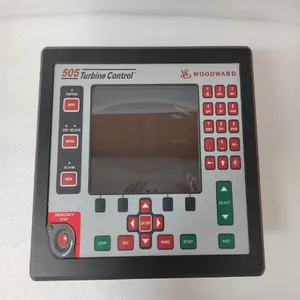
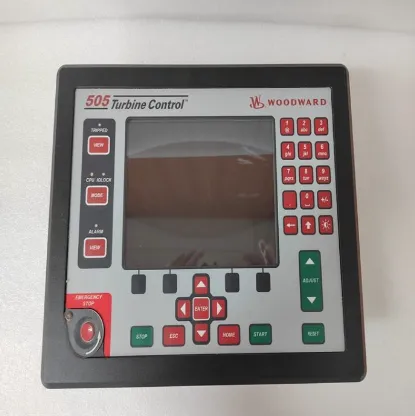
WOODWARD 8200-1400 Low Voltage Direct Current (LVDC)



Related Products
-
 WOODWARD 8200-1403 Francis/Kaplan TurbinesNegotiableMOQ: 1 Piece
 -
WOODWARD 8200-1401 505HT for Pelton TurbinesNegotiableMOQ: 1 Piece
-
WOODWARD 8269-1073 17" OCP TouchpanelNegotiableMOQ: 1 Piece
-
WOODWARD 8928-5311 RemoteViewNegotiableMOQ: 1 Piece
-
WOODWARD 8200-1500 ControllerNegotiableMOQ: 1 Piece
I. Overview
WOODWARD 8200-1400 is a high-performance digital control module, whose core positioning is to provide precise speed control, load regulation and operation status monitoring functions for power equipment such as steam turbines, industrial compressors and generator sets. Through advanced digital control algorithms and flexible parameter configuration capabilities, it achieves stable operation and efficient regulation of power equipment under all working conditions.
Integrated with a high-performance microprocessing unit and a reliable signal processing module, this product supports multiple analog and digital input/output interfaces. It can be easily connected to on-site sensors, actuators and upper-level control systems (PLC/DCS), providing full-process control and protection support for power equipment in fields such as industrial automation, energy power generation and petrochemical engineering.
The 8200-1400 boasts excellent environmental adaptability and anti-interference capability, enabling long-term stable operation in complex industrial environments. It is widely used in core scenarios including steam regulation in biomass power plants, wet gas compressor drive in fluid catalytic cracking units of oil refineries, control of marine LNG reliquefaction units and regulation of ammonia synthesis gas compressors.
Suitable for various needs such as new equipment matching, upgrading and transformation of old control systems and operation & maintenance replacement, it complies with mainstream safety and electromagnetic compatibility specifications in the industrial automation field, providing a solid guarantee for the continuity and stability of industrial production.
II. Product Features
Precise Digital Control: Adopting advanced digital control algorithms and a high-performance microprocessing unit, it realizes precise regulation of core parameters such as speed and load with a control accuracy of ±0.1%. It supports presetting of multi-segment control curves, which can be flexibly switched according to the requirements of different working conditions, adapting to the full-process control needs of power equipment from startup, stable operation to shutdown.
Flexible Interface Configuration: Equipped with rich input and output interfaces, including multiple programmable analog inputs (4-20mA) and digital input/output interfaces, it is compatible with signals from various detection devices such as speed sensors, pressure sensors and temperature sensors. Meanwhile, it adapts to the driving needs of different types of actuators (e.g., servo valves, speed governors) with strong compatibility.
Reliable Communication and Integration Capability: Supporting mainstream industrial communication protocols such as CANopen and MODBUS, it is provided with RS-485/RS-232 serial communication interfaces, which can quickly realize docking and integration with on-site PLC and plant DCS systems, facilitating remote monitoring, parameter configuration and operation data upload, and greatly improving the level of system automation management and control.
Strong Environmental Adaptability and Anti-Interference Design: With a wide operating temperature range, it can run stably in industrial environments from -20℃ to +70℃. Adopting a reinforced electromagnetic shielding design, it effectively resists electromagnetic interference generated by high-power motors, transformers and other equipment, ensuring the stability of signal acquisition and control command transmission. It also has salt spray corrosion protection capability, suitable for humid salt spray environments such as coastal desalination plants and ships.
Comprehensive Protection and Fault Diagnosis: Integrated with multiple protection functions such as overload protection, over-temperature protection, overspeed protection and signal abnormality protection, it can quickly trigger alarm or shutdown commands when equipment runs under abnormal conditions, avoiding equipment damage. It has full-cycle operation data recording and fault diagnosis functions, which can automatically record key information such as fault codes and abnormal parameters, providing an accurate basis for fault troubleshooting and cause tracing.
Convenient Installation and Operation & Maintenance: Adopting a modular structure design, it features flexible installation methods (supporting DIN rail mounting/flange mounting) with simple and standardized wiring. Equipped with an intuitive local configuration interface, it supports parameter debugging and program upgrading through dedicated service tools, enabling operation and maintenance personnel to quickly complete equipment debugging and fault handling, and reducing operation and maintenance costs.
III. Technical Parameters
1. Core Basic Parameters
Product Model: WOODWARD 8200-1400
Product Type: Digital Power Equipment Control Module
Manufacturer: WOODWARD (USA)
Core Processor: High-performance 32-bit Microprocessor
Core Functions: Precise speed control, load regulation, operation status monitoring, fault diagnosis and protection, communication interaction with upper-level systems
Applicable Equipment: Power equipment such as steam turbines, industrial compressors, generator sets, compressors of LNG reliquefaction units
Application Fields: Industrial automation, energy power generation (biomass power generation), petrochemical engineering, oil refining, marine power systems, etc.
2. Electrical Performance Parameters
Supply Voltage: 24V DC (DC power supply, voltage fluctuation range: 18V DC ~ 32V DC)
Analog Inputs: 4 channels of programmable 4-20mA current inputs (adapted to signals from speed, pressure, temperature and other sensors)
Analog Outputs: 2 channels of 4-20mA current outputs / 0-10V DC voltage outputs (for driving actuators, servo valves, etc.)
Digital Inputs: 8 channels of discrete inputs (for start-stop control, fault interlock and other signals)
Digital Outputs: 4 channels of relay outputs (for alarm, shutdown control, etc.)
Communication Interfaces: 1 channel of RS-485 serial port, 1 channel of RS-232 serial port, 1 channel of CANopen interface
Communication Protocols: Supports MODBUS and CANopen protocols
Control Accuracy: Speed control accuracy ±0.1%, load regulation accuracy ±0.5%
Response Time: ≤20ms (control command response)
3. Environmental and Physical Parameters
Operating Temperature: -20℃ ~ +70℃
Storage Temperature: -40℃ ~ +85℃
Relative Humidity: 5% ~ 95% RH (non-condensing)
Protection Grade: IP54 (dust-proof, splash-proof)
Special Protection: Salt spray corrosion protection (adapted to marine climate environments)
Installation Method: DIN rail mounting / Flange mounting (optional)
Weight: Approximately 1.2 kg
IV. Working Principle
The core working principle of WOODWARD 8200-1400 is a closed-loop control process of "signal acquisition - digital operation - control output - status feedback - fault protection". Through the coordinated operation of internal microprocessing units, signal processing modules, communication modules and protection logic units, it realizes precise control and safety protection of power equipment. The specific working process can be divided into five core stages:
Stage 1: Initialization and Parameter Configuration StageAfter the module is connected to a 24V DC power supply, it completes initialization and startup, automatically conducting internal circuit self-test, interface calibration and control program loading. Operation and maintenance personnel complete the configuration of control parameters (speed threshold, load range, PID parameters, etc.), communication parameters (protocol type, address, baud rate) and input/output interface functions through dedicated service tools or upper-level systems, ensuring that the module is accurately adapted to the controlled equipment, on-site sensors and actuators.
Stage 2: Operation Signal Acquisition StageThe module collects key operation parameters of power equipment such as speed signals, load signals, pressure signals and temperature signals in real time through analog input interfaces, and receives equipment start-stop commands, operation enable signals and external interlock signals through digital input interfaces. During the acquisition process, the built-in filter circuit preprocesses the original signals to remove clutter caused by electromagnetic interference, ensuring the accuracy and stability of signal acquisition.
Stage 3: Digital Operation and Decision-Making StageBased on the collected real-time operation data and combined with preset control logic and parameter thresholds, the core microprocessing unit completes digital operations such as speed regulation and load distribution. It dynamically adjusts the control strategy according to the equipment operating conditions (startup, stable operation, load switching). For example, it maintains a constant speed under stable operating conditions, and quickly adjusts output commands when the load changes suddenly, ensuring that the equipment operating status meets process requirements.
Stage 4: Control Output and Execution StageThe module sends the control commands generated by operations to actuators (such as servo valves and speed governors) through analog output interfaces, driving the action of equipment regulating mechanisms to achieve precise regulation of speed or load. Meanwhile, it feeds back equipment operation status signals through digital output interfaces, triggering on-site indicating devices or interlock protection mechanisms to ensure the effective execution of control commands.
Stage 5: Status Feedback and Fault Protection StageThe module uploads equipment operation parameters and its own working status to the upper-level PLC/DCS system in real time through communication interfaces, providing data support for remote monitoring. At the same time, it real-time monitors whether each operation parameter exceeds the preset threshold. When faults such as overload, over-temperature, overspeed and signal abnormality are detected, it immediately triggers corresponding protection mechanisms (such as alarm prompts, load reduction operation or emergency shutdown), and records fault codes and abnormal data to facilitate subsequent fault troubleshooting and handling.
V. Common Fault Troubleshooting
1. Speed Control Accuracy Deviation / Excessive Fluctuation
Phenomenon: The deviation between the speed data displayed by the module and the actual speed of the equipment exceeds the allowable range; the speed fluctuates frequently and cannot be stabilized at the preset value; the speed cannot recover quickly after a sudden change during load switching.
Causes: Aging, damage or improper installation position of the speed sensor; loose, poor contact, damaged or short-circuited speed signal lines; abnormal signal transmission caused by electromagnetic interference; unreasonable configuration of PID control parameters (proportional, integral, derivative); incorrect setting of module speed threshold.
Solutions:
Check whether the appearance of the speed sensor is damaged, use professional tools to detect the output signal of the sensor and confirm its stability and accuracy; adjust the installation position of the sensor to the standard gap, and replace the faulty sensor with a genuine product of the same model in a timely manner.
Disconnect the power supply, check the wiring of the speed signal lines, tighten loose connectors, repair or replace damaged and short-circuited lines; replace the original lines with shielded cables, keep the signal lines away from strong electromagnetic interference sources such as frequency converters and high-power motors, and reliably ground one end of the shielded cable (grounding resistance ≤4Ω) to enhance anti-interference capability.
Enter the module configuration interface, re-optimize the PID control parameters, and ensure the stability and fast responsiveness of speed regulation through step-by-step debugging.
Check the settings of parameters such as speed threshold and load regulation range to ensure they are consistent with the technical requirements of the equipment, and conduct no-load and load test verification after adjustment.
2. Communication Link Interruption / Abnormal Data Interaction
Phenomenon: The module cannot establish communication with the upper-level PLC/DCS system; operation data transmission is frequently interrupted or packet loss occurs; the upper-level system cannot issue control commands or parameter configuration fails; the communication status indicator flashes abnormally.
Causes: Loose, poor contact, damaged or short-circuited communication lines (RS-485/RS-232/CAN bus); incorrect configuration of communication parameters (mismatched protocol type, address, baud rate); damaged or oxidized communication interface connectors; failure of the built-in communication unit of the module; failure of the communication module of the upper-level system or address setting conflict; signal interference caused by poor ground wire connection.
Solutions:
Disconnect the power supply, check the connection status of the communication lines, re-plug and tighten the connectors, replace damaged and aging lines; ensure that the terminal resistance of the CAN bus line is matched (usually 120Ω) to improve communication stability.
Check the communication parameters between the module and the upper-level system to ensure that the protocol type, address and baud rate are completely consistent, reconfigure and restart the communication link.
Check whether the communication interface connectors are damaged or oxidized, clean impurities in the interface or replace them with connectors of the same specification.
Check the ground wire connection status of the module to ensure reliable grounding and avoid signal interference caused by poor grounding.
Troubleshoot the working status and address allocation of the communication module of the upper-level system to avoid address conflicts; if normal communication still cannot be achieved, the built-in communication unit of the module may be faulty, and you need to contact WOODWARD official after-sales service for maintenance.
3. Fault Protection Mis-triggering / Frequent Alarms
Phenomenon: The equipment frequently triggers alarms or protective shutdown without abnormal working conditions; the alarm information is inconsistent with the actual operation status; false alarms of protection signals such as overload and over-temperature occur.
Causes: The protection parameter threshold is set too low (e.g., speed upper limit, temperature upper limit, load upper limit); signal abnormality caused by detection sensor failure; signal misjudgment caused by short circuit or leakage of input signal lines; failure of the internal signal processing unit of the module.
Solutions:
Retrieve the module fault records, analyze the key parameters triggering the protection action, and re-adjust the protection threshold to a reasonable range in combination with the rated operation parameters of the equipment.
Check the sensors triggering the alarm (temperature, pressure, load sensors, etc.), detect whether their output signals are normal, and replace the faulty sensors in a timely manner.
Check the insulation status of the sensor signal lines, troubleshoot line short circuit or leakage problems, and repair abnormal lines.
If the above measures are ineffective, the internal signal processing unit of the module may be faulty, and you need to contact the official after-sales service for testing and maintenance.
4. Abnormal Power Supply / Failure to Start the Module
Phenomenon: After being connected to a 24V DC power supply, the module cannot start and the power indicator has no response; the module frequently shuts down due to power supply problems during operation; the power status indicator flashes abnormally.
Causes: The supply voltage is not within the standard range of 18V DC ~ 32V DC (too high or too low); loose, poor contact or reversed positive and negative poles of the power interface; excessive voltage fluctuation caused by the failure of the external power module; short circuit or component aging of the internal power supply circuit of the module; the fuse circuit breaker in the cabinet is not closed or damaged.
Solutions:
Use a multimeter to detect the voltage of the power supply to ensure it is stably within the standard range; if the voltage fluctuates excessively, replace it with a high-precision regulated power supply module.
Re-plug the power interface, tighten the connector, check the positive and negative wiring of the power supply, and correct the wrong wiring.
Check the status of the fuse circuit breaker in the cabinet to ensure it is closed and undamaged; replace it with a fuse of the same specification in a timely manner if it is damaged.
Disconnect the power supply, wait for 5 minutes, and then reconnect the power supply to try to start the module, eliminating the startup failure caused by instantaneous voltage impact.
If the module still cannot start or the power supply is abnormal, the internal power supply circuit of the module may be faulty, and you need to contact WOODWARD official after-sales service for maintenance.

Send Inquiry to This Supplier


You May Also Like
-
WOODWARD 8200-1502 Original Instructions ManualNegotiableMOQ: 1 Piece
-
WOODWARD 8200-1505 Manuals and User GuidesNegotiableMOQ: 1 Piece
-
WOODWARD 8200-1310 Logic Controller ModuleNegotiableMOQ: 1 Piece
-
WOODWARD 8200-1312 Digital Governor Turbine ControlNegotiableMOQ: 1 Piece
-
WOODWARD 8200-1330 Digital ControllerNegotiableMOQ: 1 Piece
-
WOODWARD 5541-705 Discrete Input 20 Through Relay 8 InterlockNegotiableMOQ: 1 Piece
-
WOODWARD 8200-1203 LinkNet-HT Analog 4-20 mA ModuleNegotiableMOQ: 1 Piece
-
WOODWARD 8200-1200 LinkNet-HT RTD ModuleNegotiableMOQ: 1 Piece
-
WOODWARD 8262-1142 5009XT With 2 220 VAC PSNegotiableMOQ: 1 Piece
-
WOODWARD 8262-1141 5009XT With 2 120 V AC/DC PSNegotiableMOQ: 1 Piece


