








 Contact Platform Support
 Help Center
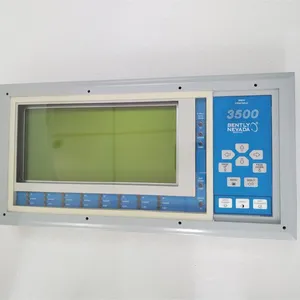
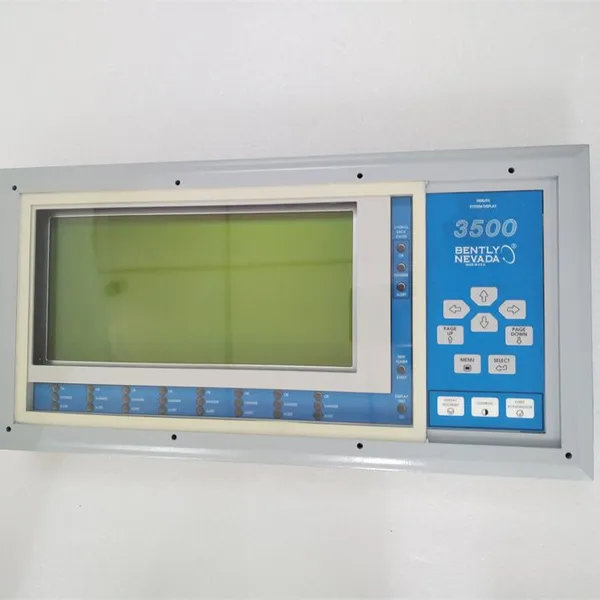
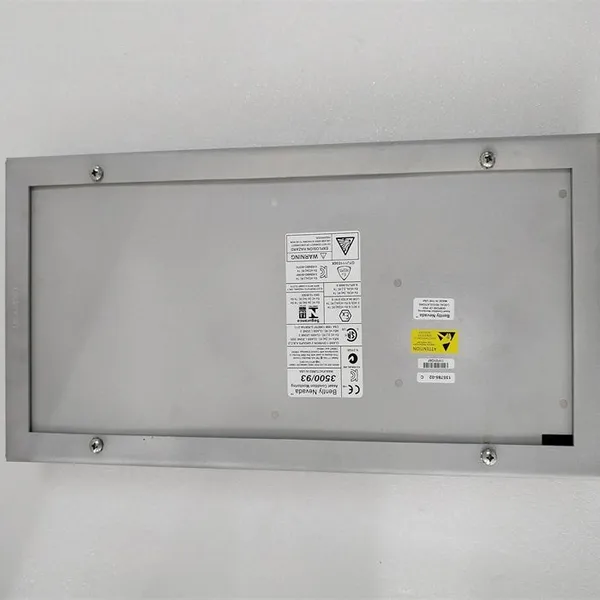
Bently Nevada 3500/93 135785-02 System Display




Related Products
-
 Bently Nevada 125720-01 Channel Relay Module 3500/32MUS$ 100 - 600MOQ: 1 Unit
 -
Bently Nevada 135489-01 Barrier Proximitor I/O Module 3500/42MUS$ 100 - 600MOQ: 1 Unit
-
Bently Nevada 1900/65A-01-01-03-00-00 General Purpose Equipment MonitorUS$ 200 - 1200MOQ: 1 Unit
-
Bently Nevada 3500/05-01-02-00-00-01 System RackUS$ 500 - 3400MOQ: 1 Unit
-
Bently Nevada 3500/15 106M1079-01 Universal AC Power SupplyUS$ 800 - 3200MOQ: 1 Unit
The Bently Nevada 3500/93 135785-02 is an important module in the 3500 series monitoring system of Bently Nevada Company, mainly used for mechanical protection and monitoring, etc. Functional Features Vibration Monitoring and Analysis: It can accurately measure the vibration parameters of equipment, such as vibration amplitude, frequency, phase, etc. It can be connected to various types of vibration sensors, such as accelerometers, velocity sensors, and displacement sensors, etc., to conduct real-time monitoring and analysis of the vibration status of rotating machinery (such as steam turbines, compressors, fans, etc.), providing key data for the evaluation of the equipment's operating status and helping to determine whether there are problems such as unbalance, misalignment, and bearing faults in the equipment. Multi-channel Data Acquisition: It usually has multiple input channels and can access the signals of multiple sensors simultaneously, achieving synchronous monitoring of multiple vibration parameters of the equipment, so as to have a more comprehensive understanding of the equipment's operating status. This multi-channel acquisition capability helps to capture the vibration information of the equipment at different positions or under different working conditions, improving the accuracy and reliability of monitoring. Advanced Signal Processing: It is equipped with advanced signal processing algorithms and technologies to process the collected vibration signals, such as filtering, spectral analysis, and time-domain analysis. Through these processes, the noise interference in the signals can be removed, useful characteristic information can be extracted, and the fault types and degrees of the equipment can be identified more accurately. For example, through spectral analysis, the distribution of each frequency component in the vibration signal can be determined, so as to judge whether there are fault characteristics of specific frequencies. Alarm and Protection Function: It supports setting multiple alarm thresholds. When the monitored vibration parameters exceed the preset alarm values, it can promptly send out alarm signals to remind the operators that there may be abnormal situations with the equipment. At the same time, it can cooperate with other protection modules to trigger corresponding protective actions, such as equipment shutdown and power cut-off, according to the preset logical relationships, to prevent the equipment from being severely damaged due to excessive vibration and ensure the safety of the equipment and personnel. Communication and Integration Capability: It has a variety of communication interfaces and supports common industrial communication protocols, such as Profibus, Modbus, Ethernet/IP, etc., which can conveniently carry out data interaction and communication with the upper computer monitoring system, other control systems or devices, realizing remote monitoring and centralized management. It can be closely integrated with other modules of the 3500 series to build a complete mechanical monitoring and protection system.
Technical Parameters Input Characteristics: The number of input channels depends on the specific model and configuration. The acceptable input signal types include various forms of vibration signals such as acceleration, velocity, and displacement. The input signal range generally varies according to the connected sensors. For example, the input range of the acceleration signal may be ±5g (g is the acceleration of gravity), etc. The specific parameters can be referred to in the product manual. Output Characteristics: The analog output is usually a standard 4 - 20mA current signal or a signal within a specific voltage range, which is used to connect to other display or control devices to intuitively display the vibration parameters; the digital output is used for alarm and control signals, such as dry contact output, which can trigger external alarm devices or control the start and stop of the equipment. In terms of communication output, the supported communication rate and data format meet the standard requirements of the corresponding communication protocol to ensure the accurate transmission of data. Working Environment: The working temperature range is generally between -40°C and +85°C, which can adapt to relatively harsh industrial environments; the relative humidity range is usually 5% - 95% (without condensation), with good resistance to humidity and dust, to ensure the stable operation of the module under different environmental conditions. Application Areas Power Industry: It is widely used in the vibration monitoring and protection of various rotating mechanical equipment in power plants, such as steam turbine generator sets, feed pumps, and circulating water pumps. By monitoring the vibration of the equipment in real time, potential faults of the equipment can be detected in a timely manner, ensuring the safe and stable operation of power production, reducing equipment downtime, and improving power generation efficiency. Petrochemical Industry: It is used for the monitoring of equipment such as compressors, pumps, fans, and reaction kettles in petrochemical enterprises. Real-time monitoring of the vibration status of these key equipment can prevent production accidents and economic losses caused by equipment failures, ensuring the continuity and safety of the production process. For example, during the operation of the compressor, timely monitoring of its vibration changes can detect problems such as bearing wear and impeller unbalance in advance. Metallurgical Industry: It plays an important role in equipment such as large rolling mills, motors, and blast furnace blowers in metallurgical production. Through the monitoring and analysis of the equipment's vibration parameters, predictive maintenance of the equipment can be achieved, reducing equipment maintenance costs and improving the service life and production efficiency of the equipment. For example, by monitoring the vibration of the rolling mill, the rolling process parameters can be adjusted in a timely manner to avoid damage to the equipment due to excessive vibration. Other Industrial Fields: It can also be applied to the condition monitoring of large mechanical equipment in industries such as papermaking, cement, and mining, providing reliable technical support for the stable operation of industrial production.
Common Faults Sensor Connection Fault: It may be due to reasons such as damage to the connection cable between the sensor and the module, loose joints, or poor contact, resulting in the inability of the signal to be transmitted normally, and the module displaying no signal input or abnormal signals. Signal Deviation Fault: There is a deviation between the vibration signal value collected by the module and the actual vibration situation of the equipment. It may be caused by factors such as changes in the performance of the sensor itself, faults in the input channel of the module, or external electromagnetic interference, affecting the accurate judgment of the equipment's status. Communication Fault: It includes problems such as the interruption of the communication connection with the upper computer or other devices and errors in the communication data. The reasons may include communication cable faults, damage to the communication interface, incorrect communication protocol settings, and mismatching of communication parameters, etc. Hardware Fault: The electronic components inside the module, such as chips, capacitors, resistors, etc., may be damaged, resulting in the module being unable to work properly, such as the indicator light not turning on, no output signal, etc.; problems with the power supply, such as unstable voltage and damage to the power supply module, etc., will also affect the normal operation of the module. Software Fault: Loss or error of configuration parameters, such as changes in the range setting of the input channel, alarm threshold, etc., may lead to abnormal operation of the module; errors occur during the software operation process, such as program freezing, data processing errors, etc., affecting the normal functions of the module.

Send Inquiry to This Supplier


You May Also Like
-
Bently Nevada 3500/22M 288055-01 Transient Data Interface ModuleUS$ 300 - 2600MOQ: 1 Unit
-
Bently Nevada 3500/42M 176449-02 Proximitor/Seismic MonitorUS$ 800 - 1300MOQ: 1 Unit
-
Bently Nevada 3500/50M 288062-02 Tachometer ModuleUS$ 800 - 1800MOQ: 1 Unit
-
Bently Nevada 3500/92 136180-01 Communication Gateway ModuleUS$ 780 - 1600MOQ: 1 Unit
-
Bently Nevada 3500/32M 149986-01 4-Channel Relay ModuleUS$ 850 - 1840MOQ: 1 Unit
-
Bently Nevada 3500/25 184684-01 Enhanced Keyphasor ModuleUS$ 560 - 1100MOQ: 1 Unit
-
ICS Triplex T8110B Trusted TMR ProcessorUS$ 560 - 1700MOQ: 1 Unit
-
ICS Triplex T8461 Digital Output ModuleUS$ 460 - 1680MOQ: 1 Unit
-
ICS Triplex T8231 Power Pack 24 VdcUS$ 640 - 1750MOQ: 1 Unit
-
ICS Triplex 9300 9832 9802 Analog Input ModuleUS$ 200 - 1100MOQ: 1 Unit


